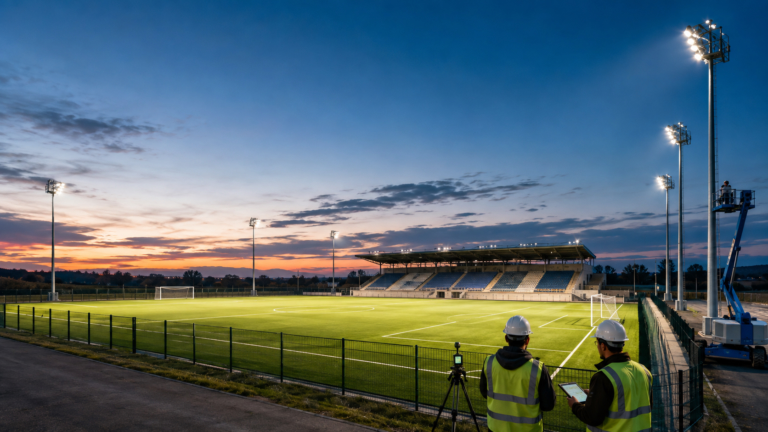
Sports Lighting Total Installed Cost: A Procurement Comparison Framework
Compare two sports lighting proposals on the same system boundary—before a low fixture price hides structural, installation, control, commissioning or lifecycle costs.

Compare two sports lighting proposals on the same system boundary—before a low fixture price hides structural, installation, control, commissioning or lifecycle costs.
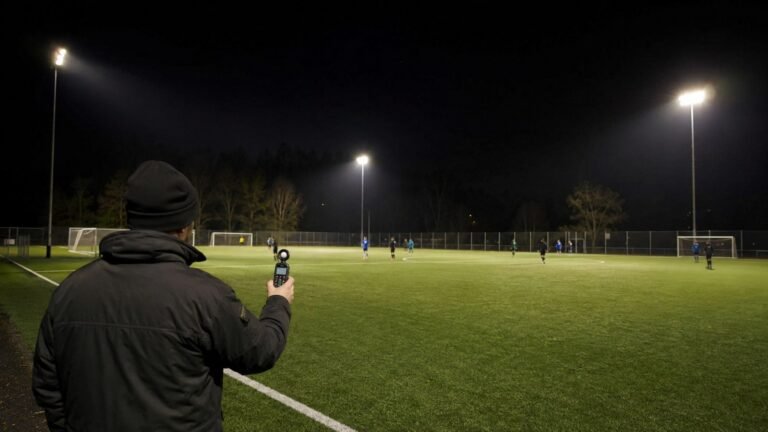
A practical post-installation method to verify glare, observer sightlines, boundary impact and aiming accuracy before a sports-lighting project is accepted.
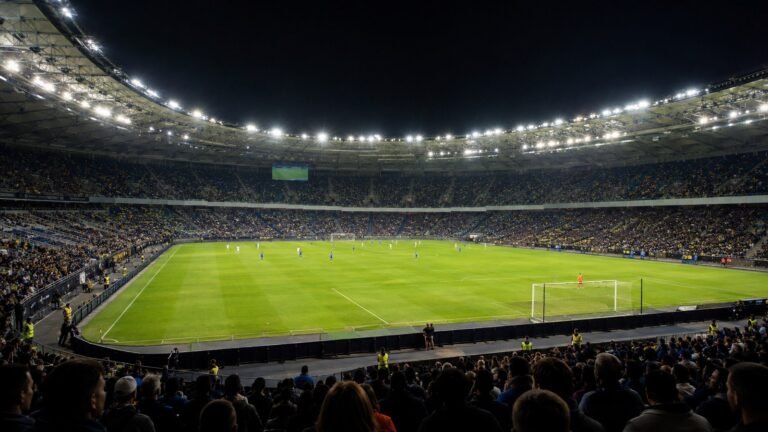
Learn why a good sports-lighting uniformity ratio does not automatically ensure visual comfort—and which glare, geometry, vertical-light and observer factors must also be reviewed.
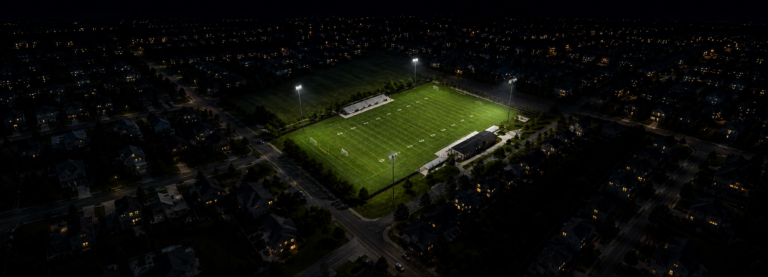
A practical guide to pole setback, mounting height, aiming, shielding, boundary calculations and operating controls for sports lighting near residential areas.
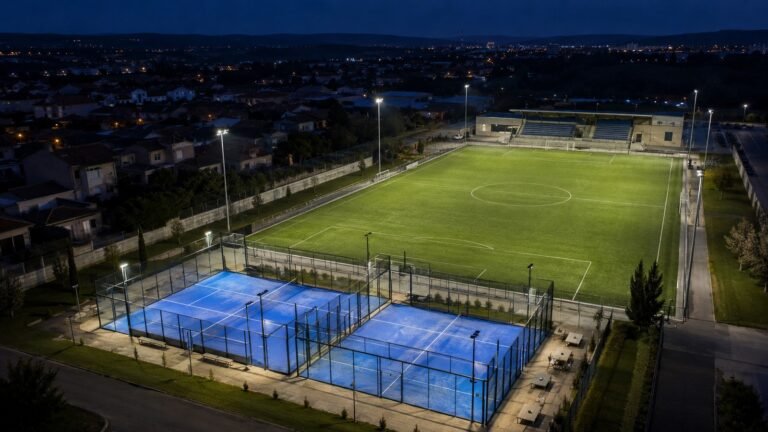
From padel courts close to residential properties to professional stadiums, successful LED sports lighting now depends on controlling glare, spill light, backlight and uplight—not simply reaching a lux target.
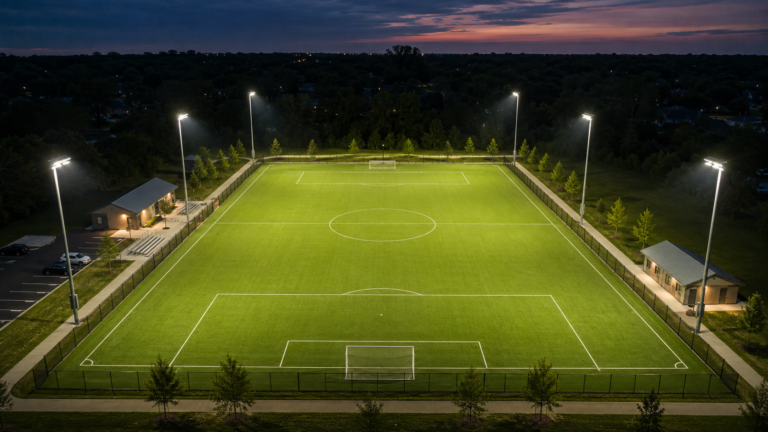
A practical engineering guide for municipal fields, professional venues and residentially sensitive sports sites
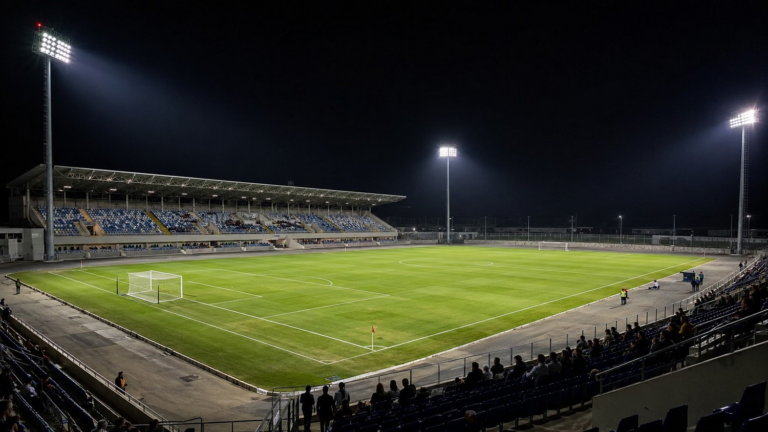
Learn how to choose LED stadium lights based on venue level, pole geometry, photometric targets, optics, glare control, structural limits, controls, and maintenance.
A publish-ready Knowledge Center article with embedded engineering visuals, internal-link suggestions, SEO settings, and a project input checklist.
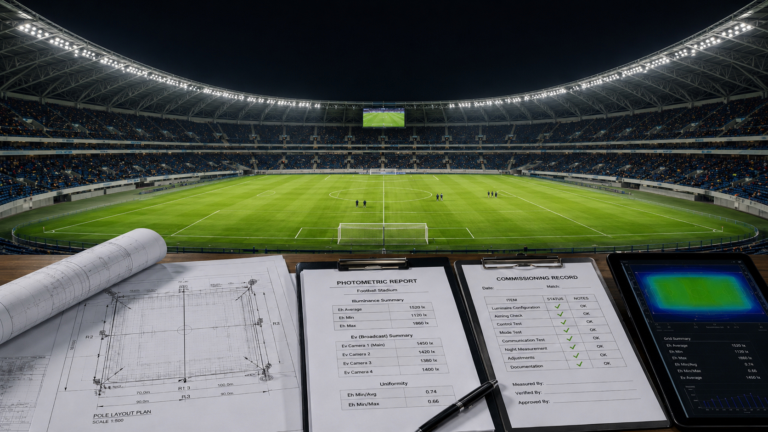
A practical market and engineering analysis for professional sports lighting suppliers, consultants, contractors and venue owners.
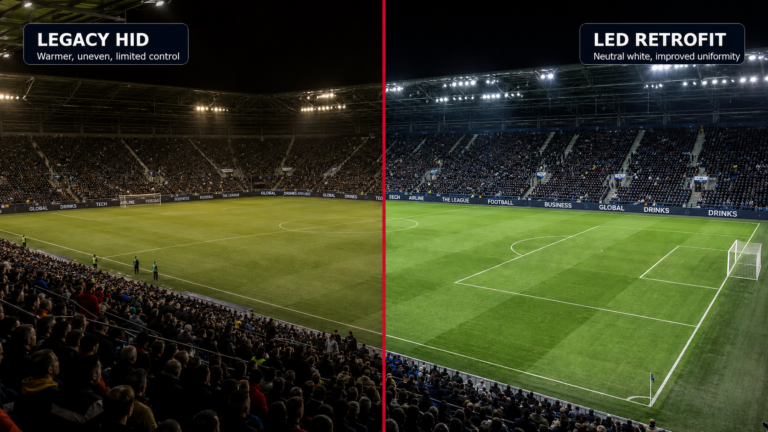
Energy savings are one of the most common reasons for replacing traditional stadium lighting with LED.
However, a credible retrofit return-on-investment calculation requires more than comparing the wattage of the old and new luminaires.
Sports facilities operate in different ways, and the real project cost may include structural, electrical, control and installation work.
A useful ROI model should reflect the complete operating and investment conditions
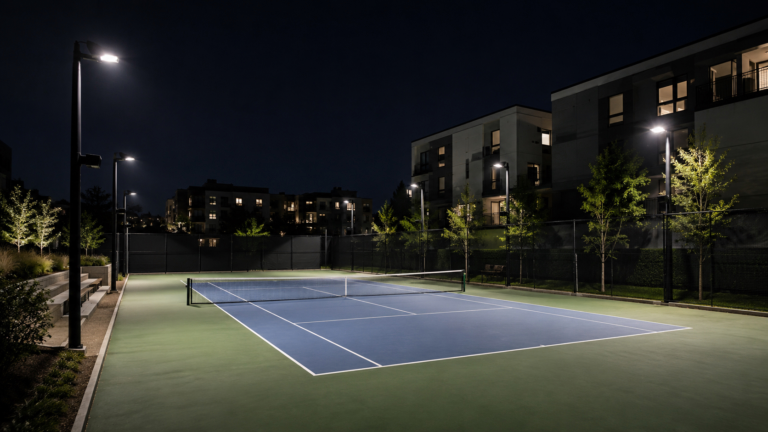
“Low glare” is one of the most common claims in outdoor sports lighting.
However, glare is not a fixed property that can be determined by the luminaire alone.
The final visual and environmental result depends on the relationship between:
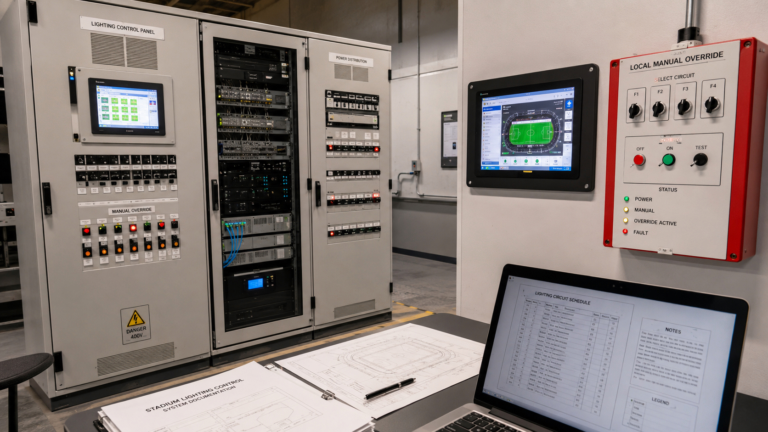
“The phrase “smart sports lighting” is widely used, but it can describe very different levels of capability.
In one project, it may mean basic 0–10V dimming.
In another, it may involve:
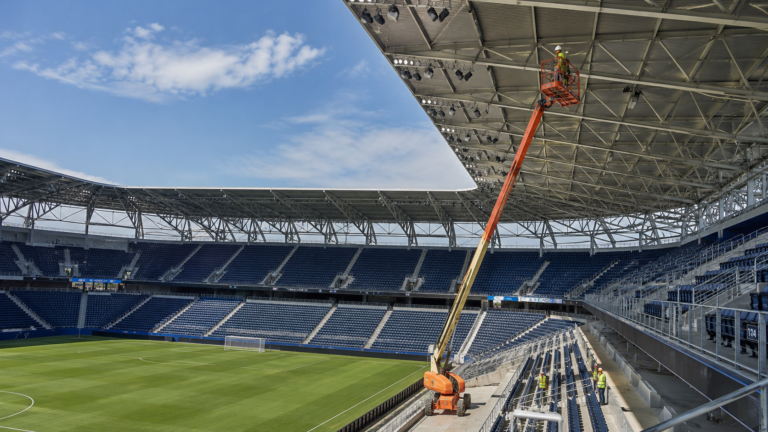
Learn how phased stadium lighting retrofits can reduce operational disruption while managing existing poles, electrical systems, controls, aiming and commissioning.
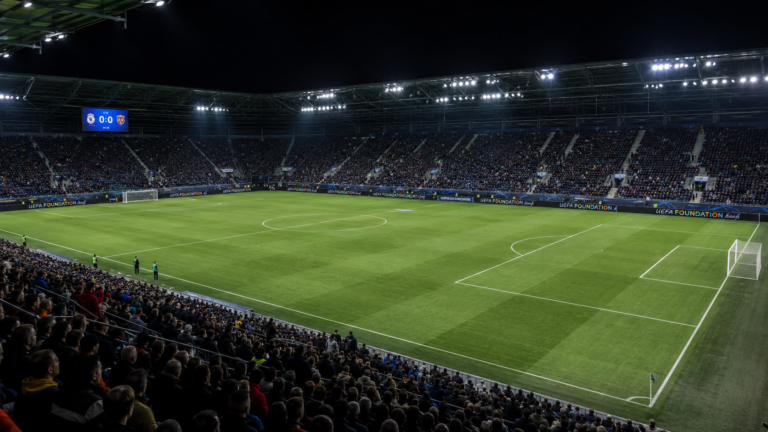
A high lumen output may look impressive on a product specification sheet, but it does not determine whether a sports lighting project will perform successfully.
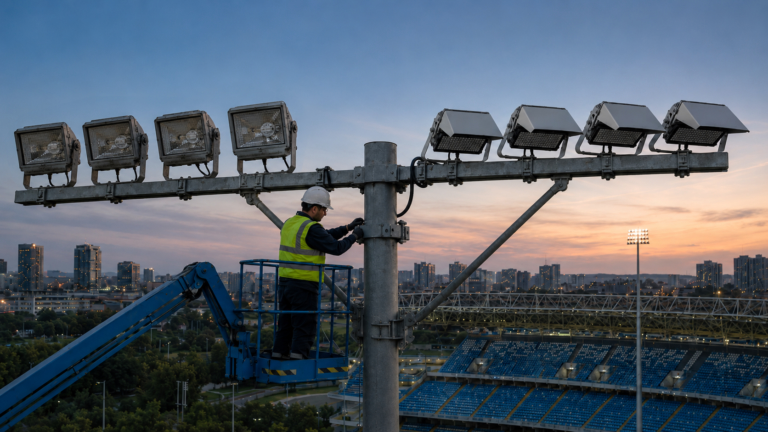
A lighter stadium floodlight does not automatically create a safer retrofit. Learn how weight, EPA, orientation and structural moment affect existing sports-lighting poles.

Learn how proper dimming curves, scene levels and transition times create smooth stadium lighting transitions and prevent visible stepping and complaints.
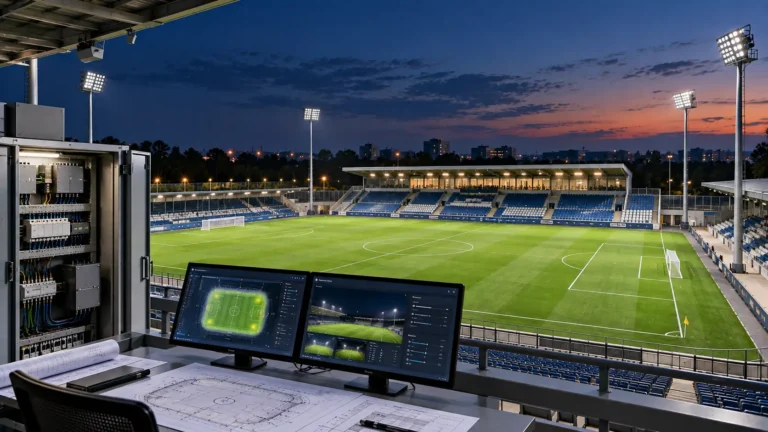
Learn how sports lighting integrates with modern venue energy and control systems for smarter operation, flexible scene control and greater efficiency.
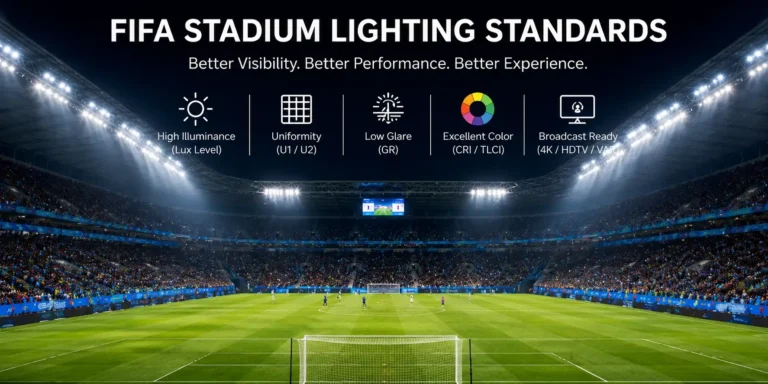
Modern football is faster. Sharper. More global than ever. That means stadium lighting must also evolve. Today, lighting is no longer just about brightness. It
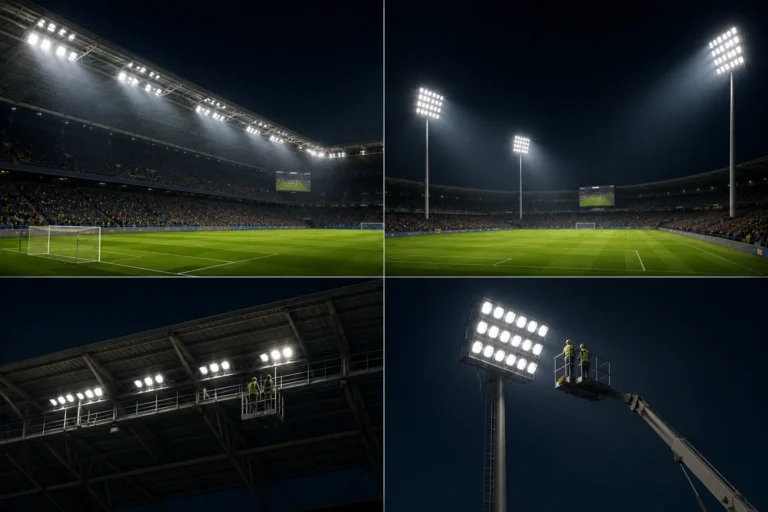
Compare roof-mounted vs pole-mounted stadium lighting systems. Learn how mounting choices affect glare control, aiming flexibility, maintenance access, and project costs.
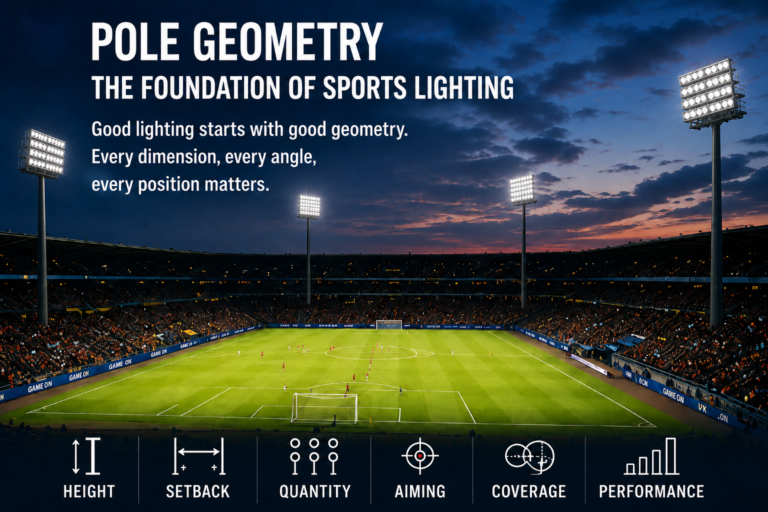
Hero Summary Ask most people what determines the performance of a sports lighting system, and the answer is usually straightforward: → Pole height. It seems logical.
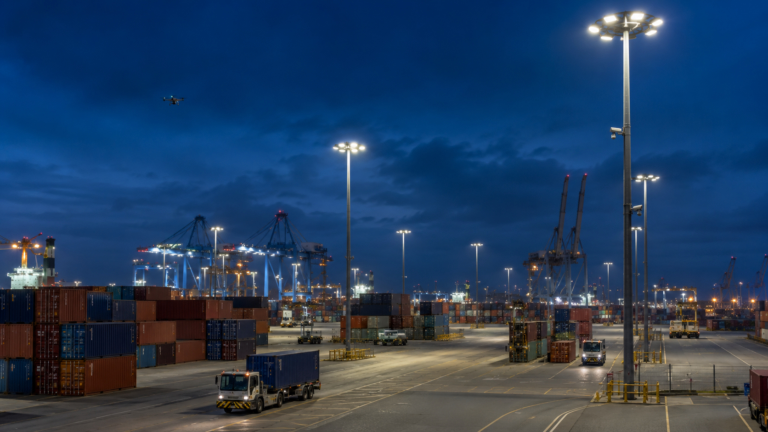
As industrial sites become more connected, data-driven and visually monitored, lighting is no longer only about basic visibility. For ports, airports, logistics yards, interchanges and