Energy savings are one of the most common reasons for replacing traditional stadium lighting with LED.
However, a credible retrofit return-on-investment calculation requires more than comparing the wattage of the old and new luminaires.
Sports facilities operate in different ways, and the real project cost may include structural, electrical, control and installation work.
A useful ROI model should reflect the complete operating and investment conditions.
Start with the Existing System
The baseline should include:
- Number of luminaires
- Luminaire wattage
- Ballast losses
- Circuit losses where relevant
- Annual operating hours
- Maintenance frequency
- Lamp replacement
- Ballast replacement
- Access equipment
- Emergency repairs
Traditional HID system power is often higher than the lamp rating because of ballast losses.
Using only the nominal lamp wattage may underestimate the existing energy consumption.
Separate Operating Modes
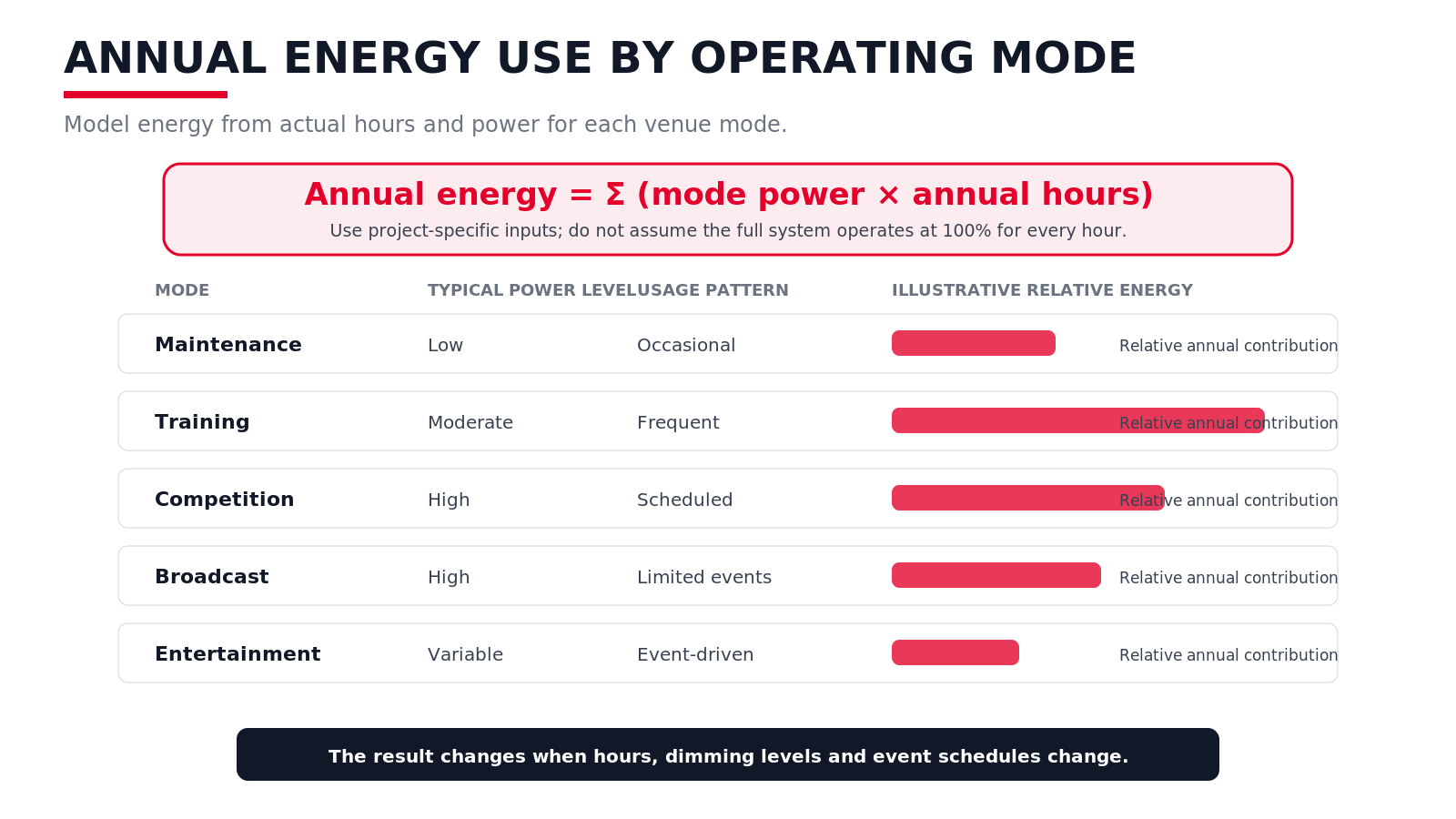
A sports facility may use different lighting levels for:
- Maintenance
- Casual use
- Training
- Competition
- Broadcast
- Entertainment
- Cleaning
- Security
The annual energy calculation should estimate the operating hours and power level for each mode.
| Annual energy use = Training power × training hours + Competition power × competition hours + Maintenance power × maintenance hours + Event power × event hours |
This method is more accurate than assuming the full system operates at 100% output during every hour of use.
Use Local Electricity Prices
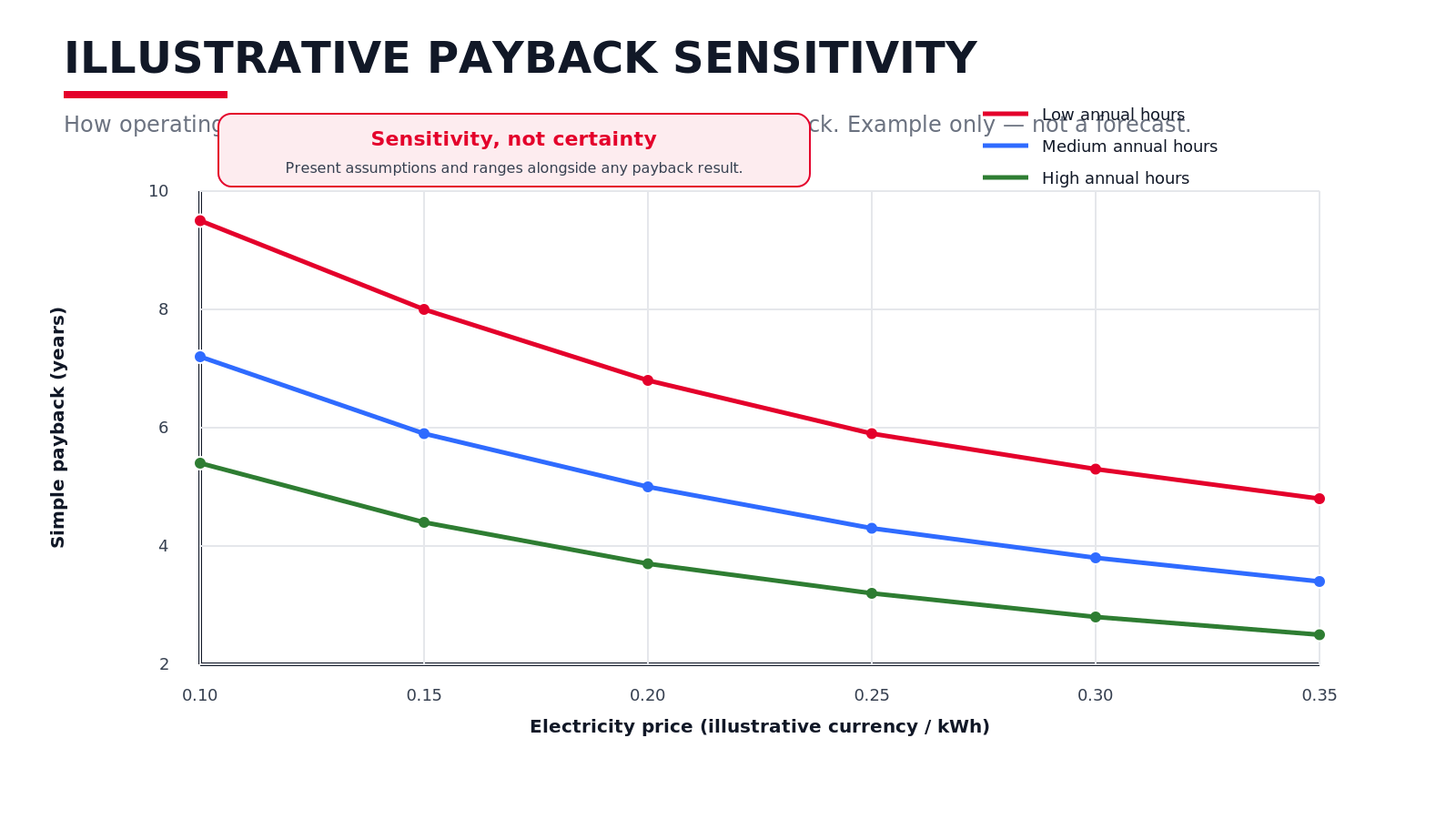
Electricity prices vary significantly between:
- Countries
- Utilities
- Contract types
- Seasons
- Peak and off-peak periods
- Public and private facilities
A European project should not use a single “European electricity price.”
Similarly, a US school district, private stadium and municipal sports complex may pay different rates within the same state.
The ROI model should allow the user to enter:
- Energy rate
- Demand charge
- Peak-period rate
- Expected annual escalation
- Applicable tax or surcharge
Because energy prices can change, the result should be presented as a range rather than a guaranteed saving.
Include Total Installed Cost
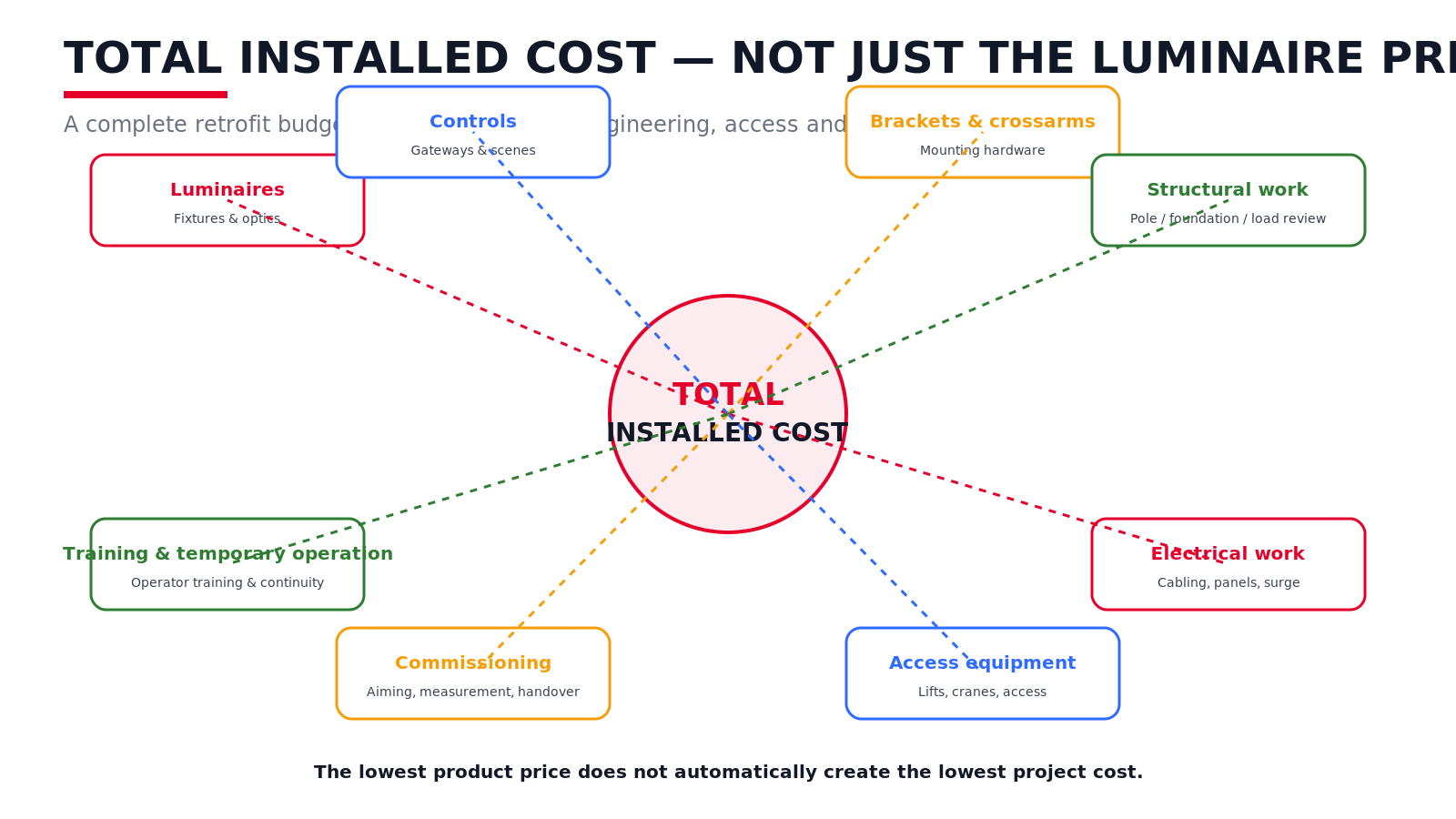
The product purchase price is only one part of the project.
Total installed cost may include:
- Luminaires
- Drivers
- Control equipment
- Brackets
- Crossarm modification
- Pole strengthening
- New cabling
- Distribution panels
- Surge protection
- Installation labor
- Cranes or lifts
- Aiming
- Measurement
- Commissioning
- Training
- Temporary lighting
A low-cost luminaire does not always produce the lowest total project cost.
A product that reduces structural work, installation time or future maintenance may create greater overall value.
Evaluate Existing Infrastructure Reuse
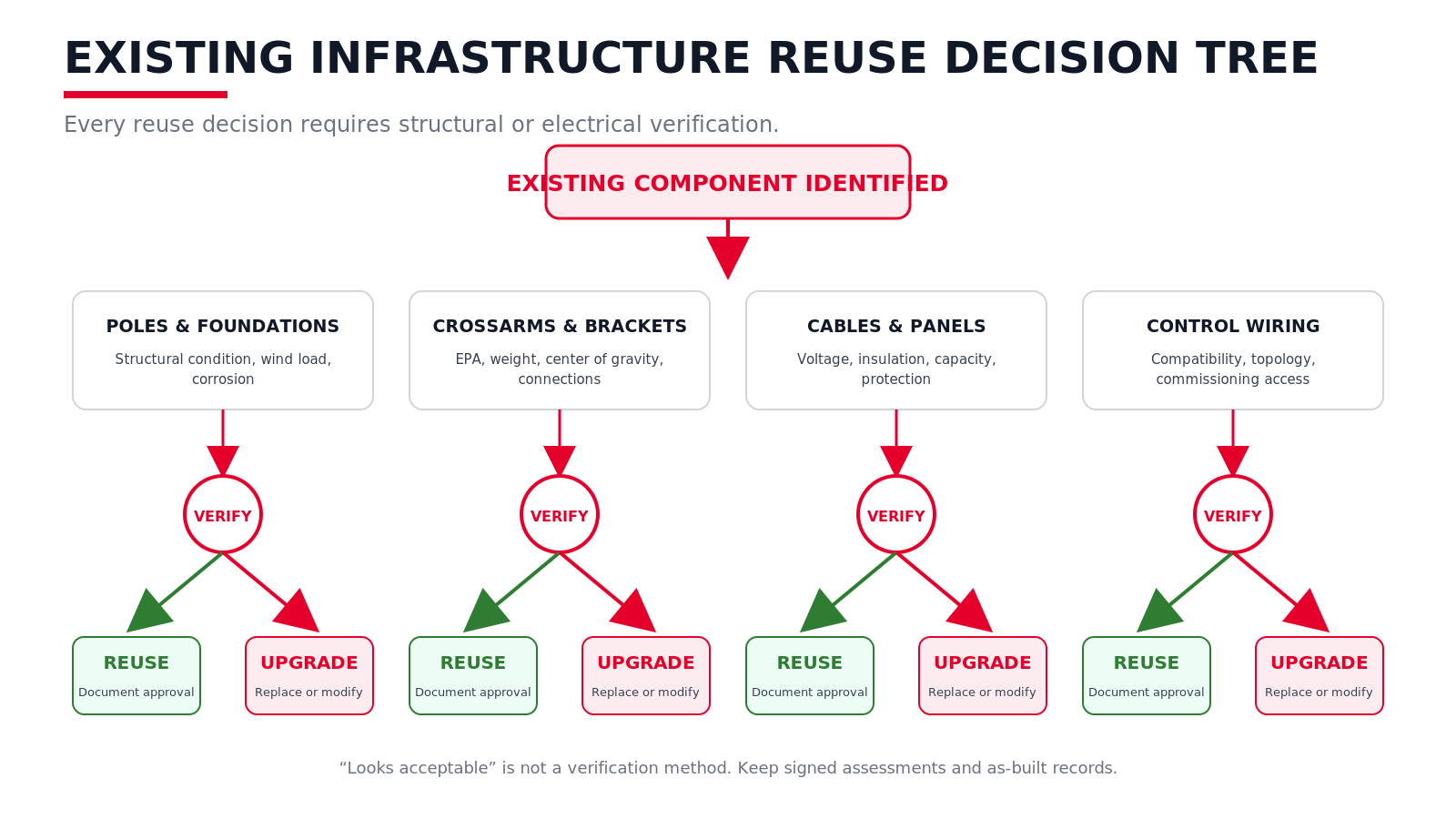
One of the most important retrofit decisions is whether the project can reuse:
- Poles
- Foundations
- Crossarms
- Cables
- Distribution panels
- Driver cabinets
- Control wiring
Reuse can significantly reduce investment, but only when the existing components are suitable.
The decision should be supported by structural and electrical assessment rather than assumption.
Add Maintenance and Downtime
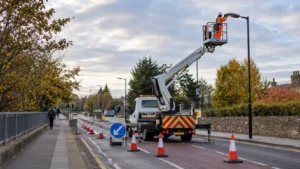
Sports lighting maintenance often requires:
- High-access equipment
- Specialist technicians
- Venue closure
- Safety coordination
- Replacement parts
- Re-aiming
The financial impact may include both direct maintenance cost and lost operating time.
Remote driver configurations, modular products and replaceable optical components may reduce maintenance complexity, but these benefits should be calculated based on the actual venue arrangement.
Consider Financing Sensitivity
A project with a five-year simple payback may appear attractive, but financing cost can affect the real result.
The model should compare:
- Upfront purchase
- Financed purchase
- ESCO model
- Phased retrofit
- Utility incentive
- Government subsidy
- Lease or service agreement
Higher interest rates may increase the value of phased investment or reduced initial scope.
Present More Than One Upgrade Level
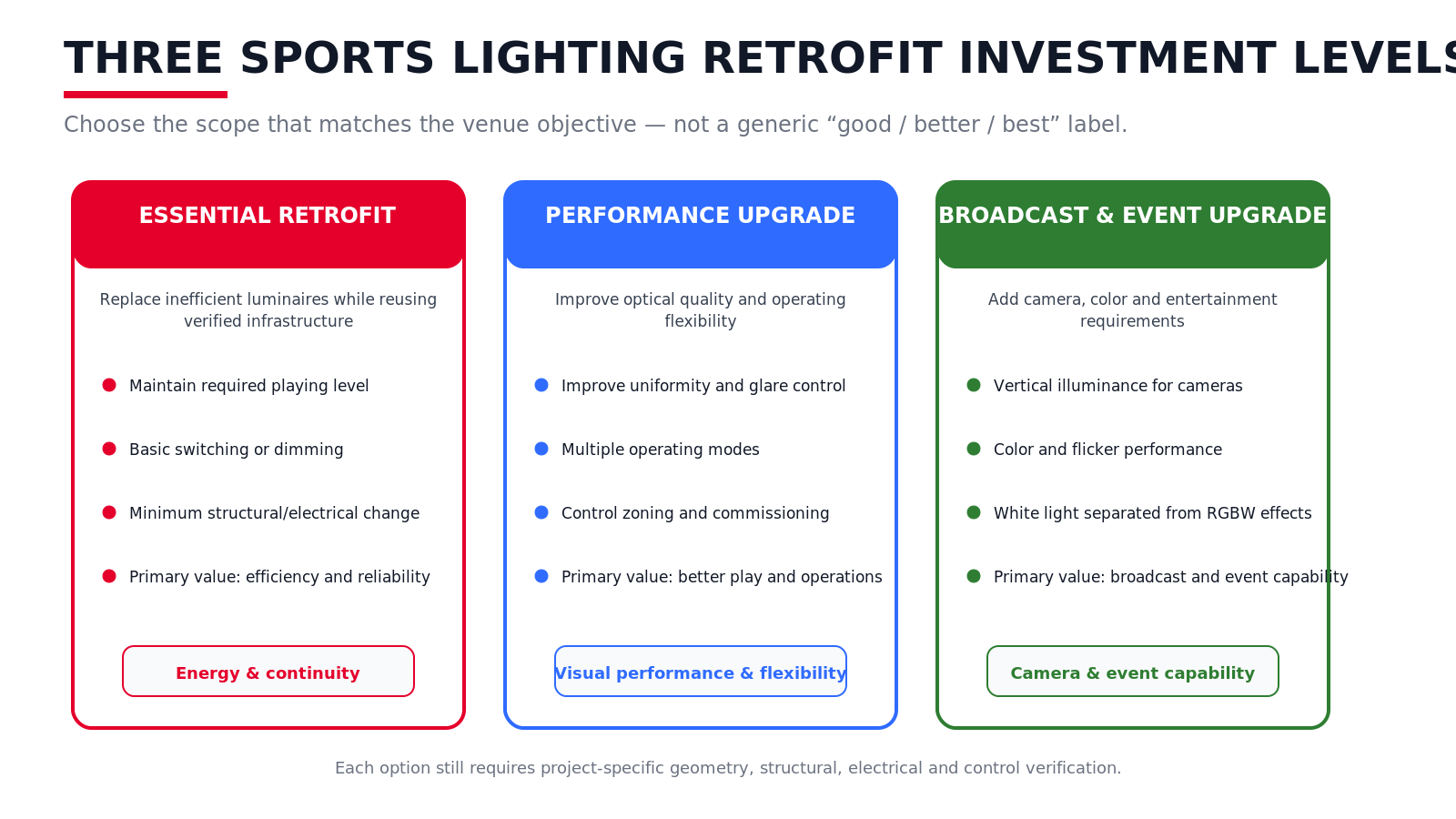
Essential Retrofit
- Replace inefficient luminaires
- Reuse suitable infrastructure
- Basic switching or dimming
- Maintain current competition level
Performance Upgrade
- Improve uniformity
- Improve glare and spill control
- Add multiple operating modes
- Upgrade controls
Broadcast and Event Upgrade
- Improve vertical illuminance
- Improve color and flicker performance
- Add entertainment lighting
- Add advanced scene control
This helps the owner understand which benefits come from energy replacement and which require additional investment.
ROI Should Support a Decision, Not Create a Promise
A professional ROI estimate should clearly state:
- Input assumptions
- Electricity price
- Operating hours
- Equipment scope
- Installation scope
- Maintenance assumptions
- Financing assumptions
- Exclusions
- Sensitivity range
The purpose is not to produce the shortest possible payback figure.
The purpose is to help the owner understand what creates value, what creates risk and which upgrade level is appropriate.
FAQ
No. Operating modes, local electricity rates, ballast losses, installation, controls, maintenance and infrastructure work should also be considered.
Yes, but they should be based on actual access, labor, replacement and downtime conditions rather than a generic percentage.
| ZC Lighting can support preliminary retrofit evaluation using existing system power, annual operating hours, pole information and target lighting requirements. |