Table of Contents
- Why Sports Lighting Retrofit Is More Important Than Ever
- Hidden Long-Term Costs of Outdated Traditional Lighting Systems
- LED Fixtures Are Only The First Step, Not The Complete Solution LED
- Smart Control Systems: Eliminate Unnecessary Full-Power Consumption
- Glare & Light Spill Control to Reduce Project Rework Risks
- Lighting Simulation: Predict Actual Lighting Effects Before Constructio
- Core Pre-Retrofit Inspection Items You Must Complete
How LED and Smart Control Reduce Long-Term Operating Costs
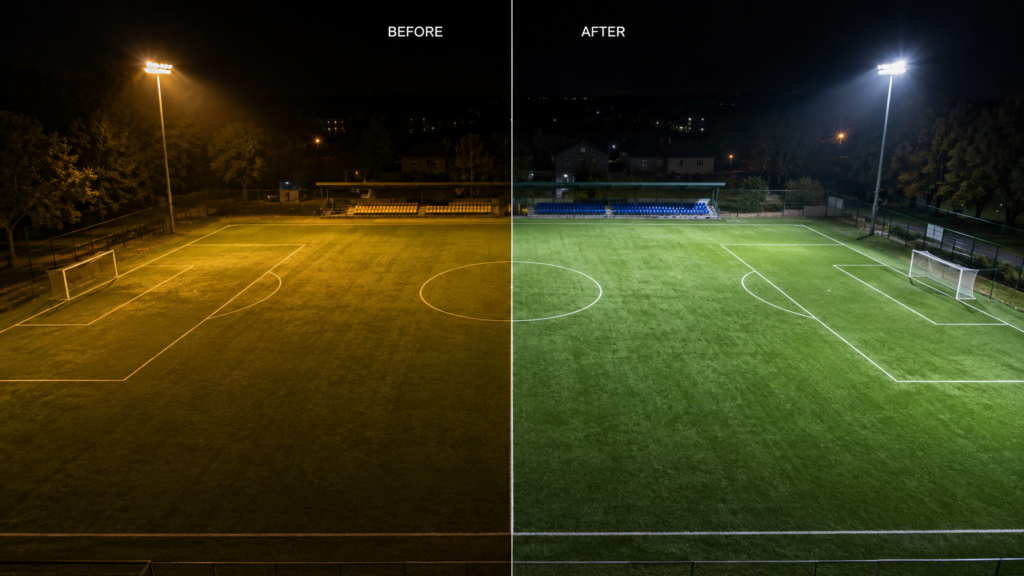
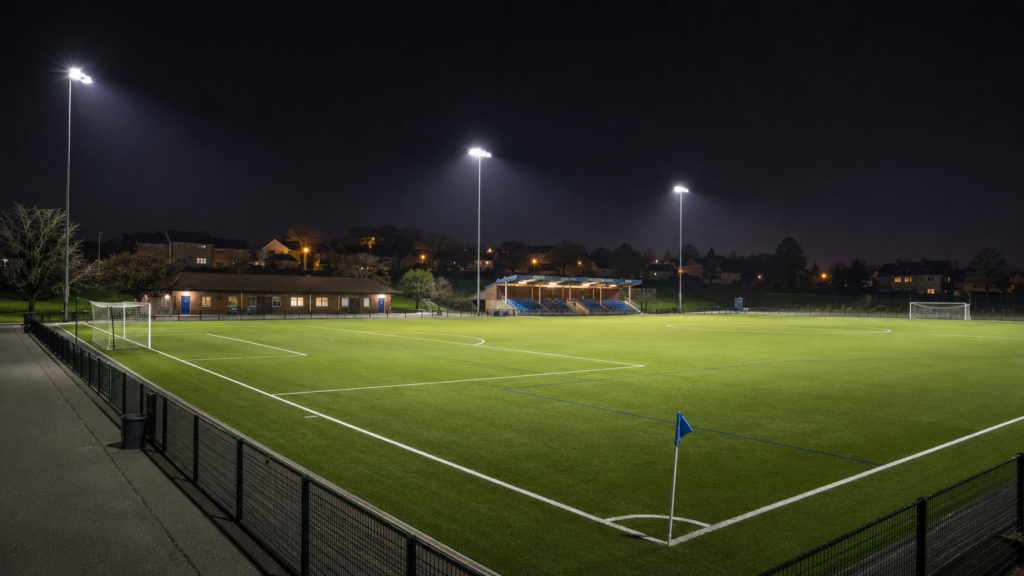
Many stadiums, school sports fields and community sports grounds still rely on outdated lighting systems, including traditional metal halide and HID floodlights. Even early-generation LED products fail to meet modern standards for energy efficiency, lighting quality, glare suppression and intelligent operation,For a long time, sports lighting retrofit was only regarded as an energy-saving project. But its value extends far beyond power savings today. A well-designed LED sports lighting upgrade can improve field visibility, cut manual maintenance work, support dimming and zone control, and slash long-term venue operating costs fundamentally,Retrofitting lighting for football pitches, athletics tracks, tennis courts, baseball fields, training grounds and community venues is not a simple lamp replacement. It builds a high-performance, low-cost and easy-to-manage new lighting system
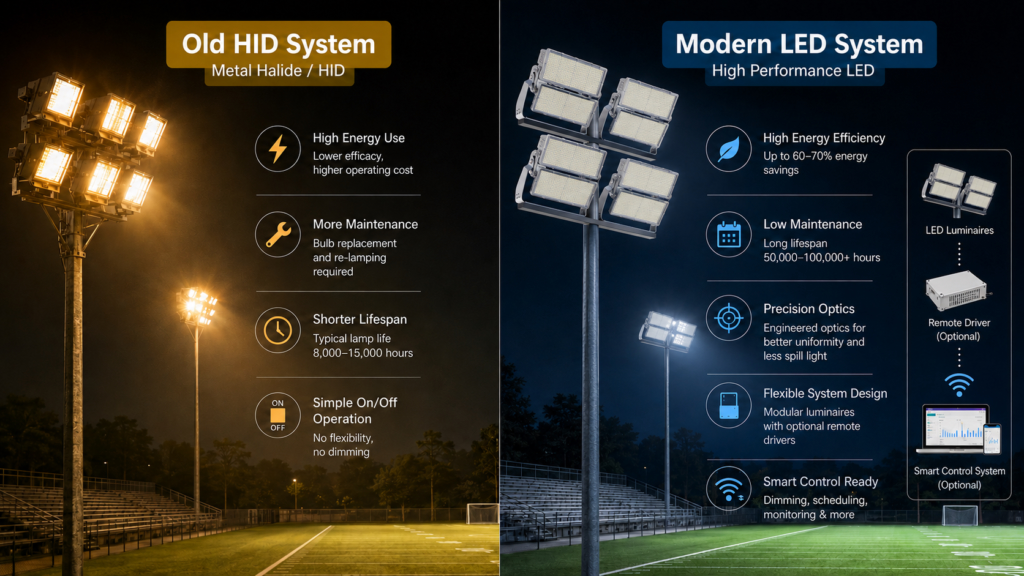
| Key Indicator | Traditional HID Lighting System | Modern LED Intelligent Lighting System | Benefits After Retrofit |
|---|---|---|---|
| Luminous efficacy per lamp | 80-100 lm/W | 150-180 lm/W | 80% higher luminous efficiency, drastically lower basic energy consumption |
| Service life | 8,000-15,000 hours | 50,000-100,000 hours | 6x longer lifespan, far fewer lamp replacements |
| Energy consumption ratio | 100% (baseline) | 30%-40% | 60%-70% total energy saving, electricity cost halved |
| Annual maintenance cost | High (frequent lamp change + aerial work) | Extremely low (maintenance-free for years) | Over 90% reduction in maintenance expenses |
| Dimming function | Not available (only on/off) | 0-100% stepless dimming | Adjust brightness on demand, eliminate wasted power |
| Warm-up & restart time | 5-15 minutes | Instant full brightness, no waiting | Adapt to temporary matches and sudden use scenarios |
Why Sports Lighting Retrofit Is More Important Than Ever
- Reduce overall energy consumption
- Cut long-term maintenance costs
- Improve field illuminance uniformity
- Control glare and off-site light spill
- Instant startup without warm-up waiting
- Support dimming and custom scene modes
- Meet high-standard lighting for live broadcast and spectators
- Simplify long-term venue operation management
Essentially, LED sports lighting retrofit is more than a product upgrade—it is a complete cost-reduction operation strategy for venues
Hidden Long-Term Costs of Outdated Traditional Lighting Systems
Most venue owners only focus on upfront lamp purchase prices, ignoring cumulative invisible costs of old HID systems over years
| Pain Point Category | Specific Performance | Long-Term Hidden Cost |
|---|---|---|
| Energy waste | Low luminous efficiency, no dimming, full power for all activities | Annual overspending on electricity, accounting for over 30% of venue operation costs |
| Heavy maintenance | Fast light decay, regular batch lamp replacement | Aerial lift rental, labor and spare parts; high single repair cost with repeated annual expenditure |
| Experience defects | Long warm-up and restart waiting time | Delayed matches and training plans, lower venue utilization efficiency |
| Light pollution disputes | Simple shielding design, severe spill light and glare | Complaints from nearby residents, rework and rectification, potential compliance penalties |
| Safety hazards | Uneven illuminance with dark zones | Higher risk of player sports injuries, venue liability risks |
The initial purchase cost of traditional HID systems only accounts for 10% of the full life-cycle cost. The remaining 90% consists of electricity fees, maintenance charges, rework and rectification costs—all of which can be eliminated via LED retrofit
LED Fixtures Are Only The First Step, Not The Complete Solution LED
Replacing HID lamps with LED can achieve basic energy savings and less maintenance, but lamp replacement alone cannot deliver ideal lighting performance. A full retrofit project must comprehensively consider optical design, field layout, pole structure, smart control strategy and actual venue usage frequency,For example: High-power LED fixtures with poor beam control still create severe glare and light spill; improper beam angles lead to dark zones on the field; overweight fixtures exceed original pole load capacity and require extra pole reinforcement, raising total project costs significantly
- Standard illuminance level required for the sport
- Height and layout of existing poles
- Whether original poles can bear new fixture weight and wind load
- Required beam angles for the field
- Glare risks for athletes and nearby residents
- Demands for dimming and multi-zone scene control
- Lighting standards for live sports broadcast
- Energy-saving solutions for low-load scenarios such as training and security
Therefore, lighting retrofit is a complete design engineering project, not simple lamp replacement
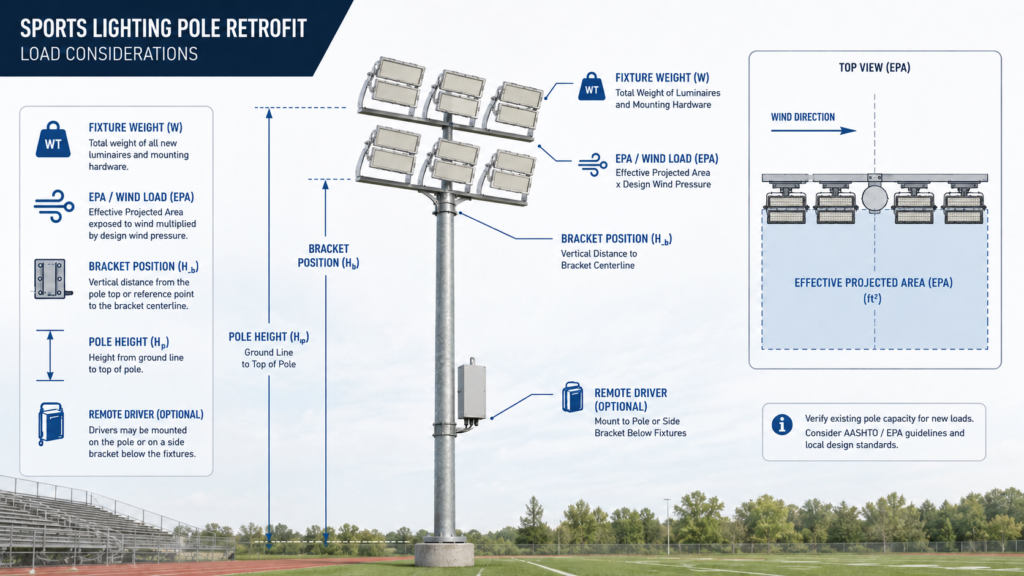
Key Points: Pole Load, Fixture Weight & EPA (Effective Projected Area)
- Height and aging condition of existing poles
- Weight comparison between old lamps and new LED fixtures
- Fixture EPA and local wind pressure standards
- Bracket compatibility, driver installation position
- Cable routing and fixture angle adjustment range
Long-Term Maintenance Cost Determines ROI (Return on Investment)
Smart Control Systems: Eliminate Unnecessary Full-Power Consumption
The core way to cut long-term operating costs is avoiding 100% full-power output under low-brightness demand scenarios. Sports venues cover diverse usage types with vastly different illuminance requirements: official matches, professional training, youth practice, field cleaning, night security, partial field use and community events. Uniform full brightness is unnecessary for all activities.With smart control systems, lighting switches between preset scene modes to deliver matched brightness.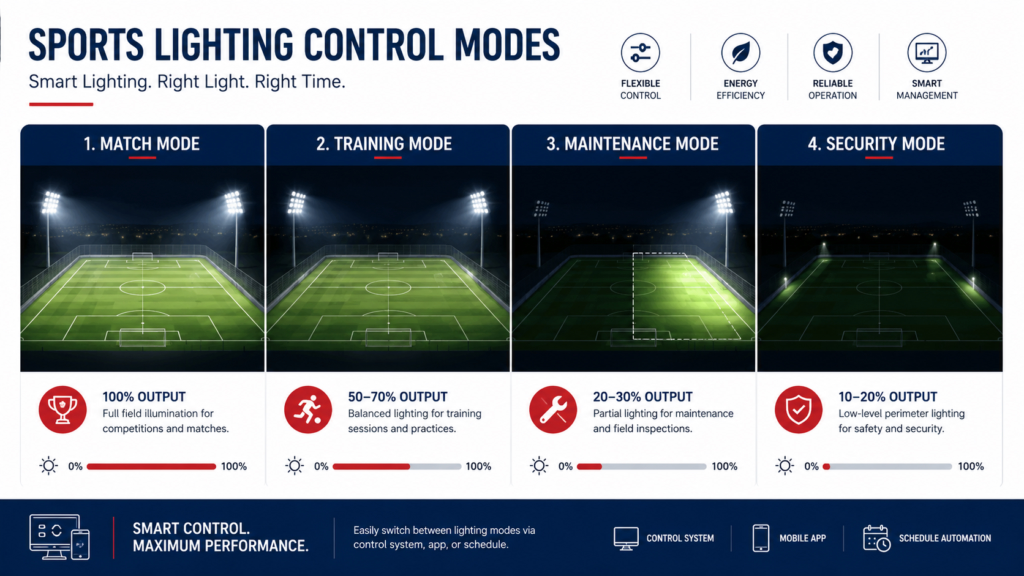 Mainstream control solutions include 0-10V dimming, DALI, DMX for RGBW event lighting, automatic scheduling, zone control and remote backend management, flexibly matched per project demands. Core logic: match suitable brightness to each activity and eliminate power waste
Additional Benefit: Smart Control Eases Community Light Pollution Conflicts
Glare & Light Spill Control to Reduce Project Rework Risks
Lighting Simulation: Predict Actual Lighting Effects Before Constructio
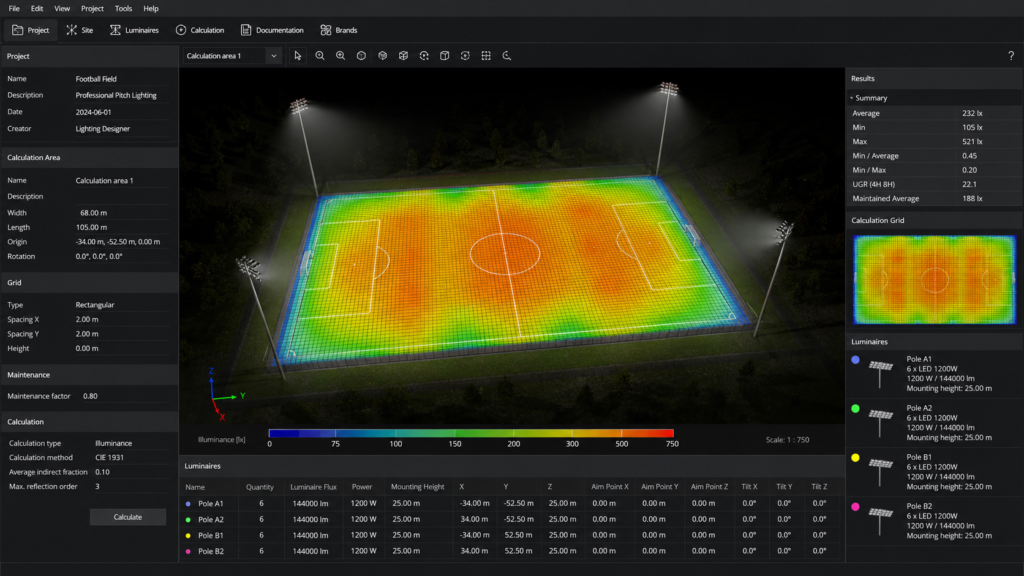
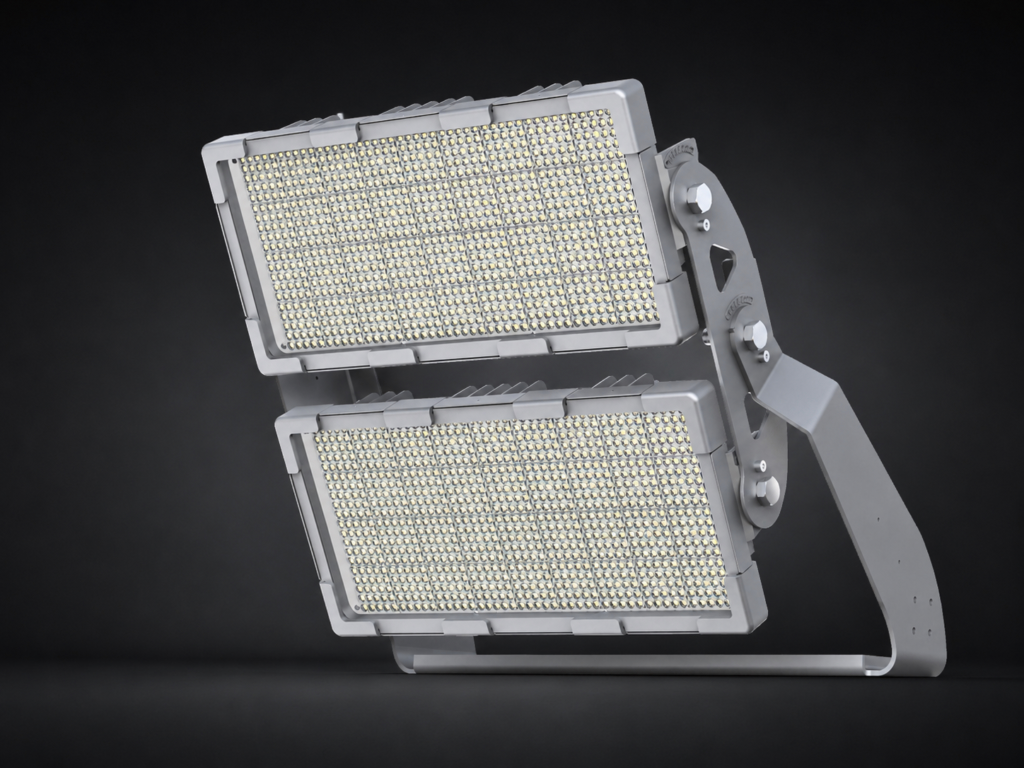
Core Pre-Retrofit Inspection Items You Must Complete
Venue owners and contractors need to check all items below before starting the project to avoid extra work and rework
| Inspection Category | Specific Inspection Items | Result (Yes/No/Pending Confirmation) | Remarks |
|---|---|---|---|
| Existing Lighting System | Original fixture model, wattage, quantity, pole height, daily operating hours | ||
| Required Illumination Standard | Sport type, competition level, local lighting standards, training & match differentiated requirements | ||
| Pole Structure Safety | Pole aging condition, load limit, fixture weight, wind load, bracket compatibility | ||
| Existing Lighting Defects | Field uniformity, glare, dark areas, players’ visual experience problems | ||
| Surrounding Environment | Distribution of nearby residential buildings, roads, parking lots, schools and sensitive areas | ||
| Intelligent Control Demand | Needs for multi-scene mode, dimming, timing, zoning, remote control | ||
| Maintenance Accessibility | Difficulty of high-altitude maintenance for drivers, brackets and fixtures, existing construction conditions | ||
| Design Verification | Whether lighting simulation with IES files is completed to confirm scheme feasibility |
C Lighting One-Stop Solution for Sports Lighting Retrofit ZC Lighting
- Professional fixture selection and beam angle recommendation
- Standard IES photometric files & professional lighting simulation design
- Custom low-glare optical accessories
- Compatibility with all dimming and smart control systems
- Lightweight retrofit-friendly fixtures suitable for original pole reuse
- Remote driver solutions for high-power projects to reduce pole load
- Modular flexible configurations to fit different site sizes and budgets
- One-on-one dedicated technical support for all projects
| Model | Core Advantages | Suitable Retrofit Scenarios |
|---|---|---|
| FL19 | High-power design, optimized weight, structural load and overall cost control | Large stadiums, professional football fields, high pole retrofit projects |
| FL26 | Modular assembly, multiple optional beam angles, compact packaging for transportation | Medium & small sports fields, school playgrounds, multi-pole combined retrofit |
| SP02 | Even wide-area light distribution, optimized visual comfort for athletes | Training bases, athletics tracks, multi-purpose composite sports grounds |
| FL20 | Low-glare cut-off optical design, excellent spill light suppression effect | Community fields and school sports grounds adjacent to residential areas |
| PL08 | Precise light control, flexible beam angles, strong installation adaptability | Tennis courts, basketball courts, small special ball venues |
The final fixture selection should be determined comprehensively based on field size, pole layout, illumination standard, surrounding environment and project budget