Pole Height Trade-Offs (18m/25m/35m) — How Height Changes Aiming, Glare, and Spill Risk
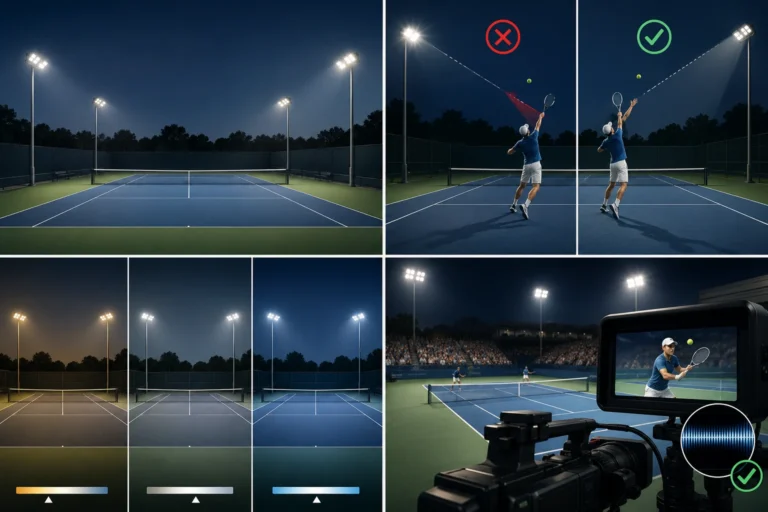
How Height Changes Aiming, Glare, and Spill Risk Pole height is not ‘higher is better’. It changes aiming angles, spill distance, and maintenance access cost.

How Height Changes Aiming, Glare, and Spill Risk Pole height is not ‘higher is better’. It changes aiming angles, spill distance, and maintenance access cost.

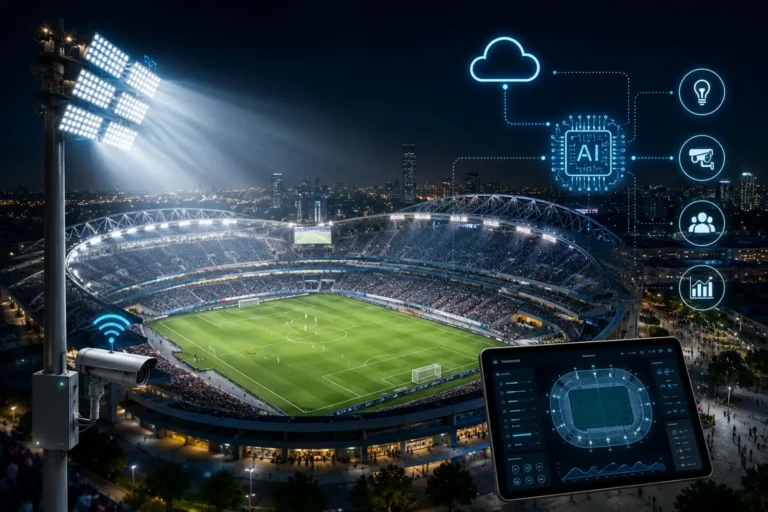
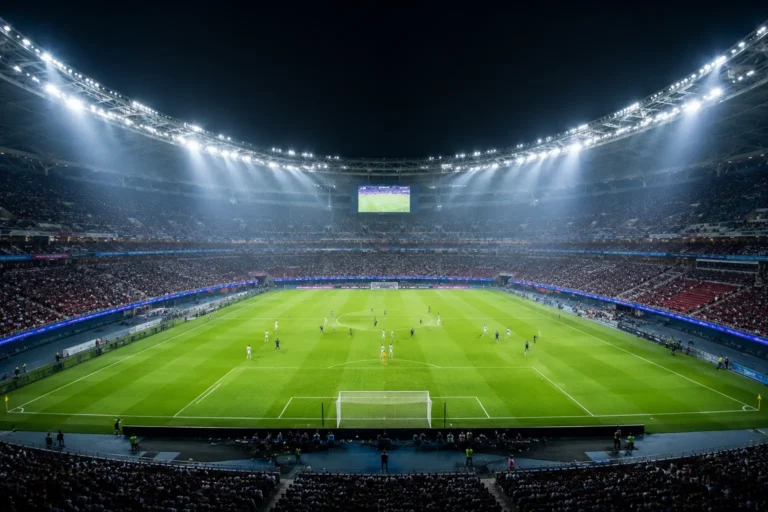
Modern World Cup stadiums are evolving far beyond traditional sports venues. Today’s football stadiums must support ultra-HD broadcasting, immersive fan experiences, smart energy systems, and

How to Balance Flexibility and Simplicity Good zoning makes stadium lighting easy to operate and easier to sign off. Define zones that match use cases

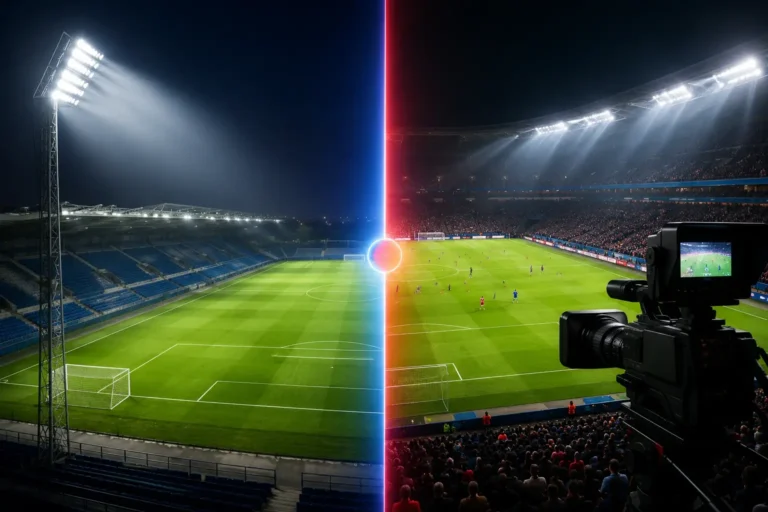
Modern football broadcasting is unforgiving, while a stadium may look bright to spectators, it can still appear flat, shadowed, or inconsistent on television. Yet on

A Practical Decision Framework (Structure, Glare, Maintenance) Most control complaints are not about lux—they’re about how lighting changes. Specify curve and transition behavior, then verify

Modern football is faster. Sharper. More global than ever. That means stadium lighting must also evolve. Today, lighting is no longer just about brightness. It

A Practical Decision Framework (Structure, Glare, Maintenance) Most handover disputes are evidence disputes. This guide defines a practical sign-off pack that links acceptance criteria →

A Practical Decision Framework (Structure, Glare, Maintenance) Mounting choice affects everything: structure, aiming, spill control, and long-term maintenance cost. This guide gives a fair comparison

Better Aiming, Lower Spill, Maximum Visibility Most glare and spill problems are aiming problems. Define a max tilt policy, choose optics to support it, and

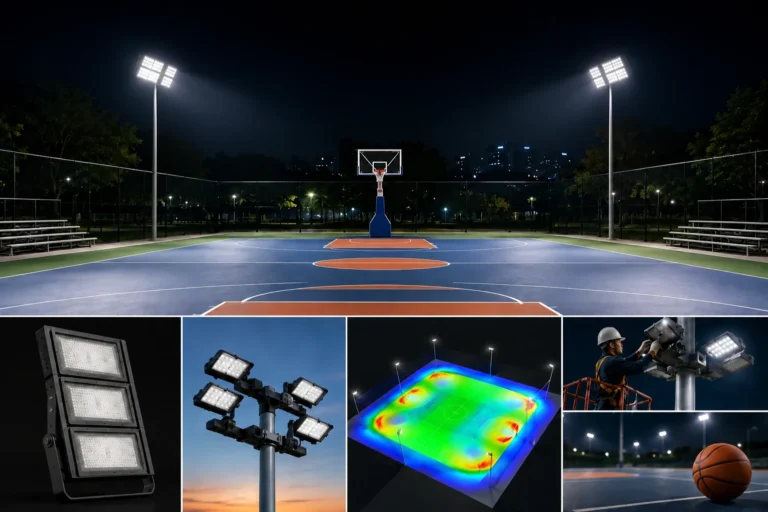
Poles for Stadium Lighting: How to Choose a Layout Without Over-Engineering. Pole layout is a performance decision, not just a budget line. This guide compares

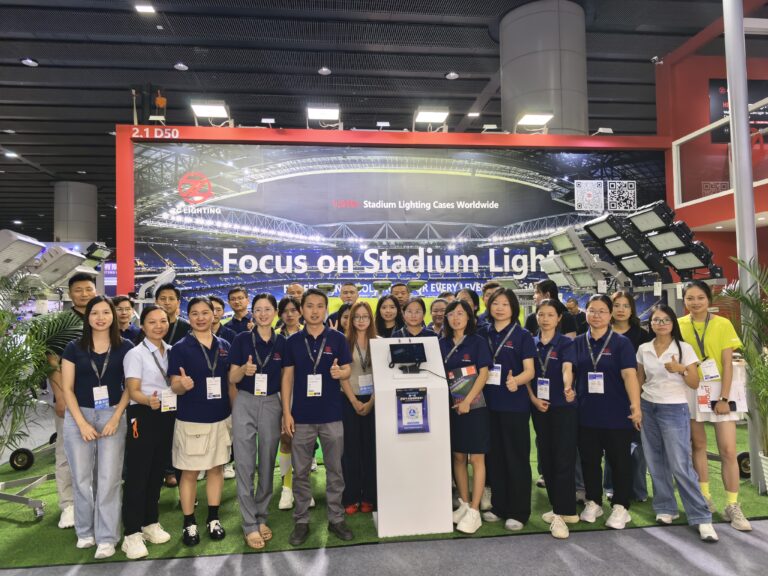
Post-Show News | Frankfurt 2026 Light + Building 2026 Has Ended. The Conversations Are Moving Forward. Our week in Frankfurt has come to a close,

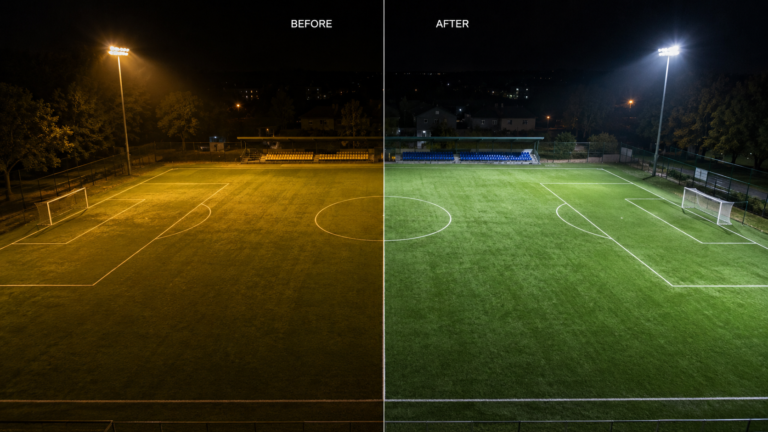
Color specs can waste budget or create patchiness when written badly. Use a practical method: define the use case, select one baseline CCT, set a

Coastal failures are usually hardware failures. This guide shows how to specify a corrosion delivery pack and how to verify execution with as-built evidence and

Stop losing time in ‘aim again’ loops. Use a structured aiming table (tilt/azimuth per fixture), record as-built angles, and verify with a repeatable sign-off workflow.

Surge events are one of the most common real-world causes of driver failures-especially on tall poles in open terrain. This guide turns ‘SPD included’ into

Stadium lighting near residential areas often fails not on lux-but on spill, complaints, and approvals. This guide turns spill control into measurable contract language and

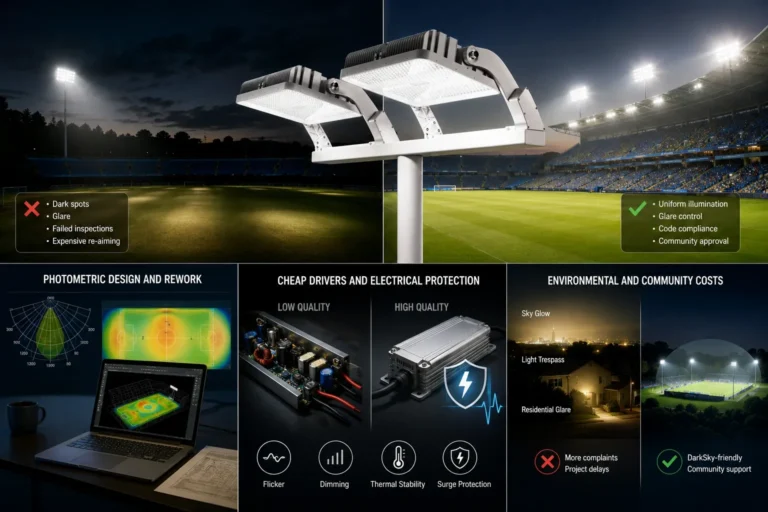
Optics selection is where stadium lighting projects are won or lost. The right distribution improves uniformity and cuts glare without increasing power; the wrong choice

Many sports lighting disputes are not about day-one brightness-they are about what happens after months of operation. MF is the simplest way to align targets

Many tenders say “flicker-free” or “no banding,” but those phrases are not enforceable unless you define measurable metrics and a test plan. This guide shows

Sport-by-sport target setting chain-avoid over-engineering by locking tier and acceptance rules. Lux targets vary by level of play and standard-but the decision logic is repeatable.
For the fastest pricing, include model, quantity, application, and installation height.