
The useful question is not “Do we want low glare?” but “How high is glare on this project’s risk list?”
Most buyers would prefer less glare. The engineering decision is different: how much design effort, optical control, shielding, pole geometry optimization and verification should be allocated to glare compared with other project goals?
This article does not repeat the basics of glare or the general low-glare design principles already covered in ZC Lighting’s low-glare sports lighting guide. Instead, it classifies projects by observer exposure, boundary sensitivity, venue use and approval consequence.
A qualitative priority matrix for early project screening
| 프로젝트 유형 | Typical glare priority | Main reason | Early action |
|---|---|---|---|
| Isolated training field with generous setbacks | 보통 | Fewer off-site receptors, but players still view pole groups during play. | Optimize optics and aiming; verify player sightlines. |
| Community football field beside homes | 높음 | Residents may see bright sources for long periods; spill and glare combine. | Map windows and boundaries before design freeze. |
| Padel / tennis court in a dense club or residential setting | 높음 | Lower poles and close spectator / neighbor positions can increase source visibility. | Prioritize controlled optics, pole placement and shielding strategy. |
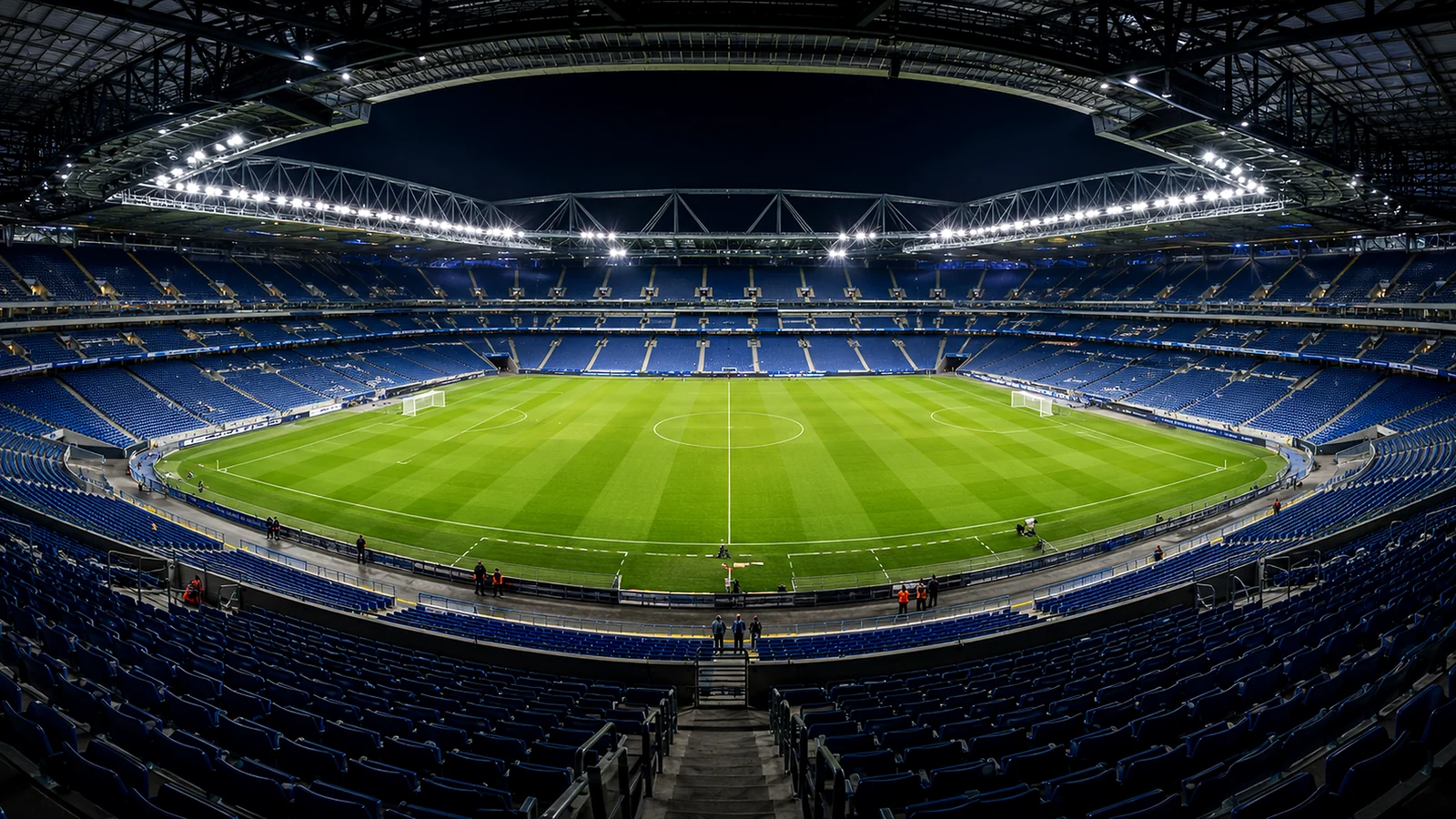
| Professional / broadcast stadium | 높음 | Player, spectator and camera views all matter, and the venue has many operating scenarios. | Coordinate glare control with vertical illuminance and camera requirements. |
| School multi-use field | Medium–High | Frequent evening use, mixed ages, nearby roads or residences can raise sensitivity. | Identify users and neighbors; define curfew / reduced modes if needed. |
| Large remote sports complex | 중간 | Off-site receptors may be limited, but internal views and skyglow still matter. | Do not over-light; control high-angle output and operating hours. |
These are screening categories, not universal compliance levels. Applicable limits and methods depend on the project location, authority, sport, environmental zone and tender requirements.
Start by listing who can see the light source—not by selecting a “low-glare” SKU
Players & officials
Which movements require them to look toward critical pole groups or high-angle sources?
관중들
Where are seating, circulation and standing zones relative to luminous surfaces?
Neighbors & roads
Which windows, property lines and road approaches face the installation?
These observers become more or less critical depending on the site. A simple project screen is often more useful than starting with a product label:
Four conditions that move glare higher on the project priority list
Short setback or lower mounting height
Close geometry can increase direct visibility of emitting surfaces and reduce the angular separation between observers and luminaires.
Frequent evening operation
Long operating hours increase exposure and the chance of complaints, especially near residential or environmentally sensitive areas.
Multiple critical viewing directions
Sports such as football, tennis and padel can place players in repeated sightlines toward different pole groups.
High consequence of approval failure
Where planning approval, community acceptance or televised events are at stake, glare and obtrusive light deserve earlier definition and stronger evidence.
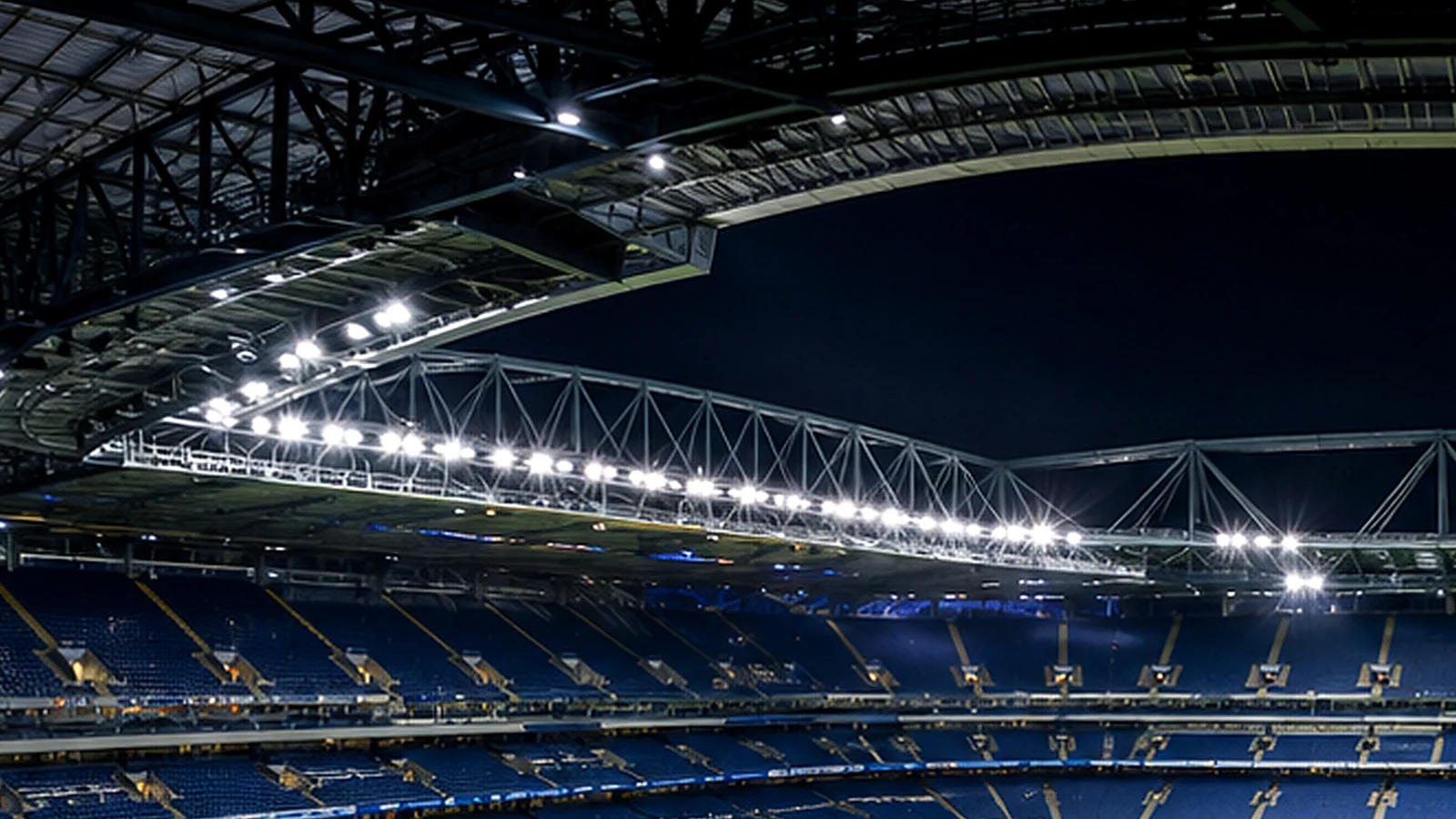
CIE 150 and current ILP guidance both treat obtrusive light as something to address in design, while DarkSky’s sports-lighting program emphasizes high-angle glare, spill and skyglow. FIFA stadium guidance likewise identifies glare, spill and skyglow as unwanted effects that need control in stadium systems.
Replace “low-glare fixture required” with a project requirement that can be designed and checked
A tender phrase such as “use low-glare LED floodlights” does not define the observer, calculation method, spill condition, operating scene or acceptance point. A stronger project brief describes the outcome.
Product-label specification
“Provide low-glare sports lights with visors.”
Project-outcome specification
Identify critical observer positions, required glare / obtrusive-light criteria, boundary points, operating modes and the calculation / verification basis.
The second approach lets the designer compare optics, pole geometry, aiming and shielding together rather than chasing one product label.
Different projects may need different optical-control approaches
Product selection should follow the project classification. Depending on the geometry and application, relevant ZC pages may include:
Do not infer project compliance from a product name or marketing label. Confirm current photometric files, configuration, accessories and applicable project requirements for the selected model.
자주 묻는 질문
Do small community fields need more glare control than professional stadiums?
Not necessarily more in absolute terms, but they can have stronger neighbor sensitivity because poles, homes and roads are much closer together.
Is low glare mainly a residential issue?
No. Players, officials, spectators, cameras and road users can all be affected. Residential proximity simply adds another high-priority receptor.
Can a high-lumen fixture still be used on a low-glare project?
Fixture output alone does not determine glare. The photometric distribution, source visibility, aiming, pole geometry and shielding strategy must be evaluated together.
Should every project use the strictest possible glare target?
No. Requirements should be appropriate to the sport, venue class, surroundings, authority and operating context. Over-constraining one metric can create unnecessary cost or compromise other performance goals.
Authoritative sources and related guidance
- CIE 150:2017 — Guide on the Limitation of the Effects of Obtrusive Light from Outdoor Lighting Installations, 2nd Edition
- Institution of Lighting Professionals — current guidance resources, including GN01/26 on the avoidance of obtrusive light
- DarkSky — Outdoor Sports Lighting guidelines
- FIFA Stadium Guidelines — Technical systems and services / floodlighting
Need a project-specific lighting review?
Send ZC Lighting the venue type, field dimensions, pole height and locations, target lighting criteria, nearby sensitive areas and any existing design files. The technical team can review suitable product configurations and photometric options for the project.
프로젝트 지원 요청View Product RangeFinal project requirements, local approvals and structural decisions remain subject to the responsible project parties and applicable regulations.