
In This Article
- Quick Answer: What Makes a Street Light Smart?
- Understand the Five System Layers
- NEMA and Zhaga Interfaces: What Is the Difference?
- DALI, DALI-2 and D4i in Outdoor Lighting
- Plan Adaptive Roadway Lighting Around Operating Conditions
- Choose Communications for Coverage and Operations
- Define Data, Cybersecurity and Platform Requirements
- Connect Smart Functions to Maintenance Workflows
- Build the Smart-Lighting Business Case
- ZC Lighting’s Role in a Smart Street Lighting Project
- Smart Street Lighting Procurement Checklist
- Test a Night When the Network Is Unavailable
- Replace One Node Before Approving the Rollout
- Buy the Functions Your Team Will Use
- 참고 문헌 및 추가 자료
- 자주 묻는 질문
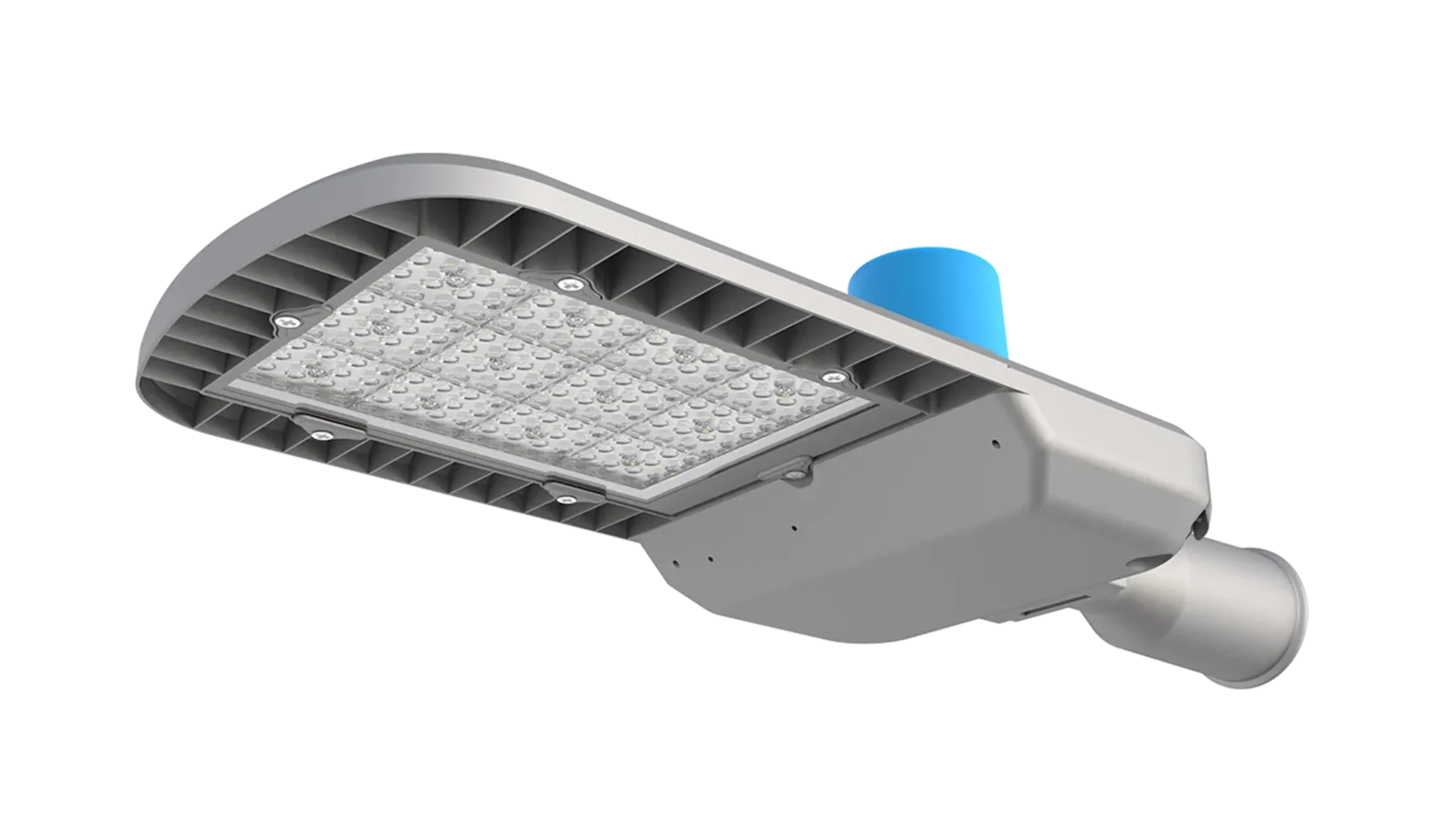
A city can buy control-ready street lights and still be unable to dim them from its chosen platform. The socket fits, but the driver, node or software does not support the requested function. Avoid that mismatch by specifying what the operator needs to do: change a schedule, identify an outage, read energy data or replace a failed node. Each task must work across the complete system, from the driver inside the luminaire to the person receiving the alarm.
Quick Answer: What Makes a Street Light Smart?
A street light becomes connected when it can exchange status or commands with a control system. Typical functions include scheduled dimming, adaptive output, energy reporting, failure alerts, remote switching, asset mapping and control of groups or individual luminaires. Sensors may add traffic, pedestrian or environmental inputs, but every added function requires a defined data path and operating purpose.
1. Understand the Five System Layers
Luminaire and driver
Produces and regulates light, accepts dimming commands and may report operating data.
Physical interface
Connects the luminaire to a photocell, sensor or communication node.
Node and sensors
Receives commands, switches or dims the driver and collects selected data.
Communications
Moves information through cellular, RF mesh, LPWAN or another approved network.
Management platform
Provides commissioning, maps, scenes, alarms, reports, user roles and integrations.
A weakness in any layer can limit the whole project. A luminaire may have an external socket but a non-compatible driver. A node may support remote switching but not energy measurement. A platform may collect data yet lack an export interface required by the city. Buyers should therefore evaluate the complete data and control chain.
2. NEMA and Zhaga Interfaces: What Is the Difference?
NEMA-style locking receptacles are widely used for outdoor photocells and control nodes, especially in markets that follow ANSI roadway practices. Different pin configurations can support mains supply and dimming or data connections. The exact receptacle and node configuration must be matched.
Zhaga Book 18 defines a compact interface between outdoor luminaires and sensing or communication modules. The current Zhaga description covers mechanical fit, electrical pins, power and communication aspects. Zhaga also makes an important qualification: plug-and-play interoperability is guaranteed only when both the luminaire side and the node side carry the applicable Zhaga-D4i certification.
| Question | NEMA direction | Zhaga-D4i direction | Buyer check |
|---|---|---|---|
| Physical format | Larger twist-lock outdoor receptacle ecosystem. | Compact standardized Book 18 interface. | Space, orientation, sealing and node availability. |
| Node power | Architecture may expose mains supply depending on configuration. | Low-voltage auxiliary power is part of the ecosystem. | Driver, receptacle and node electrical compatibility. |
| Interoperability | Depends on the selected receptacle, node and control method. | Certification of both sides supports the stated interoperability promise. | Request certificates for the exact supplied components. |
| Market fit | Common in several established roadway-control markets. | Strong option for compact, serviceable and upgradeable smart luminaires. | Local utility preference and integrator ecosystem. |
The best choice is not universal. Use the interface required by the destination market, city standard, control supplier and long-term node strategy. Some projects may also require a hybrid architecture, but that increases configuration management and should be documented carefully.
3. DALI, DALI-2 and D4i in Outdoor Lighting
DALI is a digital lighting-control protocol used between control devices and drivers. DALI-2 expands standardized device behavior and certification within the DALI ecosystem. D4i adds requirements intended for intelligent luminaires, including standardized data and auxiliary power capabilities that support intra-luminaire control devices.
These terms should be used precisely. A product described as DALI dimmable is not automatically a Zhaga-D4i certified luminaire, and a Zhaga socket does not by itself prove that every driver data function is available. Ask for the exact driver model, DALI Alliance certification status where specified, wiring diagram and a function matrix showing which commands and data points the control node can use.
For projects that only need scheduled dimming, a simpler control method may be sufficient. Digital intelligence has value when the owner will actually use commissioning, monitoring, diagnostics or future node replacement.
4. Plan Adaptive Roadway Lighting Around Operating Conditions
The FHWA Lighting Handbook describes adaptive lighting as reducing roadway lighting during periods of lower vehicle and pedestrian activity. It also notes that LED dimming and control are major advantages compared with older sources. Adaptive operation can reduce energy use and limit glare, spill and skyglow, but lower levels must be selected through an approved method.
Useful inputs can include time schedules, traffic volume, pedestrian presence, weather, incidents or special events. Critical visibility areas require caution. A hospital approach, complex curve, crossing, interchange conflict zone or continuously active district may not be suitable for aggressive reduction. The policy should define minimum levels, transition rates, sensor failure behavior and manual override.
Start with a small number of understandable scenes. For example, the operator may use normal evening, late-night reduced, emergency full-output and maintenance modes. Complex real-time logic should be added only when the city can validate the data and maintain the system.
5. Choose Communications for Coverage and Operations
Street lighting networks may use RF mesh, cellular connections, LoRaWAN, NB-IoT or other communications. Selection depends on geography, node density, local spectrum, latency, coverage, data volume, ownership and integration. A dense urban grid and a long rural corridor may need different architectures.
Ask how nodes are commissioned, how identity is secured, what happens when communications fail and how firmware is updated. Local fallback schedules can keep lights operating when the network is unavailable. The city should know which party owns SIM contracts, gateways, cloud accounts and encryption keys, and how the system will be transferred if the service provider changes.
6. Define Data, Cybersecurity and Platform Requirements
Remote monitoring is valuable only when alarms lead to a maintenance action. Define which events matter: lamp or driver failure, power loss, daytime burning, communication loss, abnormal energy use or cabinet faults. Set priorities and escalation rules so operators are not overwhelmed by low-value notifications.
Procurement documents should address user roles, audit logs, authentication, encryption, vulnerability handling, backup, retention, data export and application programming interfaces. Cybersecurity requirements should follow the city’s information-technology policy and applicable regulation. Avoid relying on a supplier’s generic “secure platform” statement without architecture and support evidence.
Data ownership and portability are commercial issues as well as technical ones. The contract should state who owns asset data, whether the city can export it in a usable format, how long records remain available and what happens at contract termination.
7. Connect Smart Functions to Maintenance Workflows
A map-based asset register can show luminaire model, installation date, pole ID, driver, node, optic and warranty status. Automatic fault reports can reduce manual night patrols and help crews carry the correct spare parts. Energy data can identify abnormal operation, while remote commands can support troubleshooting before a truck is dispatched.
However, the asset database must be accurate. Commissioning should associate each physical pole with the correct digital record and verify control response. Replacement procedures must explain how a new driver or node is assigned, configured and tested. Without these processes, the network can become harder to maintain despite having more technology.
8. Build the Smart-Lighting Business Case
Separate the value of LED conversion from the additional value of controls. The base case compares efficient LED operation with the old lighting system. The control case adds scheduled or adaptive reductions, avoided patrols, faster fault response and any platform-enabled efficiencies. Against those benefits, include nodes, receptacles, gateways, commissioning, software, communications, cybersecurity work, training and replacement costs.
FHWA guidance points out that adaptive lighting needs a dimmable control-ready luminaire, a control system and metering or a rate arrangement that recognizes the reduction. A city that pays a flat unmetered tariff may achieve technical energy reduction without receiving the expected financial benefit. Confirm the utility mechanism before building the ROI case.
9. ZC Lighting’s Role in a Smart Street Lighting Project
For a ZC Lighting quotation, separate the luminaire specification from the network and software specification. Ask ZC to identify the optic, driver, receptacle, wiring and photometric file for the proposed fixture. Ask the system integrator to name the compatible node, firmware and management platform. Put both answers in the same approval document so there is a clear owner for each interface.
The current SL05 product direction explicitly emphasizes NEMA and Zhaga control interfaces, roadway optics and maintenance access, making it the clearest starting point for municipal smart-ready specifications. SL03 and SL04 may also support control-oriented configurations, but the exact socket, driver, protocol and certificate package should be confirmed for the ordered version. System integrators can then match the luminaire configuration to approved nodes, communications and management software.
10. Smart Street Lighting Procurement Checklist
Define required functions, road classes, dimming policy, interface standard, driver protocol, data points, communications, platform hosting, cybersecurity, APIs, ownership, service levels and warranty responsibilities. Require a component compatibility matrix that names the luminaire, driver, receptacle, node, firmware and platform versions.
Use a staged rollout: laboratory compatibility check, small field pilot, representative corridor, then wider deployment. Test commissioning time, communications coverage, dimming, alarms, data accuracy, outage fallback, firmware update and replacement workflow. Document the accepted configuration so later batches and spare parts remain compatible.
11. Test a Night When the Network Is Unavailable
A successful command from a laptop proves only one operating condition. During the pilot, ask the integrator to demonstrate loss of the upstream connection under an agreed test procedure. Record whether each luminaire follows a stored schedule, holds its previous setting or enters a configured fallback state. The required behavior should be agreed with the lighting authority; full output is not automatically the right response for every location.
Test recovery as well. When communications return, check that the clock, schedule and reported status are correct. A dashboard can show a recently received message without proving that the intended scene is active. Compare the reported state with a field observation and, where necessary, an input-power measurement. Include a power interruption in the approved commissioning procedure because restart behavior can differ from a simple communications outage.
Turn alarms into useful work orders
Several neighboring nodes losing contact at the same time may indicate a shared communications or supply issue. It does not by itself prove that several LED engines failed. The operator needs a way to inspect the group, check the last contact time and assign an investigation. Agree alarm delays and escalation rules with the maintenance team so a short interruption does not generate unnecessary truck visits.
12. Replace One Node Before Approving the Rollout
Ask a trained technician to replace a pilot node using the written procedure and an approved spare. Verify that the replacement is associated with the correct pole, receives its schedule and reports the expected data. Check whether the old device’s credentials are revoked and whether the asset history stays attached to the pole. Record the time and tools needed, including any support call.
This exercise exposes costs that a software demonstration can hide. A proprietary commissioning tool may require a license. A replacement driver may need programming before it accepts the required commands. A new firmware version may need compatibility testing. Put those responsibilities, tools and access rights in the handover package, together with the support period and the process for obtaining future replacements.
Finally, request an export of the pilot asset register and alarm history in a documented format. Open it outside the supplier’s dashboard. Pole identifiers, coordinates, model references and timestamps should remain understandable. Portability is much easier to negotiate while selecting a platform than when an operator is trying to leave one.
Buy the Functions Your Team Will Use
Start with an agreed lighting schedule and a maintenance task list. Have ZC and the integrator confirm the complete component combination, then test dimming, loss of communications and a physical replacement in the pilot. Approve the rollout when the operating team can repeat those tasks using the handover documents.
Sources and Further Reading
- ZC Lighting: 15 Types of Street Lights
- ZC Lighting: Street and Roadway LED Lighting Solutions
- FHWA Lighting Handbook 2023
- DOE Municipal Solid-State Street Lighting Consortium
- DALI Alliance: D4i requirements and certification
- Zhaga Book 18
- Signify: Main Roads and Highways
Project requirements and product configurations can change. Confirm the applicable local standard and the latest approved ZC Lighting datasheet before tender submission or purchase.
Need a Roadway Lighting Proposal?
Share the road layout, pole data, target criteria, voltage, controls and environmental conditions for product and quotation support.
자주 묻는 질문
What is a smart street lighting system?
It is a coordinated system of controllable LED luminaires, interfaces, nodes, communications and management software that supports functions such as dimming, monitoring, alarms and asset management.
What is the difference between NEMA and Zhaga sockets?
They are different outdoor control-interface ecosystems with different physical and electrical architectures. The correct choice depends on the market, control node, driver, utility standard and certification requirements.
Does a Zhaga socket guarantee interoperability?
Zhaga states that the interoperability promise applies when both the luminaire and the sensing or communication node are certified for the applicable Zhaga-D4i ecosystem.
Is DALI the same as D4i?
No. DALI is a digital lighting-control protocol. D4i adds requirements and data or auxiliary-power capabilities intended for intelligent luminaires. Confirm the exact certification and functions of the supplied driver and luminaire.
How does adaptive street lighting save energy?
It reduces output during approved lower-demand periods or conditions. The dimming policy must still maintain the required lighting level for the road and users.
What should a smart-lighting pilot test?
Test photometric performance, commissioning, communications coverage, dimming scenes, alarms, data accuracy, fallback behavior, cybersecurity controls and component replacement procedures.