
In This Article
- Quick Answer: Is LED Better Than HPS for Street Lighting?
- Build a Reliable Existing-System Baseline
- LED and HPS: What Changes in a Retrofit?
- Replace the Photometric Design, Not Just the Luminaire
- Calculate Energy Savings Transparently
- Include Maintenance and Operational Risk
- Verify Mechanical, Electrical and Control Compatibility
- Use a Pilot and Written Acceptance Plan
- Add a Quality and Batch-Control Plan
- Build a Lifecycle ROI Model Buyers Can Audit
- ZC Lighting Product Direction for Retrofit Projects
- A Retrofit Budget You Can Recalculate
- Close the Gap Between Installation and Savings
- Make the Approval Match the Installed System
- 참고 문헌 및 추가 자료
- 자주 묻는 질문
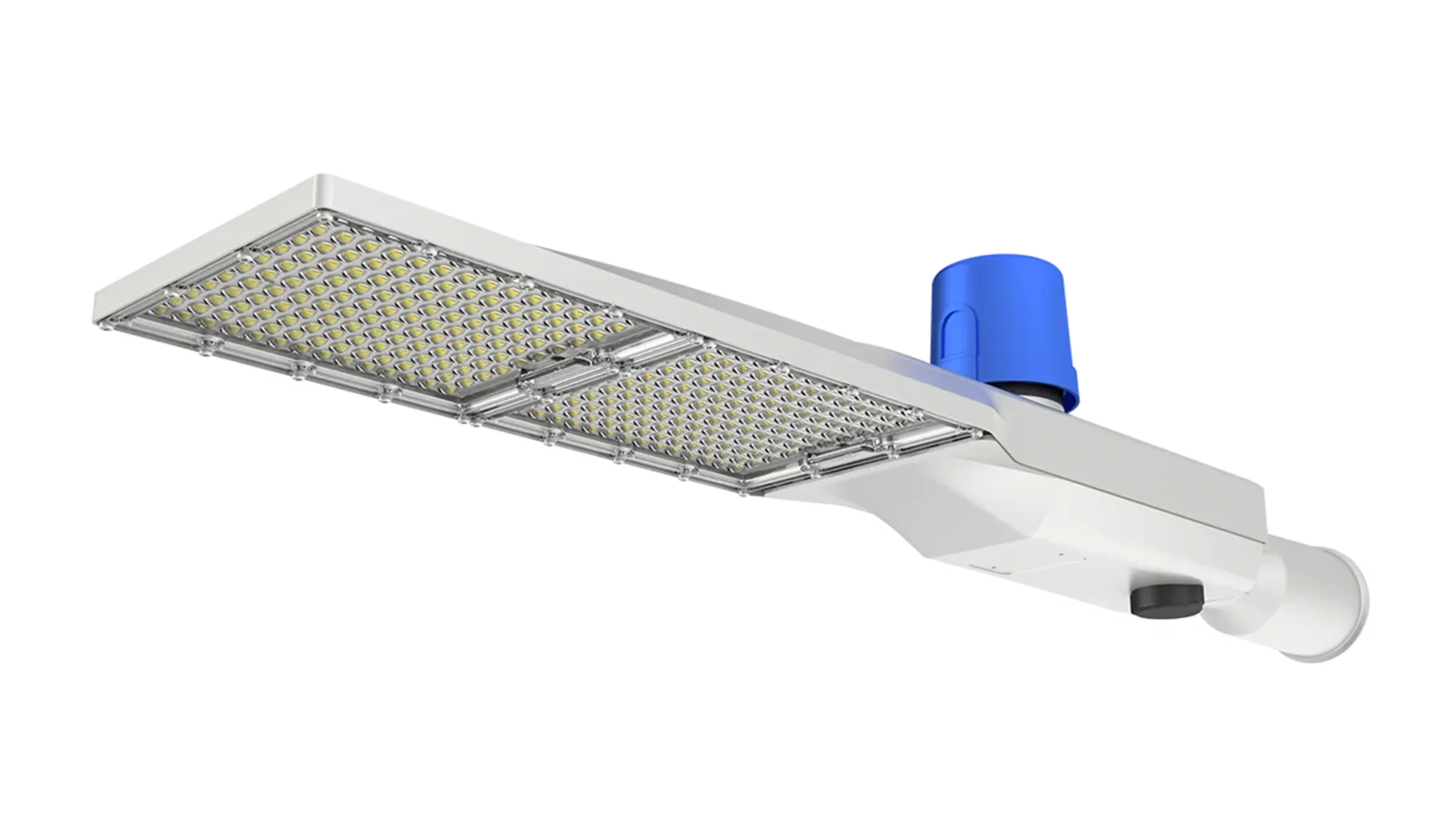
The first number in an HPS-to-LED proposal is usually the energy saving. The costs that decide whether the project pays back often sit elsewhere: traffic management, damaged arms, control subscriptions and the next driver replacement. Compare the old and proposed systems on the same road, over the same operating hours, with the same required lighting performance. Then separate the benefits of changing the luminaire from the extra benefits and costs of adding controls.
Quick Answer: Is LED Better Than HPS for Street Lighting?
For most new and retrofit roadway projects, LED offers stronger optical control, instant start, easier dimming, better white-light visibility and lower routine lamp maintenance than high-pressure sodium. The business case is strongest where operating hours are long, electricity cost is significant, failures are expensive to service and controls can reduce output during low-demand periods. Results still depend on product quality and design.
1. Build a Reliable Existing-System Baseline
The first step is an asset and operating audit. Count luminaires by road segment, lamp type and nominal wattage, then include ballast input where applicable. Record annual operating hours, tariff structure, ownership model, failure rate, relamping labor, traffic-management cost, bucket-truck cost and unplanned outage response.
Field conditions matter as much as the inventory. Survey pole height, spacing, arm length, tilt, mounting diameter, conductor condition, cabinet arrangement and grounding. Photograph representative installations and note trees, signs, overhead lines, property boundaries, intersections and curves. Existing plans are useful but may not reflect decades of field changes.
Measure representative lighting conditions only with a defined method. Old HPS lamps at different ages can produce inconsistent output, and dirty or yellowed optics can distort the baseline. The goal is not to reproduce every weakness of the old system; it is to understand current performance and define the required future result.
2. LED and HPS: What Changes in a Retrofit?
| 요인 | HPS system | LED system | 개조 시 고려 사항 |
|---|---|---|---|
| Light distribution | Lamp, reflector and refractor create the beam. | Purpose-designed lenses can shape roadway distribution. | Recalculate the layout; do not match wattage only. |
| Color appearance | Orange-yellow output and low color rendering. | White light with selectable CCT and CRI. | Check visual comfort and local CCT policy. |
| 조작법 | Limited dimming and warm-up constraints. | Instant response and broad dimming compatibility. | Savings may include scheduled or adaptive reduction. |
| 유지보수 | Lamp and ballast replacement cycles. | Driver, module and control-node service strategy. | Compare access, spares and warranty process. |
LED can improve useful light utilization, but high optical efficiency does not automatically mean low glare. A poorly selected LED distribution can create intense bright zones, excessive backlight or dark gaps. Review luminance or illuminance, uniformity and glare metrics required by the project, not just lumens and efficacy.
3. Replace the Photometric Design, Not Just the Luminaire
A retrofit calculation should use the surveyed pole geometry and the proposed luminaire’s IES or LDT file. Model each road class separately, including medians, sidewalks, cycle lanes and conflict areas where relevant. Apply the agreed maintenance factor and surface assumptions. If poles alternate, sit on curves or use different arm lengths, represent those conditions rather than relying on a single idealized road section.
One-for-one replacement can be practical when poles must remain, but it should be the result of a calculation, not the design method. In some sections, changing the optic or output is enough. Other locations may need an arm adjustment, different tilt, an additional pole or a special distribution. Mixed configurations are often more credible than forcing one SKU across an entire network.
Compare the proposed layout at full output and at each planned dimming level. Dimming generally reduces output while preserving the shape of the distribution, but the lower level must still comply with the approved adaptive-lighting policy for that time and traffic condition.
4. Calculate Energy Savings Transparently
Annual energy use can be estimated from total input power multiplied by annual operating hours, then divided by 1,000 to convert watt-hours to kilowatt-hours. For a controlled system, calculate each time band separately: full output, reduced output and any special event mode. Use measured or manufacturer-confirmed system input power, not only nominal LED board wattage.
An example model can be written as: existing system energy minus proposed LED energy equals annual energy reduction. Annual cost reduction is the energy reduction multiplied by the applicable tariff. If demand charges, time-of-use rates or utility ownership fees apply, they need separate treatment. A municipality should also check whether the tariff actually rewards adaptive dimming; FHWA guidance notes that metering or an appropriate rate structure is part of realizing financial benefit from adaptive lighting.
Do not present a best-case percentage as guaranteed savings. The final figure changes with the old ballast load, LED design, operating schedule, controls, tariff and over-lighting in the existing installation.
5. Include Maintenance and Operational Risk
HPS maintenance commonly includes lamp replacement, ballast service, cleaning and outage inspections. Street-light work may require traffic control, lifting equipment and crews working at night. Those indirect costs can materially affect lifecycle economics.
LED removes scheduled lamp replacement, but it does not eliminate maintenance. Drivers, surge protective devices, control nodes, seals and connectors can still fail. Evaluate expected component life at the project temperature, access to replaceable parts, tool requirements, automatic power isolation, warranty logistics and the supplier’s ability to provide matching spares.
A connected control system can reduce night patrols by reporting failures, but it adds commissioning, network, software and cybersecurity responsibilities. Include platform fees, gateways, node replacement and data ownership in the lifecycle model where applicable.
6. Verify Mechanical, Electrical and Control Compatibility
Confirm tenon or spigot dimensions, luminaire weight, projected area, arm angle and structural condition. A lighter fixture is not automatically compatible if its center of gravity or wind area changes. The authority or structural engineer should decide whether existing poles and arms remain acceptable.
Electrical checks include supply voltage, protection devices, grounding, cable condition, inrush current, surge environment and cabinet controls. Where dimming or network controls are planned, confirm the driver protocol and physical control interface. NEMA, Zhaga, photocell, 0-10 V, DALI and D4i describe different parts of the control architecture; they are not interchangeable labels.
Installation instructions should define safe isolation, mounting torque, aiming, cable glands and sealing. Retrofit adapters need mechanical drawings and corrosion-compatible materials. A field mock-up can expose practical issues before the full order ships.
7. Use a Pilot and Written Acceptance Plan
Select a pilot area that represents the difficult parts of the network, not only the easiest straight road. Include typical spacing, a conflict area and a location sensitive to glare or spill. Install the proposed configuration, commission controls and inspect the result from the perspective of drivers, pedestrians, residents and maintenance crews.
Agree the measurement grid, meter requirements, weather constraints, burn-in period and pass/fail criteria in advance. Record input power and control behavior as well as light levels. If the pilot requires aiming or output changes, update the final schedule and calculation before mass production.
8. Add a Quality and Batch-Control Plan
A sample that passes a pilot does not automatically prove that every production batch will match it. The purchase specification should lock the approved optical code, LED configuration, driver, control interface, surge option, housing finish and mounting accessories. Require notification and approval before any component substitution.
For production inspection, compare labels and configuration records with the approved bill of materials, inspect mechanical fit and sealing, and verify representative electrical and photometric data according to the contract. Define how nonconforming units will be identified, corrected and retested. Keep reference samples or traceable serial records for large municipal programs.
Delivery planning should also cover spare drivers, control nodes, surge devices, gaskets and mounting hardware. A modest, documented spare-parts strategy can reduce future downtime and prevent emergency substitutions that change light distribution or control compatibility.
9. Build a Lifecycle ROI Model Buyers Can Audit
The cost model should include luminaires, controls, brackets, wiring changes, installation, design, pilot testing, traffic management, disposal, financing and software where applicable. Benefits can include energy reduction, avoided lamp and ballast replacement, fewer inspections, faster fault response and lower outage exposure. Use the buyer’s own labor rates and maintenance records whenever possible.
Show simple payback, but also evaluate cash flow over the expected analysis period. State assumptions for energy escalation, discount rate, component replacement and residual value. A credible conservative case is more useful for procurement approval than an aggressive headline claim that cannot survive review.
10. ZC Lighting Product Direction for Retrofit Projects
ZC Lighting’s SL03, SL04 and SL05 families provide different starting points for roadway retrofit discussions. SL03 is positioned as a budget-oriented power-tunable option, SL04 emphasizes cost-effective retrofit and maintenance considerations, and SL05 targets broader municipal configurations and smart-interface readiness. This portfolio can help distributors and contractors align product level with road class and tender budget.
Send ZC the asset schedule, pole survey, target criteria, voltage, existing lamp and ballast data, control requirement and destination market. Request a proposal that identifies the optical code, output setting, driver, mounting method and compliance documents for the supplied version. Ask for a separate price for brackets, control nodes and spare parts; bundling these into a single fixture price makes competing offers harder to compare.
11. A Retrofit Budget You Can Recalculate
The following is an illustrative calculation, not a ZC product rating or a project result. Assume 100 existing luminaires draw 280 W each, including ballast losses, and operate for 4,000 hours per year. Their annual consumption is 100 × 0.280 × 4,000 = 112,000 kWh. Assume a calculated LED alternative draws 120 W per luminaire at full output. Over the same hours it uses 48,000 kWh, a reduction of 64,000 kWh.
At an assumed energy tariff of USD 0.15/kWh, that reduction is worth USD 9,600 per year. An assumed installed project cost of USD 45,000 would have an energy-only simple payback of approximately 4.7 years. This calculation excludes financing, maintenance, tariff changes and replacement costs. It also assumes the 120 W design meets the lighting requirement; the arithmetic cannot establish that.
Keep the control saving on a separate line
Suppose an approved schedule operates at 120 W for 2,000 hours and at a measured 75 W for another 2,000 hours. Consumption becomes 39,000 kWh. The controls add 9,000 kWh of annual reduction, worth USD 1,350 at the same assumed tariff. Compare the extra control hardware, commissioning and annual fees with this incremental benefit. Do not attribute the full LED conversion saving to the control platform.
Use electrical input at the scheduled setting rather than multiplying full-load watts by a dimming percentage. Driver behavior and control loads affect the relationship. Record node consumption and any gateway load consistently. If the utility bills a fixed amount per light, establish how that bill changes before treating a calculated energy reduction as cash savings.
12. Close the Gap Between Installation and Savings
At handover, reconcile installed quantities with the invoice and the asset register. List any poles left on HPS, luminaires awaiting connection and LED units operating at temporary settings. A partly commissioned network should not be reported as a completed conversion. Save the final dimming schedule and identify who is allowed to change it.
Compare energy use over equivalent operating periods, allowing for seasonal night length and changes to the number of connected lights. Investigate daytime operation, overridden schedules or additional loads before blaming the luminaire. For maintenance, record the failed component and the labor spent rather than reporting only a total fault count. Those records make the next purchasing decision more reliable.
Make the Approval Match the Installed System
Approve a road-by-road configuration and an auditable budget. Keep the approved sample, calculation and output schedule traceable through delivery. For a retrofit quotation, send ZC the existing system load and pole survey as well as the required light levels; those inputs determine whether a low purchase price becomes a low operating cost.
Sources and Further Reading
- ZC Lighting: 15 Types of Street Lights
- ZC Lighting: Street and Roadway LED Lighting Solutions
- FHWA Lighting Handbook 2023
- DOE Municipal Solid-State Street Lighting Consortium
- DALI Alliance: D4i requirements and certification
- Zhaga Book 18
- Signify: Main Roads and Highways
Project requirements and product configurations can change. Confirm the applicable local standard and the latest approved ZC Lighting datasheet before tender submission or purchase.
Need a Roadway Lighting Proposal?
Share the road layout, pole data, target criteria, voltage, controls and environmental conditions for product and quotation support.
자주 묻는 질문
Can LED street lights replace HPS fixtures one for one?
They often can use the existing pole locations, but the replacement still requires photometric calculation because LED and HPS systems distribute light differently.
How much energy can an HPS-to-LED retrofit save?
There is no guaranteed percentage. Calculate savings from verified existing input power, proposed LED power, operating hours, dimming schedule and the applicable electricity tariff.
Does LED street lighting require less maintenance?
LED removes routine lamp replacement and can extend service intervals, but drivers, surge devices, control nodes and seals still need a planned service and spare-parts strategy.
What should be checked on existing poles?
Check height, spacing, arm length, mounting diameter, tilt, structural condition, wind loading, wiring, grounding and access before selecting the retrofit luminaire.
Should a municipality run a pilot project?
A representative pilot is recommended for large conversions because it can validate photometrics, glare, installation, controls, power use and acceptance procedures before full deployment.
What information is needed for an LED street light retrofit quotation?
Provide the asset inventory, road drawings, pole survey, existing system load, target standard, voltage, controls, environmental conditions and destination-market compliance requirements.