
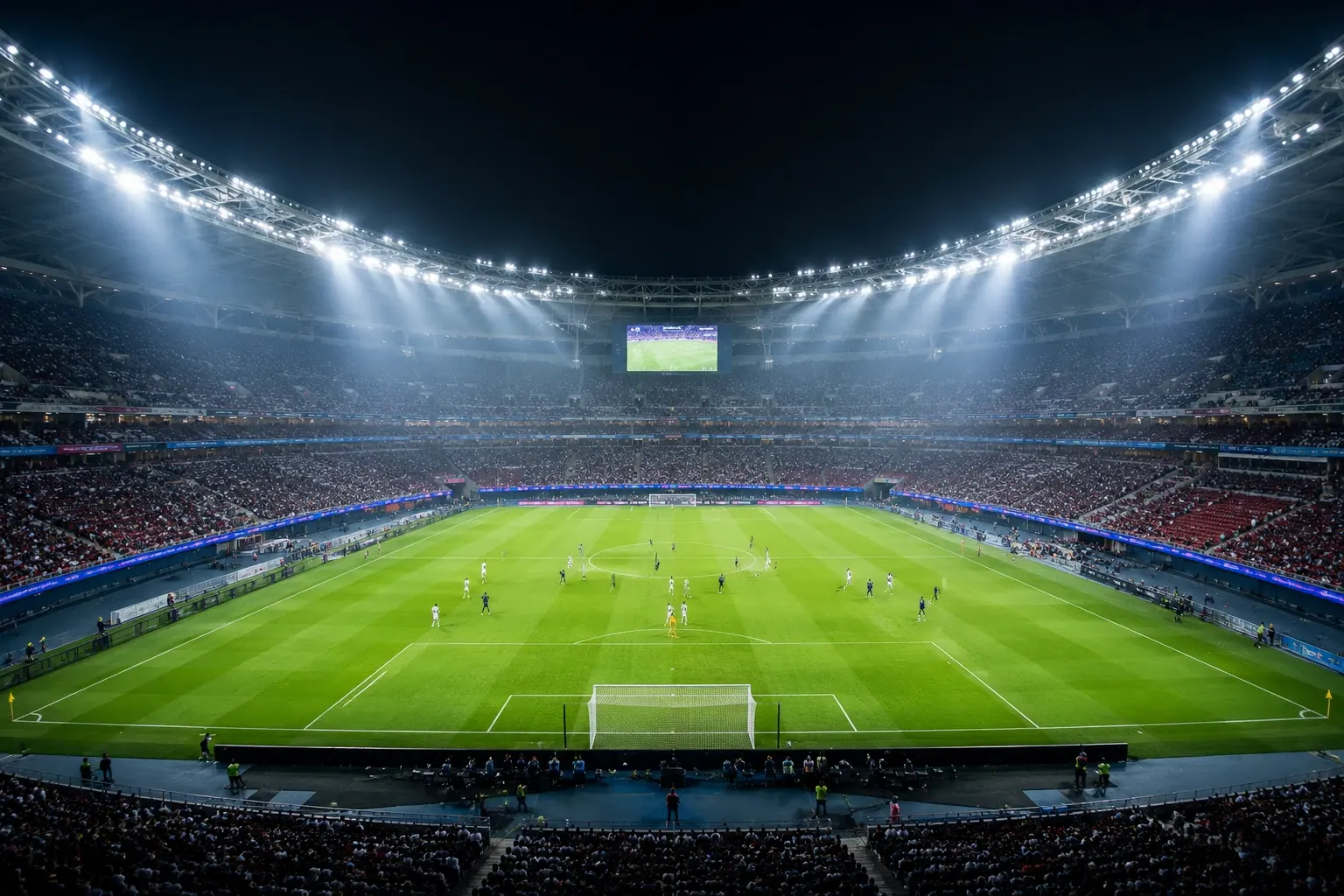
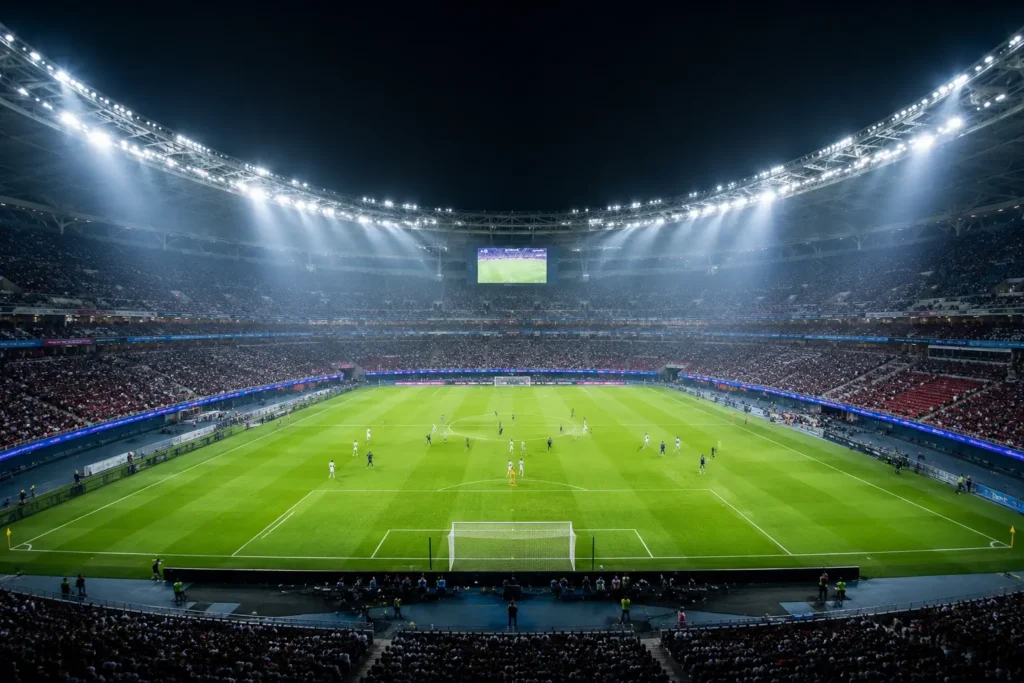
 A World Cup stadium usually needs 2,000 to 3,000 lux for professional football broadcasting. But lux alone does not decide lighting quality. A stadium also needs strong vertical illuminance, high uniformity, low glare, flicker-free drivers, and broadcast-ready optical design.
In this guide, we explain what lux means, how FIFA-level lighting works, why HDR broadcasting needs better light, and how you can choose a stadium lighting system for professional sports projects.
A World Cup stadium usually needs 2,000 to 3,000 lux for professional football broadcasting. But lux alone does not decide lighting quality. A stadium also needs strong vertical illuminance, high uniformity, low glare, flicker-free drivers, and broadcast-ready optical design.
In this guide, we explain what lux means, how FIFA-level lighting works, why HDR broadcasting needs better light, and how you can choose a stadium lighting system for professional sports projects.
What Does Lux Level Mean?
Lux measures how much light reaches a surface. One lux equals one lumen per square meter. This simple definition helps you understand the difference between light output and usable light. Lumens measure total light from a fixture. Lux measures how much of that light reaches the football pitch. A floodlight can produce high lumens, but poor optics can still create low lux on the field.| Term | Meaning | Why It Matters |
|---|---|---|
| Lumen | Total light output | Shows fixture brightness |
| Lux | Light per square meter | Shows usable field brightness |
| Uniformity | Evenness of light | Reduces shadows and dark zones |
| Glare Rating | Visual discomfort level | Protects players and cameras |
What Lux Level Does a World Cup Stadium Need?
A FIFA World Cup stadium usually needs about 2,000 to 3,000 lux for international broadcasting. Some elite venues require higher vertical illuminance because 4K and HDR cameras need cleaner, more stable light. A normal football field can work with much lower lux. A training ground may need only 200 to 300 lux. A professional stadium needs much more because cameras, referees, players, and global audiences all need clear visibility.| Venue Type | Typical Lux Level | Main Use |
|---|---|---|
| Training Ground | 200–300 lux | Practice and basic play |
| Amateur Football Field | 300–500 lux | Local matches |
| Semi-Professional Stadium | 500–750 lux | Regional competition |
| Professional League Stadium | 750–1500 lux | Professional matches |
| World Cup Stadium | 2000–3000 lux | International broadcast |
Why Lux Alone Is Not Enough
High lux does not always mean better stadium lighting. A field can look bright but still perform poorly on camera. Poor uniformity creates dark patches. Bad aiming creates glare. Weak drivers create flicker.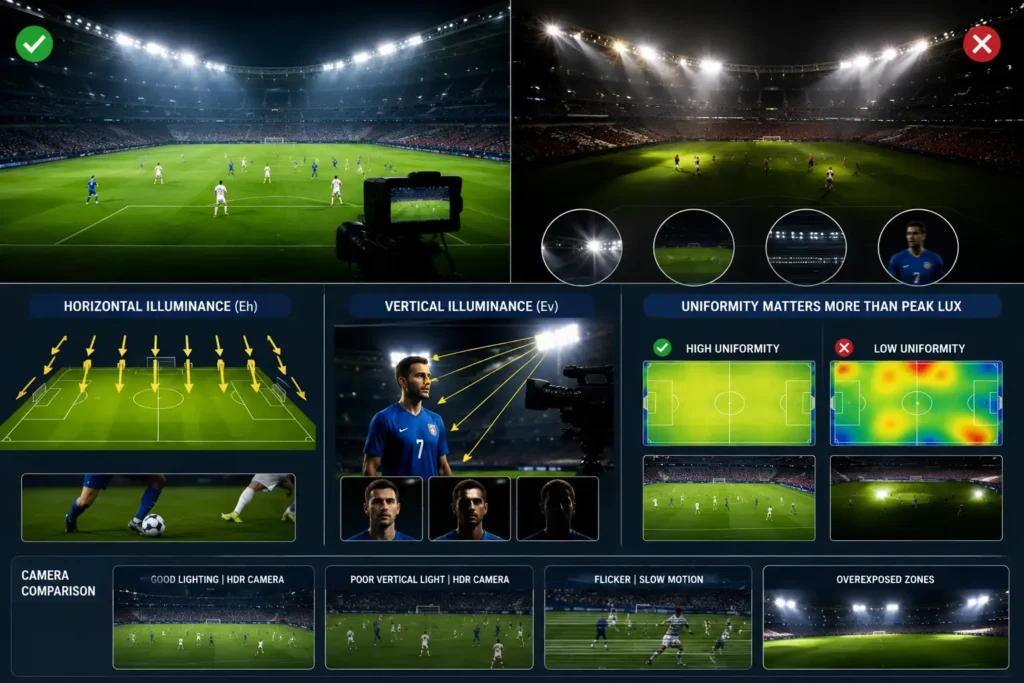
Horizontal Illuminance vs Vertical Illuminance
Horizontal illuminance supports field visibility. Vertical illuminance supports image quality. A World Cup stadium needs both. If vertical lux is weak, cameras lose detail even when the grass looks bright. HDR broadcasting makes this issue more serious. HDR cameras capture more contrast than older HDTV systems. They also expose lighting errors faster. Shadows look deeper. Overexposed zones look harsher. Flicker becomes more visible.Why Uniformity Matters More Than Peak Lux
Uniformity controls how evenly light spreads across the pitch. Better uniformity gives players a smoother visual field. It also helps broadcast cameras maintain stable exposure during fast movement. Professional engineers often care more about uniformity than maximum lux. More light is not always better. More controlled light is better.| Lighting Factor | Bad Design Result | Better Design Result |
|---|---|---|
| Low Uniformity | Dark zones and shadows | Smoother field visibility |
| High Glare | Player discomfort | Cleaner visual comfort |
| Weak Vertical Lux | Poor camera image | Clearer broadcast detail |
| Driver Flicker | Replay distortion | Stable slow-motion footage |
How Broadcast Requirements Change Stadium Lighting
Modern World Cup stadiums serve more than spectators. They serve cameras, VAR systems, media teams, and global streaming platforms. This makes stadium lighting more technical than ordinary outdoor lighting.4K, HDR, and Slow-Motion Replay
4K cameras need sharper detail. HDR cameras need stronger contrast control. Slow-motion cameras need flicker-free light. These systems make weak lighting more obvious than before. Flicker-free LED drivers are now essential for professional stadiums. Human eyes may not notice flicker, but cameras can capture it clearly. During slow-motion replay, flicker can ruin broadcast quality.CRI, TLCI, and Camera Color
CRI measures how humans see color. TLCI measures how cameras reproduce color. A light source can look acceptable to spectators but still produce poor skin tones or weak grass color on camera. Better spectral quality creates more stable broadcast images. It also reduces color correction work for media teams.VAR and AI Tracking Systems
Modern football uses VAR, automated offside technology, ball tracking, and AI-assisted player analysis. These systems need stable lighting. Poor light can reduce tracking accuracy and camera consistency. For projects that require strong long-distance output, the FL12 high-power LED stadium and airfield floodlight can support large-area sports and transportation lighting applications.How Engineers Design FIFA-Compliant Stadium Lighting
Engineers do not design stadium lighting by guessing wattage. They use photometric data, software simulation, pole layout analysis, and beam angle planning.DIALux, AGi32, and IES Files
DIALux and AGi32 help engineers calculate lux, uniformity, glare, and spill light before installation. IES files describe how a fixture distributes light. These files help designers test different aiming plans. Without simulation, a stadium project faces more risk. The field may fail inspection. The owner may need re-aiming work. The contractor may face delays and extra lift equipment costs.Pole Height and Beam Control
Pole height affects uniformity, glare, and spill light. Higher poles can improve coverage, but bad aiming can still create strong glare. Roof-mounted stadium systems can improve integration, but they need precise optical control. Asymmetric optics help direct light toward the pitch and away from unwanted areas. They reduce waste and improve usable lux. In many cases, better optics beat higher wattage. For surrounding areas such as access roads, parking zones, and stadium districts, the SL05 municipal LED street light can help create safer and more consistent outdoor lighting.Weather and Outdoor Reliability
World Cup stadium lighting must survive rain, fog, heat, humidity, wind, and corrosion. Coastal venues need stronger anti-corrosion protection. Hot climates need better thermal management. Harsh sites need surge protection and durable housings. Outdoor reliability protects the investment. It also reduces maintenance cost over the fixture lifetime.LED Stadium Lighting vs Traditional Systems
Many old stadiums still replace metal halide systems with LED stadium lighting. The upgrade can reduce energy use, shorten warm-up time, improve control, and lower maintenance. However, a simple fixture replacement is not enough. LED light behaves differently from metal halide light. Engineers must review pole layout, beam angle, glare control, and electrical infrastructure.LED vs Metal Halide
| Feature | LED Stadium Lighting | Metal Halide Lighting |
|---|---|---|
| Energy Use | Lower | Higher |
| Warm-Up Time | Instant | Slow |
| Maintenance | Lower | Higher |
| Control | Dimming and smart control | Limited control |
| Broadcast Performance | Better with proper drivers | Weaker for modern replay |
Smart Stadium Lighting Trends
Modern stadium lighting is becoming smarter. Many projects now use DALI, DMX, IoT controls, remote monitoring, and adaptive dimming. These systems reduce energy use and improve event flexibility.Smart Control and Energy Saving
A stadium does not need full match LED lighting for football fields every day. Training mode, cleaning mode, event mode, and broadcast mode can use different light levels. Smart control makes this process faster and more efficient.RGBW and Fan Experience
Many stadiums now use RGBW lighting for pre-match shows, concerts, and fan engagement. This trend turns stadium lighting into part of the entertainment system. Large venues may also combine sports lighting with high-mast and large-area LED lighting solutions for sports parks, airports, ports, parking areas, and logistics zones.How to Choose the Right Stadium Lighting System
You should choose a stadium lighting system based on competition level, broadcast needs, pole structure, maintenance plan, and smart control goals. A World Cup-level project needs a more advanced system than a school field or local sports park. Look for flicker-free drivers, strong thermal design, optical precision, corrosion resistance, and modular maintenance. These features reduce risk and improve long-term value. For professional football projects, stadium LED lighting solutions can support lux planning, beam design, and broadcast-ready lighting requirements. For multi-use indoor areas, maintenance buildings, or training facilities, industrial and high-bay LED lighting solutions can support a complete site lighting plan. Professional manufacturers such as ZC Lighting support EPC contractors, stadium owners, distributors, LED lighting for football fields consultants, and municipal project teams with outdoor LED lighting systems. For project planning and fast quotation support, you can request instant quotes for lighting solutions.Conclusion
A World Cup stadium usually needs 2,000 to 3,000 lux, but the best lighting system does much more than create brightness. It improves vertical illuminance, increases uniformity, controls glare, protects broadcast quality, and supports smart operation. Modern football lighting must serve players, spectators, referees, cameras, VAR systems, and global audiences at the same time. A better system uses more precise optics, more stable drivers, and smarter controls. It also lowers maintenance cost and improves long-term reliability. If you plan a professional stadium, do not ask only how many lumens to light a soccer field. Ask how the system controls light, how it performs on camera, and how it will operate after years of outdoor use.FAQ
What does lux level mean?
Lux level means the amount of light that reaches a surface. One lux equals one lumen per square meter. In stadium LED lighting for football fields, lux shows how much usable light reaches the football pitch, not just how much light the fixture produces.What is a good lux level for a football stadium?
A good lux level depends on the competition level. A training field may need 200–300 lux. A professional stadium may need 750–1500 lux. A World Cup stadium usually needs 2000–3000 lux for international broadcasting.Is 10,000 lux the same as 10,000 lumens?
No. Lumens measure total light output from a fixture. Lux measures light intensity on a surface. The same 10,000 lumens can create different lux levels depending on distance, beam angle, mounting height, and area size.How many lumens are needed to light a soccer field?
A soccer field may need hundreds of thousands or even millions of lumens. The final number depends on field size, target lux, fixture efficiency, pole height, beam angle, and light loss factor. Engineers should calculate this with photometric simulation.What is the standard for a FIFA World Cup stadium?
A FIFA World Cup stadium usually requires high horizontal and vertical illuminance, strong uniformity, low glare, flicker-free LED performance, and broadcast-ready LED lighting for football fields. Many international venues target around 2000–3000 lux for professional TV production.Need help selecting the right driver architecture?
Request a ConsultationShare your project voltage, pole layout, control system and maintenance constraints for an initial technical review.