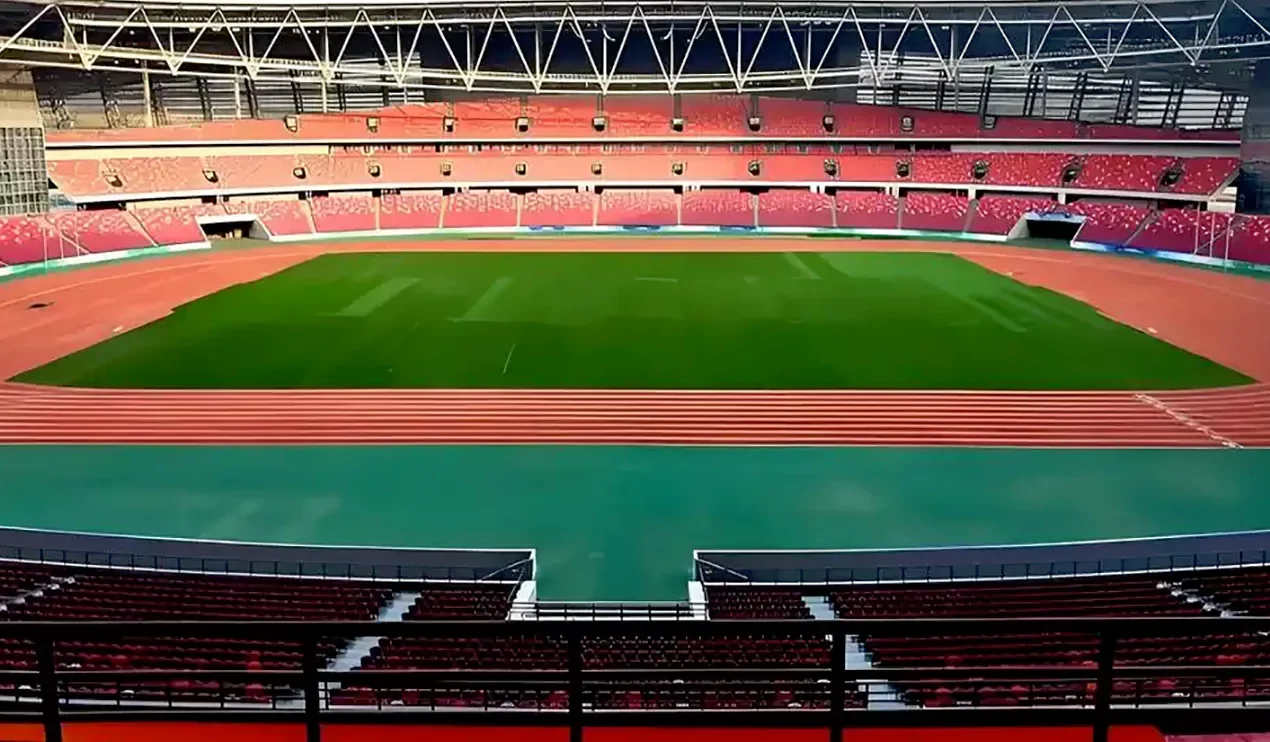
Stadium lighting retrofit projects promise major improvements in energy efficiency, visual comfort, and operational flexibility. Yet many projects fail to deliver their expected results — not because LED technology is flawed, but because of avoidable planning and execution mistakes.
This article summarizes the most common mistakes observed in real stadium lighting retrofit projects and explains how each can be avoided through proper engineering discipline.
1. Treating LED as a Watt-for-Watt Replacement
One of the most frequent mistakes is replacing HID luminaires with LED units of similar wattage.
- HID wattage does not translate directly to LED performance.
- Optical efficiency differs significantly.
How to avoid: Design based on required illuminance, uniformity and glare limits — not on wattage equivalence.
2. Ignoring Optical Redesign
Many retrofit projects reuse existing pole layouts without reconsidering beam distribution.
- Single beam angle for entire field.
- No asymmetric optics.
How to avoid: Apply mixed optics tailored to near-field and far-field zones.
3. Over-Tilting Luminaires to Fix Dark Areas
Tilting luminaires upward is often used as a quick fix for insufficient coverage.
- Increases glare.
- Creates light spill.
How to avoid: Adjust optics and distribution before changing tilt angles.
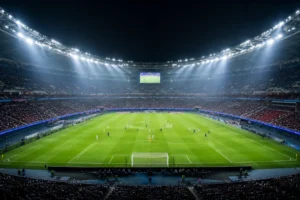
4. Underestimating Glare Impact
Glare complaints often appear after commissioning, not during simulation.
- Goalkeeper sightlines overlooked.
- Spectator comfort ignored.
How to avoid: Evaluate glare from player, spectator and camera viewpoints.

5. Skipping On-Site Aiming and Verification
Even a well-designed system can fail if aiming is not verified.
- No aiming checklist.
- No post-installation adjustments.
How to avoid: Schedule night-time aiming verification as part of commissioning.
6. Over-Specifying Performance Levels
Some projects demand broadcast-grade lighting for facilities that never host televised matches.
- Unnecessary cost.
- Higher energy consumption.
How to avoid: Match performance targets to actual usage scenarios.
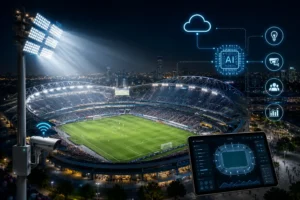
7. Ignoring Control Strategy
Failing to integrate controls limits flexibility and ROI.
- Single operating mode.
- No energy optimization.
How to avoid: Design control scenes from the beginning.
8. Choosing Products Without Retrofit Experience
Not all LED stadium luminaires are suitable for retrofits.
- Limited optics options.
- Poor aiming adjustment.
9. Summary
Successful stadium lighting retrofit projects depend on correct assumptions, optical engineering, disciplined aiming, and realistic performance targets. Avoiding common mistakes saves cost, improves comfort, and ensures long-term satisfaction.