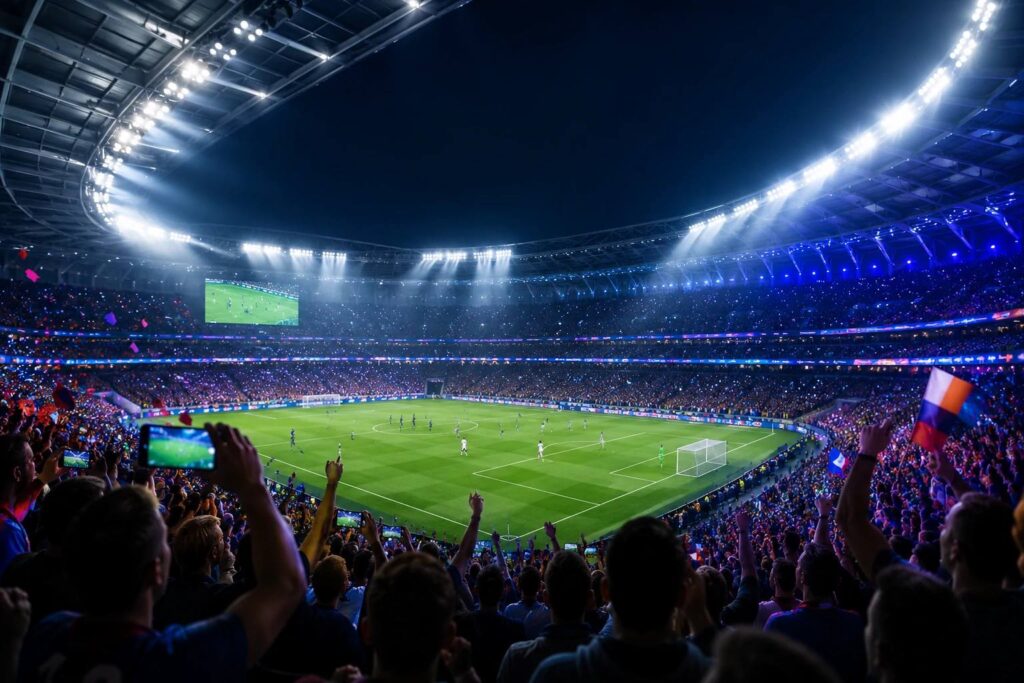
 LED lighting now shapes the full FIFA fan experience. It improves visibility, atmosphere, safety, broadcast quality, and social media moments. Old stadium lights only made the field bright. Modern LED systems make the whole venue feel smarter, safer, and more exciting.
In this guide, I explain how LED sports lighting helps you create better matchday experiences, stronger 4K broadcasts, lower energy costs, and more reliable stadium infrastructure.
Why LED Lighting Matters in FIFA Stadiums
Modern FIFA stadiums use lighting as part of the experience, not only as a utility. Fans want sharper visibility, stronger atmosphere, better comfort, and more dramatic event moments. LED lighting supports all of these needs more effectively than traditional metal halide systems.
Compared with older floodlights, LED stadium lighting starts faster, uses less energy, creates cleaner white light, and supports smarter control. It also helps the stadium meet higher expectations from spectators, broadcasters, sponsors, and event organizers.
LED lighting improves stadium atmosphere
Dynamic LED systems can create team-color scenes, player entrance effects, goal celebration lighting, and halftime light shows. These effects make the stadium feel more emotional and more immersive. A brighter field helps fans see the match. A smarter lighting system helps fans feel the event.
For large sports venues, flexible products such as the FL08 modular LED sports floodlight can support different beam layouts, stronger visual control, and more adaptable stadium lighting design.
LED lighting improves fan comfort
Good football stadium lighting design helps fans track the ball, recognize players, and enjoy the match from different seats. Better uniformity reduces dark patches. Lower glare reduces eye fatigue. Cleaner color rendering improves the look of the pitch, players, and crowd.
| Lighting Factor | Impact on Fans | LED Advantage |
|---|---|---|
| Uniformity | Reduces dark areas | Smoother field visibility |
| Glare control | Improves comfort | Better optical design |
| Color quality | Improves visual realism | Better CRI and CCT options |
| Instant control | Supports event scenes | Fast dimming and switching |
The Complete Matchday Lighting Journey
The FIFA fan experience starts before kickoff. Fans first experience the event in roads, parking lots, transit hubs, entrances, concourses, and public spaces. A stadium lighting plan should cover this complete journey.
Arrival and parking areas
Large football events create heavy nighttime traffic. Better LED lighting improves parking visibility, vehicle movement, pedestrian safety, and crowd organization. High-mast systems can cover wide spaces with fewer poles and better uniformity.
For large outdoor areas, high-mast and large-area LED lighting solutions can support parking lots, transit hubs, airports, ports, and stadium districts.
Entrances, concourses, and public areas
Entrances need clear lighting for ticket scanning, security checks, and camera visibility. Concourses need comfortable lighting for food areas, stairways, restrooms, and merchandise zones. Better lighting helps fans move faster and feel safer.
Indoor support areas can also use efficient systems such as the HB06 high-bay light with dual driver options to create more consistent lighting across stadium service zones, warehouses, and back-of-house spaces.
Seating bowl and pitch visibility
Inside the stadium, LED lighting improves the core match experience. It helps fans see the ball, players, referees, and tactical movement more clearly. Compared with older systems, LED lighting gives the pitch a sharper and more modern look.
Broadcast-Ready Lighting for 4K and HDR
FIFA events depend heavily on broadcasting. A stadium can look bright to spectators but still look poor on camera. Broadcast-ready LED lighting reduces this gap. It supports the in-stadium audience and the at-home audience at the same time.
Flicker-free performance
Modern cameras use 4K, HDR, high frame rates, and ultra-slow-motion replay. Weak LED drivers can create flicker. Human eyes may not notice it, but cameras can capture it clearly. Flicker-free performance helps protect replay quality and broadcast professionalism.
For long-distance stadium illumination, the FL12 high-power stadium and airfield floodlight can support large-area visibility, stronger output, and broadcast-ready field lighting.
Vertical illuminance and horizontal illuminance
Horizontal illuminance measures light on the pitch. Vertical illuminance measures light on players and camera-facing surfaces. Broadcast systems need both. However, vertical illuminance often matters more for facial detail, jersey clarity, and HDR camera exposure.
CRI, TLCI, and the FIFA Quality Programme for Floodlights
CRI measures how humans see color. TLCI measures how cameras reproduce color. FIFA-level projects should consider both metrics. The FIFA Quality Programme for Floodlights also makes lighting performance more important for international venues. Better color quality creates more natural skin tones, richer grass color, and cleaner broadcast images.
| Broadcast Need | Problem With Poor Lighting | LED Solution |
|---|---|---|
| Slow-motion replay | Visible flicker | Flicker-free drivers |
| HDR cameras | Overexposed or dark zones | Better uniformity |
| Player close-ups | Weak facial detail | Stronger vertical illuminance |
| Color quality | Unnatural tones | Higher CRI and TLCI |
Fan Engagement, RGBW Effects, and Social Media
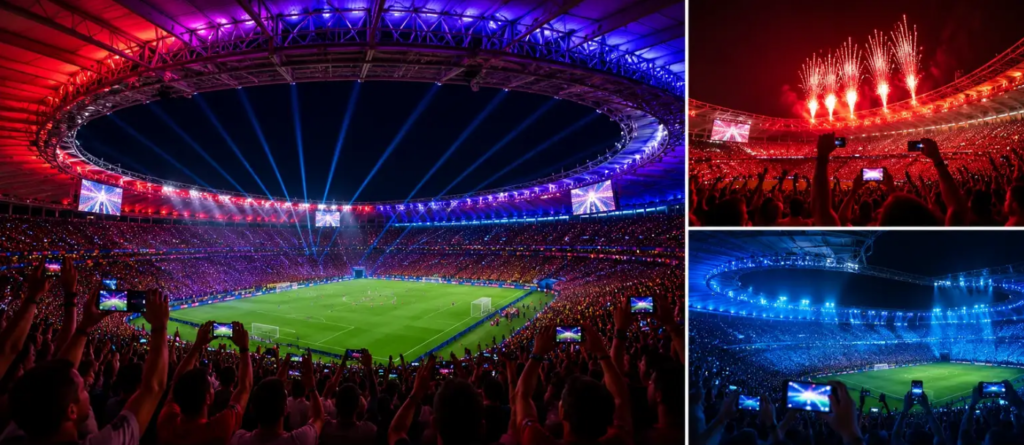
Modern fans do not only watch the match. They record it, share it, and relive it online. LED lighting improves these moments. Brighter, cleaner, and more colorful lighting helps fans create better videos, photos, and social posts.
RGBW lighting creates stronger emotion
RGBW stadium lighting can support team colors, goal effects, music-linked scenes, and halftime shows. These scenes create stronger emotional peaks than static lighting. They also make the venue look more impressive on Instagram, TikTok, YouTube, and live broadcasts.
For fan zones and event areas, the FL03 adjustable smart flood light can support flexible outdoor lighting scenes with smarter aiming and control compatibility.
LED screens and lighting synchronization
Modern stadiums often synchronize lighting with LED screens, scoreboards, sound systems, and digital signage. This creates a more unified entertainment environment. Fans feel a stronger connection when the lighting, music, video, and match action move together.
Sponsor visibility and commercial value
Better lighting improves the visibility of perimeter boards, digital screens, jerseys, and branded areas. Sponsors gain cleaner exposure in the stadium and on camera. This makes LED lighting more valuable than a simple electrical upgrade.
Safety, Wayfinding, and Stadium District Lighting
FIFA fan experience also depends on safety. Fans need clear pathways, visible exits, brighter parking areas, and better public spaces. Poor lighting creates confusion. Stronger LED lighting creates better control.
Pedestrian and transit safety
Large events create dense crowds before and after the match. LED lighting improves pedestrian routes, transit access, parking circulation, and emergency evacuation. It also supports surveillance cameras and public safety teams.
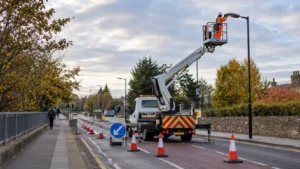
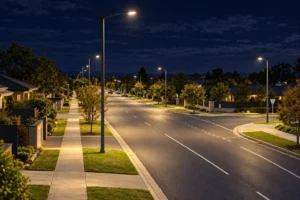
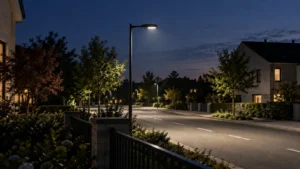
For urban areas around stadiums, SL05 municipal and urban roadway LED lighting can help cities improve visibility on roads, sidewalks, and event corridors.
Glare control and community impact
Too much uncontrolled light can damage the fan experience. Poorly aimed floodlights create glare, spill light, sky glow, and neighborhood complaints. Better optics direct light where it is needed. This improves comfort and reduces waste.
Smart city event districts
Mega football events affect airports, roads, parking lots, hotels, plazas, and transit stations. Municipal authorities often use street and roadway LED lighting systems to create safer and more connected event districts.
Smart Controls, Energy Savings, and Maintenance
Modern stadium lighting needs smarter operation. Manual systems are slower. Smart LED systems respond faster, save more energy, and give operators better data.
AI and IoT lighting control
AI-based lighting systems can automate brightness adjustment, occupancy response, scene switching, and energy optimization. IoT sensors can monitor crowd density, daylight, weather, and movement. This creates more responsive and more efficient lighting.
Lower energy costs
Compared with metal halide systems, LED lighting usually uses less electricity and lasts longer. Smart dimming reduces waste even further. Operators can dim unused areas, reduce peak demand, and balance electrical loads.
Predictive maintenance
Smart systems can monitor temperature, voltage, driver condition, and fixture performance. This helps maintenance teams detect problems earlier. Fewer failures mean lower downtime and better event reliability.
| Project Goal | Traditional Approach | Modern LED Approach |
|---|---|---|
| Energy savings | Fixed high output | Smart dimming and scheduling |
| Maintenance | Manual inspection | Remote diagnostics |
| Fan experience | Static lighting | Dynamic scenes and RGBW effects |
| Infrastructure value | Single-use system | Connected smart stadium platform |
How to Choose LED Lighting for FIFA-Scale Projects
The best stadium LED system depends on more than wattage. You should evaluate lighting quality, control compatibility, lifecycle cost, installation conditions, and long-term project goals.
Review technical performance
You should check lux levels, vertical illuminance, horizontal illuminance, uniformity, glare rating, CRI, TLCI, CCT, flicker performance, surge protection, and thermal design. Better optical control often performs better than higher wattage alone.
Review smart control compatibility
Modern stadium projects may require DALI, DMX, 0-10V, API integration, IoT platforms, and centralized control systems. Better compatibility helps future upgrades.
Choose an experienced lighting partner
ZC Lighting supports large-scale outdoor LED lighting projects for sports stadiums, roads, high-mast areas, industrial facilities, and smart city environments.
For stadium projects, stadium LED lighting solutions can help improve broadcast quality, fan visibility, and operational efficiency. For quick project support, you can request instant quotes for lighting solutions.
Conclusion
LED lighting now plays a larger role in FIFA events than simple illumination. It improves the fan journey from parking areas to the seating bowl. It also supports 4K broadcasting, social media sharing, crowd safety, sponsorship visibility, and smart stadium operations.
Compared with traditional sports lighting, modern LED systems create stronger atmosphere, lower energy consumption, better visual comfort, and more flexible event control. For EPC contractors, stadium owners, municipal authorities, broadcasters, and sports park investors, LED lighting is no longer only a fixture decision. It is an infrastructure decision.
If you want a better FIFA fan experience, you should plan lighting as a complete system. The best results come from strong optics, smart controls, reliable drivers, and practical stadium design.
FAQ
How does LED lighting enhance the FIFA fan experience?
LED lighting improves visibility, atmosphere, safety, social media content, and broadcast quality. It helps fans see the match more clearly and feel more connected to the event through dynamic scenes and better visual comfort.
Why is flicker-free LED lighting important for FIFA broadcasting?
Flicker-free LED lighting protects 4K, HDR, and ultra-slow-motion footage. Weak drivers can create flicker that cameras capture clearly, even when spectators do not notice it.
What is the FIFA Quality Programme for Floodlights?
The FIFA Quality Programme for Floodlights helps define lighting performance for football venues. It focuses on factors such as illuminance, uniformity, glare control, and broadcast compatibility for professional football environments.
Why do FIFA stadiums use RGBW lighting systems?
FIFA stadiums use RGBW lighting to create team-color scenes, goal celebrations, halftime shows, and immersive fan moments. RGBW systems make the stadium feel more entertaining and more shareable online.
What should EPC contractors consider when selecting stadium LED lighting?
EPC contractors should review lux levels, uniformity, glare control, flicker performance, CRI, TLCI, control compatibility, maintenance access, and lifecycle cost. A good system should support both match performance and long-term operation.
Disclaimer
FIFA and UEFA are referenced solely as sources of industry and project-design guidance. ZC Lighting is not affiliated with, endorsed by or certified by FIFA or UEFA. Final compliance depends on the complete project design, selected product configuration, installation, measurement and approval by the relevant project authority.