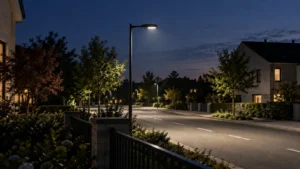
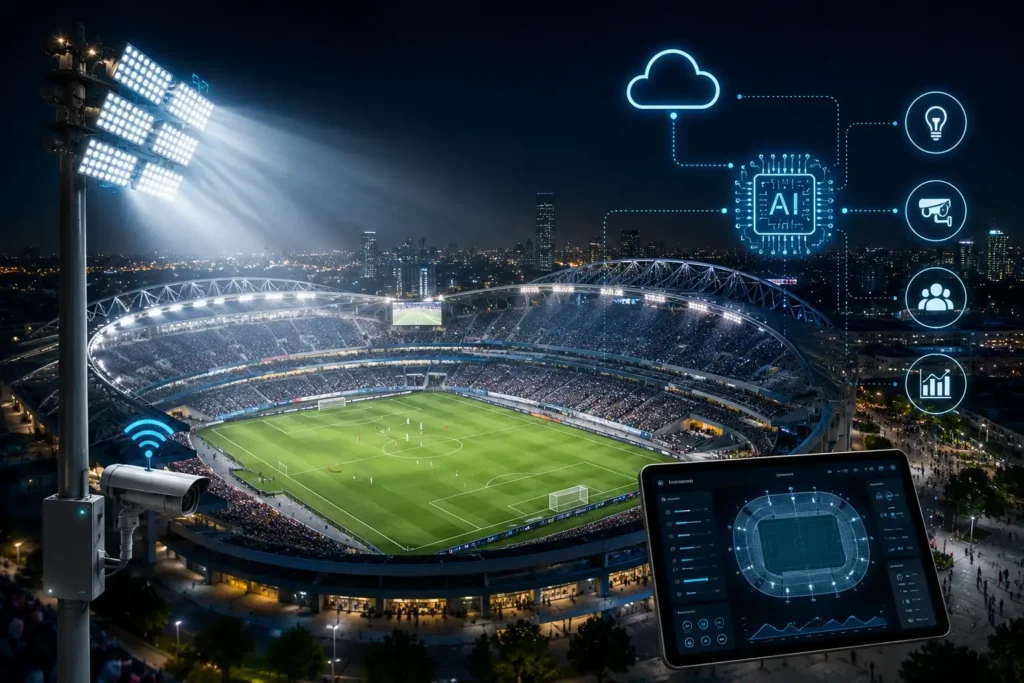
 Artificial intelligence-controlled lighting systems for major sporting events are transforming how stadiums, cities, and large outdoor venues manage visibility, energy, safety, and broadcast quality. While traditional floodlights offer only brightness, intelligent LED systems provide control, data, automation, and greater long-term value.
In this guide, I will explain how AI-powered sports lighting works, why you should consider using it for your venues, and how EPC contractors, homeowners, municipalities, and lighting consultants can plan smarter outdoor lighting projects.
What is AI-controlled motion lighting?
Artificial intelligence-based motion control lighting systems utilize artificial intelligence, sensors, IoT communication, and intelligent software to efficiently achieve automatic control of LED lighting. Traditional systems use fixed switches or timers, while AI systems leverage real-time data, making lighting control faster, smarter, and more efficient.
AI lighting controllers can analyze crowd density, day and night activities, ambient light, weather, automatic backlighting needs, and energy requirements to adjust brightness, lighting scenes, light levels, and operating modes. This makes AI-controlled lighting systems respond much faster than manual systems.
For large stadium spectators, custom systems like the FL08 LED sports floodlights offer flexible beam planning, easier maintenance, and more scalable outdoor lighting layouts.
| feature | Traditional sports lighting | AI-controlled motion lighting |
|---|---|---|
| control | Manual or timed | Automation and driving data |
| Energy utilization | Usually overburdened | Adaptive dimming |
| maintain | Reactive | predict |
| Broadcast support | Limited | More suitable for 4K, HDR and playback. |
| Intelligent integration | Weak | Powerful IoT Interface |
Why do large events need AI lighting?
Large-scale sporting events have lighting requirements that exceed those of ordinary spectators. They need brighter venues, safer passageways, clearer parking lot visibility, higher-quality broadcast images, and external energy sources. Static lighting systems are insufficient to meet these ever-changing needs.
Higher broadcast standards
Modern sports broadcasts utilize 4K, HDR, and super slow-motion lighting. These lights can quickly expose lighting problems, revealing issues such as lighting, shadows, dark areas, glare, and poor color quality more effectively than older systems with loudspeakers.
Artificial intelligence-controlled lighting systems for large-scale sporting events help maintain more stable light intensity. They balance horizontal illumination on the stage with vertical illumination on the players, thereby improving player visibility, facial and jersey pupil detail, and enhancing bulb luminosity.
For long-distance projection drills and airports, the FL12 high-power LED drill and airport floodlights can support greater visibility and meet the needs of more demanding output projects and precise aiming.
Improve crowd safety
Large crowds move rapidly. Insufficient lighting makes this movement more dangerous. Artificial intelligence systems can improve the brightness of emergency exits, parking lots, sidewalks, and security areas. This helps create a safer environment for crowd movement and enhances surveillance visibility.
Reduce energy waste
Traditional lighting systems often operate at high loads even when areas are unused. AI-controlled lighting systems, however, can reduce this waste. They dim unused areas, balance the power load, and adjust lighting based on real-time demand. This makes the system more efficient and economical.
AI-powered motion backlighting core technology
AI motion lighting is more than just a light fixture; it’s a complete control ecosystem. The system integrates LED lights, sensors, cameras, edge computers, communication networks, and control software.
IoT sensors and occupancy detection
IoT sensors collect data from inside the venue, including information on moving objects, sunlight, weather, crowd density, and vehicle traffic. The system uses this data to adjust the lighting more precisely.
AI vision and camera feedback
Artificial intelligence vision systems can analyze on-site activities, movement, rising density, and conditions. Lighting platforms can improve brightness, light intensity, and skin tone scene control.
Edge computing
Edge computing processes data near the arena, rather than sending all decisions to the cloud immediately. This reduces latency. During large events, this results in faster, critical responses. Localized AI control also ensures critical lighting functions remain operational during network outages.
Control Protocol
Modern systems may employ protocols such as DALI, DMX, KNX, 0-10V, Zigbee, LoRaWAN, hook-based systems, or API integration. Improved protocol compatibility makes it easier for the system to connect to smart building, security, and smart city platforms.
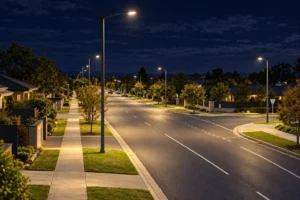
For surrounding roads and municipal infrastructure, standardized lighting fixtures like the SL05 municipal LED street light help connect urban street lighting to a wider Internet of Things (IoT) control network.
Broadcast-grade lighting for 4K and HDR
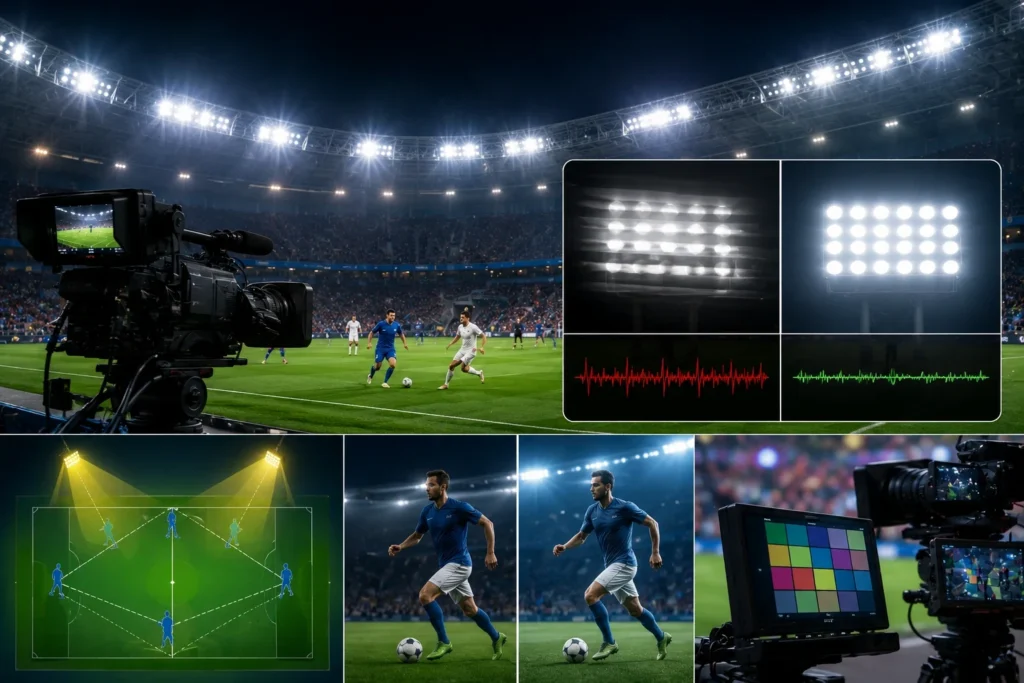
Broadcast lighting is one of the most intensive applications of AI-controlled sports lighting on-site. What might be brightly lit in the stands could look poor in a focused shot. AI systems help bridge this gap.
flicker-free performance
Low-power LED drivers produce cues. These may be imperceptible to the human eye, but can be quickly and clearly detected. Slow-motion playback makes the cues even more obvious. Non-cue drivers contribute to broadcast-quality images and produce sharper visuals.
Vertical illuminance
Vertical illuminance measurement equipment and the horizontal illumination intensity of the surface directly opposite the intersection. Broadcast systems need to measure both illuminance simultaneously. However, for 4K and HDR image quality, vertical illuminance is generally more important.
CRI and TLCI
The Color Scale Index (CRI) measures the human eye’s ability to perceive color, while the Television Screen Color Index (TLCI) measures the ability to perceive color on a television screen. TLCI is often more important for professional sports broadcasts. Better spectral quality results in more natural colors, richer hues, and a more stable picture.
| Broadcast rates | Why this is important | Advantages of AI lighting |
|---|---|---|
| Guide control | Protect slow motion playback | Stable driver |
| Vertical illuminance | Increase city player awareness | Balance involves the camera’s lighting. |
| Uniformity | Reduce brightness and brightness | Dynamically adjust area |
| Color quality | Improve HDR image quality | Support for better scene control |
Adaptive lighting and real-time scene control
Modern sports stadiums require different lighting modes for different occasions. Matches need stable brightness; halftime shows need a zoo-like effect; emergencies need loud exit lights; and maintenance teams need focused work lighting.
The speed and accuracy with which artificial intelligence switches these modes are helpful to human operation.
Dynamic illuminance adjustment
Artificial intelligence systems can adjust illumination levels based on matching data, moving crowds, ambient light, and destination requirements. This makes lighting more sensitive and more energy-efficient.
Scene mode
Common scene modes include pre-match mode, match mode, live broadcast mode, venue mode, evacuation mode, maintenance mode, and mass dispersal mode. Most modes employ different brightness levels and control strategies.
Fan area and event lighting
Staff areas, public squares, and outdoor viewing platforms also require smarter lighting. Floodlights can support color, crowd safety, temporary event layout, and responsiveness. For example, products like the FL03 adjustable smart floodlight can provide flexible, scene-specific outdoor lighting for event venues.
Energy optimization and predictive maintenance
Energy and maintenance costs affect the total value of each stadium lighting project. Lower-priced luminaires may result in higher long-term costs. Smarter systems may have a higher initial investment, but can save more money in the long run.
Artificial Intelligence Energy Optimization
Artificial intelligence systems can monitor demand, lighting output, power consumption by personnel, and uptime. They can then reduce output when full load is needed. This helps lower electricity bills and better control the load.
Smart grid and demand response
Large venues can connect their lighting systems to smart grids. This helps operators manage peak demand, backup power, and renewable energy. Solar lighting integrators can also combine battery backup with AI-based control systems.
Predictive maintenance
Artificial intelligence can detect early warning signs. It can track user behavior, temperature, voltage changes, and fixture performance. This helps your team detect major failures before components need to be replaced.
| Cost Area | Traditional lighting | Artificial intelligence control of lighting |
|---|---|---|
| electricity | Since production is fixed, therefore… | Reduce adaptive dimming |
| maintain | Manual inspection | Remote diagnostics |
| At this time | More failures | Earlier failure prediction |
| Asset value | Limited upgrade paths | Superior value of smart infrastructure |
Smart city and infrastructure integration
The impact of large-scale events extends far beyond stadiums. They affect roads, parking lots, transportation hubs, airports, hotels, plazas, and logistics areas. This makes the integration of smart lighting even more important.
Stadium lighting
Artificial intelligence-controlled outdoor sports lighting systems can connect with smart light poles, street lighting, monitoring systems, traffic control systems, and emergency networks to improve the coordination of the entire event area.
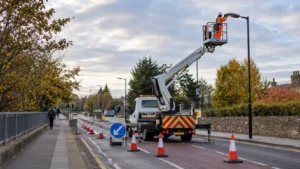
Municipal projects can use LED street and road lighting systems to improve traffic visibility and pedestrian safety near stadiums, parks and public spaces.
High poles and large-area lighting
Airports, ports, parking lots, logistics parks, oil facilities, and mining areas all require more powerful, large-area lighting. Artificial intelligence control can improve visibility in these locations and reduce energy waste.
For these applications, high-mast and large-area LED lighting solutions can support wider and more efficient coverage, better pole layout, and a wider range of outdoor lighting.
Indoor and outdoor facility network
Sports parks and logistics parks often combine indoor and outdoor lighting. Intelligent indoor lighting systems, such as the HB06 high-bay light with dual-drive options , can help facility managers build a more unified lighting control network.
How to choose a suitable AI sports lighting system
The best AI-controlled sports lighting systems for large-scale events should be matched to your venue type, broadcast objectives, power system, control platform, and strategy. You don’t have to choose based on your own power consumption.
Check lighting performance
You should check illuminance, uniformity, glare control, beam angle, color rendering index (CRI), television lighting consistency index (TLCI), color temperature (CCT), triggering performance, and surge protection. Generally, products with better optical performance perform better than those with higher power.
Review control compatibility
You should verify that the system supports your required control protocol. DALI, DMX, 0-10V, resistor, and API compatibility facilitate future integration.
Considering the conditions for renovation
Retrofit projects may face limitations such as wiring restrictions, door placement restrictions, and control compatibility issues. However, retrofit projects can begin by integrating artificial intelligence with sensors, edge computing, and digital simulation technologies.
Partner with experienced lighting partners
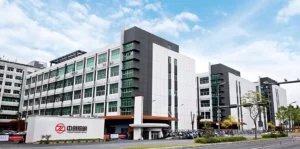
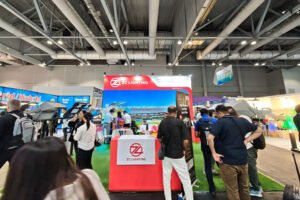
ZC Lighting supports outdoor LED lighting projects for stadiums, roads, high-mast lighting zones, industrial sites, and smart infrastructure. For stadiums, you can also explore LED lighting solutions to plan broadcast-compliant and future-proof projects.
If you need rapid project support, you can request an immediate quote for lighting solutions .
in conclusion
Artificial intelligence-controlled lighting systems for large-scale sporting events offer stadiums and cities a more efficient way to manage brightness, safety, broadcasting, energy, and maintenance. This transforms lighting from a fixed fixture into a smart infrastructure system.
Compared to traditional sports lighting, AI-controlled lights offer faster response times, better queue layout, support for higher broadcast quality, and reduced long-term maintenance risks. They are also easier to connect to smart city platforms, parking systems, street lighting, and security networks.
For EPC contractors, auditors, municipalities, lighting consultants, system integrators, and sports park investors, the next step is to view lighting as a complete system, not just a single fixture. Smarter control creates greater value.
Frequently Asked Questions
What is AI-controlled motion lighting?
Artificial intelligence-controlled sports lighting systems utilize sensors, software, and AI technology to automatically manage outdoor lighting. The system can adjust brightness, scene modes, and lighting based on real-time data, and issue maintenance alarms.
Why is AI-controlled sports lighting so important for major sporting events?
Large-scale events require safer audiences, higher-quality broadcasts, reduced external energy waste, and more reliable infrastructure. AI-powered lighting systems can help operators meet these needs faster and more accurately than traditional manual systems.
Can AI-controlled lighting enhance 4K and HDR broadcast performance?
AI-controlled lighting enables more uniform light linearity, stronger vertical illumination, more stable flash control, and more consistent exposure enhancement. These factors contribute to the production quality of 4K, HDR, and slow-motion videos, respectively.
Is AI-powered sports lighting practical for use outside stadiums?
Yes. AI motion lighting is suitable for parking lots, airports, ports, logistics parks, municipal roads, schools, universities, and smart cities. Large outdoor spaces can benefit from automated control and remote monitoring.
How to best select an AI-controlled sports lighting system for major sporting events?
You should compare lighting performance, control interfaces, lighting quality, beam design, ease of maintenance, energy efficiency, and integration with smart cities. A robust system should meet both your event needs and your long-term infrastructure plans.