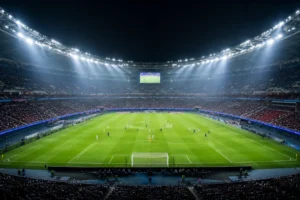
Stadium lighting has quietly become one of the most influential “invisible technologies” in modern sports. From the player’s point of view, good lighting is rarely noticed — but bad lighting is felt in every sprint, every header, and every decision made in a fraction of a second. For coaches, broadcasters, and facility owners, the quality of lighting now directly affects performance, safety, and commercial value.
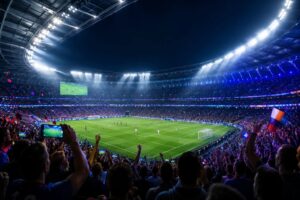
In recent World Cups and other major tournaments, we can clearly see how far LED sports lighting has come. High-definition broadcasting, ultra-slow-motion replays, and global audiences have forced stadiums to upgrade their systems to a level that was unthinkable just ten years ago. The good news for clubs, schools, and local authorities is that the same principles can now be applied to smaller projects, at a realistic budget.
This article explores in detail how stadium lighting affects player performance and what practical lessons you can borrow from top-level events when planning your next project.
1. Visual Performance: More Than “Enough Lux”
For many years, the main question in sports lighting was “How many lux do we need?”. While illuminance is still important, it is only one part of visual performance. Players don’t experience lighting as a number on a technical datasheet — they experience it as
contrast, clarity, stability, and comfort.
1.1 Depth Perception and Aerial Balls
In football and many other sports, a significant amount of play happens in the air: long passes, crosses, headers, goal kicks, and clearances. When a player tracks a ball that moves quickly across a large 3D space, their visual system relies heavily on depth cues and consistent background luminance.
If parts of the pitch are noticeably darker, or if the ball passes in front of bright light sources or glare, the brain has to work harder to estimate distance and speed. This subtle stress slows reaction times and increases the chance of mistimed jumps or missed interceptions.
1.2 Horizontal vs Vertical Illuminance
Traditional lighting calculations focused mostly on
horizontal illuminance — the light reaching the ground. However, modern standards, especially for international competitions, place strong emphasis on
vertical illuminance, which describes how well players and the ball are lit from different viewing directions and heights.
From the player’s perspective, vertical illuminance determines how clearly they see opponents’ faces, body movements, and the ball against the background. From the broadcaster’s perspective, it defines how sharp and natural the image will be on TV and digital streams.
2. Glare and Player Comfort
Glare is one of the most underestimated factors in sports performance. Almost every player has had the experience of looking up for a high ball only to be “blinded” by a floodlight. That split second of discomfort can be the difference between a clean clearance and a dangerous mistake near goal.
2.1 Types of Glare in Stadiums
In stadium lighting, we typically talk about two types of glare:
- Discomfort glare – the feeling of annoyance or physical discomfort when facing bright light sources.
- Disability glare – the loss of visibility caused by a bright source, which reduces contrast and makes it hard to see important details.
Both are relevant on the field. Discomfort glare makes it unpleasant to look in certain directions. Disability glare can temporarily reduce a player’s ability to see the ball or other players clearly.
2.2 How Modern Optics Reduce Glare
World Cup stadiums and other elite venues now use advanced optical systems to reduce glare without sacrificing brightness. This is often achieved with:
- Asymmetric beam optics that push light forward and downward, not back into players’ eyes.
- Visors and shields that cover the highest intensity angles of each luminaire.
- Precise aiming plans that ensure each light contributes to the field without overlapping excessively at sensitive angles.
- Dedicated anti-glare lens designs that soften the appearance of individual LED chips.
For players, this translates into a more comfortable visual environment where they can freely look up, turn, and jump without fear of being dazzled by the lights.
3. Uniformity: Stability for the Eyes and the Game
Uniformity — how evenly light is distributed — is another crucial factor for performance. Even if average lux levels are high, large differences between bright and dark areas can be visually stressful.
3.1 Why Uneven Lighting is a Problem
When players move from a bright zone into a darker one, their eyes must adapt. This constant adaptation over 90 minutes leads to fatigue and subtle performance loss. Poor uniformity can also create misleading shadows, making it harder to read foot positions, ball contact, and small changes in direction.
Referees and assistant referees are also affected: inconsistent lighting can make close offside decisions or handball incidents harder to judge, especially if one area of the field appears flatter in contrast than others.
3.2 Uniformity Targets in Professional Venues
Elite stadiums often aim for
horizontal and vertical uniformity ratios around 0.7–0.8 (E
min/E
avg). This means that the darkest point on the pitch is not dramatically lower in brightness than the average level.
For training grounds, a uniformity ratio above 0.5 is usually acceptable. For televised matches, higher uniformity helps both players and cameras perform at their best.
4. Flicker and High-Speed Cameras
From the player’s viewpoint, flicker is often invisible — but in the world of camera technology, it can be a major issue. As more events are captured in 4K and slow motion, even small fluctuations in light output can become visible on screen.
4.1 Why Flicker Happens
LED systems require electronic drivers to convert mains power into suitable current for the diodes. Poorly designed drivers, or those optimized only for cost and not for performance, may introduce light output modulation at the mains frequency or higher harmonics.
At regular viewing speeds, the human eye may not notice this. But high-speed cameras can “see” these fluctuations, resulting in banding, strobing or inconsistent brightness.
4.2 Broadcast-Level Requirements
Modern broadcast standards typically demand flicker levels below 1% for sports lighting. This requires carefully specified driver technology, robust control systems, and testing under realistic camera settings.
For facility owners, working with a manufacturer that understands these requirements is essential, especially when venues host televised or streamed matches.
5. Color Rendering and Color Temperature
Color quality is another critical element of lighting that directly influences perception and performance.
5.1 Color Rendering Index (CRI)
CRI measures how accurately colors appear under a light source compared to natural daylight. In stadiums, higher CRI values help:
- Distinguish between team jerseys at a glance.
- Improve visibility of referee signals and flags.
- Enhance the visual experience for live spectators and TV audiences.
Many training fields operate comfortably with CRI ≥ 80. For top-tier competitions and broadcasts, CRI 90+ is typically recommended to achieve natural, vivid images.
5.2 Correlated Color Temperature (CCT)
Most football stadiums use CCT in the
5000–5700 K range. This neutral-to-cool white balances realism with contrast. If the CCT is too warm, the pitch may look yellowish and muddy on camera; if it is too cold, the scene may appear harsh and unnatural.
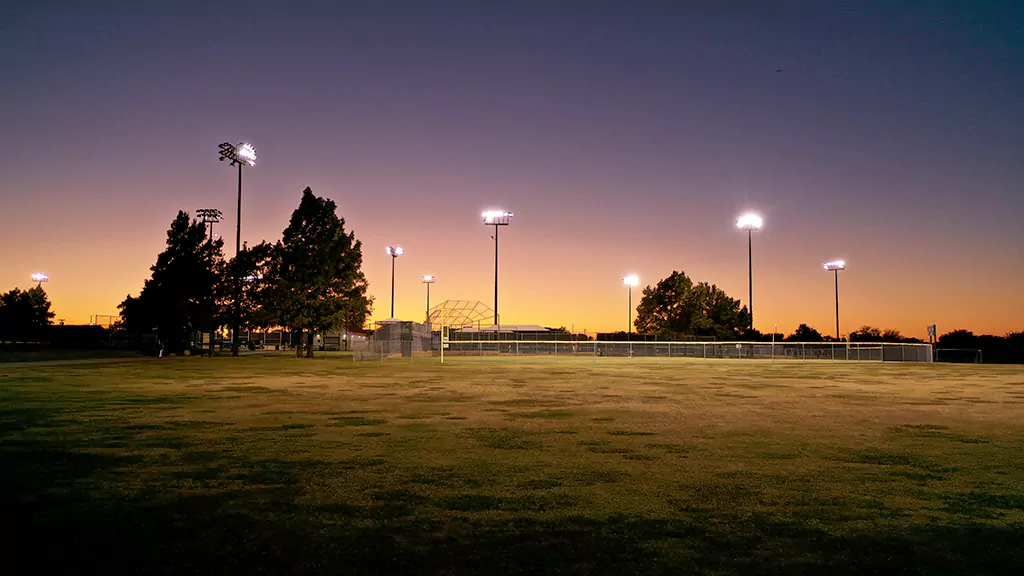
6. Practical Design Targets for Non-World-Cup Projects
While large tournaments operate at very high performance levels, many clubs, schools, and municipalities do not need — or cannot justify — full broadcast-class systems. Nonetheless, they can still apply key lessons from elite projects to improve lighting quality.
6.1 Recommended Ranges
| Parameter |
Typical Target (Training / Club) |
Higher Target (Televised) |
| Horizontal illuminance |
300–800 lux |
1000–2000 lux |
| Vertical illuminance |
200–400 lux |
800–1500 lux |
| Uniformity (Emin/Eavg) |
≥ 0.6 |
≥ 0.7 |
| CRI |
≥ 80 |
≥ 90 |
| CCT |
5000–5700 K |
5000–5700 K |
| Flicker |
< 3% |
< 1% |
6.2 From Numbers to Real Design
These values are starting points, not rigid rules. The real strength of a lighting solution comes from how luminaires, optics, aiming, and controls work together on a specific pitch. That’s why simulation and engineering support are so important — especially when reusing existing poles or upgrading from metal halide.
7. Turning World Cup Experience into Local Advantage
Major tournaments have accelerated innovation in sports lighting, but local clubs can benefit just as much from these advances. By focusing on
visual performance instead of only “more lux”, facility owners can create a noticeably better environment for players, coaches, referees, and fans.
Good stadium lighting delivers:
- Clear visibility and faster reactions for players.
- Reduced glare and fatigue over the whole match.
- More consistent and fair conditions across all areas of the pitch.
- Better images for media coverage and club promotion.

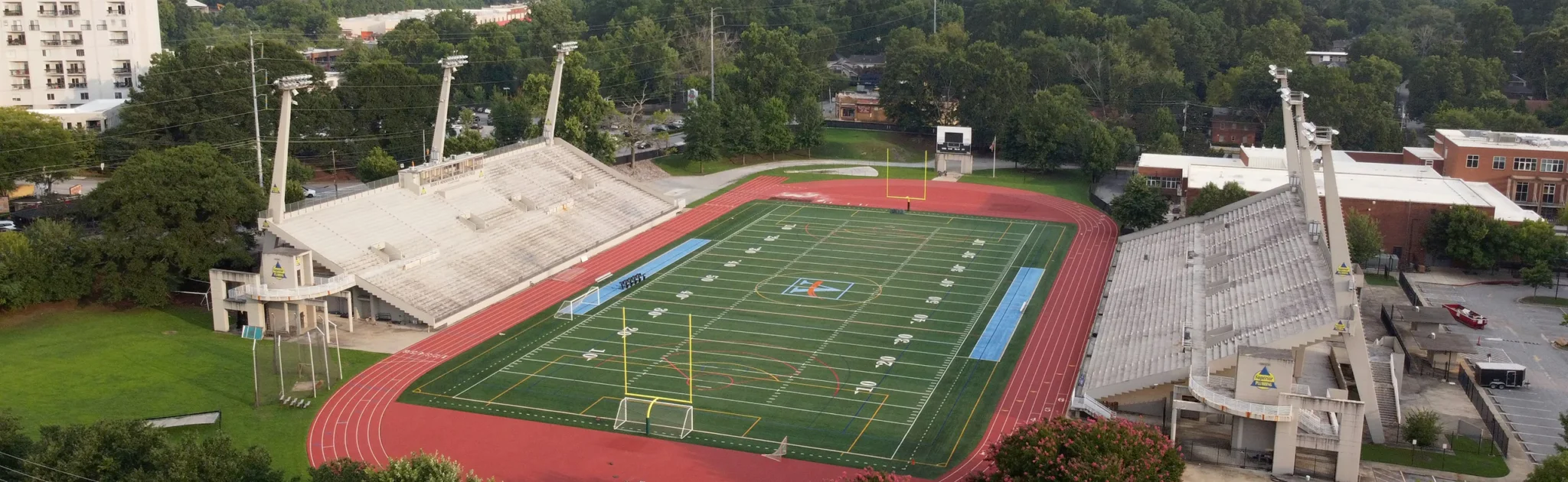
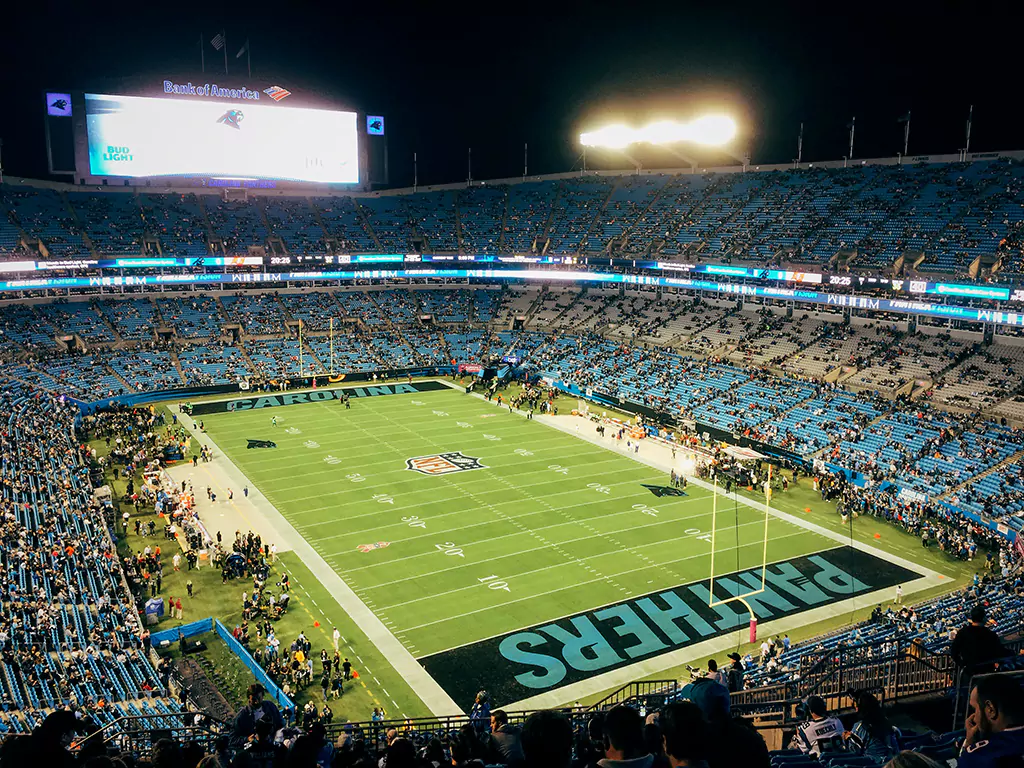
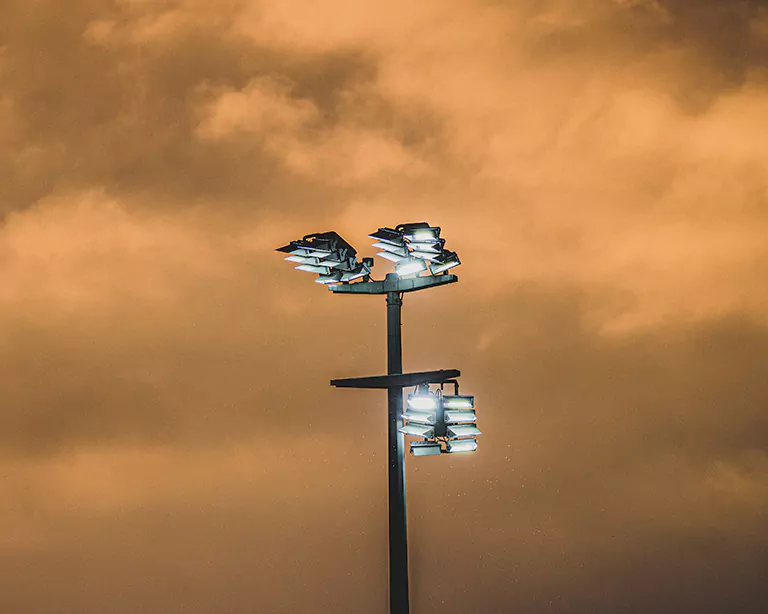 For players, this translates into a more comfortable visual environment where they can freely look up, turn, and jump without fear of being dazzled by the lights.