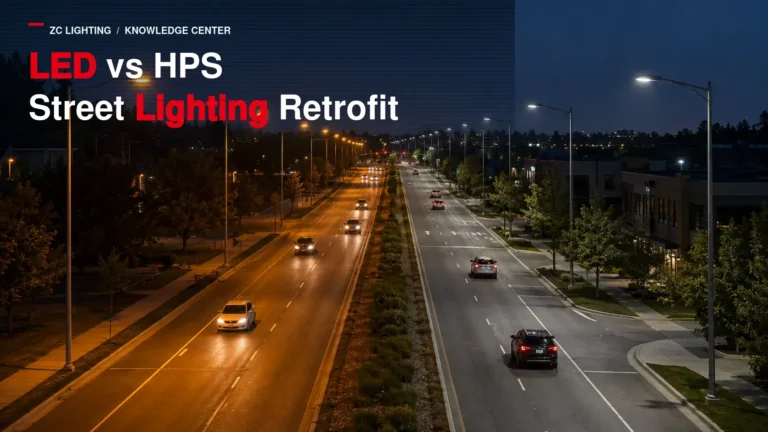
LED vs HPS Street Lighting Retrofit and ROI | ZC Lighting
Home/Knowledge Center/Street Lighting Guide Street Lighting Engineering Guide LED vs HPS Street Lighting: Retrofit Planning, Energy Savings and Lifecycle ROI A practical guide to auditing,

Home/Knowledge Center/Street Lighting Guide Street Lighting Engineering Guide LED vs HPS Street Lighting: Retrofit Planning, Energy Savings and Lifecycle ROI A practical guide to auditing,
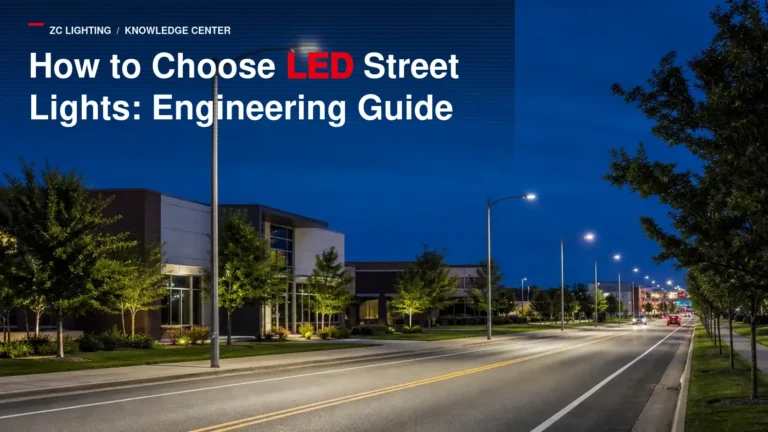
Home/Knowledge Center/Street Lighting Guide Street Lighting Engineering Guide How to Choose LED Street Lights: Wattage, Optics, Pole Height and Spacing A practical engineering guide to
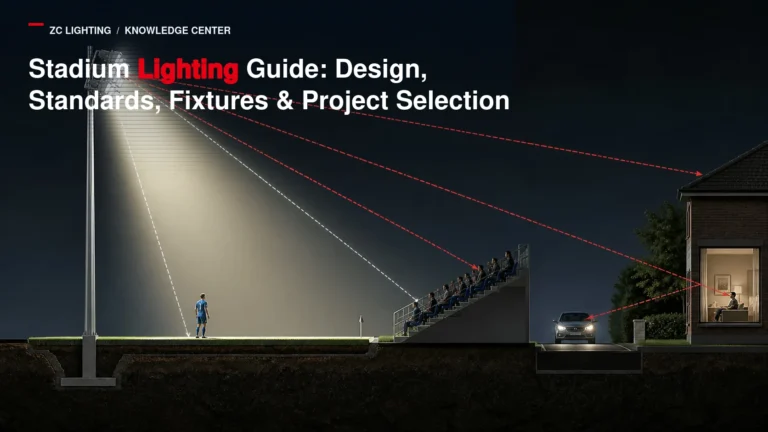
Home / Knowledge Center / Sports Lighting Engineering Decisions Engineering Decision Center · Stadium Lighting Stadium Lighting: A Practical Guide to Design, Fixtures and Project
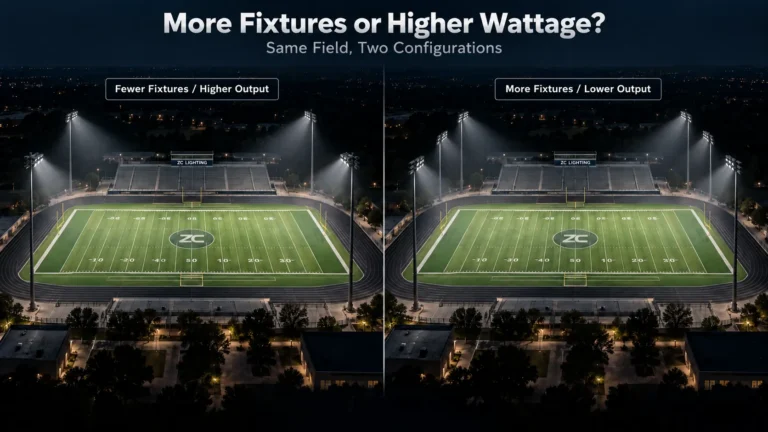
Home › Resources › Engineering Decision Center Engineering Decision Center · C01 More Fixtures or Higher Wattage: Which Is Better for Sports Lighting? Two designs
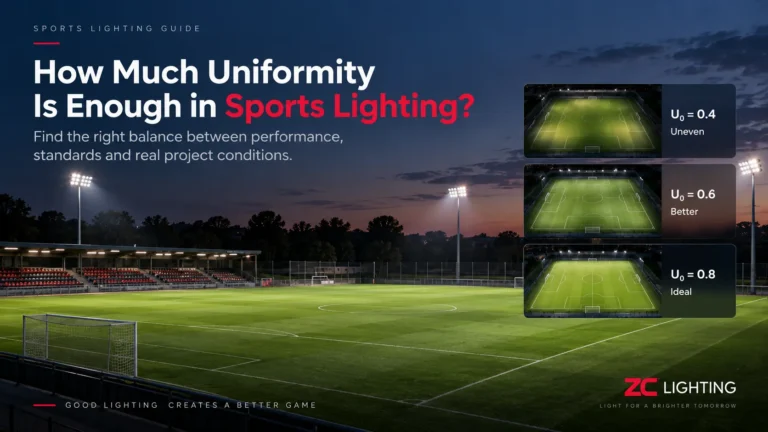
Home › Resources › Engineering Decision Center Engineering Decision Center · C05 How Much Uniformity Is Enough in Sports Lighting? Uniformity should be high enough
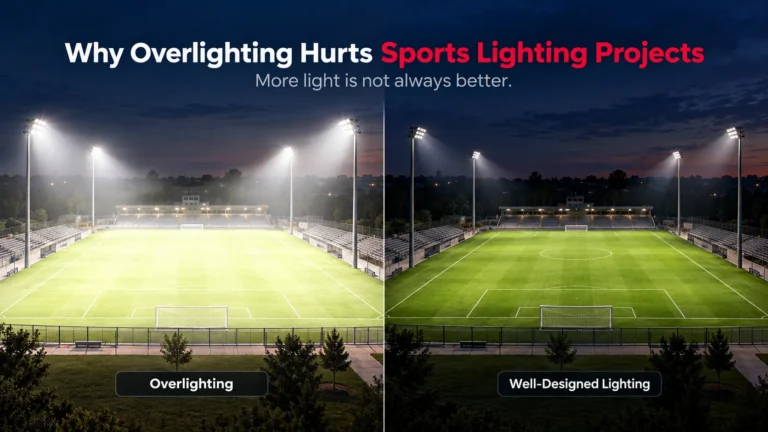
Home › Resources › Engineering Decision Center Engineering Decision Center · C06 Why Overlighting Can Hurt a Sports Lighting Project More light is useful only
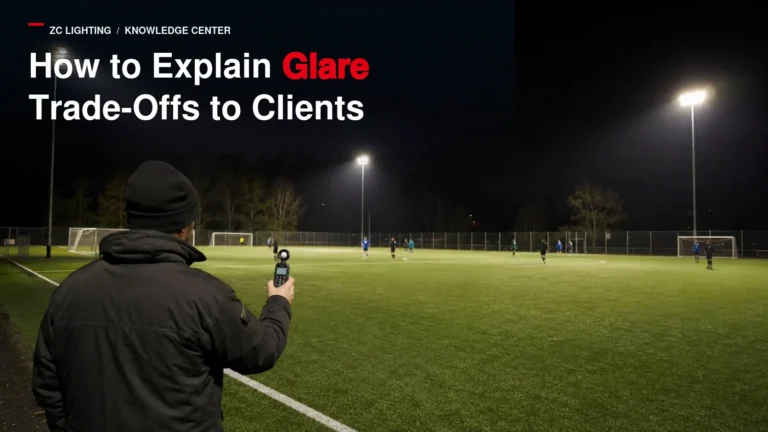
Home / Knowledge Center / Sports Lighting Engineering Decisions Engineering Decision Center · D05 How to Explain Glare Trade-Offs to Clients Clients rarely need another
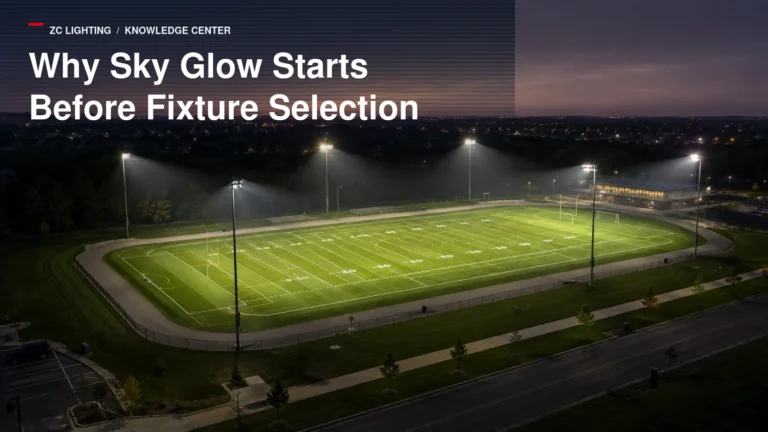
Sky glow is not only “light emitted upward from the luminaire.” It can also be created by light reflected from the field and surrounding surfaces and then scattered in the atmosphere. That is why the project can create or reduce sky-glow risk before the final fixture is chosen.
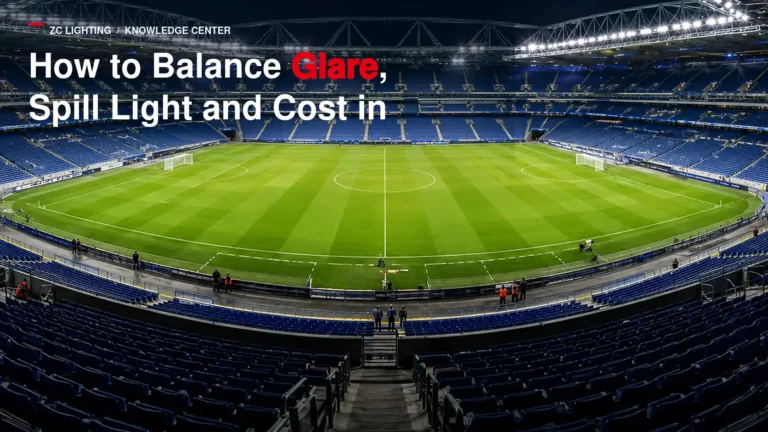
Skip to article Home / Knowledge Center / Sports Lighting Engineering Decisions Engineering Decision Center · D03 How to Balance Glare, Spill Light and Cost
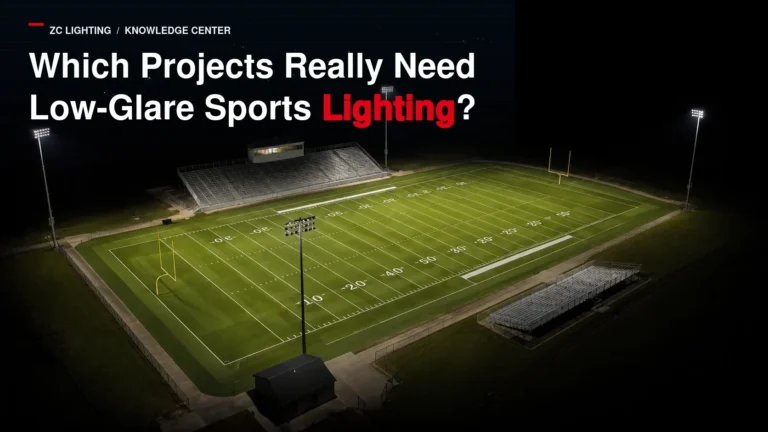
Not every sports field needs the same glare-control priority. A training ground in an isolated site, a padel court beside homes and a broadcast stadium create different observer, boundary and approval risks. This guide helps classify the project before choosing a “low-glare” solution
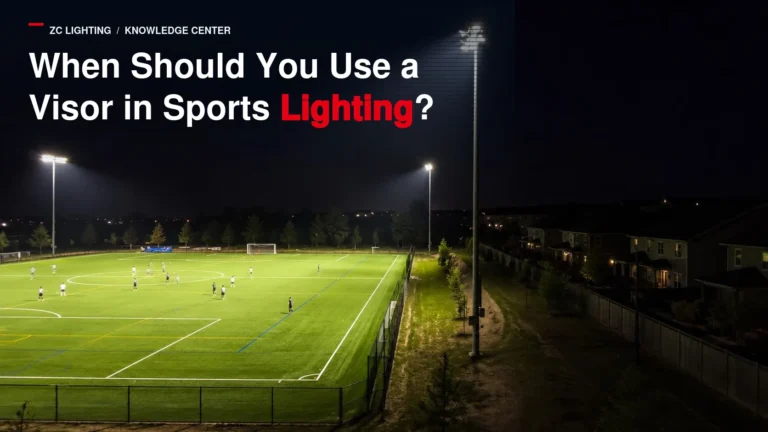
Skip to article Home / Knowledge Center / Sports Lighting Engineering Decisions Engineering Decision Center · D01 When Should You Use a Visor in Sports
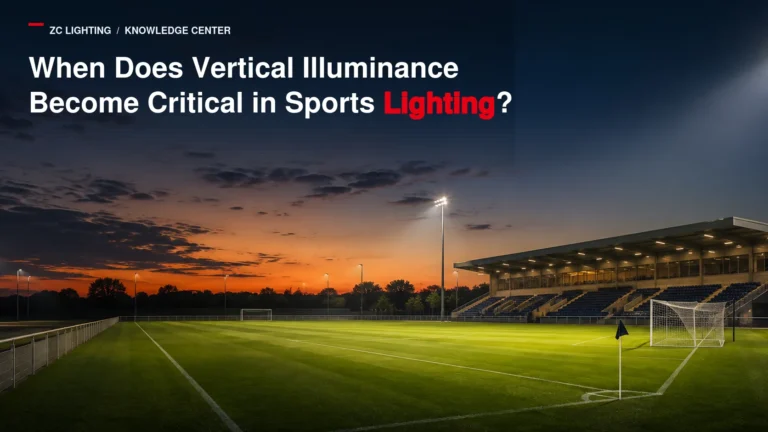
Vertical illuminance becomes critical when the project must reveal players, objects or faces from defined viewing directions. The key decision is not simply “how much Ev,” but which planes and viewpoints actually matter.
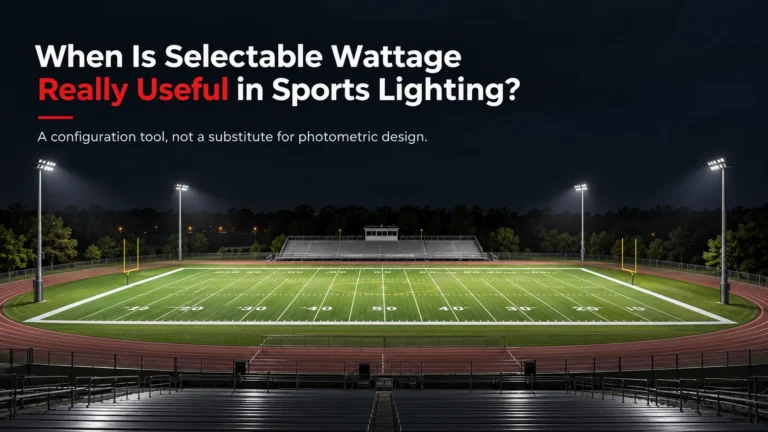
Selectable wattage can simplify a product platform and preserve controlled output flexibility, but it should not be confused with operational dimming or used to hide an unfinished photometric design.
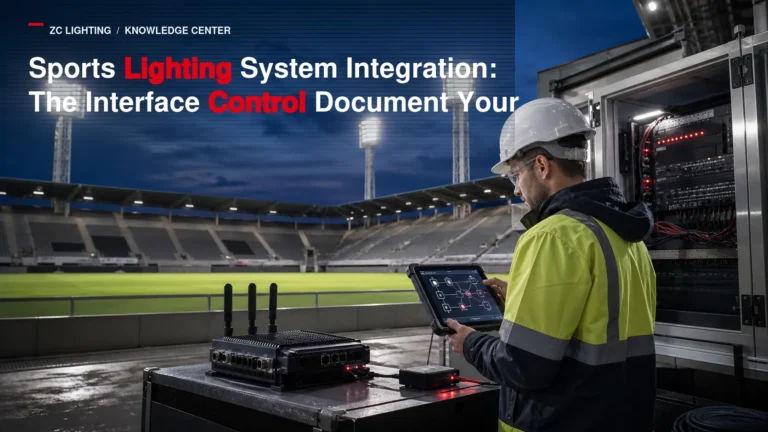
A luminaire can support a control protocol and still be difficult to integrate. The missing layer is often not another feature—it is a clear definition of interfaces, responsibility boundaries, fallback behavior and acceptance tests.
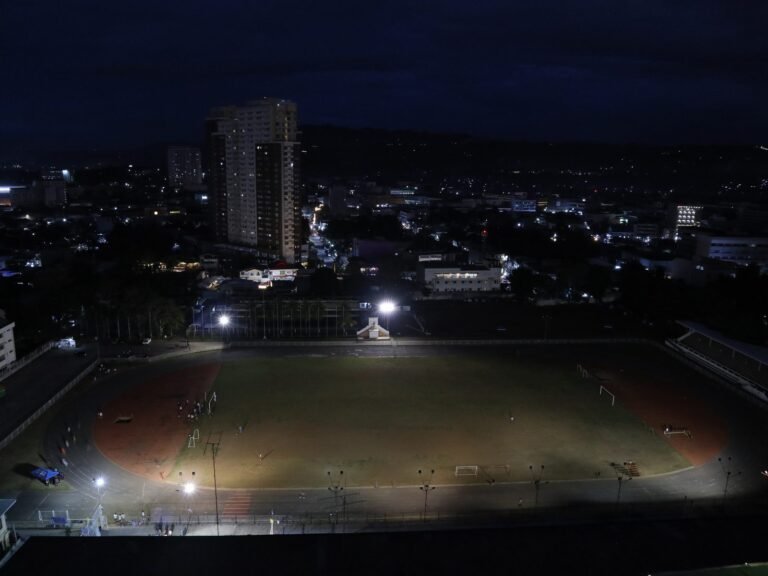
A sports-lighting project does not stop changing when the acceptance test is complete. Dirt, weather, component replacement, bracket movement, control changes and operating history can all alter the installed condition.
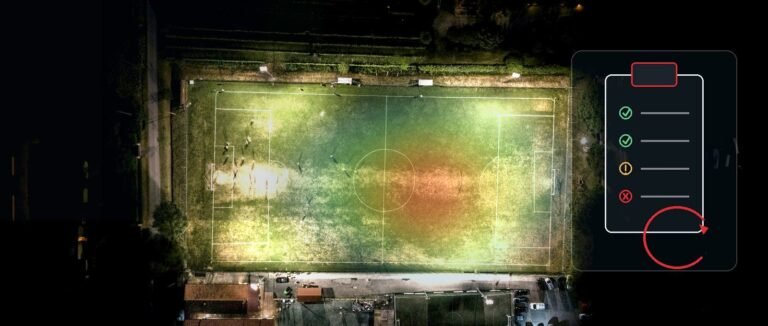
Photometric approval does not prevent change. It creates a controlled baseline so every later change can be screened, recalculated where necessary, approved and propagated into the as-built project.
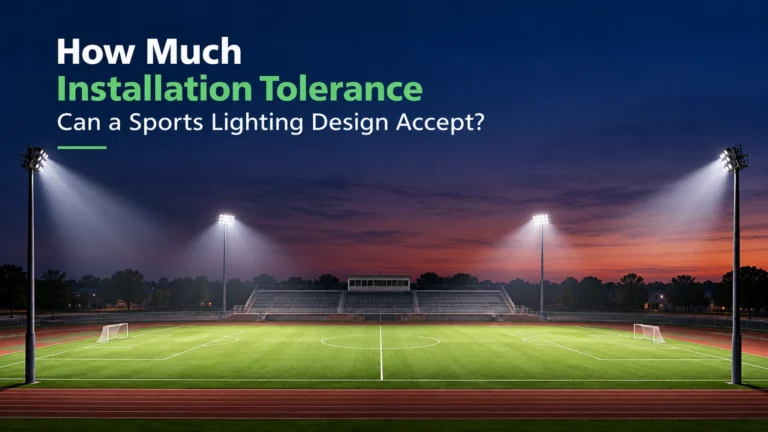
Installation tolerance is not one universal angle. It should be defined from design sensitivity, throw distance, optical distribution, observer constraints, verification capability and acceptance margin.
A safe substitute does not merely match wattage or lumens. It must remain suitable for the approved photometric duty, structure, electrical interfaces, controls, environment and project evidence.
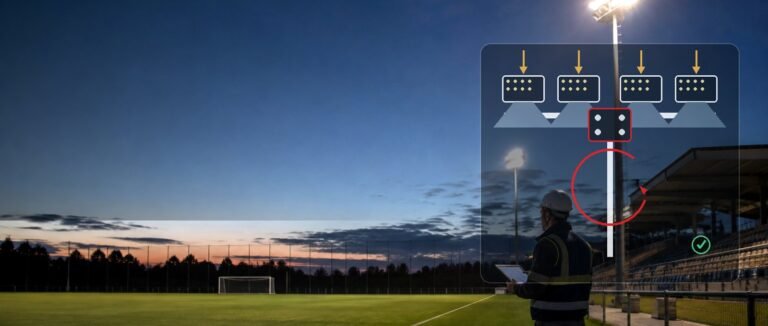
The crossarm is the structural and installation interface between the luminaires and the pole. Reuse should be based on the complete load path and the approved pole-head layout—not on available mounting space alone.
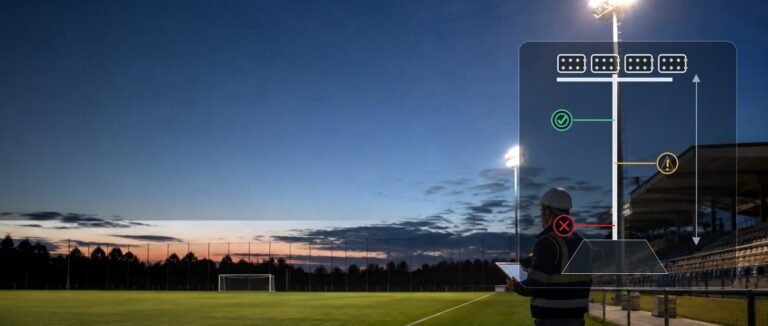
Pole reuse is defensible only when the structure can support the complete proposed arrangement and the existing geometry can achieve the approved lighting result without unacceptable compromise