Direct Answer
Plan stadium lighting from required performance targets, not from fixture wattage alone. First compare horizontal illuminance, vertical illuminance, uniformity and glare control. Then review optics, pole geometry, controls, electrical load and lifecycle reliability before selecting the final LED stadium lights.
Key Takeaways
What Is Stadium Lighting?
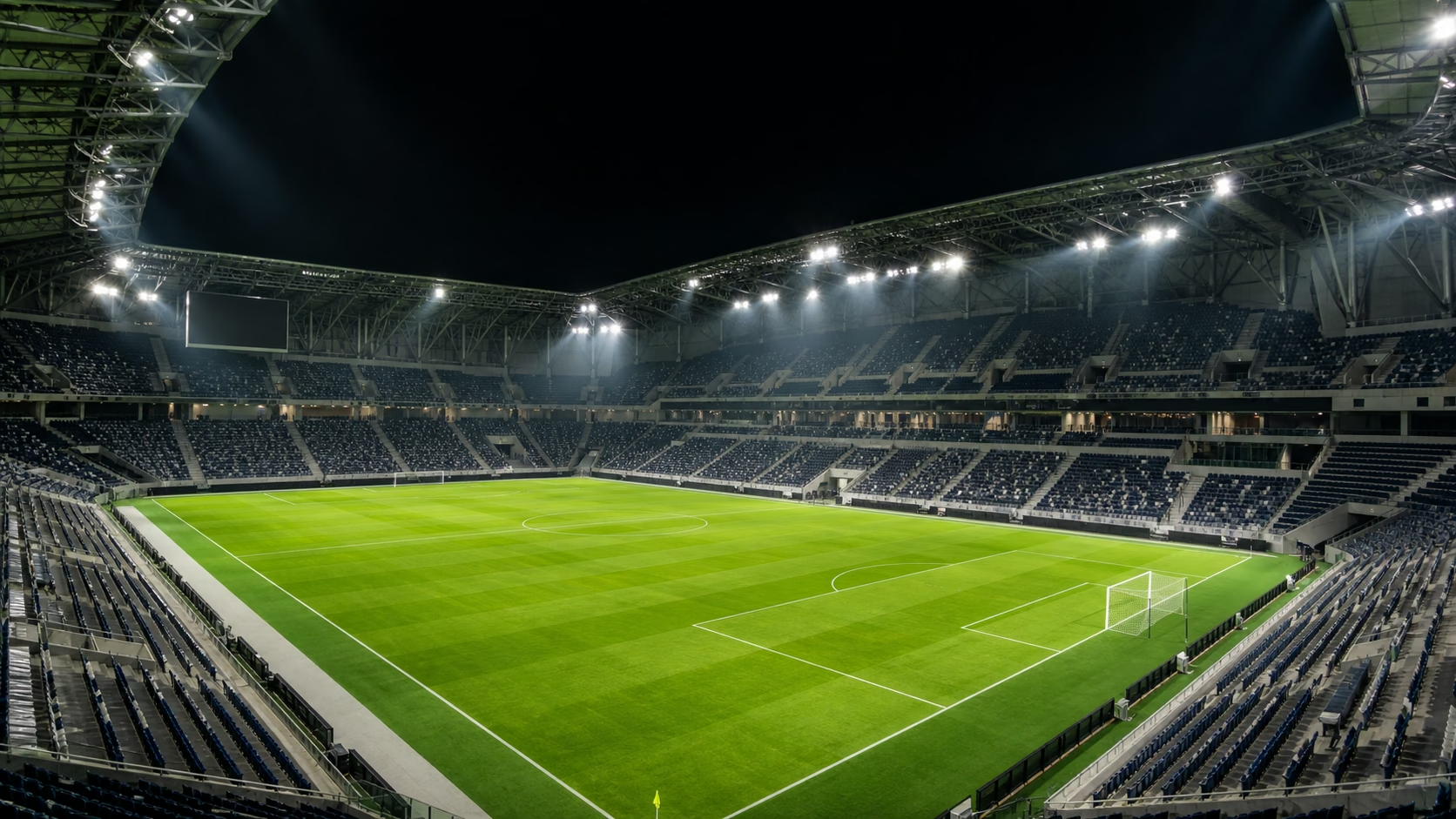
Stadium lighting is a high-performance sports lighting system that illuminates large playing areas while controlling visibility, glare, spill light and operating reliability.
Unlike general outdoor lighting, stadium lighting must account for long projection distances, high mounting positions, fast-moving objects, spectator views, broadcast cameras, nearby roads or buildings, and maintenance access.
A complete LED stadium lighting system may include high-output floodlights, high-mast poles, roof-mounted structures, optical distributions, drivers, surge protection, dimming controls, brackets and a photometric aiming schedule.
What Performance Requirements Should Stadium Lighting Meet?
Evaluate a stadium lighting design as a complete performance system, not only by average illuminance.
The exact requirements depend on the sport, competition level, governing standard, broadcast requirement, venue geometry and local authority. For European projects, designers often evaluate EN 12193 sports lighting requirements. Other projects may follow federation rules, owner specifications or FIFA and broadcast stadium lighting criteria.
| Parameter | What It Measures | Why It Matters |
|---|---|---|
| Horizontal illuminance | Light reaching the playing surface | General visibility for players and officials |
| Vertical illuminance | Light reaching vertical planes | Player recognition, camera visibility and broadcast quality |
| Uniformity | Distribution consistency across the field | Reduces hot spots, dark areas and visual fatigue |
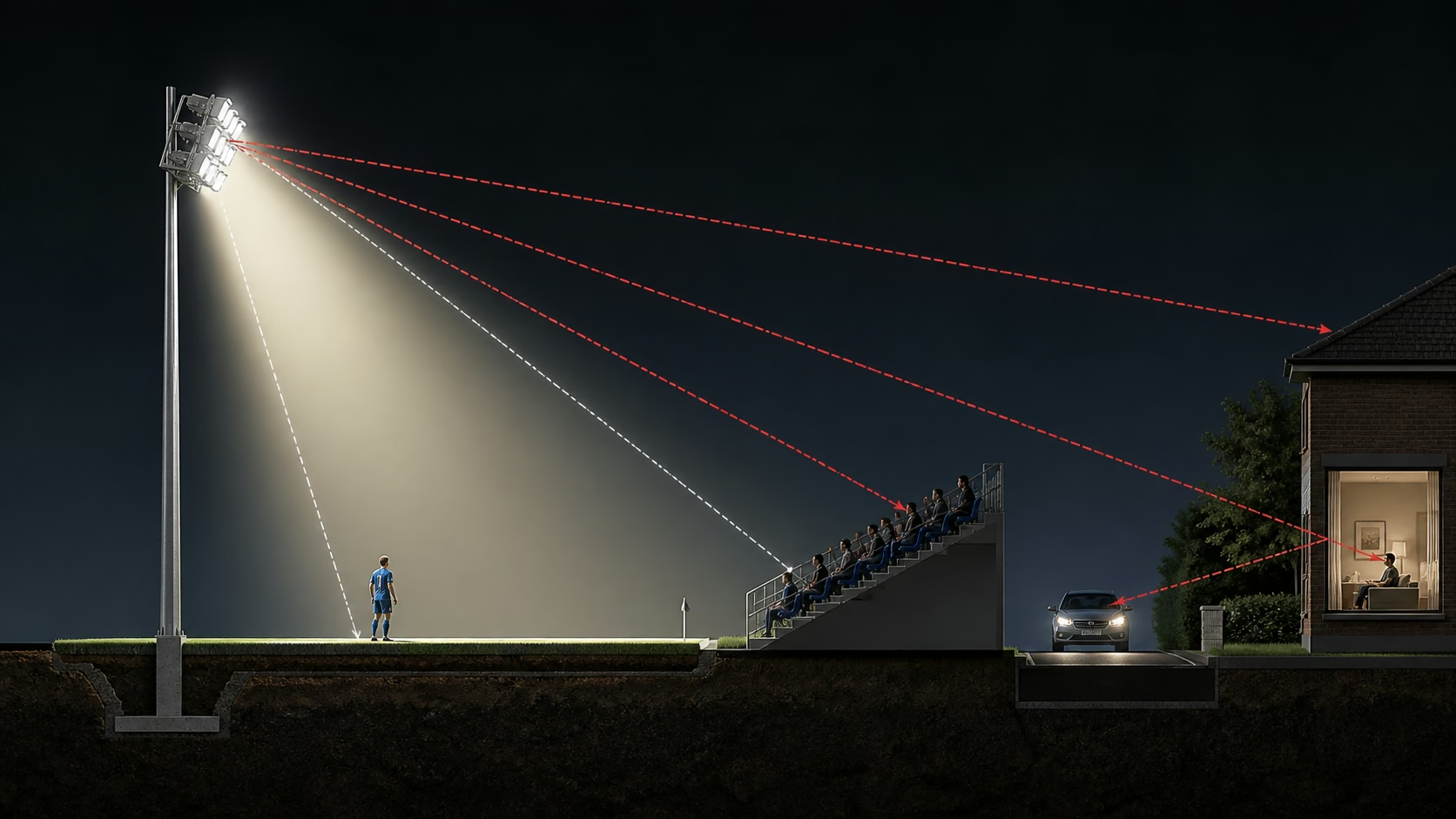
| Glare rating | Visual discomfort caused by bright luminaires | Protects players, spectators, officials and nearby observers |
| CCT and CRI | Color appearance and color rendering | Supports visual comfort and camera appearance |
| Flicker performance | Stability of light output | Important for slow-motion and high-speed cameras |
| Spill light | Light reaching areas outside the target field | Important for roads, homes, property boundaries and approvals |
| System power | Total connected load | Affects operating cost and electrical infrastructure |
How Do You Select LED Stadium Lights?
Select LED stadium lights by photometric performance, optical control, thermal design, electrical reliability and project suitability, not by wattage alone.
Large venues often need multiple beam distributions. Narrow optics support long-distance projection from high poles. Medium, wide or asymmetric distributions can work better for nearer zones. As a result, one beam angle across the whole venue can create overlap, hot spots, weak corners or excessive glare.
How Does Stadium Lighting Design Work?
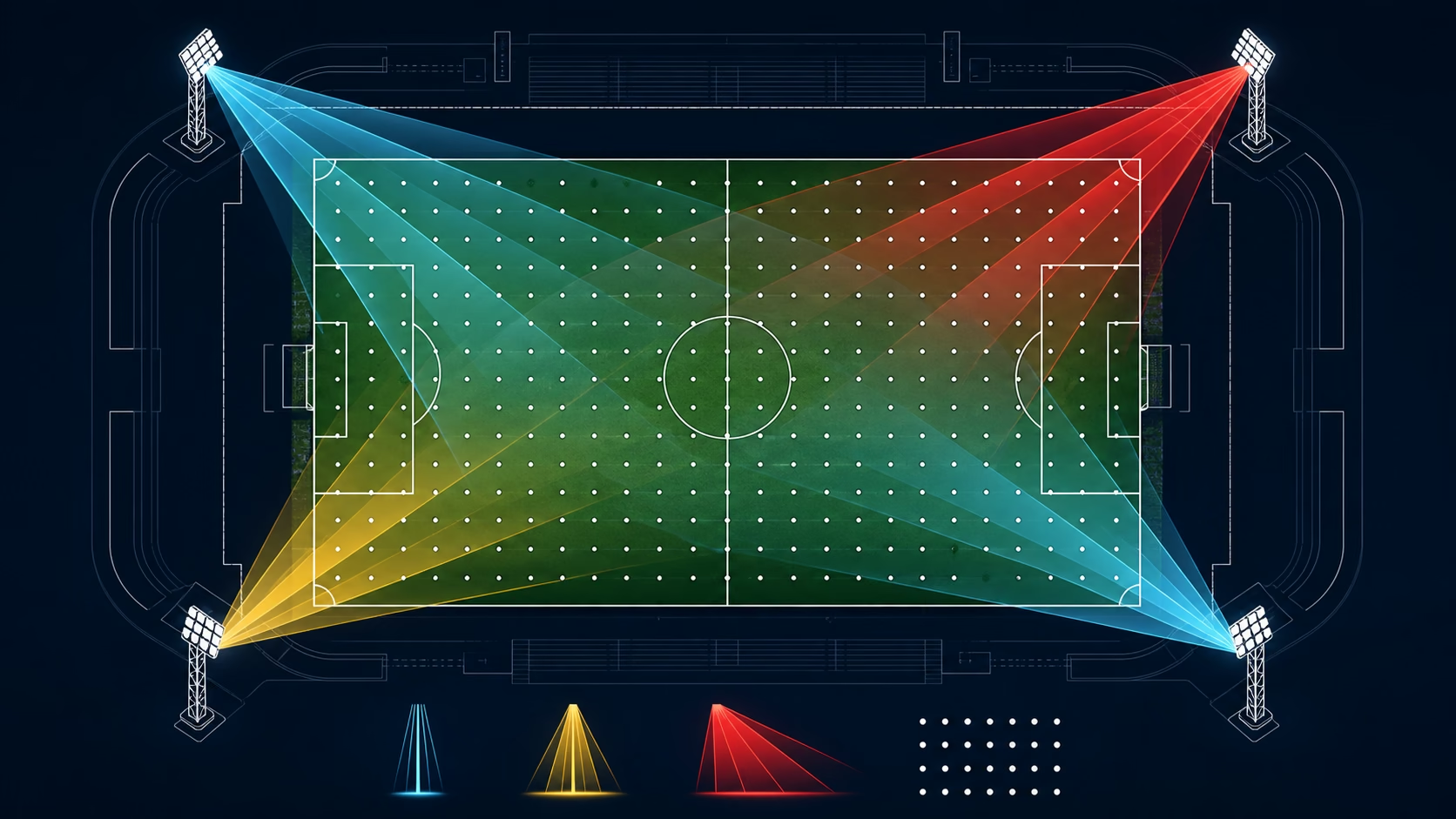
Professional stadium lighting design starts with project data, establishes performance targets, builds a photometric model, selects optics and fixtures, optimizes aiming, and verifies the final results.
Collect project inputs
Gather sport type, field dimensions, pole locations, pole heights, mounting options, voltage, environmental conditions, broadcast requirements and control needs.
Define lighting criteria
Set horizontal illuminance, vertical illuminance, uniformity, glare limits, CRI, CCT, flicker and spill-light restrictions before fixture selection.
Build the photometric model
Use IES or LDT files to compare fixture quantity, wattage, beam distribution, pole configuration, aiming angles and field results.
Optimize positions and aiming
Assign each luminaire to a target zone and balance projection distance, glare, vertical illumination and spill light through simulation iterations.
Review electrical and structural limits
Check connected load, circuit distribution, fixture weight, windage, mounting brackets, cable distances and maintenance access.
Prepare the final proposal
Deliver a fixture schedule, photometric report, lux calculation, uniformity result, aiming schedule, datasheets and commercial quotation.
How Many Stadium Lights Does a Project Need?
You cannot calculate the number of stadium lights reliably from field area and wattage alone. A photometric simulation must confirm the quantity.
Fixture quantity depends on field dimensions, required illuminance, mounting height, pole locations, projection distance, luminaire output, beam distribution, uniformity target, glare requirement, vertical illuminance and maintenance factor.
Fewer very high-output fixtures may reduce quantity, but they can create glare and uniformity risks. More lower-output fixtures may increase aiming flexibility, but they also add installation cost and maintenance points.
What Pole Height Is Best for Stadium Lighting?
The correct pole height depends on field dimensions, lighting level, setback distance, glare control and required beam projection.
Higher mounting positions can improve distribution across large fields, but they also increase projection distance and structural requirements. Lower mounting positions may reduce structural cost. However, they can increase glare, steep aiming angles and uniformity challenges.
For large venues, review high mast lighting geometry early. This matters even more when an existing stadium lighting retrofit project limits pole locations.
Why Are Uniformity and Vertical Illuminance Important?
Uniformity shows how consistently the playing surface receives light. Vertical illuminance shows how clearly players, faces, objects and camera-facing surfaces appear.
Average lux can hide serious problems such as bright hot spots, dark corners, uneven goal areas or weak camera-facing light. A stadium may have acceptable horizontal illuminance and still perform poorly for broadcasting if vertical illumination is inadequate or unbalanced.
Therefore, project managers should request both average illuminance and visual comfort evidence. Broadcast projects should also evaluate vertical illuminance from relevant camera directions.
What Are the Most Common Stadium Lighting Mistakes?
Most stadium lighting problems result from selecting equipment before completing the lighting design or evaluating only a limited set of performance metrics.
How Should B2B Buyers Compare Stadium Lighting Suppliers?
B2B buyers should compare suppliers using both technical performance and total project value rather than unit price alone.
| Evaluation Area | What to Request | Why It Matters |
|---|---|---|
| Technical evidence | IES/LDT files, lighting calculation, optical options, glare review, CRI/CCT and flicker data | Allows objective comparison between stadium lighting fixtures |
| Project support | Simulation, fixture layout, aiming schedule, documentation and control guidance | Reduces design uncertainty and installation risk |
| Commercial value | Total connected power, fixture quantity, warranty, spare parts, shipping and maintenance needs | Shows lifecycle cost rather than only fixture price |
Stadium Lighting RFQ Workflow
A detailed RFQ allows the lighting manufacturer to prepare a more accurate fixture selection, lighting calculation and quotation.
- Send CAD, PDF or dimensioned drawings showing the field, poles, grandstands, roof structures and surrounding areas.
- Define the sport and use case, such as football, soccer, rugby, baseball, cricket or multi-purpose stadium use.
- Provide lighting targets for illuminance, uniformity, glare, CCT, CRI, flicker and broadcast level where available.
- Share electrical information including input voltage, frequency, existing infrastructure, dimming needs and control protocol.
- Request a photometric proposal rather than only a fixture price.
- Compare technical and commercial results on the same basis.
Product Context
Different stadium projects need different optical-control approaches, so product selection should follow the project classification and photometric design.
Do not infer project compliance from a product name or marketing label. Confirm current photometric files, configuration, accessories and applicable project requirements for the selected model.
Frequently Asked Questions About Stadium Lighting
What type of lighting do modern stadiums use?
Modern stadiums increasingly use high-output LED floodlighting. LED systems provide controllable optics, instant switching, dimming, high system efficiency and lower maintenance than many traditional HID systems.
How many watts does stadium lighting require?
There is no universal wattage requirement. Fixture wattage and quantity depend on field size, target lighting level, mounting geometry, optical distribution and photometric performance.
How many LED lights does a football stadium need?
A photometric simulation must calculate the required quantity. Stadium size alone cannot determine fixture quantity.
What is the best color temperature for stadium lighting?
The appropriate CCT depends on project requirements, competition level, broadcast needs and local preference. Many sports projects use neutral to cool white light, but the project brief should specify the final choice.
Does higher wattage always mean better stadium lighting?
No. Higher wattage can increase installed power and glare without improving useful field performance. Optical efficiency, aiming and uniformity are more important than wattage alone.
Can one lighting system serve both training and match modes?
Yes, if the design includes suitable controls and dimming scenes. Define training, match and maintenance modes during design rather than adding them after installation.
Need a Project-Specific Stadium Lighting Proposal?
Send ZC Lighting the venue type, field dimensions, pole height and locations, target lighting criteria, nearby sensitive areas and any existing design files. The technical team can review suitable product configurations and photometric options for the project.