RGBW can transform a venue’s experience, but it is not a default upgrade for every project. This buyer guide explains who truly needs RGBW, who should skip it, how to think in use-cases and workflows, and what a professional ‘no-hype’ decision framework looks like.
- On this page
- Why RGBW is misunderstood in stadium projects
- Who really benefits from RGBW (good-fit scenarios)
- Who usually does not need RGBW (skip scenarios)
- The hidden cost: operation, commissioning, and complexity
- A professional RGBW scene strategy (keep it minimal)
- Control protocols and workflow planning
- How to evaluate integrated RGBW approaches responsibly
- Buyer checklist and common pitfalls
Why RGBW is misunderstood in stadium projects
RGBW has become a popular talking point in stadium lighting. Some vendors present it as a “premium feature,” while some buyers fear it as unnecessary complexity. Both perspectives miss the key question: what is the real use-case?
RGBW is valuable when it supports real venue goals—ceremonies, identity moments, event scheduling, fan experience. It is wasteful when it is purchased without a plan to operate it. This article takes a professional approach: scenario-based, no hype, and focused on deliverability.
Who really benefits from RGBW (good-fit scenarios)
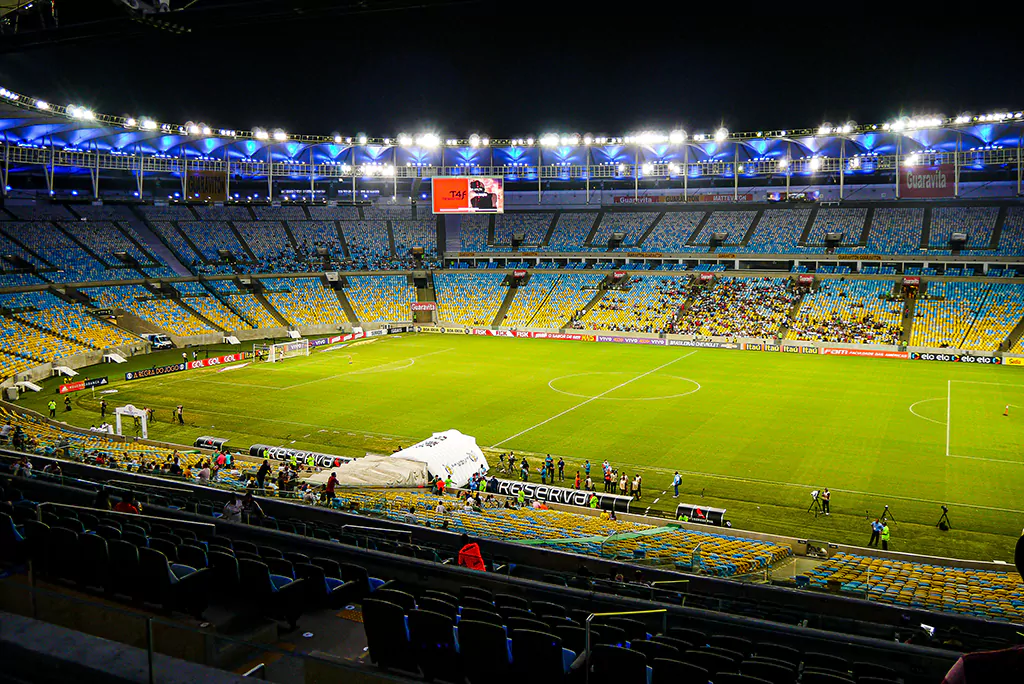
RGBW is a good fit when the venue has clear experience goals and will use scenes regularly. Typical good-fit scenarios include:
- Multi-purpose venues: sports + events + ceremonies throughout the year
- Brand identity venues: stadiums positioned as city landmarks
- Broadcast and media moments: where transitions and ceremonies matter
- Operational readiness: staff can run predefined scenes consistently
In these venues, RGBW is not “extra.” It becomes part of the venue’s commercial and identity value.
Who usually does not need RGBW (skip scenarios)
RGBW is often unnecessary when the venue’s priority is simple, low-cost operation. Common skip scenarios include:
- Training fields and community venues: long hours, cost-sensitive, match-only needs
- Projects without operators: no staff to run scenes reliably
- Venues with strict separation: atmosphere handled by separate entertainment systems
Skipping RGBW in these cases is not “low-end.” It is professional budgeting.
Credibility point: The best suppliers do not push RGBW everywhere. They help buyers avoid overspending and protect long-term operability.
The hidden cost: operation, commissioning, and complexity
The hidden cost of RGBW is rarely the LEDs. It is:
- Commissioning complexity: addressing, grouping, scene mapping
- Control protocols: more interfaces, more potential failure points
- Operator training: people, not hardware, decide whether scenes are actually used
- Maintenance and troubleshooting: more layers to diagnose when something is wrong
That does not mean RGBW is “bad.” It means RGBW should be treated as a system decision. When planned correctly, the ROI can be strong. When planned poorly, it becomes an unused feature.
A professional RGBW scene strategy (keep it minimal)
Professional RGBW strategy is minimal, not maximal. The best venues run a few meaningful scenes:
- Match mode: stable white lighting
- Training mode: efficient operation
- Ceremony mode: controlled transitions
- Identity mode: team colors or signature look
Avoid building a library of dozens of scenes. Scenes that are never used create confusion and risk. Keep scene naming professional and consistent, and define who has permission to edit scenes.
Control protocols and workflow planning
RGBW can be controlled through different protocols depending on project needs. The important point is workflow:
- Who triggers scenes? operator, event staff, automation schedule?
- Where is the control point? local controller, network system, or integrated interface?
- What is the fallback? if advanced scenes fail, match lighting must remain stable
A professional project defines these answers before ordering hardware. This is also where documentation and SOPs become essential.
Workflow Definition (RGBW)
- Scene list: 4-8 scenes maximum, with clear meaning
- Permissions: run vs edit vs admin separation
- Fallback: match lighting stable mode always available
- Reset SOP: what to do after restart or disconnect
- Training: at least two operators can run the workflow
How to evaluate integrated RGBW approaches responsibly
Some venues look for an integrated approach: match lighting and atmosphere capability in a unified workflow. This can be cost-effective when it reduces duplicated devices and simplifies installation—but it must be evaluated responsibly.
A responsible evaluation checks:
- Does the venue truly need atmosphere scenes often enough?
- Can the workflow remain simple for operators?
- Is match lighting performance protected as a non-negotiable requirement?
If these answers are clear, integrated RGBW capability can be a strong solution for professional venues with smarter budgets.
Related reading: Combine Match & Atmosphere Lighting
Buyer checklist and common pitfalls
Use this checklist to avoid overspending and overcomplicating:
RGBW Buyer Checklist
- List real use-cases (events, ceremonies, branding moments) and frequency
- Define who will operate scenes and who can edit them
- Confirm the minimum scene list and keep it small
- Define fallback mode and reset behavior
- Plan commissioning steps and documentation requirements
- Ensure match lighting performance remains the priority
Common pitfalls:
- Buying RGBW without an operational plan
- Building too many scenes
- No permissions or SOP
- No fallback behavior
A professional RGBW project is not about colors. It is about workflows, deliverability, and long-term use.
FAQ
Does RGBW improve match lighting performance?
RGBW is primarily for atmosphere and experience workflows. Match lighting performance still depends on optics, aiming, glare control, and stable white-light operation.
Why do many RGBW projects end up underused?
Because the venue lacks a clear scene plan, operator ownership, or a simple workflow. Without these, scenes are rarely used after commissioning.
What is the safest way to adopt RGBW?
Start with a minimal scene set, define permissions and fallback modes, and ensure at least two operators can run the workflow confidently.
RGBW Readiness: A Venue Maturity Model
RGBW success depends on venue maturity. A simple maturity model helps buyers decide honestly:
- Level 1 – Match/Training Only: minimal scenes; ROI comes from zoning and dimming.
- Level 2 – Structured Operation: scenes and scheduling used weekly; basic monitoring.
- Level 3 – Event-Ready: ceremonies and identity moments; trained operators; scene discipline.
- Level 4 – Entertainment-Driven: frequent productions; dedicated show operators; complex programming.
RGBW typically belongs in Level 3 and Level 4. Level 1 venues often gain more from better optics, aiming, and reliable controls.
Professional Scene Templates (Examples You Can Copy)
Below are scene templates that are professional and commonly useful:
- Identity Wash: team colors at low intensity; stable and repeatable.
- Pre-match Build: controlled transition from warm-up to match-ready.
- Celebration Moment: short, timed highlight (only if the venue has operator capacity).
- Community Night: calmer atmosphere for non-match activities.
These templates can be executed with a small number of scenes. The goal is consistency—not endless variations.
RGBW Commissioning Checklist (No-Hype)
RGBW Commissioning Steps
- Confirm match lighting baseline first (aiming, groups, match scene)
- Lock the scene list (4–8 scenes max) and finalize names
- Set permissions (run vs edit) to prevent accidental changes
- Validate fallback behavior (match scene always available)
- Train at least two operators; record a short SOP video
How to Talk About RGBW Without Overpromising
Professional buyers dislike hype. The best messaging is honest: RGBW is valuable when the venue will use it. Otherwise, investing in reliable match lighting and practical controls is often smarter. This tone also improves brand credibility and long-term conversion.
Good Fit vs Skip: A Simple Scenario Grid
If you want a fast decision, use this scenario grid:
- Good fit: venues with frequent ceremonies, identity moments, and trained operators.
- Maybe: venues with occasional events—if the scene list is minimal and workflow is unified.
- Skip: training fields and venues with no operator ownership or strict budget constraints.
RGBW and Branding: What Actually Works
The most effective RGBW branding is usually subtle and consistent. Strong results often come from:
- Team-color identity scenes at controlled intensity
- Short ceremony transitions, not continuous color cycling
- Architectural accents that complement the venue design
Over-saturated or constantly changing effects can feel unprofessional and may create complaints. The goal is a premium identity moment, not visual noise.
Maintenance, Ownership, and Long-Term Use
RGBW projects underperform when nobody owns the system after commissioning. A professional handover includes:
- Scene library documentation and locked naming
- Operator training and refresh plan
- Reset/fallback SOP and a quick reference card
When ownership is clear, RGBW becomes a reliable asset rather than a forgotten feature.
Final Message: Professional = Honest
RGBW can be powerful, but the most professional approach is honest recommendation: use it where it will be used; skip it where it will not. That credibility is what drives long-term conversion in B2B stadium lighting.
RGBW Myths (What Buyers Often Assume)
- Myth 1: “RGBW automatically makes a stadium look premium.”
Reality: premium comes from controlled, consistent scenes and good optics—not from random effects. - Myth 2: “More scenes = more value.”
Reality: more scenes often means more confusion and less usage. - Myth 3: “RGBW is only for big professional stadiums.”
Reality: smaller venues can benefit if they host frequent events and have operator ownership.
How to Specify RGBW Without Making Your Tender Impossible
To keep procurement professional, specify outcomes and workflow—not vague “RGBW support.” Useful specification points include:
- maximum number of predefined scenes (e.g., 8 or fewer)
- scene naming and permission model (run vs edit)
- fallback mode behavior (match-safe baseline)
- commissioning deliverables (SOPs + documentation)
This approach prevents vendors from selling complexity that cannot be delivered or operated.
Where RGBW Creates Real Value (Commercial Logic)
RGBW contributes value when it supports revenue or brand outcomes:
- More event bookings: venues that can offer flexible ceremony and identity experiences can attract more events.
- Stronger sponsorship packages: branded moments and team-color identity scenes can be integrated into sponsorship narratives.
- Higher venue visibility: landmark identity moments strengthen city branding and media exposure.
If your venue does not monetize or use these outcomes, RGBW may still be nice—but it may not be a priority.
Implementation Plan (Low Risk)
Low-Risk Implementation
- Start with match lighting baseline and lock it
- Add 2–4 identity/ceremony scenes only
- Train operators and document SOP
- Run a rehearsal and validate reset/fallback behavior
- Expand scene library only after proven usage
Acceptance and Handover: How to Make RGBW “Stick” After Commissioning
Many RGBW systems work on day one and disappear on day 30. The difference is handover quality. A strong handover includes:
- an agreed scene library with locked names
- a simple operator card (one page) and a short SOP video
- a permissions plan so scenes aren’t accidentally edited
- a quarterly refresh: review whether scenes are being used, and simplify if needed
This is practical operations, not marketing. It’s what turns RGBW from a “demo feature” into a real venue asset.
Compliance and Responsibility
RGBW is still lighting—so the same responsibility applies: avoid nuisance light, avoid uncontrolled spill, and keep safety modes clear. Professional RGBW design includes scheduling discipline, controlled intensity, and a match-safe fallback that never depends on event programming.
A 30-Second Decision Rule
If the venue can answer three questions clearly—how often we will use scenes, who will run them, and what the fallback is—RGBW can be justified. If not, focus on reliable match lighting and practical controls first.
GBW Do’s and Don’ts (Straightforward and Useful)
- Do: keep scenes limited, meaningful, and tied to real event moments.
- Do: lock match lighting as a baseline and protect it with permissions and fallback behavior.
- Do: train operators and make operation easy (one-page card + SOP video).
- Don’t: sell RGBW as a default upgrade for every venue.
- Don’t: build a huge scene library that nobody will maintain.
- Don’t: rely on one “expert operator” to make the system work.
Professional RGBW is less about spectacle and more about controlled repeatability.
More Buyer FAQs
Can RGBW be limited to specific moments to reduce complexity?
Yes. Many venues use RGBW only for identity and ceremony moments, while keeping match/training as stable white-light scenes. This keeps operation simple and protects match performance.
Will RGBW increase maintenance workload?
It can, mainly because there are more control and commissioning layers to manage. You can reduce this by keeping the scene library small, locking permissions, and maintaining clear documentation.
How do we prevent accidental “wrong colors” on match day?
Use locked match scenes, run-only permissions for daily operators, and a reset/fallback workflow that defaults to match-safe mode. The goal is that even non-expert staff can recover the system quickly.
What is the most important acceptance test?
Not the most dramatic effect. The most important acceptance test is repeatability: run the scenes, reboot the controller, and confirm the system returns to the correct baseline every time.
If you’re unsure, start with a pilot: one controlled identity scene, one ceremony transition, and a locked match baseline—then expand only if usage proves the value.
One last practical reminder: RGBW decisions should be made with the operator in the room. If the operator says “we won’t use this,” believe them—and invest in reliability instead.
Want an RGBW decision framework tailored to your venue?
Tell us your venue type, event frequency, and operational resources. We’ll help you decide whether RGBW adds real value—and how to implement it without unnecessary complexity.