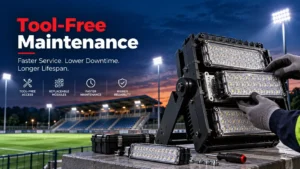
Before a show floor opens, the most important work happens off-stage: validating space, workflows, installation steps, and control demos so execution becomes repeatable. This article breaks down the exact details we test during our 1:1 booth rehearsal-so the final experience is professional, reliable, and controllable.
On this page
- Why a 1:1 rehearsal matters
- What we test: layout, flow, and zoning
- What we test: RGBW demo stability and control steps
- What we test: bracket installation training and aiming steps
- The “controllable & repeatable” principle
- A practical rehearsal checklist you can reuse
- How this translates to real stadium projects
Why a 1:1 rehearsal matters
Trade shows are compressed versions of real projects. Time is limited, the environment is unfamiliar, and the cost of mistakes is visible to every visitor. If a booth looks great but a demo fails, or an installation is rushed, the message is clear: the process is not under control. That is why we treat a booth as a deliverable-not a decoration.
For ZC Lighting, a rehearsal is not about “prettier display.” It is about turning the entire booth into a repeatable execution: the same steps, the same checks, the same roles, and the same control sequence every time. This mindset is aligned with how professional stadium lighting should be delivered: performance is engineered, validated, and documented.
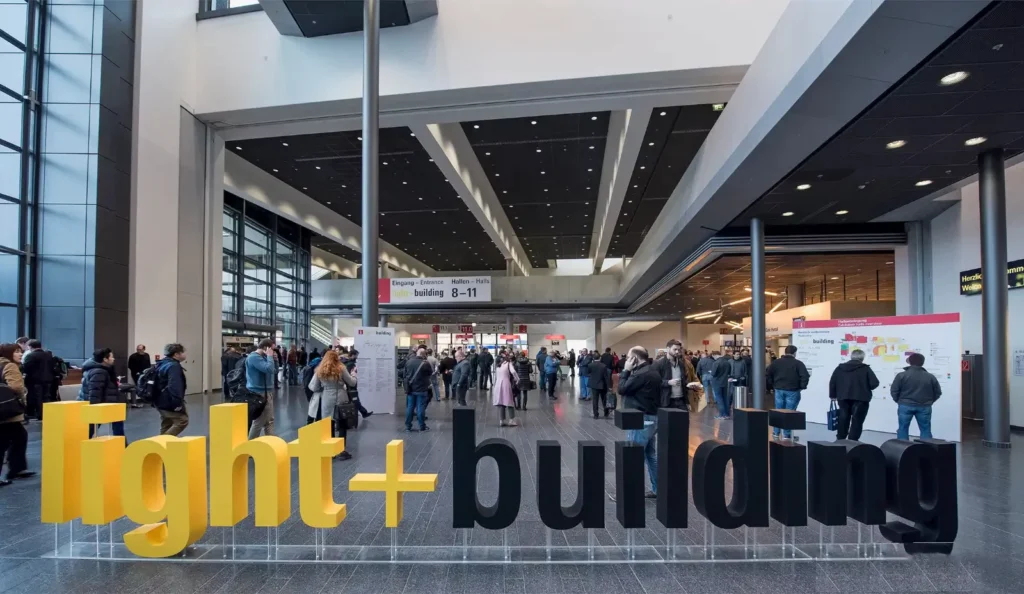
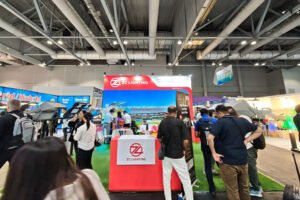
What we test: layout, flow, and zoning
The first layer of rehearsal is spatial logic. A booth is a small environment where visitors decide in seconds whether your brand feels premium. We validate three things early:
- Flow: Can visitors naturally enter, browse, ask questions, and exit without congestion?
- Zoning: Is the product story clear-sports lighting first, then high mast / street / industrial as supporting categories?
- Visibility: From the aisle, do the key messages read instantly (solutions, ROI logic, reliability, controls)?
A common mistake is to treat every product equally. In reality, the booth should mirror your market focus. For Frankfurt, we prioritize stadium lighting presentation, while also showing that we can support broader outdoor infrastructure and industrial needs.
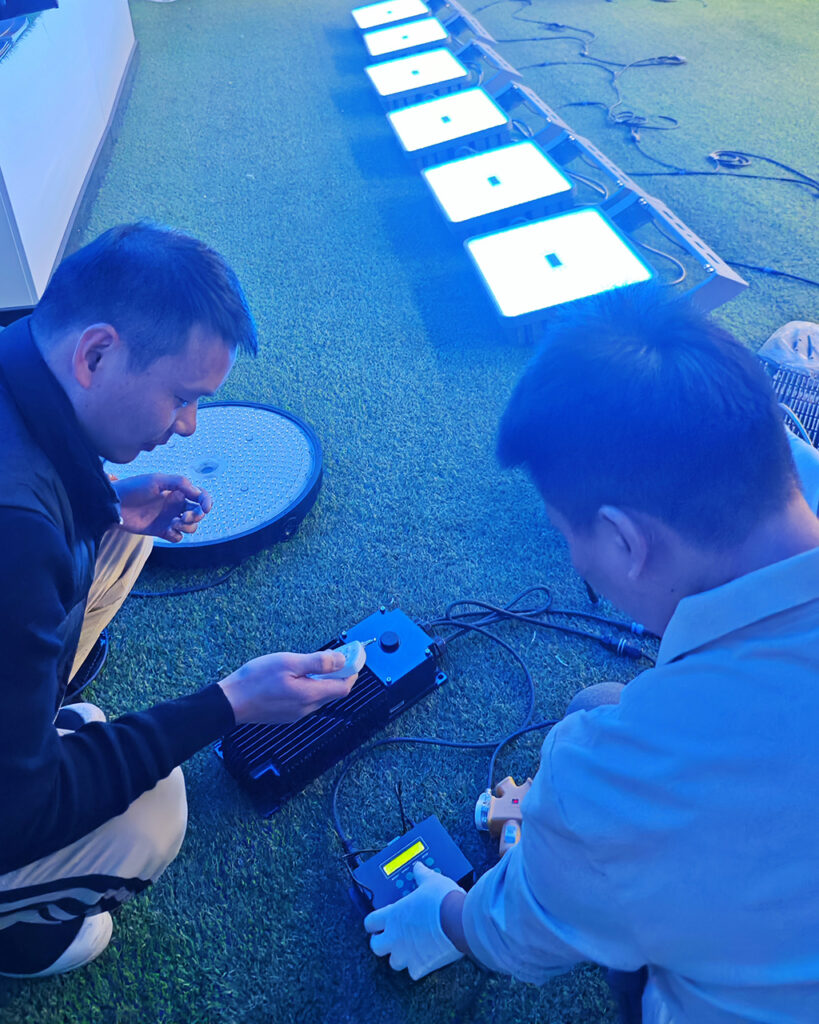
What we test: RGBW demo stability and control steps
A stadium lighting demo is only convincing if it is stable and repeatable. That is especially true for RGBW demonstrations, where the story shifts from “a luminaire” to “a system experience.” During rehearsal, we validate:
- Control sequence: A step-by-step script that any trained team member can run (no hero operators).
- Scene logic: A small set of clear scenes that match real venue needs (not random colors).
- Reset logic: How to recover quickly if a step is interrupted (power cycle, reconnect, restore scene).
- Visitor comprehension: Whether a first-time viewer understands what is happening within 10 seconds.
We also confirm the demo narrative: RGBW is not a “feature list.” It is a decision framework-when it makes sense, when it does not, and how it affects total system cost.
What we test: bracket installation training and aiming steps
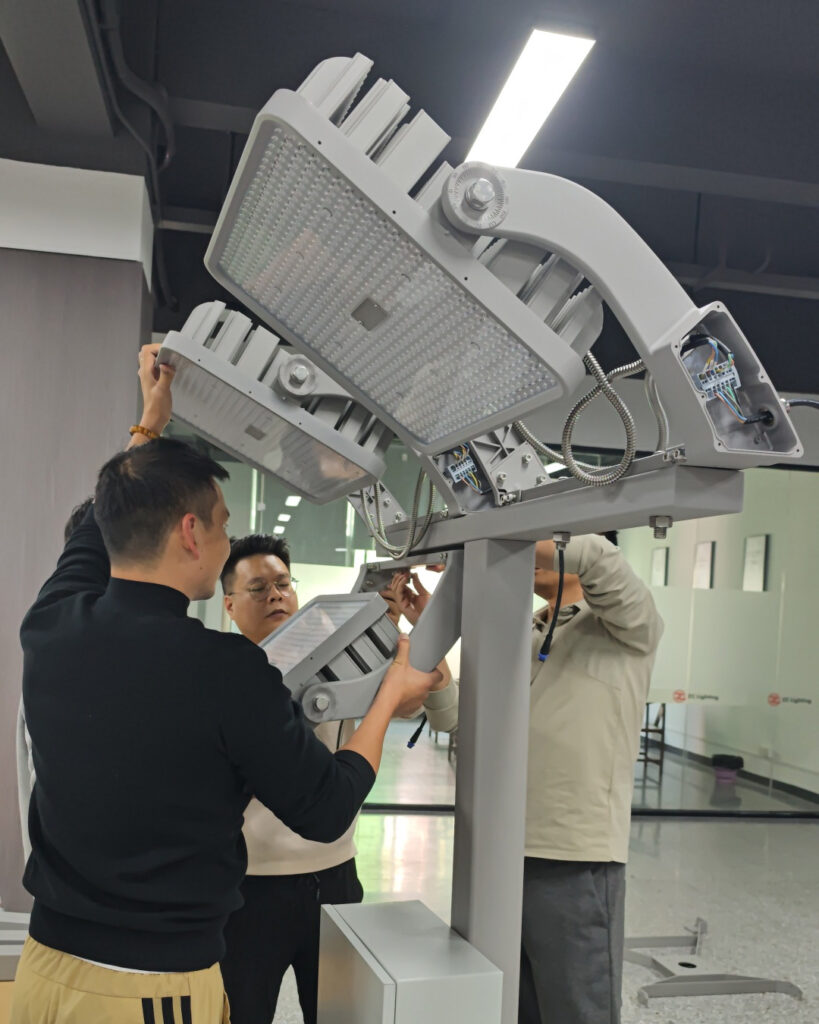
Booth installation is where many teams lose control. Brackets, aiming, and wiring details are simple in theory but complex under time pressure. We therefore rehearse the same steps we will repeat on-site:
- Bracket assembly sequence (tools, torque points, safety checks)
- Aiming marks and angle setting workflow
- Cable routing discipline (no visual mess, no ambiguity)
- Labeling logic so any team member can identify connections instantly
This rehearsal also functions as training for new staff. Instead of learning “on the show floor,” the team builds muscle memory in advance. The outcome is fewer mistakes, faster setup, and higher confidence when visitors arrive.
The “controllable & repeatable” principle
In our internal language, “professional, reliable, controllable” means one thing: execution must be controllable and repeatable.
Controllable = the result does not depend on individual improvisation.
Repeatable = the same process produces the same outcome across different people, days, and venues.
This is exactly how we think about stadium lighting projects. The best designs are not only bright-they are deliverable. From bracket installation to control workflows, every step should be documented and trainable.
Quick takeaway: If a demo requires an expert operator to “make it work,” the system is not ready. A professional solution should run through a simple SOP that your team can execute consistently.
A practical rehearsal checklist you can reuse
Below is a simplified version of the rehearsal checklist we use. It is intentionally practical. If you’re a distributor preparing a demo room or a project owner validating a pilot installation, you can adapt it directly.
Rehearsal Checklist (Simplified)
- Layout: confirm zones, key messages, and visitor flow
- Product positioning: sports lighting prioritized; supporting categories clearly secondary
- Demo script: written control steps (who does what, in which order)
- Scenes: 3–5 scenes maximum with clear meaning (match / training / atmosphere / maintenance)
- Hardware checks: bracket sequence, aiming marks, fastening points, safety checks
- Wiring & labeling: consistent tags, clean routing, spare cables available
- Operator training: at least two team members can run the demo independently
- Backup plan: spare parts, quick-fix kit, and a reset workflow
- Time rehearsal: run full setup start-to-finish and record actual time
How this translates to real stadium projects
A booth rehearsal is not separate from engineering. It reflects how you operate as a supplier. Customers-especially professional stadium projects-care about:
- Deliverability: Can the solution be installed and maintained without guesswork?
- Consistency: Will performance remain stable under real conditions and long operating hours?
- System readiness: Can lighting and controls work together as one coherent deliverable?
That is why our rehearsal includes both luminaires and the control narrative. It’s also why we invest in training: the best products still fail if execution is chaotic.
Related reading (internal links): Essential Stadium Lighting Controls • Reducing On-site Risks in Delivery • RGBW: Who Really Needs It?
FAQ
Why rehearse a booth 1:1 instead of planning on paper?
Because paper planning cannot fully reveal real spatial conflicts, wiring complexity, timing issues, or operator errors. A 1:1 rehearsal exposes practical gaps early-when fixes are cheap.
What makes a lighting demo feel professional to stadium buyers?
A simple, repeatable script: clear scenes, stable control steps, and an operator workflow that does not depend on improvisation.
Does this rehearsal approach also apply to real stadium projects?
Yes. The same principle-controllable, repeatable execution-applies to installation SOPs, commissioning workflows, and maintenance planning.
Planning a stadium lighting project or an OEM/ODM collaboration?
Tell us your venue type, mounting height, lighting class, and control expectations. Our engineering team can recommend a practical, deliverable solution and provide a clear project workflow.