When planning stadium lighting, most project discussions start with power, brightness, or budget. However, experienced engineers and lighting designers know that the structural design of a stadium floodlight is one of the most decisive factors affecting performance, maintenance, and long-term reliability.
In this guide, we explain the three main structural categories of modern LED stadium floodlights, how they differ in real-world applications, and how to choose the right solution based on project priorities.
Why Stadium Floodlight Structure Matters More Than Appearance
At first glance, stadium floodlights may appear different only in shape — round, square, or modular. In reality, structure defines far more than aesthetics.
The floodlight structure directly influences:
- Thermal management and long-term lumen maintenance
- Optical layout and beam precision
- Wind resistance and installation behavior
- Maintenance access and system scalability
Understanding these differences helps project owners and EPC contractors avoid overdesign — or worse, underperformance.

1) Integrated Square Stadium Floodlights
High-Precision Professional Design
Integrated square stadium floodlights feature a fully enclosed, one-body housing with a rectangular optical layout. This design allows engineers to arrange LED arrays and optics in a highly controlled and symmetrical manner.Key characteristics
- One-piece integrated housing
- Highly organized optical distribution
- Strong mechanical rigidity
- Excellent thermal stability for high-power operation
Where they are most commonly used
- Professional football stadiums
- Competition-level sports arenas
- Venues requiring strict glare control and uniformity
- Projects following FIFA / UEFA or broadcast-oriented lighting standards
ZC Lighting solutions (Integrated Square)
FL18
2) Integrated Round Stadium Floodlights
Radial Design for High-Mast Applications
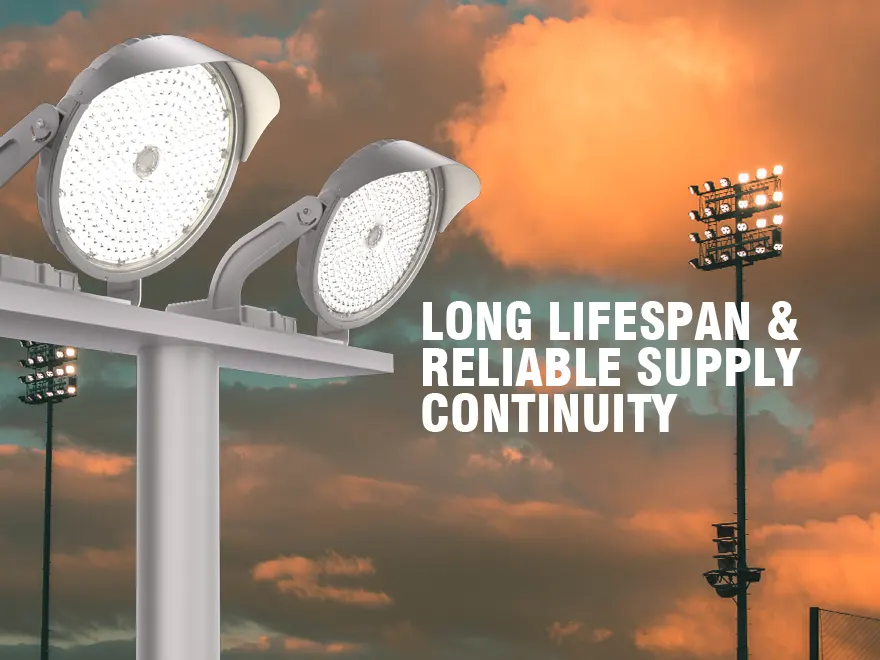
Integrated round stadium floodlights, often referred to as radial-style floodlights, are designed around a circular optical and mechanical structure.Compared with square designs, round floodlights offer lower wind resistance and a visual appearance more commonly associated with traditional stadium installations.Key characteristics
- Circular housing with radial LED layout
- Lower wind load (EPA-friendly design)
- Balanced light distribution around a central axis
- Strong suitability for high-mast and tower installations
Where they are most commonly used
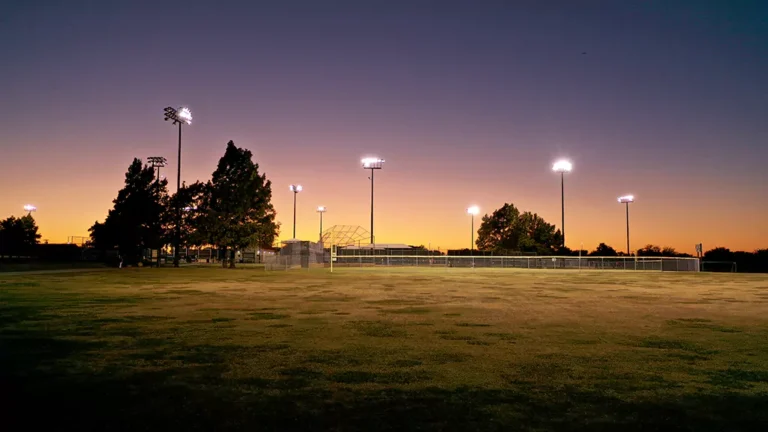
- Large outdoor stadiums with high lighting poles
- Training complexes and multi-field sports parks
- Projects prioritizing structural stability under wind exposure
ZC Lighting solution (Integrated Round)
SP02
3) Modular Stadium Floodlights
Flexibility-Focused System Design
Modular stadium floodlights are built from independent lighting modules combined into a single system. Instead of scaling performance within one housing, modular designs scale output by adding or removing modules.
Key characteristics
- Modular power scalability
- Easier maintenance and component replacement
- Greater flexibility for phased installations
- More adaptable to budget-driven projects
Where they are most commonly used
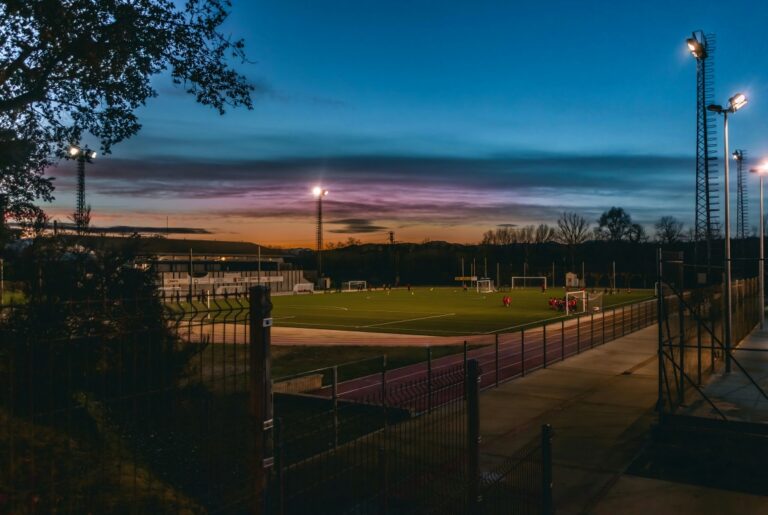
- Training fields and community stadiums
- Semi-professional or non-professional sports facilities
- Projects requiring flexible power configurations
- EPC projects with phased investment plans
ZC Lighting solutions (Modular)
Integrated vs Modular: How to Decide
There is no universal “best” stadium floodlight structure. The right choice depends on project priorities, not product hierarchy.| Project priority | Recommended structure |
|---|---|
| Highest lighting precision | Integrated Square |
| High-mast installation / wind exposure | Integrated Round |
| Budget flexibility / phased investment | Modular |
| Simplified maintenance | Modular |
| Long-term stability | Integrated |
Final Thoughts: Structure Is the Foundation of Performance
Power, optics, and control systems all matter — but structure is the foundation that supports them.Choosing the right floodlight structure:- Improves system reliability
- Simplifies maintenance
- Reduces unnecessary cost
- Aligns lighting performance with real project needs