Baseline sightlines
Keep the most visible luminaires away from dominant player viewing directions where possible.
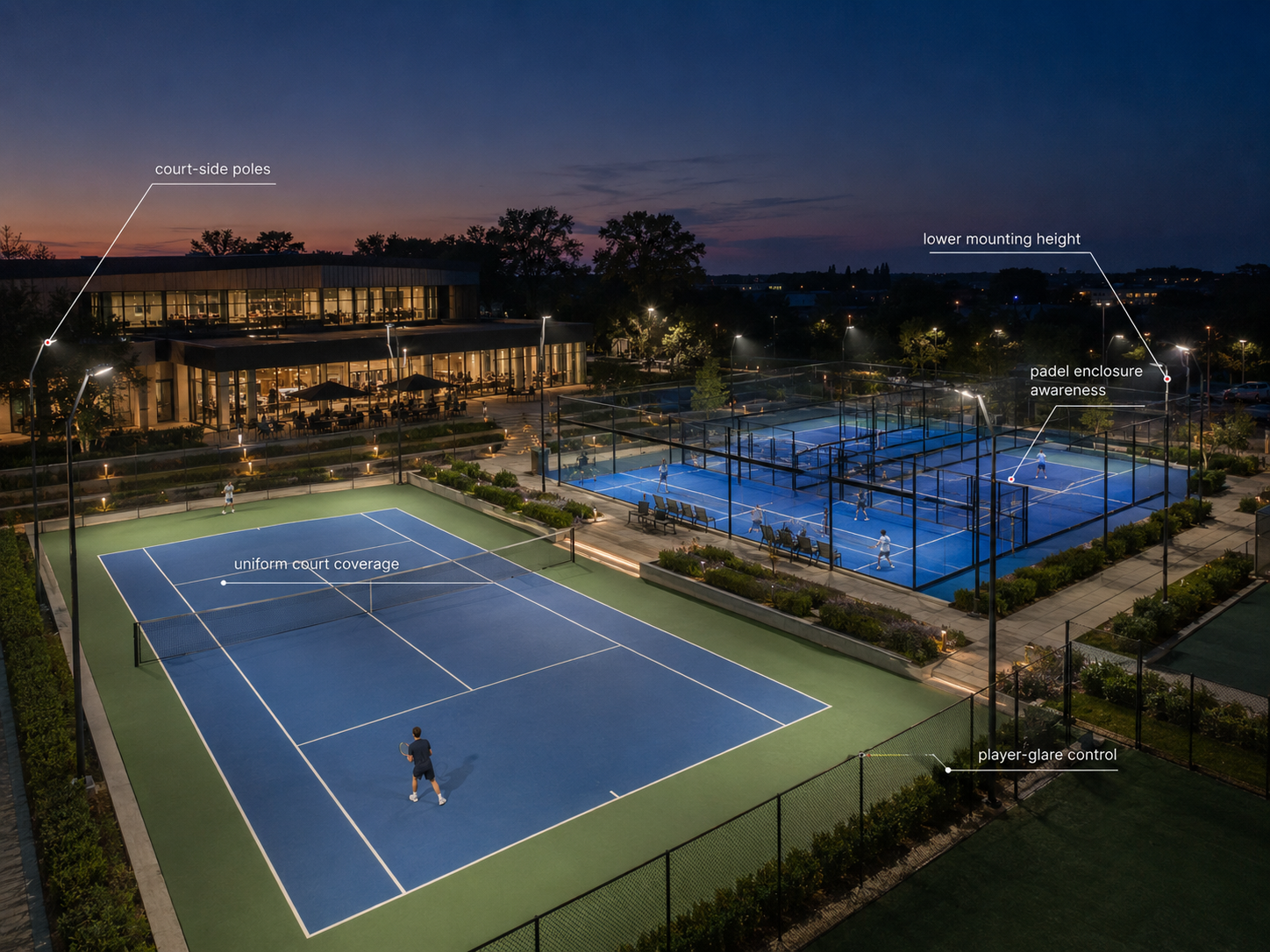
Court lighting built around player sightlines, lower mounting heights, uniform ball visibility and controlled spill toward neighboring properties.
High-quality sports lighting is a system result. Geometry, source positions, optics, controls, environmental limits and commissioning all influence the final experience.
Court sports place players close to the luminaires and repeatedly direct their eyes upward toward a fast-moving ball. This makes source position and glare control especially important. For padel, glass walls and mesh fencing can further affect perceived brightness and reflections.
Single-court, double-court and large club installations should not use the same pole logic. Multi-court sites need to consider cross-court glare and whether one pole serves more than one court. Nearby residential buildings, hotel rooms or public roads may also drive visor and aiming decisions.
The aim is not simply to achieve a high average. Good court lighting should keep the ball and court lines visible across both baselines, reduce bright hotspots and preserve visual comfort when players look upward.
ZC project approach: use the actual site drawing and target criteria to select products, optics, quantity, aiming and compatible controls. Product wattage is an input to the calculation—not the starting answer.
The same luminaire can perform very differently when pole height, setback, aiming angle or observer direction changes.
Club environment combining tennis and padel courts, illustrating lower mounting heights, player sightlines and enclosure constraints.
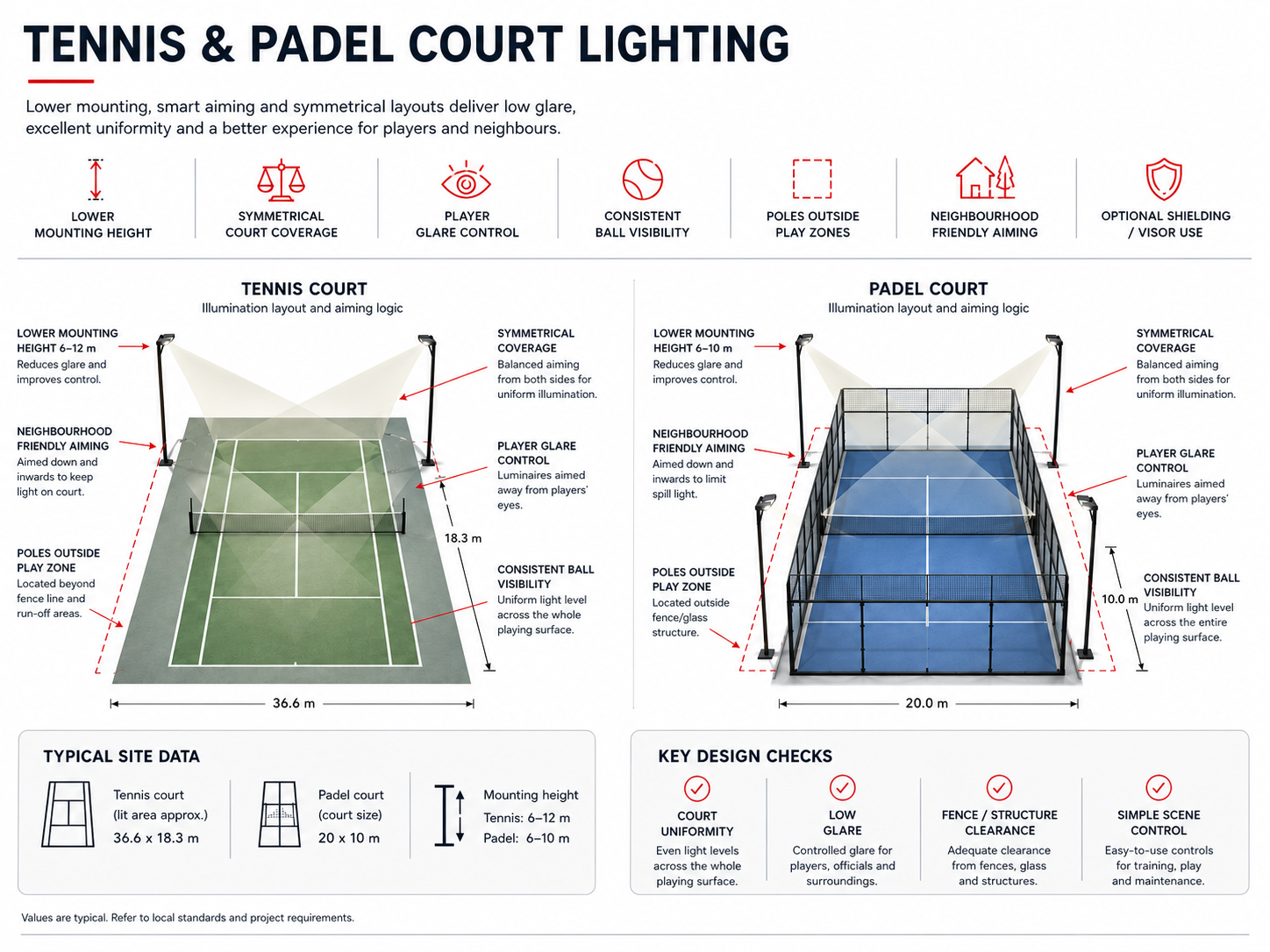
Tennis and padel should be reviewed separately: pole positions, fence / glass clearance and player-glare directions are not interchangeable.
Keep the most visible luminaires away from dominant player viewing directions where possible.
Coordinate pole positions with court dimensions, fences, gates and circulation areas.
Shared poles can reduce infrastructure but require careful cross-aiming and independent court zoning.
Padel walls and metal mesh can change reflections and perceived contrast; verify at night after installation.
A complete review considers playability, visual adaptation, camera or spectator needs and the effect of the lighting outside the venue.
Scene planning can reduce operating hours and energy use, but the control architecture must match the selected driver/product configuration. ZC can coordinate compatible luminaire interfaces; final system integration should follow the project control design.
Shielding, brackets, drivers and electrical accessories should be selected because the project needs them—not added as generic decoration.
LED retrofit decisions should combine structural, electrical, optical and operational review.
These are project starting points, not universal specifications. Final product, power, optics, accessories and controls should follow photometric calculation and installation conditions. Confirm the latest product configuration with ZC Lighting before specification.
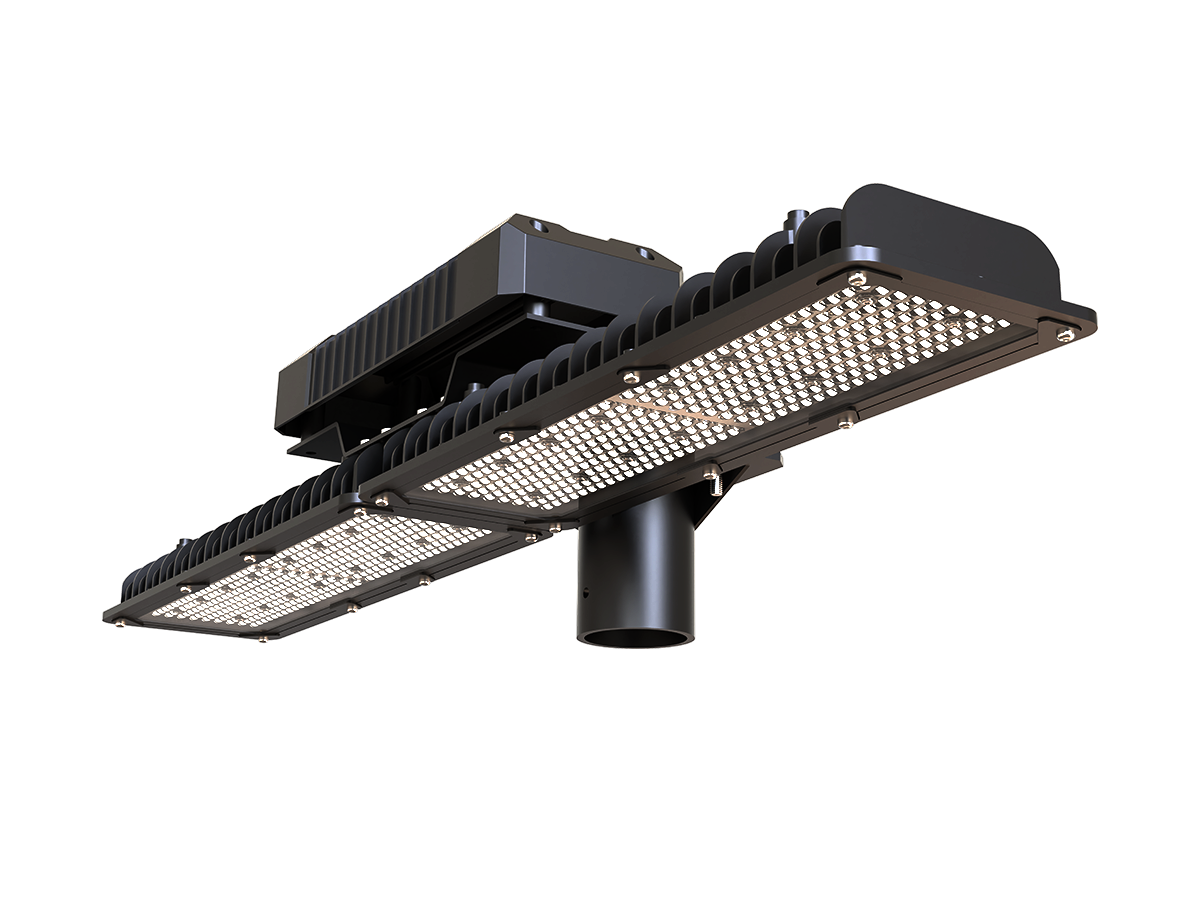
Court-focused luminaire designed around lower mounting heights, glare management, spill-light control, flexible aiming and single- or multi-court layouts.
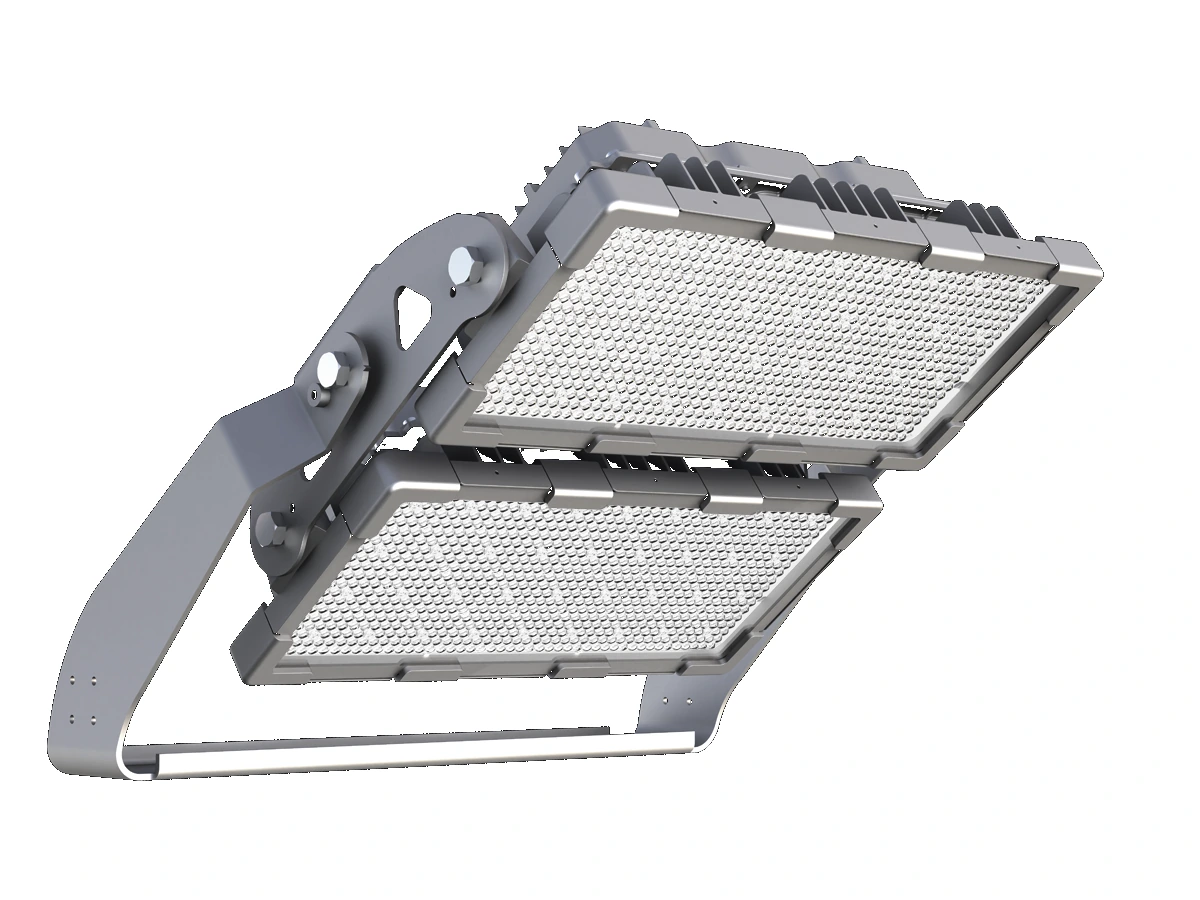
Modular sports floodlight with a broad power and optical range, useful where one project needs several beam distributions or phased fixture quantities.
Full-cutoff modular floodlight for projects requiring strict upward-light control, broad optical choice and stable visual performance.
Fixture orientation, aiming, control grouping and verification should be treated as part of the lighting design—not left to visual adjustment after installation.
Better input data reduces redesign, narrows the right product/optic combination and makes the first proposal more useful.
Court type and count
Court dimensions
Pole positions/heights
Fence/glass geometry
Nearest homes/hotel/roads
Competition level
Operating hours
Control/zoning requirements
These answers are practical engineering guidance. Final performance should be confirmed against the project requirements and applicable local or sport-specific standards.
Not automatically. Court dimensions, glass/fence geometry, pole positions and viewing directions differ, so the photometric and glare review should be specific.
No. Use a visor when the calculation or observer review shows it improves spill/backlight/source visibility without harming the on-court result.
Sometimes, but pole position, height, crossarm and glass/fence constraints should be checked.
Very important for tracking a ball above eye height, even when the project specification is expressed mainly in horizontal lux.
Every court, shared poles, adjacent court glare, circulation areas and off-site assessment points should be included.
Share dimensions, mounting positions and heights, target performance, existing fixture information and available drawings. ZC Lighting can then review product options, optics, quantity, aiming and compatible control requirements.
Email: info@zcled.com