Backboard / basket zone
Avoid mounting positions that create dominant glare directly behind or above the backboard from player viewpoints.
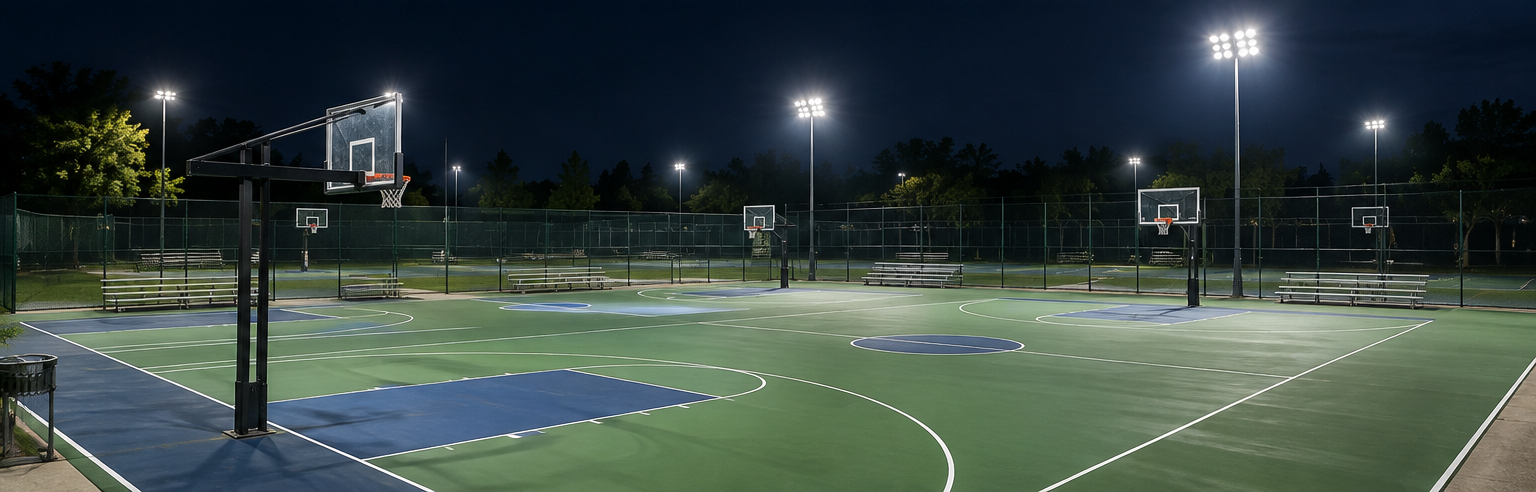
Uniform, low-glare lighting for indoor and outdoor basketball courts, with clear ball, line and player visibility.
High-quality sports lighting is a system result. Geometry, source positions, optics, controls, environmental limits and commissioning all influence the final experience.
Basketball is fast, vertical and direction-changing. Players repeatedly look toward baskets and upward for rebounds, so source positions near the backboards and key viewing axes require particular care.
Indoor and outdoor projects should be treated separately. Indoor halls must coordinate with roof services, scoreboards and seating; outdoor courts must control spill light and source visibility to surrounding homes, roads and adjacent courts.
Multi-court basketball centers should also consider independent court scenes so an unused court does not need to operate at full output.
ZC project approach: use the actual site drawing and target criteria to select products, optics, quantity, aiming and compatible controls. Product wattage is an input to the calculation—not the starting answer.
The same luminaire can perform very differently when pole height, setback, aiming angle or observer direction changes.
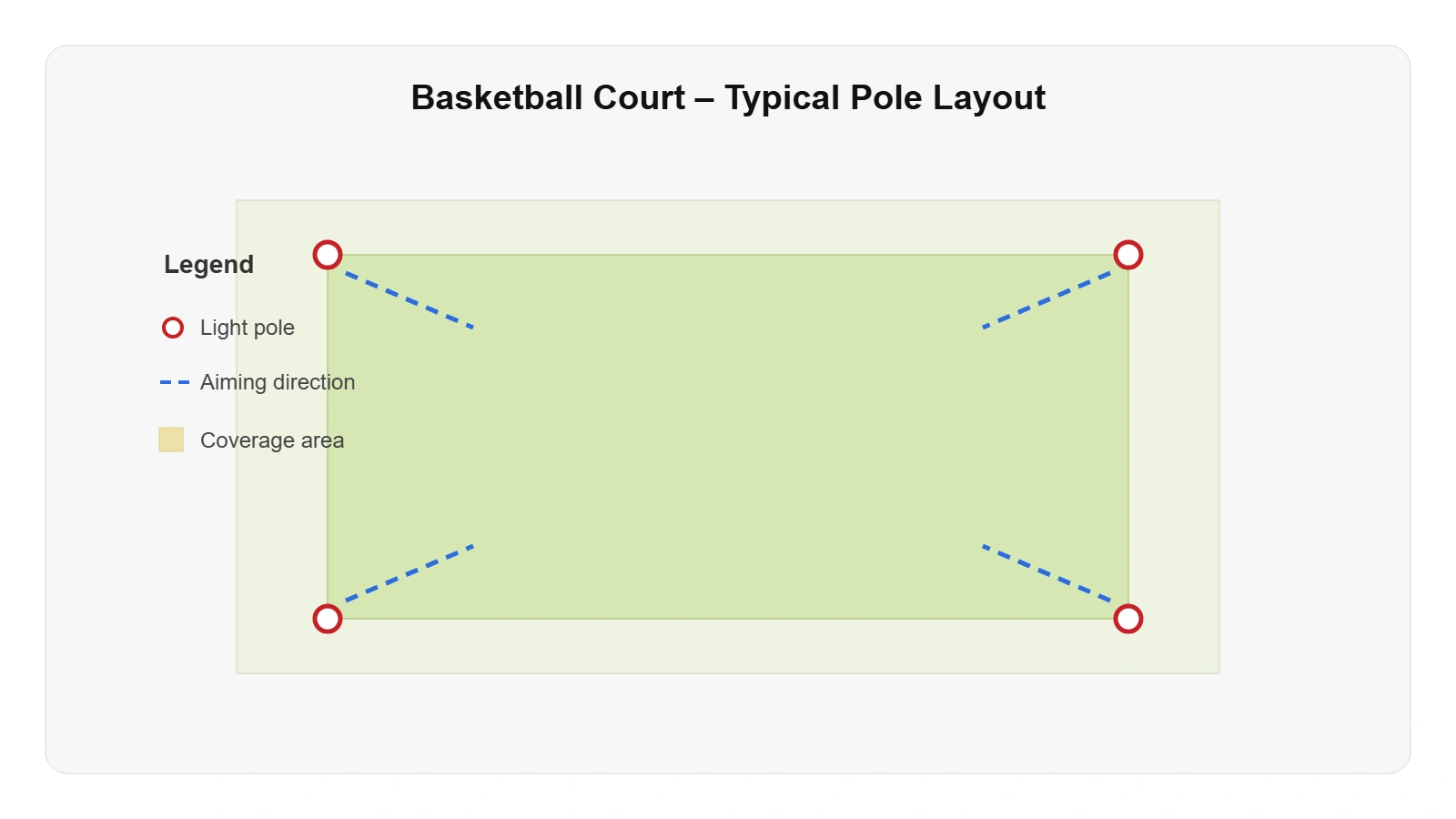
Outdoor perimeter poles and indoor overhead grids should be treated as separate installation strategies.
Avoid mounting positions that create dominant glare directly behind or above the backboard from player viewpoints.
Coordinate fixture rows with court lines and structural bays.
Keep poles outside safety zones and use cross-aiming instead of only aiming toward the centre.
Align electrical groups with actual court partitions and operating patterns.
A complete review considers playability, visual adaptation, camera or spectator needs and the effect of the lighting outside the venue.
Scene planning can reduce operating hours and energy use, but the control architecture must match the selected driver/product configuration. ZC can coordinate compatible luminaire interfaces; final system integration should follow the project control design.
Shielding, brackets, drivers and electrical accessories should be selected because the project needs them—not added as generic decoration.
LED retrofit decisions should combine structural, electrical, optical and operational review.
These are project starting points, not universal specifications. Final product, power, optics, accessories and controls should follow photometric calculation and installation conditions. Confirm the latest product configuration with ZC Lighting before specification.
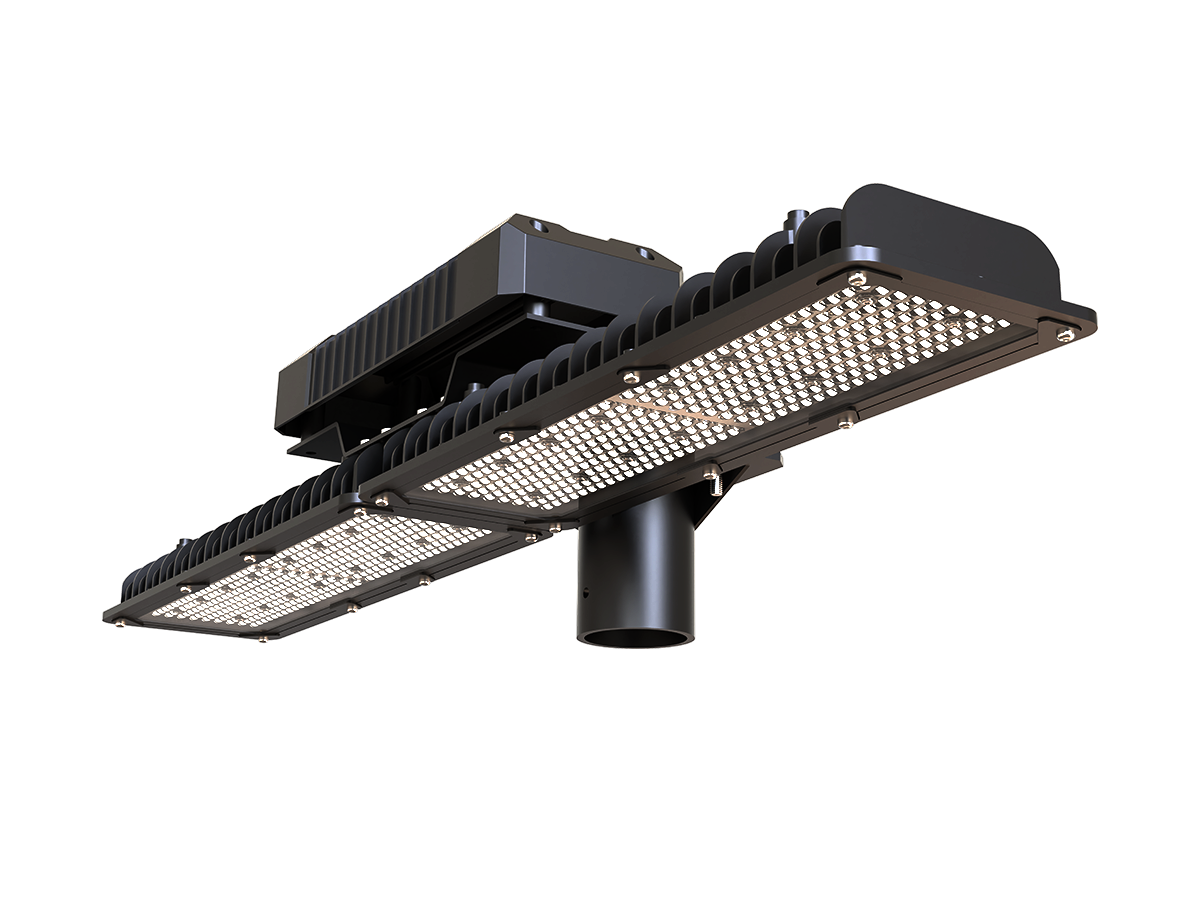
Court-focused luminaire designed around lower mounting heights, glare management, spill-light control, flexible aiming and single- or multi-court layouts.
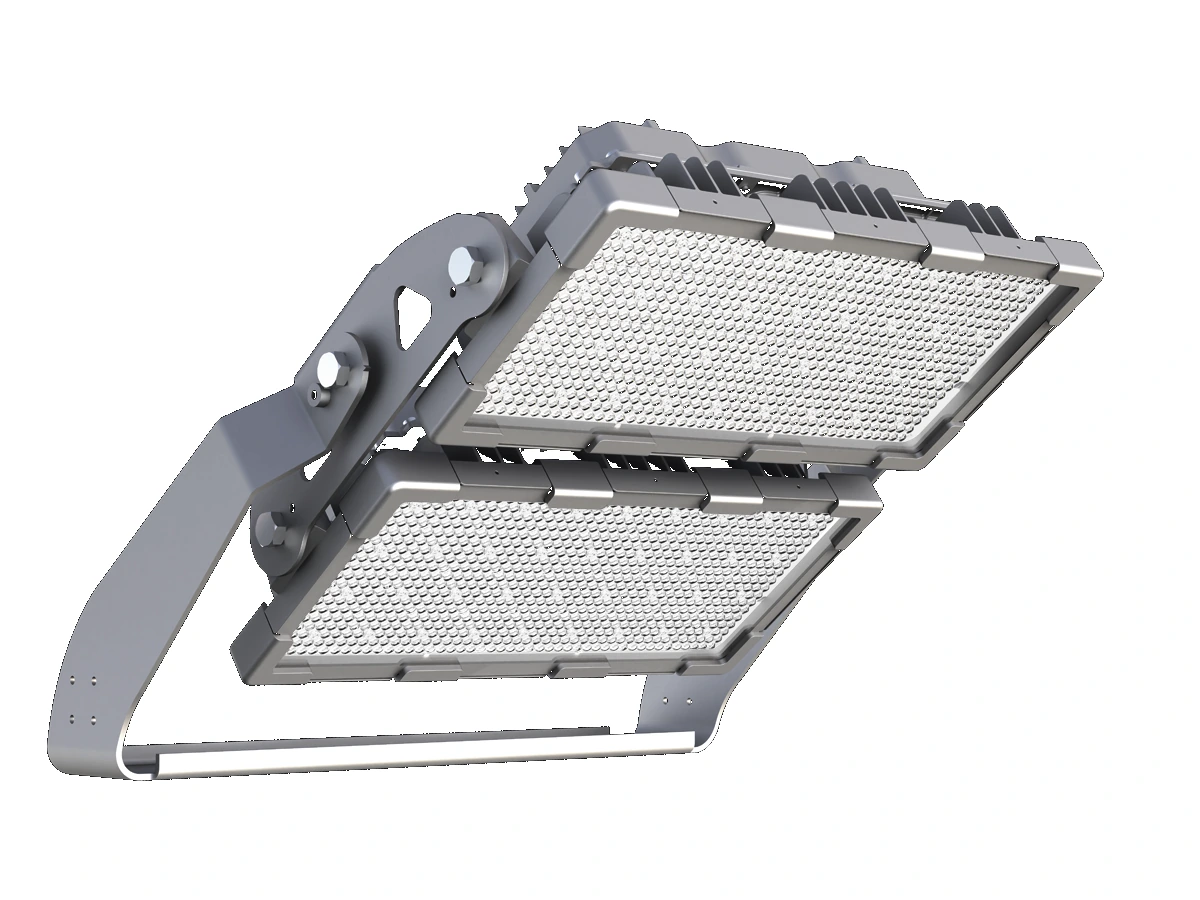
Modular sports floodlight with a broad power and optical range, useful where one project needs several beam distributions or phased fixture quantities.
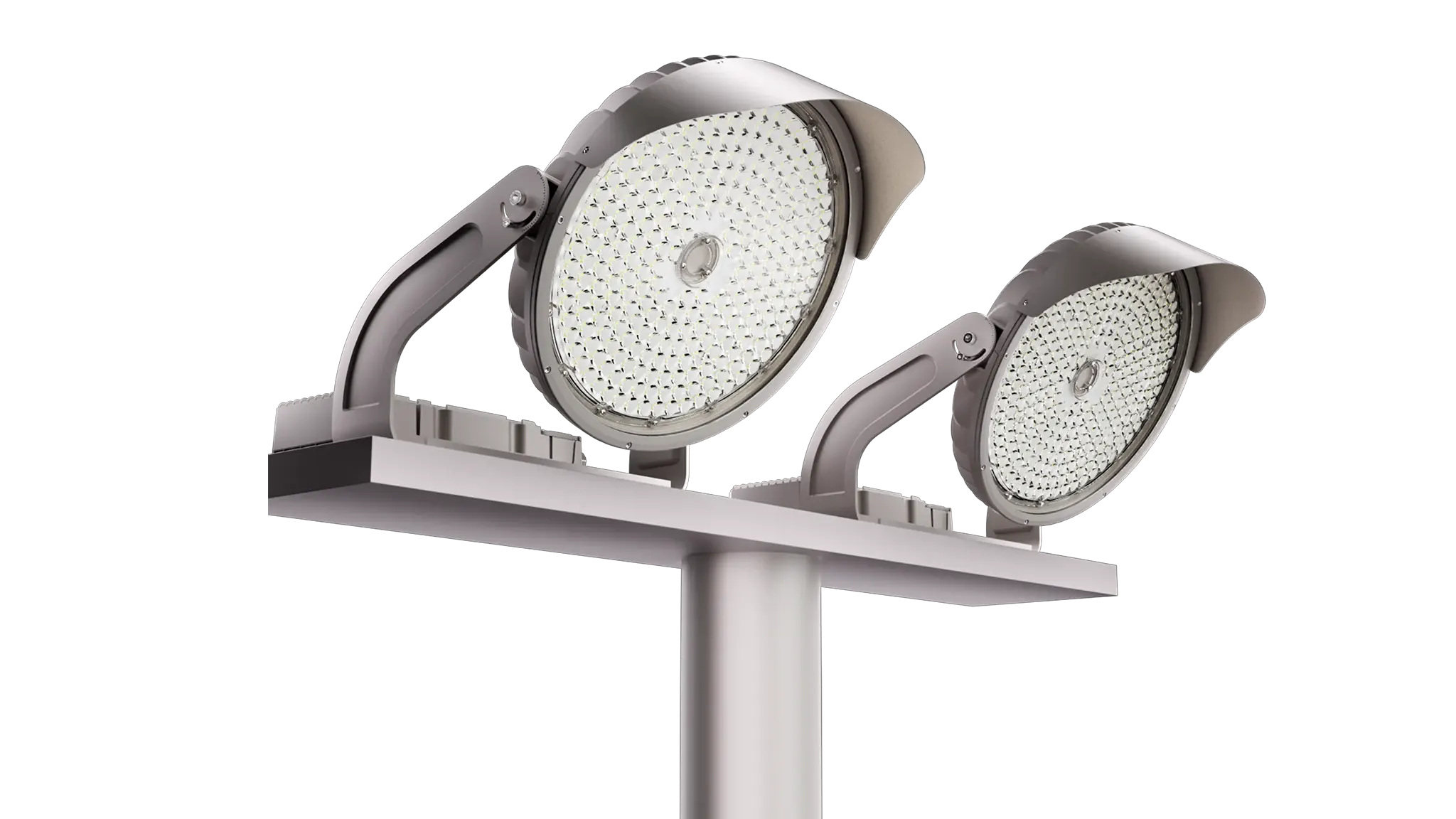
High-power sports floodlight for large-area and event-oriented venues, with multiple optical and control configurations depending on the selected version.
Low-glare high-bay option for indoor training halls and multipurpose spaces where lighter mounting loads, adjustable power/CCT/beam and sensor or dimming interfaces may be useful.
Fixture orientation, aiming, control grouping and verification should be treated as part of the lighting design—not left to visual adjustment after installation.
Better input data reduces redesign, narrows the right product/optic combination and makes the first proposal more useful.
Indoor/outdoor status
Court dimensions/count
Mounting height and locations
Roof services or pole layout
Competition level
Camera/spectator positions
Nearby homes/roads for outdoor sites
Control/zoning needs
These answers are practical engineering guidance. Final performance should be confirmed against the project requirements and applicable local or sport-specific standards.
No. Players track the ball above head height and cameras/spectators see vertical surfaces, so vertical visibility and glare also matter.
It can be evaluated as a court-focused option, but the final optic and mounting layout should be verified by calculation.
Group fixtures by actual court/partition so training or cleaning can use only occupied zones.
Yes. They can block or reflect light, and player viewpoints around the basket make nearby fixture positions more sensitive.
The agreed court illuminance/uniformity plus glare-sensitive positions and any outdoor boundary points.
Share dimensions, mounting positions and heights, target performance, existing fixture information and available drawings. ZC Lighting can then review product options, optics, quantity, aiming and compatible control requirements.
Email: info@zcled.com