Baseball & Softball Field Lighting
Sports & Venue Lighting

Baseball & Softball Field Lighting

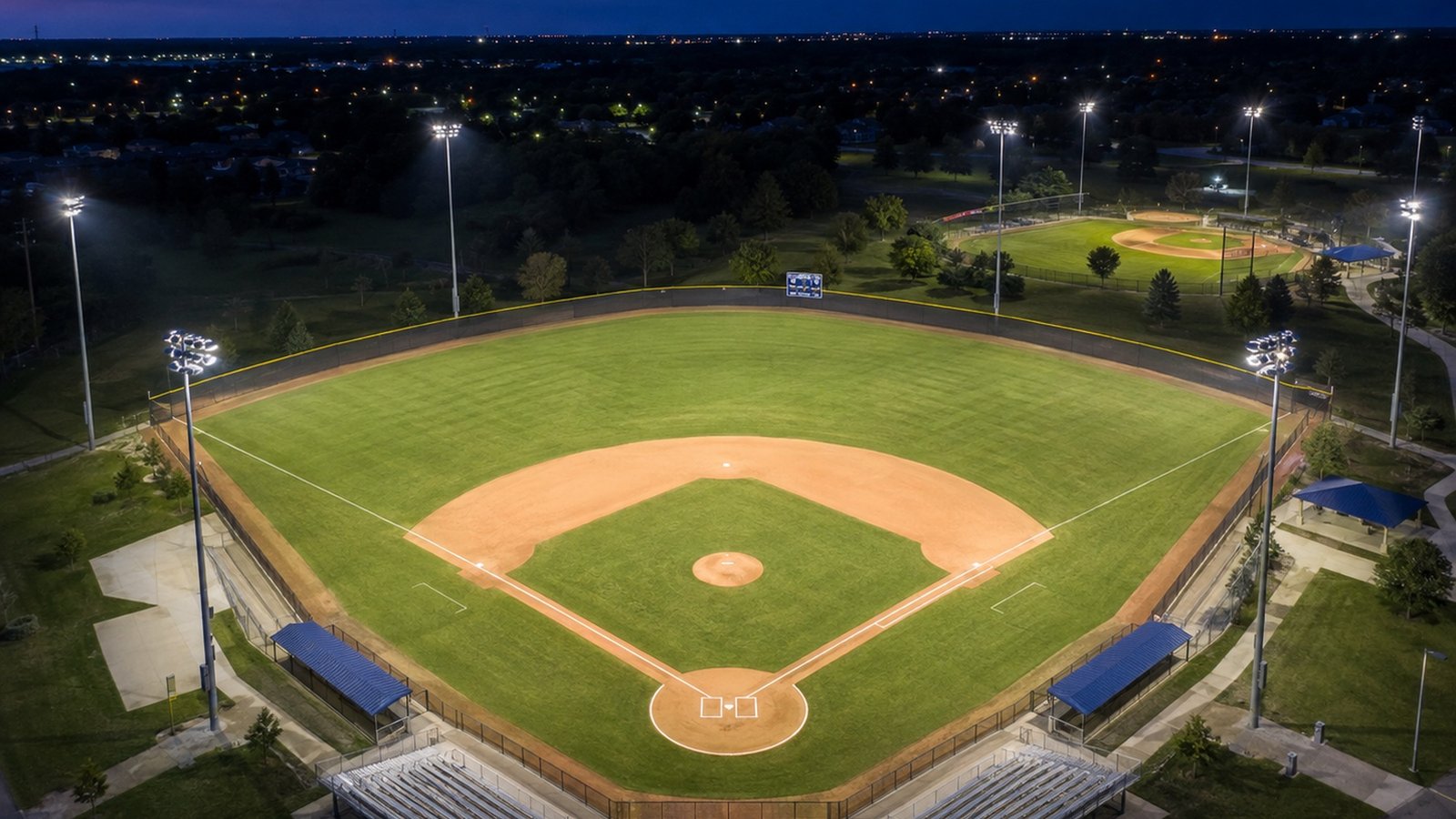
Multi-zone lighting for infield, outfield and high-ball tracking, with player visibility treated differently from a rectangular field.

Field ShapeDiamond + large outfield rather than one rectangular grid
Visual TaskPitch/bat interaction and high aerial-ball tracking
MountingMultiple pole groups outside the safe playing boundary
Critical ReviewInfield/outfield balance, player glare and vertical/aerial visibility
Project Context

Design the lighting around how the venue is actually used.

High-quality sports lighting is a system result. Geometry, source positions, optics, controls, environmental limits and commissioning all influence the final experience.

Baseball and softball require a different design mindset from football. The infield, outfield, foul territory, batter/pitcher corridor, dugouts and high-ball trajectories create several distinct visual tasks. A lighting scheme that looks uniform on a horizontal plan can still be uncomfortable when a player follows a ball high into the night sky.

The outfield geometry and fence distance vary by level and venue. Softball dimensions can also differ from baseball, so the actual diamond and boundary must be modeled. Camera positions, scoreboards and spectator stands should be marked if the facility supports higher-level competition or streaming.

The design goal is not only to meet a ground-level average. Players need to identify a small, fast ball from the pitcher, against the field, and against the sky.

ZC project approach: use the actual site drawing and target criteria to select products, optics, quantity, aiming and compatible controls. Product wattage is an input to the calculation—not the starting answer.

Geometry, Mounting & Aiming

Source position and beam direction determine the quality of the installation.

The same luminaire can perform very differently when pole height, setback, aiming angle or observer direction changes.

Typical baseball / softball layout
Engineering diagramTypical baseball / softball layout

A diamond-based layout showing why pole groups must serve infield, outfield and high-ball visual tasks separately.

Typical reference only. Final pole quantity, mounting height, aiming angles, optics and fixture quantity should be confirmed by photometric calculation, structural conditions and the applicable project requirements.

Infield poles

Need strong but controlled coverage around home plate, bases and pitcher/batter zone.

Outfield poles

Support long-distance coverage and high-ball tracking without dominating player sightlines.

Cross-aiming

Use different target zones and beam groups; avoid over-concentrating output around the diamond.

Safe setbacks

Pole and equipment positions must remain outside sport-specific safety zones and circulation areas.

Lighting Performance

Review more than average horizontal lux.

A complete review considers playability, visual adaptation, camera or spectator needs and the effect of the lighting outside the venue.

Infield illuminance
Often the highest-demand playing zone.
Confirm the specific project/league criterion.
Outfield illuminance
Requires long-throw coverage without severe falloff.
Balance with the infield to avoid adaptation issues.
Vertical/aerial visibility
Essential for high-ball tracking.
Review source positions from fielder viewpoints.
Glare
Batter, catcher, pitcher and fielders can face different pole groups.
Observer-based review is essential.
Uniformity / gradients
Avoid sharp changes between infield and outfield.
Review transitional zones, not only grid averages.
Broadcast / flicker
Relevant for televised or high-speed capture.
Confirm driver and color-quality options.
Batter / catcherDirect views near home plate can make some pole groups critical.
PitcherNeeds clear recognition of batter/catcher without high visible-source distraction.
OutfieldersTrack high balls against sky near the luminous mast groups.
Cameras / standsCan require vertical and color-quality performance beyond community play.
Have a target standard, league brief or photometric specification?Send it with your site drawing →
Controls & Operating Scenes

Light when needed, at the level the venue actually needs.

Scene planning can reduce operating hours and energy use, but the control architecture must match the selected driver/product configuration. ZC can coordinate compatible luminaire interfaces; final system integration should follow the project control design.

Game
Full-field scene.
Training
Reduced output or simplified scene where allowed.
Batting / infield practice
Zone circuits when the facility uses only part of the field.
Maintenance
Local operation.
Event / broadcast
Separate scene when higher camera-related performance is required.
Accessories & Special Conditions

Use accessories to solve defined engineering issues.

Shielding, brackets, drivers and electrical accessories should be selected because the project needs them—not added as generic decoration.

Precision narrow/medium optics for different zones
Visors for defined glare/spill directions
Aiming labels for large multi-fixture headframes
Surge protection
Accessible drivers/cabinets where service at height is difficult
Control grouping aligned with practice/game zones
New Build & Retrofit

Existing infrastructure can be valuable, but it must be verified.

LED retrofit decisions should combine structural, electrical, optical and operational review.

Baseball retrofits often reuse tall legacy poles. Reuse can be attractive, but check whether old pole locations are suitable for modern LED beam control. A 1:1 fixture swap may save installation work yet still fail to improve aerial visibility if the original geometry is weak.
Retrofitting existing poles or roof positions?Send pole height, fixture photos and existing layout →
Recommended Products

Products worth evaluating for this application.

These are project starting points, not universal specifications. Final product, power, optics, accessories and controls should follow photometric calculation and installation conditions. Confirm the latest product configuration with ZC Lighting before specification.
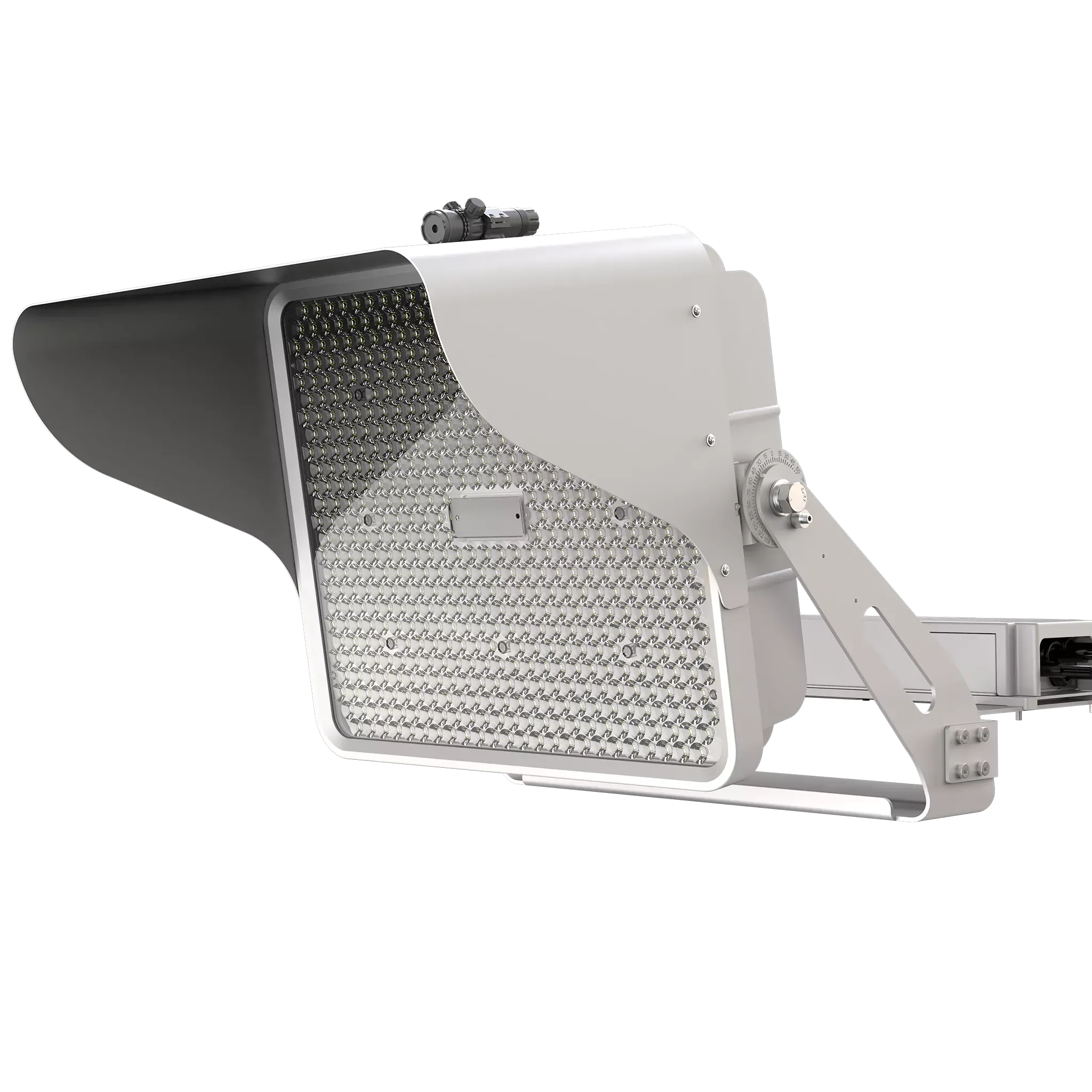
FL09 Ares LED Stadium Floodlight
FL09

Ares FL09

Professional long-throw sports luminaire for high mounting positions, large fields and projects requiring precise beam selection and camera-oriented light quality options.
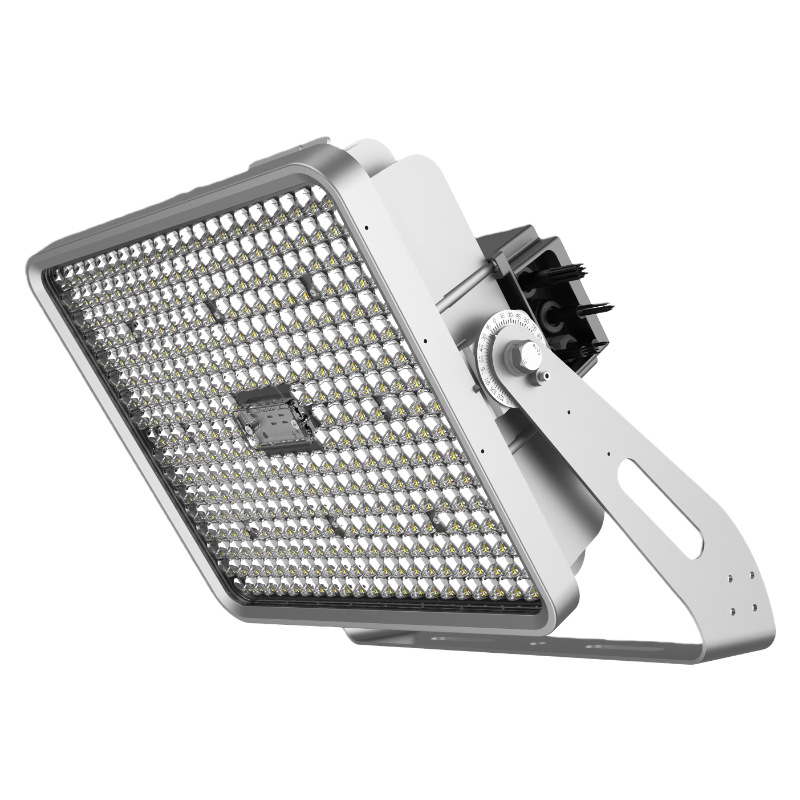
Why evaluate it here: Well suited to long-throw infield/outfield aiming from high poles.
View product
FL18 GameAres LED Stadium Floodlight
FL18

GameAres FL18

High-output integrated sports floodlight with multiple power, optical and color-quality configurations for professional stadium and long-throw projects.
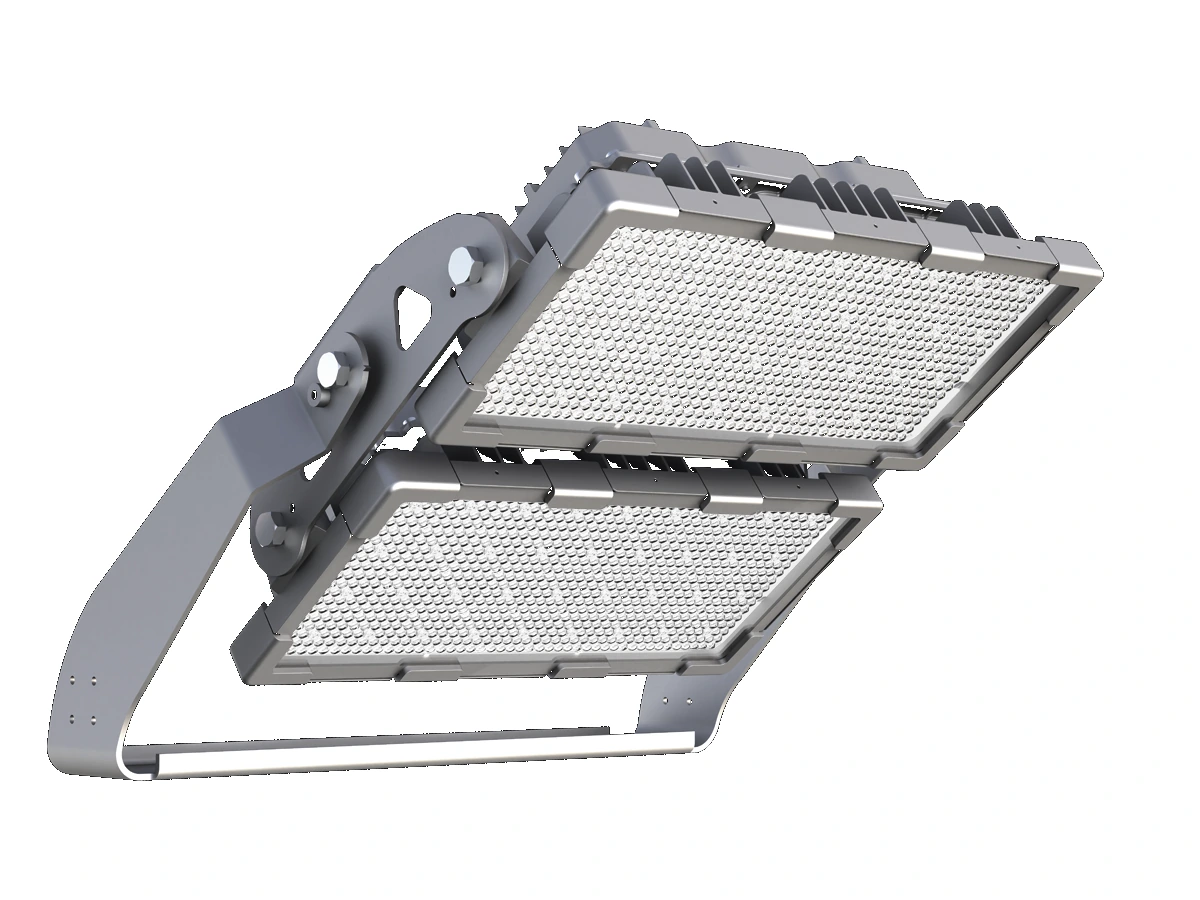
Why evaluate it here: Useful for high-output stadium-grade zones and higher mounting positions.
View product
FL26 Modular LED Sports Floodlight
FL26

FL26 Scalable Stadium Floodlight

Modular sports floodlight with a broad power and optical range, useful where one project needs several beam distributions or phased fixture quantities.

Why evaluate it here: Helpful where a field needs several optical distributions from a modular product family.
View product
Installation & Commissioning

A good calculation still needs a disciplined site handover.

Fixture orientation, aiming, control grouping and verification should be treated as part of the lighting design—not left to visual adjustment after installation.

Verify infield and outfield target groups separately.
Walk batter, pitcher and key fielder sightlines.
Measure transitional zones between infield/outfield.
Check high-ball source visibility from multiple field positions.
Confirm any camera scene and flicker configuration.
Record final aiming by pole/headframe position.
Project Input Checklist

What to send for a faster technical review.

Better input data reduces redesign, narrows the right product/optic combination and makes the first proposal more useful.

01

Field/diamond drawing

02

Foul lines and outfield fence dimensions

03

Pole positions/heights

04

Dugout and spectator areas

05

Level of play / broadcast use

06

Existing fixture schedule

07

Control/practice zones

08

Nearby property boundaries

Frequently Asked Questions

Questions to resolve before final product selection.

These answers are practical engineering guidance. Final performance should be confirmed against the project requirements and applicable local or sport-specific standards.

Why can’t baseball be designed like a football field?

Because player tasks, field geometry and aerial-ball tracking create different lighting zones and observer directions.

Do outfield fixtures need narrow beams?

Often long throws require tighter optics, but a final mix should be chosen from the actual pole distance and target areas.

How should glare be reviewed?

Check batter, pitcher, catcher and fielder viewpoints rather than relying only on a single glare metric.

Can existing poles be retained?

Frequently yes, but the pole/headframe, electrical system, wind load and aiming geometry should all be checked.

What information is essential for a first calculation?

A dimensioned diamond/outfield plan plus pole locations/heights and the intended level of play.

Request a lighting proposal

Send the site geometry before choosing fixture quantity.

Share dimensions, mounting positions and heights, target performance, existing fixture information and available drawings. ZC Lighting can then review product options, optics, quantity, aiming and compatible control requirements.

Email: info@zcled.com

Your information will be used only to respond to this project inquiry.

Get a Quote

Tell us about your project

For the fastest pricing, include model, quantity, application, and installation height.

Trust & Privacy

We respect your privacy. Your information will only be used to respond to your inquiry.

Upload project spec, layout, or drawing.

Thank you!

Your inquiry has been submitted successfully.
We'll reply within 24 hours.