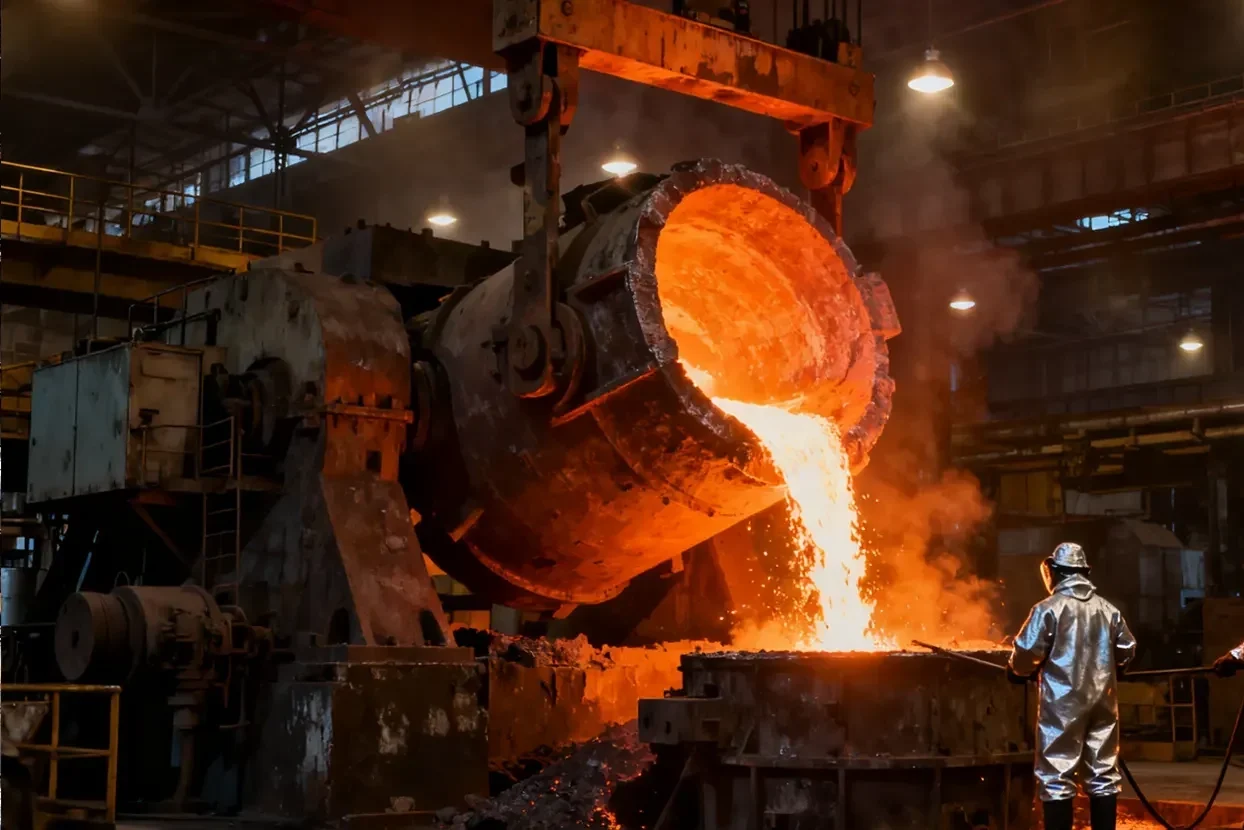
Steelworks, glass plants, forging shops and paper mills do not behave like normal warehouses. Temperatures are higher, duty cycles are longer and thermal stress is constant. In these environments, most standard LED high bays are pushed far beyond their comfort zone. This article explains why, and how a high-temperature platform such as HB20 changes the outcome.
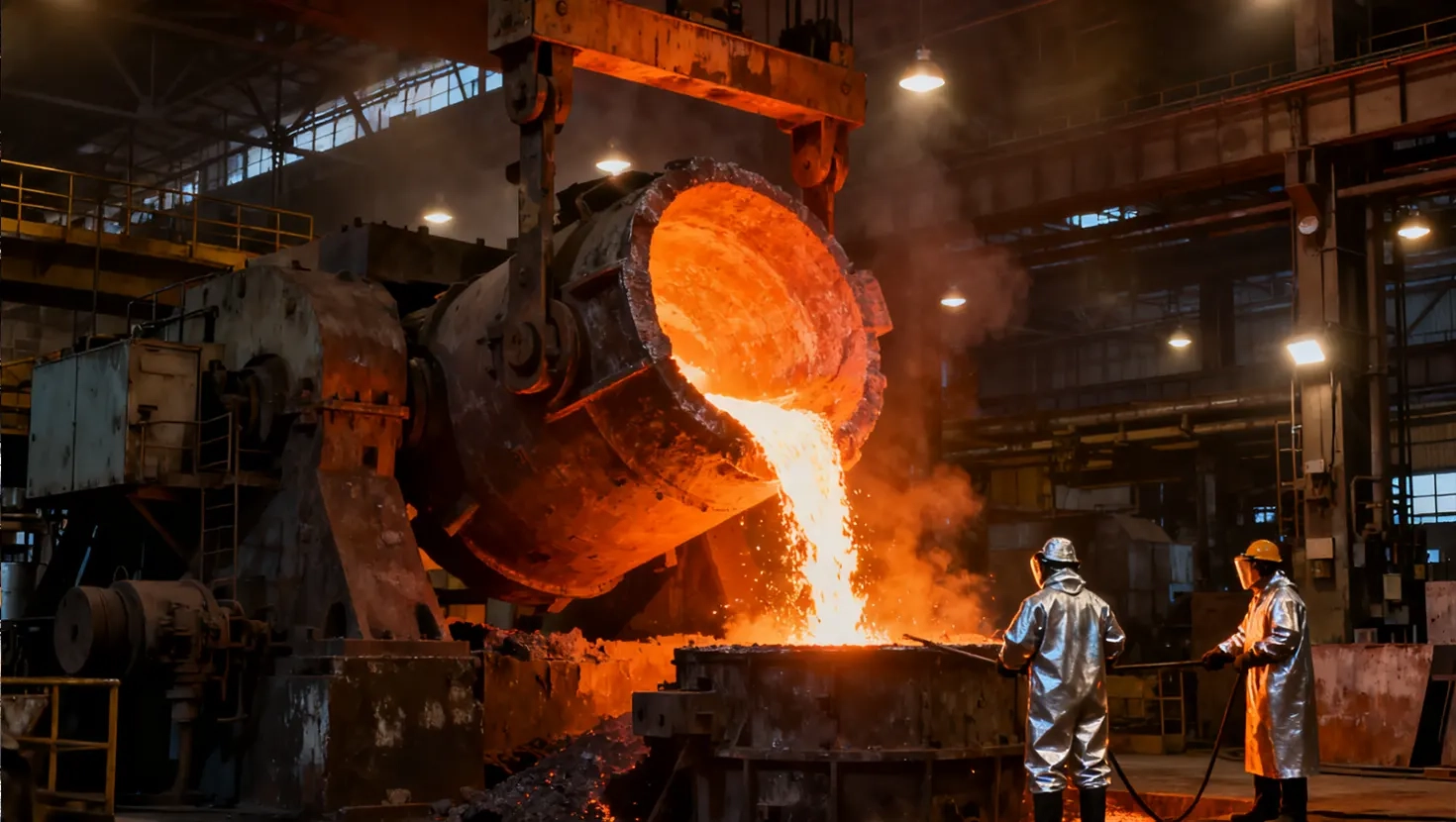
High-temperature lighting is not about “brighter” — it is about survival
In a typical warehouse or logistics hall, the main questions around lighting are about brightness, glare and energy efficiency. In a high-temperature industrial plant, the first question is much simpler:
Can this luminaire survive in our environment for more than a few thousand hours?
Areas around furnaces, kilns, hot process lines and drying sections regularly see ambient temperatures far above what most “standard” LED high bays were ever designed for. In these environments, it is not enough to be efficient. The luminaire must be thermally resilient.
Typical temperature environments in heavy industry
High-temperature plants are not all the same. Each process segment has its own thermal profile and risk level. The table below provides a simplified view of typical ranges that directly affect luminaire lifetime.
| Plant type | Typical ambient range* | Lighting challenge |
|---|---|---|
| Steelworks & forging shops | 60–95 °C (localised hot zones can be higher) | Strong radiant heat, heavy dust, long duty cycles; standard drivers and LEDs age very quickly. |
| Glass manufacturing plants | 55–85 °C near furnaces and forming lines | High radiant heat and reflective surfaces; temperature spikes are common. |
| Paper mills (drying & pressing) | 45–75 °C with humidity | Warm, humid and sometimes dusty; constant operation leaves no cool-down periods. |
| Other hot process zones | 50–90 °C depending on process | Combination of heat, contamination and mechanical stress. |
*Typical indicative ranges. Exact temperatures depend on process design and measurement points.
Why standard LED high bays struggle in these environments
Most general-purpose LED high bays are specified at an ambient temperature around 25–40 °C, with full-load driver ratings typically up to 45–50 °C. Above those limits, several mechanisms start to accelerate:
- Driver stress: electrolytic capacitors and power components age faster at higher core temperatures, leading to premature driver failures.
- LED junction temperature: as ambient temperatures rise, LED junction temperatures increase, reducing light output and accelerating lumen depreciation.
- Material fatigue: plastics, seals and gaskets can harden or crack, impacting ingress protection and long-term reliability.
The result is predictable: early lumen drop, colour shift, unstable behaviour or complete luminaire failure well before the expected lifetime. This is where a high-temperature platform such as HB20 makes a measurable difference.
1. HB20: a driver platform designed for high-temperature operation
In high-temperature environments, the driver is often the first component to fail. HB20 is built around a high-temperature driver concept that focuses on three aspects:
- Elevated operating range: the driver platform is designed to operate reliably at higher ambient temperatures compared to standard high bays, maintaining stable output in demanding hot zones.
- Component selection: critical parts such as capacitors and semiconductors are chosen for higher thermal ratings, helping to slow down ageing mechanisms under continuous load.
- Thermal path design: the driver is integrated into a housing and heat path that moves heat away from sensitive components rather than trapping it.
In practice, this means HB20 can keep supplying stable power under ambient temperatures that would push typical drivers into derating or failure. This is the foundation for any serious high-temperature solution.
2. Stable optical performance at elevated temperatures
When LED junction temperatures increase, you usually see three trends:
- Light output drops, reducing illuminance on the working plane.
- LED efficacy decreases, raising energy consumption per delivered lumen.
- Thermal stress accumulates in solder joints and materials, accelerating long-term degradation.
HB20 addresses these issues with a thermal design that keeps LED junction temperatures under better control, even when ambient conditions are elevated. The practical benefits are clear:
- More stable light levels over time in hot production zones.
- More predictable lumen depreciation curves for planning maintenance.
- Reduced risk of thermal runaway that can lead to early LED failure.
For operators, this means fewer dark corners, less frequent relighting work and more consistent visual conditions for workers.
3. Lifetime under heat: driver + LED + thermal design working together
A true high-temperature luminaire cannot rely only on “better heatsinks” or “high-quality LEDs”. It requires a coordinated approach:
- The driver must be able to survive and operate under higher case temperatures without rapid degradation.
- The LED engine must be designed with realistic junction temperature assumptions.
- The mechanical and thermal design must support heat dissipation even in hot ambient air.
HB20 combines these aspects into a single platform. Instead of trying to make a standard luminaire “work harder” in hot plants, HB20 is built from the beginning with elevated ambient temperatures in mind.
In many high-temperature plants, this translates into significantly longer maintenance intervals and a much lower risk of unplanned outages — a critical factor when every shutdown costs time and money.
Where HB20 makes the biggest difference
HB20 is most relevant wherever ambient temperatures, radiant heat and duty cycles push standard luminaires to their limits.
| Application area | Why HB20 is suited |
|---|---|
| Steelworks and forging zones | High ambient and radiant heat; HB20 supports more stable operation where standard high bays tend to fail early. |
| Glass production lines | Temperature spikes and reflective heat; HB20 provides a more robust platform for furnace-adjacent lighting. |
| Paper mill drying sections | Warm, humid and continuous operation; HB20 helps maintain reliable lighting over longer duty cycles. |
| Other hot process areas | Any industrial zone where ambient temperatures and operating hours exceed the comfort zone of standard luminaires. |