A practical, engineering-first guide to OEM and ODM cooperation for stadium, sports, industrial high bay, street, and high mast lighting — focused on how projects are defined, validated, produced, and supported over time.
OEM and ODM in LED lighting are often treated as “branding” or “catalog selection.” In professional projects – especially stadium lighting and large-area outdoor lighting – successful OEM/ODM outcomes depend on something deeper: engineering collaboration.
A stadium luminaire is not a single component. It is a system where optical design, thermal management, drivers, surge protection, mechanical aiming, corrosion resistance, and controls must work together under real operating conditions. The same is true in industrial high bays and infrastructure lighting, where long operating hours, heat, dust, vibration, and maintenance access become defining constraints.
Why This Comparison Matters
A common misconception in the market is that professional stadium lighting automatically means selecting the highest possible specification. In reality, many stadium projects operate under strict budget frameworks while still requiring professional-grade performance, safety, and reliability.
Understanding the distinction between specification headroom and engineering sufficiency is critical. Over-specification can increase cost without improving real-world outcomes, while under-specification can lead to performance degradation and higher maintenance risk.
Positioning in one sentence:
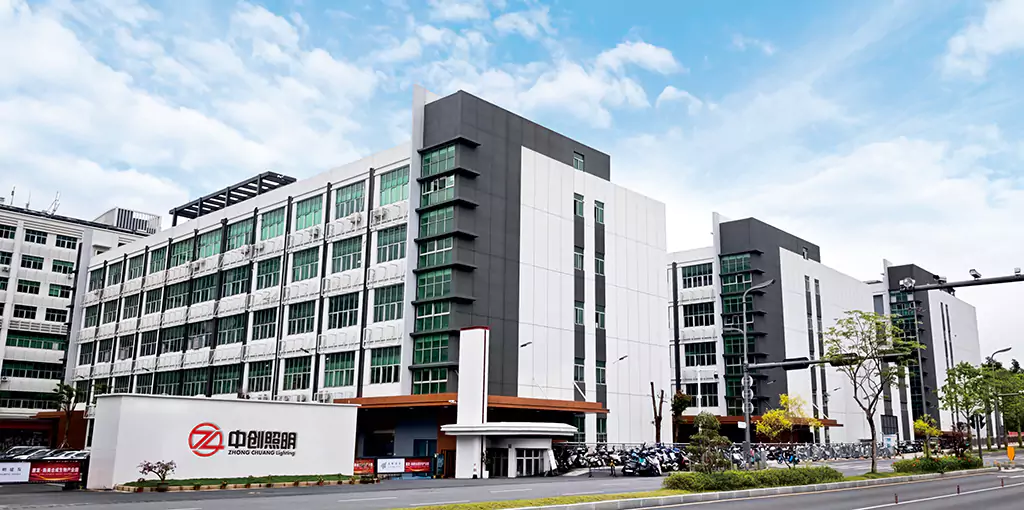
At ZC Lighting, we treat OEM/ODM cooperation as a structured engineering process – from project definition to validation, manufacturing, documentation, and long-term support.
1) Who This OEM/ODM Model Is Built For
OEM/ODM is not a single use case. The most successful partnerships usually fall into one (or more) of these profiles:
2) OEM vs ODM in Professional Lighting
In practical terms:
- OEM usually means you adopt an existing product platform and specify configuration details (branding, optics, driver options, controls, packaging, etc.).
- ODM usually means deeper product development involvement — often including structural modifications or new platform design aligned to your market strategy.
In stadium and infrastructure lighting, a better question is not “OEM or ODM,” but: how much engineering adaptation is needed to succeed in your target projects. Many collaborations begin as OEM with a clear roadmap to ODM once project data, customer feedback, and market positioning are validated.
A healthy OEM/ODM progression:
Start with a stable platform → validate with real projects → lock a repeatable configuration → then invest in deeper differentiation.
3) An Engineering-First OEM/ODM Workflow
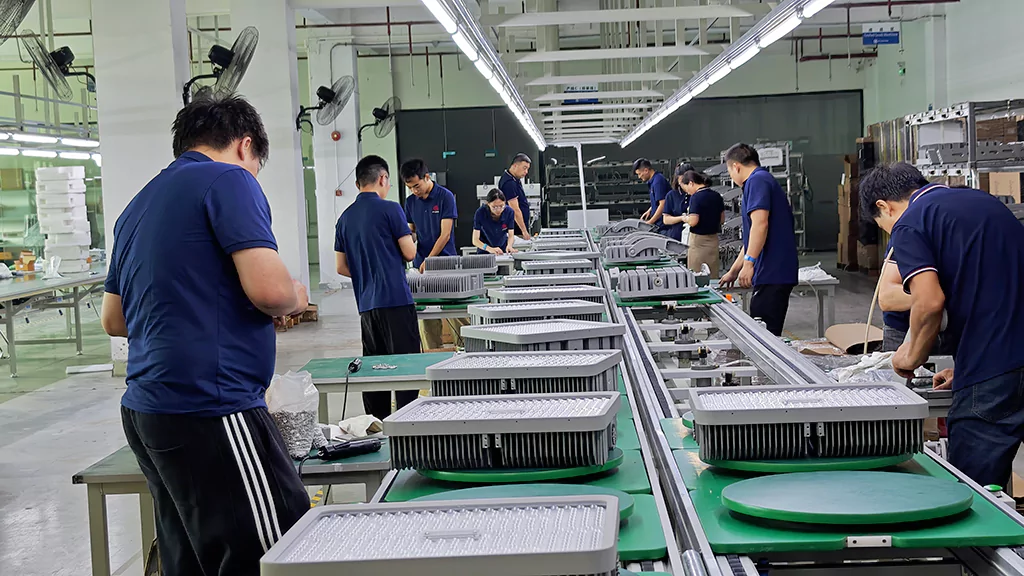
Strong OEM/ODM outcomes come from a repeatable workflow. Below is an engineering-driven process designed to reduce misunderstandings and shorten the “trial-and-error” phase.
Step 1 — Project definition (requirements that actually matter)
Stadium and outdoor projects are defined by operating reality: mounting heights, aiming angles, spill light control, thermal environment, and maintenance access. We translate these realities into a clear configuration direction.
- Application: stadium / training field / arena / high mast / roadway / industrial facility
- Mounting height and layout constraints
- Target performance level (project requirement)
- Controls expectation (basic dimming, network readiness, scene operation, etc.)
- Environmental demands (heat, salt air, dust, vibration)
Step 2 – Platform matching (integrated vs modular, output range, optics)
Next, we match your project profile to the right product architecture. In stadium lighting, integrated and modular designs can both be professional — the best choice depends on scale, thermal strategy, installation logic, and lifecycle planning.
Step 3 – Optical configuration and beam strategy
Beam selection is where stadium projects are often won or lost. A great luminaire can still deliver poor results if the optical distribution does not match mounting geometry. We support project-oriented optics planning and provide photometric assets (IES files) aligned to the chosen configuration.
Step 4 – Driver, protection, and control readiness
Drivers and protection are a major reliability driver. We define configuration based on your target market and project requirements — including dimming, surge protection level strategy, and optional control interfaces (where applicable).
Step 5 – Mechanical & installation details (aiming, bracket logic, serviceability)
Real projects involve installers, not only drawings. Aiming brackets, handling logic, cable routing, and service access should be designed to reduce on-site risk and improve maintenance efficiency.
Step 6 – Pilot sampling and validation
Sampling is not simply “sending a unit.” It’s validating that the selected configuration behaves as expected: optical output distribution, thermal behavior, and assembly consistency.
Step 7 – Production planning and quality gates
Before mass production, we confirm BOM stability, key process controls, and traceability. This is where OEM/ODM moves from a design to a repeatable product.
Step 8 – Delivery and long-term support
For professional projects, delivery is not the finish line. It is the start of operational feedback — which strengthens future iterations and ensures long-term partner value.
4) What Can Be Customized (and What Should Not)
The best OEM/ODM programs focus customization on what impacts real project performance and commercial success. Below is a practical overview of common customization areas, and where we recommend caution.
| Customization Area | Common Requests | Engineering Notes (Best Practice) |
|---|---|---|
| Optics / Beam distribution | Different beams for varying mounting heights and throw distances | Align optics to geometry. Provide IES files for design teams; avoid “one beam fits all.” |
| Driver & dimming | 0–10V, DALI (where applicable), project-specific dimming logic | Match driver to region and control ecosystem; confirm compatibility early to reduce rework. |
| Protection strategy | Surge strategy and durability orientation | Define protection needs based on installation environment and grid stability expectations. |
| Mechanical & mounting | Bracket style, aiming marks, installation convenience | Installation reliability often matters more than “beauty.” Reduce on-site risk. |
| Surface treatment | Coating selection for corrosion-sensitive environments | Choose treatment based on environment (coastal, industrial chemical exposure, etc.). |
| Branding & packaging | Logo, label, carton design, manual | Brand elements are important — but should not compromise ventilation, protection, or compliance. |
Common mistake:
Over-customizing non-critical visual elements while under-investing in optics, installation details, and validation.
5) Validation Beyond Datasheets
Datasheets are necessary — but they rarely reveal how a system behaves after months or years of operation. In stadium and industrial lighting, reliability is shaped by long operating hours, thermal cycling, environmental stress, and installation realities.
What validation should cover
- Thermal stability: consistency under long-hour operation and varying ambient conditions
- Driver endurance: stable output and behavior over time
- Structural behavior: seals, fasteners, bracket strength, and vibration tolerance
- Optical durability: lens/glass integrity, contamination resistance, and long-term clarity
- Serviceability: how easily the system can be maintained without full fixture replacement
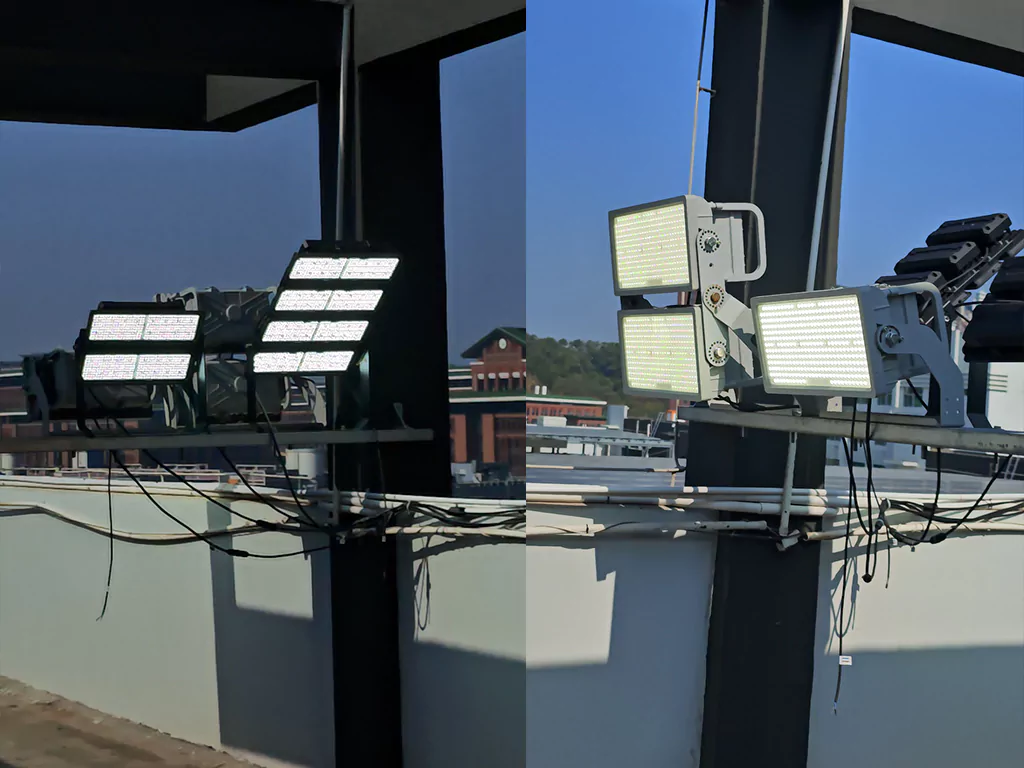
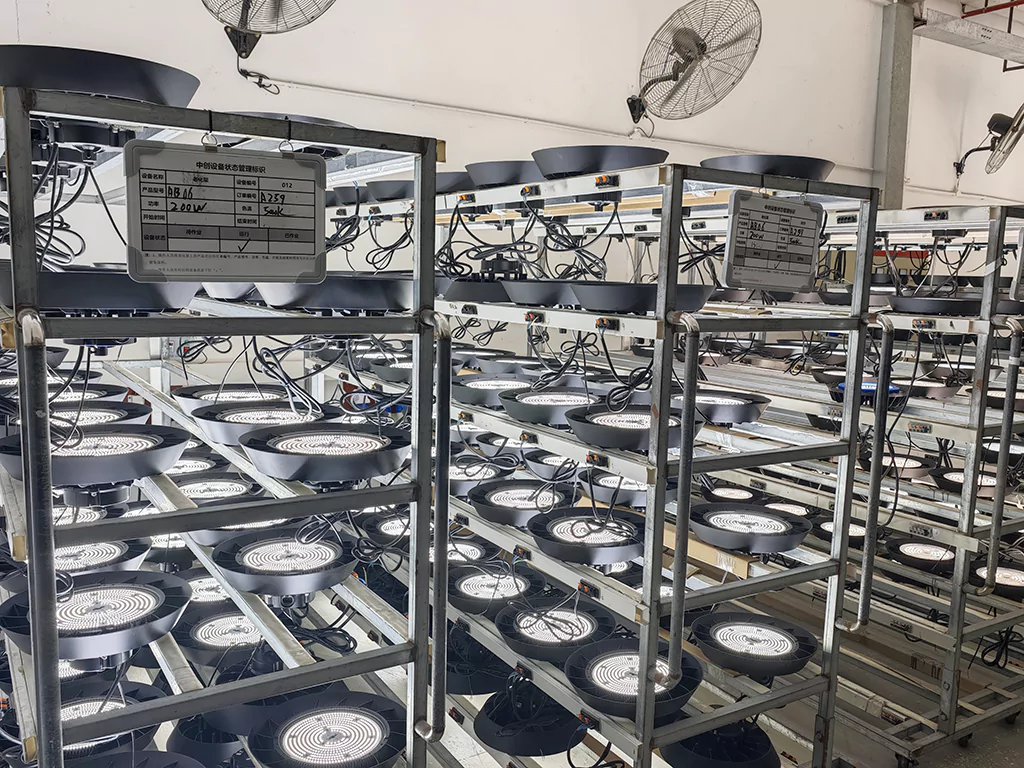
We also value real-operation observation because it reveals issues that controlled tests may not show. Long-hour operation under real outdoor conditions provides feedback on thermal paths, sealing strategy, and assembly consistency. This is not a marketing claim — it is an engineering practice that helps reduce uncertainty for professional projects.
6) Documentation and Compliance Mindset
Documentation is part of reliability and project execution. Professional customers need more than a product sheet — they need consistent configuration records and assets that reduce engineering workload.
Common documentation needs (project-dependent)
- Photometric assets (IES files) aligned to actual optics configuration
- Installation guidance (aiming logic, bracket instructions, safety notes)
- Configuration records (driver, optics, control options, labels)
- Quality and traceability support for project deliveries
Important: compliance requirements vary by country, project, and configuration.
For any OEM/ODM program, documentation and certification planning should be aligned to the target market before scaling.
7) Manufacturing & Quality Control: What Reliability Looks Like
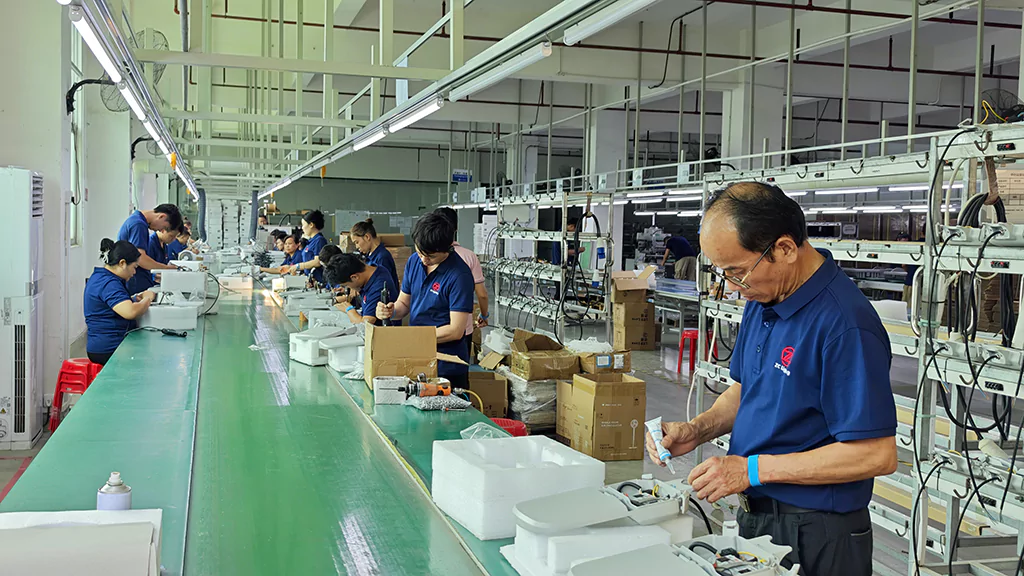
“Quality” becomes meaningful only when it is measurable and repeatable. In OEM/ODM cooperation, partners usually care about: consistency between batches, traceability for project deliveries, and confidence that the product is built the same way every time.
Key quality checkpoints commonly used in professional lighting
- Incoming inspection: LEDs, drivers, optics, fasteners, and critical components
- Process control: assembly torque, sealing steps, and routing discipline
- Functional verification: electrical safety checks and operational tests
- Aging / burn-in concept: early-failure risk reduction (process depends on program needs)
- Final inspection: labeling, packaging integrity, and visual consistency
- Traceability: batch records tied to configuration and shipment
8) ROI Logic for Distributors and Project Owners
In B2B lighting, ROI is rarely about “cheapest product.” It’s about reducing total cost of ownership and improving project predictability. OEM/ODM collaboration can support ROI in several concrete ways:
- Configuration clarity: fewer mis-selections and fewer project surprises
- SKU discipline: a rational product family that is easier to stock and sell
- Service efficiency: maintenance planning that reduces downtime and labor
- Lifecycle strategy: solutions that support upgrades and long-term operation
For distributors, “good ROI” often means a product family that is easy to explain and defend: clear segmentation, consistent naming logic, and a repeatable project story. For project owners, ROI usually means predictable operation and reduced maintenance risk over time.
Practical takeaway:
The best OEM/ODM collaborations don’t chase the lowest cost line-by-line — they optimize the full project lifecycle.
9) How to Start an OEM/ODM Project With ZC Lighting
To move fast without guessing, it helps to start with a short project brief. Below is a practical checklist you can send to our team before a technical discussion.
| Info to Provide | Why It Matters |
|---|---|
| Application type & project context | Determines architecture, protection strategy, and configuration priorities. |
| Mounting height & layout constraints | Defines beam strategy, aiming logic, and optical distribution direction. |
| Control expectations | Aligns driver options and system integration requirements. |
| Environment conditions | Impacts sealing, coating, and durability orientation. |
| Target market / certification direction | Helps plan documentation and compliance needs early (avoid late-stage surprises). |
| Target timeline & expected volume | Supports sampling plan, production planning, and inventory discipline. |
10) FAQ
Is OEM/ODM only about private labeling?
Not in professional lighting. Branding is a small part. Most value comes from correct configuration, validation practices, and repeatable production quality.
Do we need ODM to be competitive?
Not always. Many partners start with a stable OEM platform and build competitiveness through optics configuration, installation logic, documentation quality, and project execution consistency. ODM becomes valuable when you have clear differentiation goals and validated market needs.
Can stadium lighting and industrial lighting be served together?
Often yes — especially for partners who serve both infrastructure and sports markets. The key is to maintain a clear product family structure so customers understand what fits each application.
How do we avoid “spec sheet” competition?
Build a project story that includes selection logic, reliability validation, and lifecycle support. A professional customer rarely chooses on one number alone — they choose on confidence.
Next Step
If you are evaluating OEM/ODM cooperation for stadium, industrial, or infrastructure lighting, we’re happy to start with an engineering discussion. The goal is simple: align product configuration with project reality, and create a repeatable product family that partners can trust.