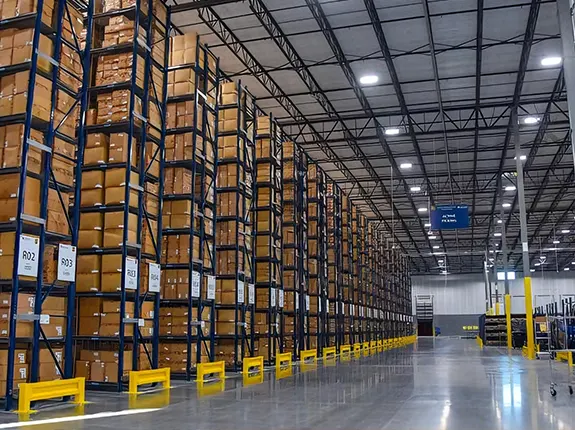
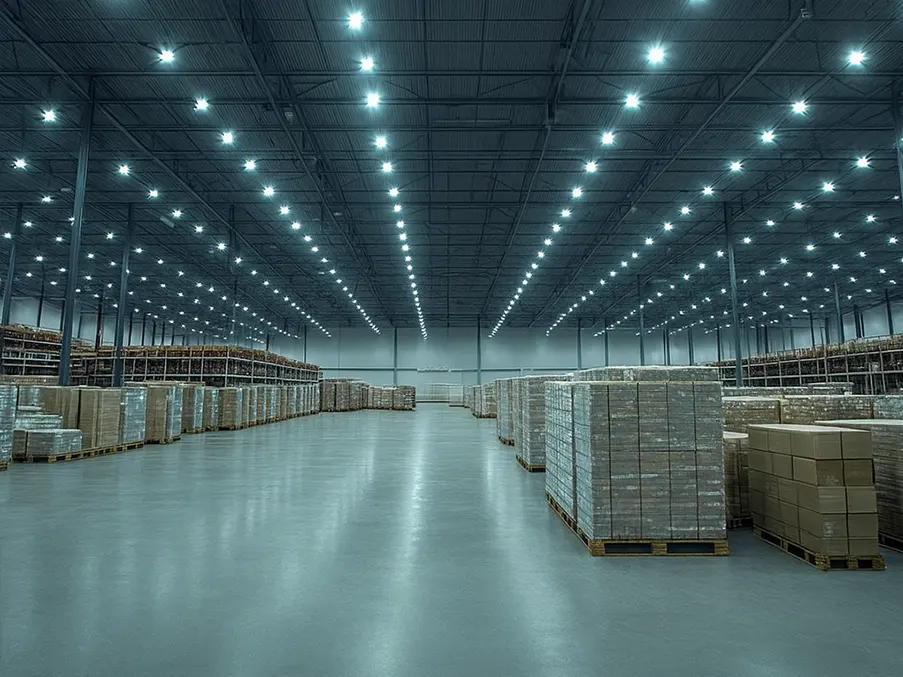
In industrial, commercial, and large-scale indoor spaces—such as warehouses, factories, gymnasiums, and retail superstores—high bay lighting plays a critical role in ensuring safety, productivity, and user comfort. For decades, traditional lighting solutions dominated these spaces, but the rise of LED (Light-Emitting Diode) technology has reshaped the market. Below is a detailed comparison of LED High Bay Lights and Traditional Lighting (primarily including High-Pressure Sodium (HPS), Metal Halide (MH), and Fluorescent High Bays) across key performance, cost, and sustainability metrics.
1. Energy Efficiency: LED’s Unmatched Advantage
Energy efficiency is one of the most impactful differences between the two technologies, directly influencing long-term operational costs.
- Traditional Lighting:
- HPS and MH lights are notoriously energy-inefficient. HPS fixtures typically convert only 20-30% of energy into visible light, with the rest wasted as heat; MH lights perform slightly better (30-40%) but still lag significantly.
- Fluorescent high bays, while more efficient than HPS/MH, still trail LEDs. A 4-foot fluorescent tube (T5/T8) uses ~50-80 watts to produce 4,000-6,000 lumens, meaning lower “lumens per watt” (lm/W) ratios.
- LED High Bay Lights:
- LEDs excel at energy conversion, with 80-90% of energy turned into light and minimal heat loss. Modern LED high bays deliver 130-180 lm/W—a 2-4x improvement over HPS/MH and 1.5-2x better than fluorescent options.
- For example: A 100W LED high bay can produce ~15,000 lumens, equivalent to a 400W MH fixture or 350W HPS fixture. This translates to 60-75% energy savings per fixture, a game-changer for spaces with dozens of high bays.
2. Lifespan: LEDs Reduce Maintenance Headaches
The lifespan of lighting directly affects maintenance costs, labor, and downtime—critical factors for industrial spaces.
- Traditional Lighting:
- HPS bulbs last 10,000-24,000 hours (1-2.5 years with 12-hour daily use); MH bulbs have a shorter lifespan (6,000-15,000 hours, ~0.5-1.5 years).
- Fluorescent tubes last 20,000-30,000 hours (~2-3 years) but degrade faster in cold or dusty environments (common in warehouses), leading to premature failure.
- All traditional options require frequent bulb replacements, which often involve hiring technicians (due to high mounting heights) and disrupting operations.
- LED High Bay Lights:
- LEDs have an average lifespan of 50,000-100,000 hours (5-10 years with 12-hour daily use)—5x longer than HPS and 8x longer than MH.
- Many LED models also feature “lifespan warranties” (5-7 years), ensuring reliability. Reduced replacements mean lower labor costs and minimal downtime, a major advantage for 24/7 operations (e.g., distribution centers).
3. Light Quality: LEDs Improve Visibility and Safety
Light quality—measured by color rendering index (CRI), color temperature (CCT), and uniformity—impacts safety, productivity, and even employee well-being.
- Traditional Lighting:
- HPS lights produce a warm, yellowish glow (CCT: 2,000-2,700K) with very low CRI (20-30). This makes it hard to distinguish colors (e.g., identifying product labels or equipment defects) and can cause eye strain.
- MH lights have better CRI (60-80) but emit a harsh, cool white light (CCT: 4,000-6,000K) that often creates glare or uneven lighting (hotspots and shadows).
- Fluorescent high bays have moderate CRI (70-80) but suffer from “flicker” (visible or invisible) and color shifting over time, which can trigger headaches or fatigue.
- LED High Bay Lights:
- LEDs offer customizable CCT (3,000K warm white to 6,000K cool white) to match space needs—e.g., 3,000K for gymnasiums (warm, inviting) or 5,000K for warehouses (bright, clear).
- Most LED high bays have a CRI of 80+ (some premium models reach 90+), enabling accurate color recognition—critical for quality control in factories or retail stockrooms.
- LEDs also provide uniform light distribution (thanks to advanced lens designs) and zero flicker (when paired with high-quality drivers), reducing eye strain and improving safety (e.g., preventing trips in dimly lit corners).
4. Environmental Impact: LEDs Are Greener
Sustainability is increasingly a priority for businesses, and lighting choices play a role in reducing carbon footprints.
- Traditional Lighting:
- HPS and MH bulbs contain toxic materials (e.g., mercury in MH) and require special disposal (not regular landfill). Fluorescent tubes also contain mercury (~3-5mg per tube), posing environmental risks if broken or improperly discarded.
- Higher energy consumption means traditional lighting indirectly increases carbon emissions: A 400W MH fixture (vs. 100W LED) emits ~360kg more CO₂ annually (based on U.S. average electricity carbon intensity).
- LED High Bay Lights:
- LEDs contain no mercury or toxic materials, making them easy to recycle and eco-friendly.
- Lower energy use directly reduces carbon footprints: A warehouse with 50 LED high bays (100W each) vs. 50 MH fixtures (400W each) saves ~18,000kWh annually—equivalent to reducing CO₂ emissions by ~12,600kg (or taking 2.7 cars off the road for a year).
5. Cost: Higher Upfront, Lower Total Ownership
While LED high bays have a higher initial cost, their long-term savings make them more cost-effective than traditional lighting.
- Traditional Lighting:
- Upfront cost: Low—HPS/MH fixtures cost 50-150 each; fluorescent high bays cost 80-200.
- Total Cost of Ownership (TCO): High—due to frequent bulb replacements (10-30 per bulb) and high energy bills. For example, 50x400W MH fixtures cost ~1,800/year in electricity (at 0.15/kWh) plus 500/year in maintenance.
- LED High Bay Lights:
- Upfront cost: Higher—LED high bays range from $150-400 each (depending on wattage and features like dimming or motion sensors).
- TCO: Significantly lower—50x100W LED fixtures cost ~450/year in electricity and ~50/year in maintenance. The upfront cost is typically recouped in 1-2 years, with savings continuing for a decade.
6. Additional Features: LEDs Offer More Flexibility
Modern LED high bays come with smart features that traditional lighting cannot match:
- Dimming: Many LEDs support 0-10V or DALI dimming, allowing users to adjust brightness based on occupancy (e.g., dimming lights in empty warehouse zones) for extra energy savings.
- Motion Sensors/Controls: Integrating motion sensors or IoT controls (e.g., Philips Hue, Lutron) lets lights turn on/off automatically, reducing wasted energy in low-traffic areas.
- Cold-Weather Performance: LEDs perform well in cold temperatures (-40°C to 40°C), unlike MH/HPS (which take time to warm up) or fluorescent (which dim in cold environments)—ideal for refrigerated warehouses or outdoor covered spaces.
Conclusion: LED High Bay Lights Are the Future
For most industrial, commercial, or large-scale indoor spaces, LED High Bay Lights outperform traditional lighting in every critical category: energy efficiency, lifespan, light quality, sustainability, and long-term cost. While the upfront investment is higher, the 1-2 year payback period and decade of reliable, low-cost operation make LEDs the smart choice for businesses looking to cut costs, improve safety, and reduce their environmental impact.
Traditional lighting (HPS/MH/fluorescent) may still have niche uses (e.g., retrofitting extremely old systems with minimal budget), but as LED technology becomes more affordable and advanced, their market share will continue to decline.