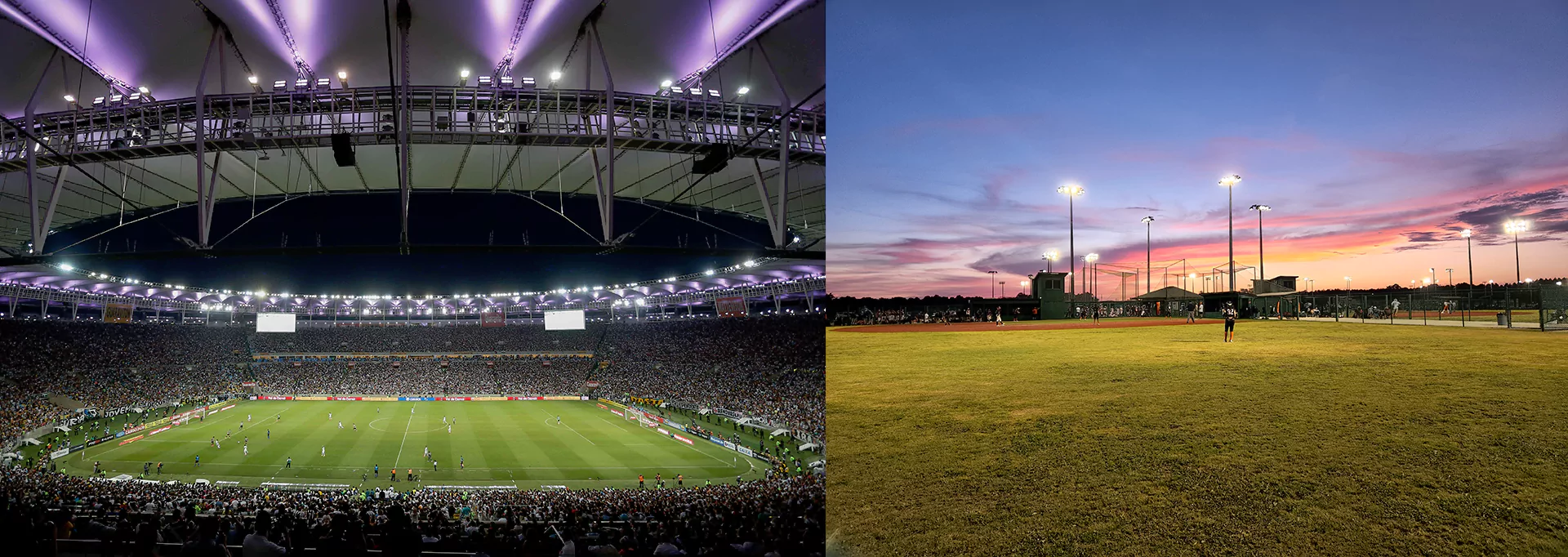
“We need FIFA-level lighting.” This requirement appears frequently in tenders — sometimes justified, sometimes misunderstood. In practice, many stadium projects fail not because they ignore standards, but because they apply the highest requirements blindly without considering real usage.
This guide explains how to meet FIFA and broadcast lighting expectations without unnecessary over-engineering. It connects standards to real design decisions — illuminance, vertical lighting, uniformity, glare control, pole height and controls — so project owners can invest where it actually matters.
1. Understanding FIFA Lighting Levels (Beyond the Labels)
FIFA and related standards define different lighting classes for football fields. These are often simplified in tender documents, but each level reflects a different viewing and broadcasting scenario.| Application level | Typical use | Design implication |
|---|---|---|
| Training / recreational | Practice, local matches | Horizontal lighting focus |
| Professional competition | League matches | Higher uniformity & glare control |
| Broadcast (HD / UHD) | Televised events | High vertical illuminance, camera consistency |
2. Horizontal vs Vertical Illuminance: Where Cost Escalates
Meeting FIFA horizontal illuminance targets is relatively straightforward. Meeting vertical illuminance targets — especially toward multiple camera angles — is what drives system complexity and cost.- Higher mounting positions.
- More luminaires.
- Mixed beam optics.
3. Uniformity: Broadcast Exposes Everything
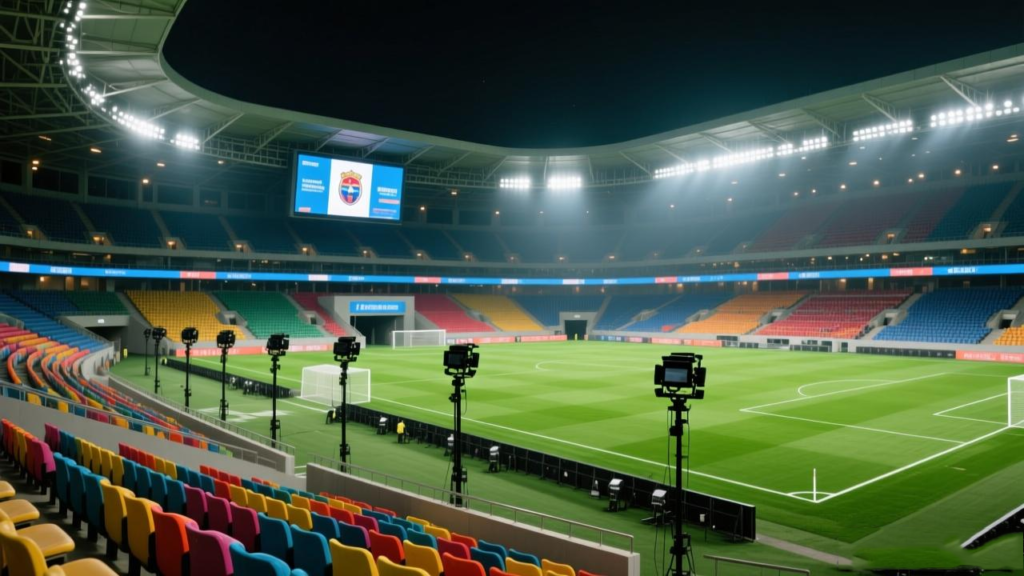
Uniformity tolerances tighten significantly for televised matches. Cameras amplify dark zones and brightness gradients that may be acceptable for live spectators.Instead of chasing extreme lux values, many successful projects invest in: better spacing, optics selection, and aiming precision.4. Glare Control Is Non-Negotiable at FIFA Level
Broadcast environments are unforgiving to glare. High-angle intensity, reflections, and flare artifacts immediately degrade image quality.- Asymmetric optics are essential.
- Visors and shields are standard.
- Strict aiming limits are applied.
5. Pole Height Strategy: Not Always “The Higher, The Better”
While broadcast stadiums often use high poles or roof-mounted systems, raising pole height without revisiting optics and layout rarely delivers value.Engineering-led projects test multiple height scenarios and choose the lowest height that meets all performance targets.6. Controls: The Smart Alternative to Over-Building
Controls allow stadiums to meet multiple requirements with one system:
- Training mode.
- Match mode.
- Broadcast mode.
This flexibility avoids permanent over-engineering while preserving future capability.
7. The Real Cost of Over-Engineering
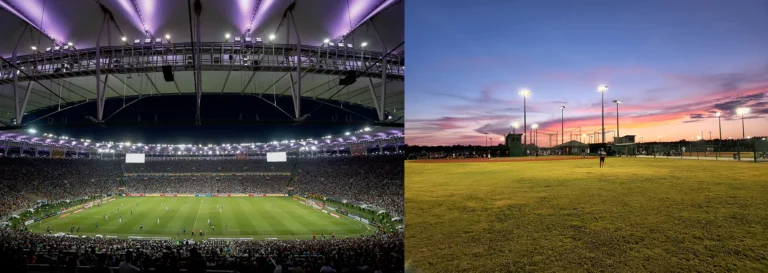
- Higher CAPEX.
- Higher energy consumption.
- More complex maintenance.
Projects that balance standards with usage typically achieve faster ROI and better long-term satisfaction.
8. A Practical FIFA-Oriented Design Checklist
- Confirm match and broadcast level.
- Define realistic vertical illuminance targets.
- Control glare before increasing lux.
- Use simulations to compare options.
- Design controls from day one.
9. Summary
Meeting FIFA and broadcast lighting requirements does not require blindly building the most expensive system. It requires understanding where performance matters, applying engineering discipline, and using flexibility to adapt to real usage.