When stadium owners consider upgrading lighting systems, the first question is often not about lux or beam angles – it is about return on investment. While LED stadium lighting is widely recognized for its energy efficiency, the real financial value of an upgrade goes far beyond electricity savings.
This article breaks down the energy savings, maintenance reduction, and ROI logic behind LED stadium lighting upgrades, helping owners, municipalities, and decision-makers evaluate projects with financial clarity rather than assumptions.
Financial reality: In most stadium projects, energy savings alone do not tell the full ROI story – maintenance, controls, and operational flexibility matter just as much.
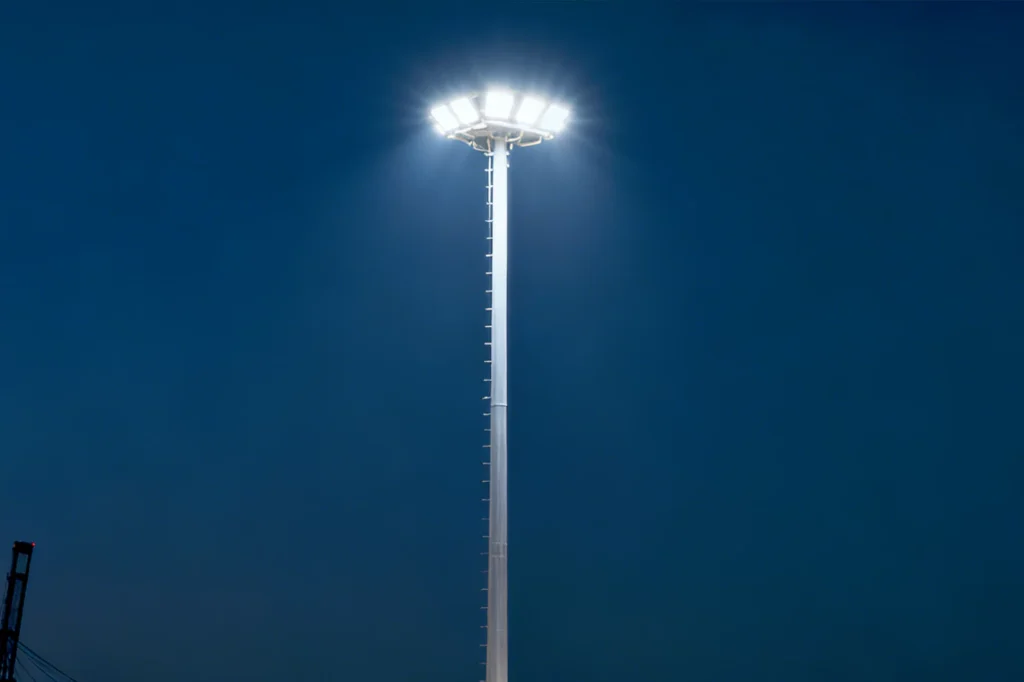
Traditional stadium lighting systems rely on metal halide or high-pressure sodium lamps. These systems carry hidden operational costs that accumulate over time.
| Cost factor | HID system | LED system |
|---|---|---|
| Power efficiency | Low | High |
| Maintenance | High | Low |
| Warm-up time | 10–20 min | Instant |
LED upgrades typically reduce energy consumption by 40-70% compared to HID systems. However, savings depend on how the system is designed and operated.
Maintenance costs in stadium environments are significant. Lamp replacement requires lifts, trained crews, and often disrupts facility operation.
LED luminaires eliminate routine lamp changes and dramatically reduce maintenance interventions, creating long-term savings that frequently match or exceed energy savings.
Controls amplify ROI by aligning lighting output with actual usage.
Facilities using intelligent controls often achieve payback periods under 4 years.
Consider a mid-sized football stadium upgrading from HID to LED:
| Parameter | Before (HID) | After (LED) |
|---|---|---|
| Annual energy cost | 100% | 45-60% |
| Annual maintenance cost | 100% | 20-30% |
Combined savings typically deliver ROI within 3–5 years, depending on usage patterns.
Engineering insight: ZC Lighting ROI evaluations focus on usable light, control strategy, and maintenance reduction – not just lumen-per-watt figures.
LED upgrades also provide non-financial benefits:
These factors often influence funding decisions even more than direct cost savings.
LED stadium lighting upgrades deliver ROI through a combination of energy savings, maintenance reduction, and operational flexibility. Projects that consider all three dimensions achieve the most reliable financial outcomes.
For the fastest pricing, include model, quantity, application, and installation height.