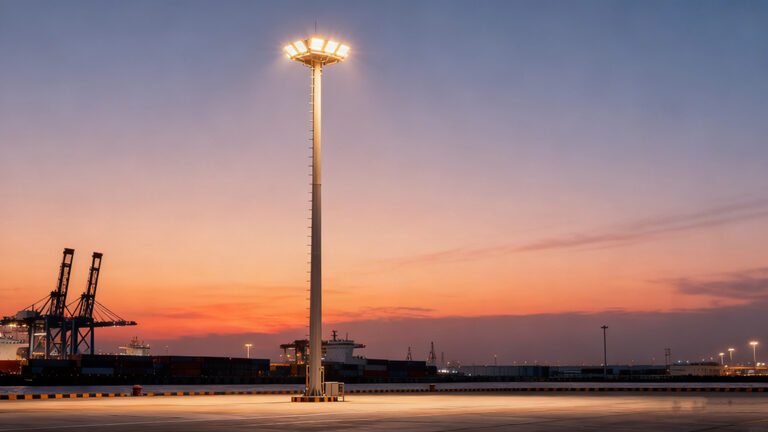
Ports, airport aprons, logistics hubs and highway interchanges share a common challenge: they must operate safely 24/7 under harsh environmental conditions. High-mast lighting is often the only practical way to provide wide-area illumination from 20–45 m poles while keeping ground space clear for operations.
Switching from traditional HID systems to LED high-mast solutions offers major benefits in energy savings, visibility and maintenance. However, design errors at these heights can be very expensive to fix later. This guide walks through key considerations when planning LED high-mast lighting for demanding outdoor sites.
Each type of high-mast site has unique risks and visual tasks:
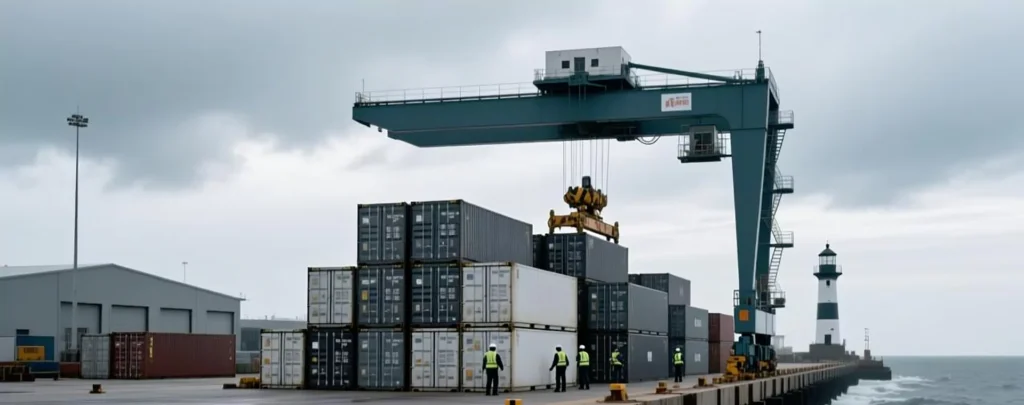
1.1 Ports and Container Terminals
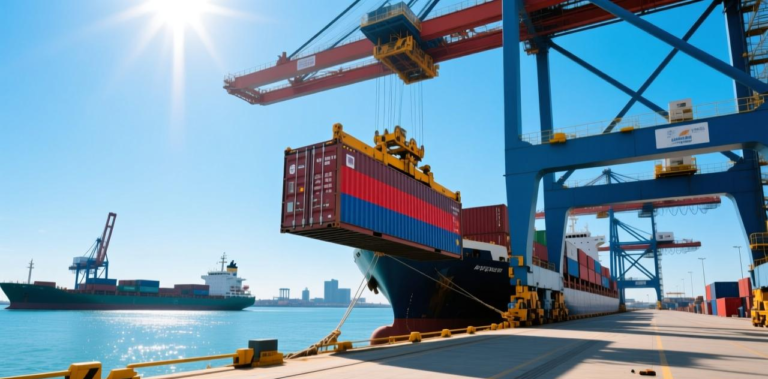
Container yards require clear visibility for crane operators, truck drivers and yard staff. Lighting must reduce shadowing between stacks and provide good vertical illuminance on container faces for identification and safety.
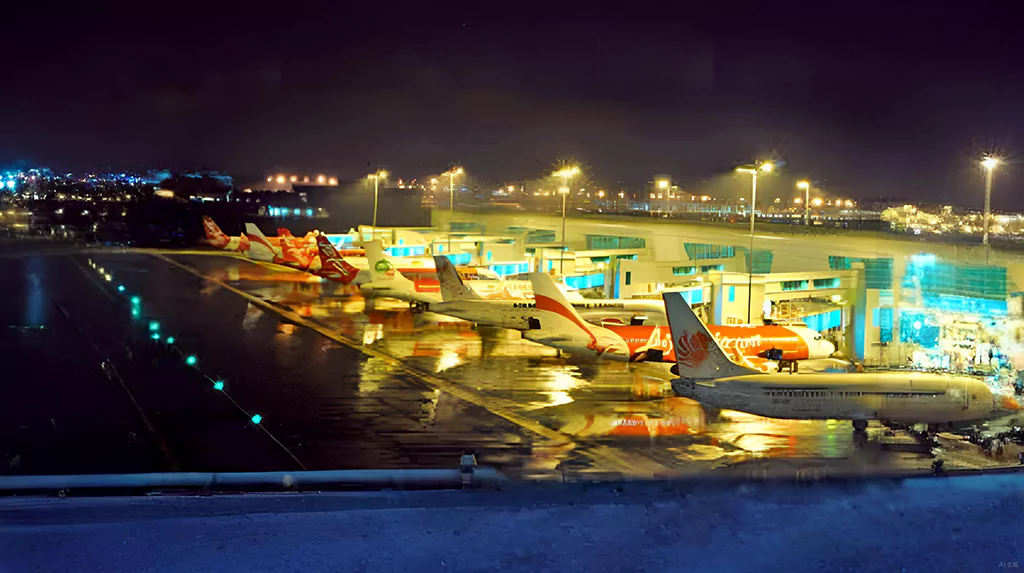
1.2 Airport Aprons and Taxiways
Aircraft stands, aprons and taxiways demand excellent vertical illumination to support ground handling, fuelling, inspections and safe movement of vehicles and aircraft. Glare control is critical to avoid impacting pilots and control tower staff.
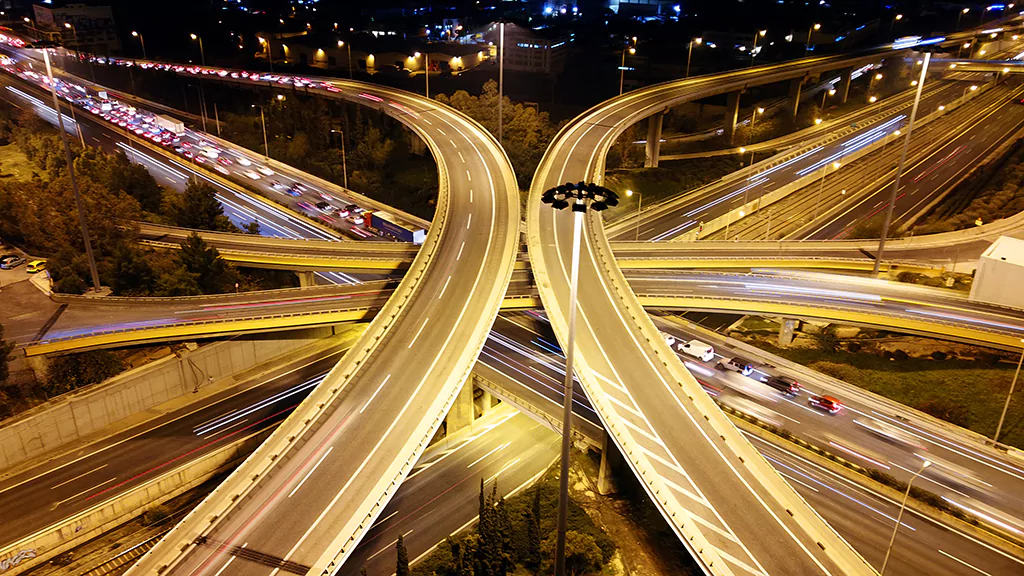
1.3 Highway Interchanges and Toll Plazas
Complex road junctions and toll areas require uniform lighting to help drivers read signage, identify lane markings and react to unexpected movements. High mounting heights help reduce the number of poles and improve visibility across multiple levels.
2. Choosing Pole Height and Layout
High-mast poles are major structural investments. Their height and positioning determine not only the lighting performance but also wind loading, foundation design and maintenance methods.
2.1 Typical High-Mast Heights
- 20–25 m: small to medium logistics yards, parking areas, toll plazas.
- 25–35 m: container terminals, larger interchanges, regional airports.
- 35–45 m: major seaports, large airport aprons, very wide open areas.
2.2 Layout Strategies
- Perimeter masts: located around the edge of operational areas, keeping the central space clear.
- Island masts: placed on central islands or median strips in interchanges or toll plazas.
- Mixed approach: combination of perimeter and selected central masts for particularly deep or complex sites.
3. Optics Selection for Long-Throw Illumination
At 20–45 m mounting heights, small changes in beam angle produce big differences on the ground. Long-throw optics and careful aiming are essential to deliver uniform lighting without wasting energy.
3.1 Narrow to Wide Distribution Mix
Most high-mast installations use a mix of:
- Narrow beams (10–20°): to project light far into the yard or across wide roads.
- Medium beams (20–40°): for mid-distance areas and general coverage.
- Wide beams (> 40°): for near-field zones directly under the mast and access roads.
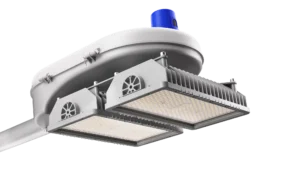
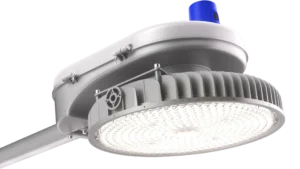
LED high-mast luminaires with modular optics allow designers to tune distribution precisely. For example, long-range optics may serve the central apron, while medium optics cover parking and staging areas around the base of the mast.
3.2 Controlling Glare at High Angles
Even at great heights, poorly controlled high-angle light can produce glare for drivers, pilots or crane operators. To avoid this:
- Use optics that limit intensity above critical angles (e.g. > 70° from nadir).
- Incorporate visors or shields on luminaires facing sensitive directions.
- Check light levels at driver eye height in simulation, not only on the ground plane.
4. Illuminance, Uniformity and Vertical Lighting
Design targets vary widely by jurisdiction and application. However, several general principles apply:
- Provide sufficient horizontal illuminance on working surfaces (roads, aprons, yard areas).
- Ensure good vertical illuminance on vehicles, containers and aircraft fuselages for visibility and identification.
- Maintain uniformity to avoid “black holes” and sharp contrasts that can confuse operators.
For container yards, special attention should be given to vertical lighting on stack faces, helping operators see locking devices and codes. For airport aprons, vertical illuminance around aircraft doors and service zones supports safe ground handling and inspection.
5. Mechanical and Environmental Considerations
Outdoor high-mast installations face severe mechanical and environmental stresses:
5.1 Wind and Vibration
At 30–45 m, wind loads are significant. Luminaires and brackets must have low effective projected area (EPA) and robust fixing systems to avoid excessive pole deflection or vibration. Choosing compact, aerodynamically optimized LED luminaires helps reduce structural costs.
5.2 Corrosion and Temperature
Ports and coastal sites face salt spray and corrosive atmospheres; airports and interchanges may experience wide temperature swings. Look for:
- High-quality powder coatings and anti-corrosion treatments.
- Gaskets and IP ratings suitable for harsh weather (e.g. IP66).
- Thermal designs that maintain LED junction temperatures within safe limits.
6. Maintenance, Safety and Access
Once installed, accessing luminaires at 20–45 m can be challenging. Thoughtful design reduces maintenance risk and cost.
6.1 Fixed vs Lowering Systems
- Fixed-head masts: require cranes, cherry pickers or climbing for maintenance; lower initial cost but higher service cost.
- Lowering-head masts: allow the luminaire ring to be brought down to ground level for servicing; higher initial cost but safer and easier long-term maintenance.
6.2 Modular Drivers and Electronics
In some designs, drivers can be located at the base of the mast or in nearby cabinets, reducing the need to work at height. Modular electronics and surge protection devices (SPD) further simplify service and improve resilience.
7. Controls, Energy Management and Smart Functions
LED high-mast systems pair naturally with modern control solutions. Depending on the site, you may consider:
- Time-based dimming: lower light levels in low-traffic hours to save energy.
- Zone-based control: switch or dim specific areas (e.g. idle yard sections) independently.
- Integration with sensors: tie lighting levels to occupancy or process states where appropriate.
- Remote monitoring: track failures, energy use and maintenance needs via a central platform.
8. A Step-by-Step Process for LED High-Mast Upgrades
When upgrading from HID to LED high-mast lighting, a structured process helps avoid surprises:
- Survey existing installations: record pole heights, spacing, bracket arms, and current lamp wattages.
- Define performance targets: illuminance, uniformity, glare limits, and vertical lighting needs.
- Check structural capacity: verify pole and foundation suitability for new luminaires and wind loads.
- Develop lighting design: select optics, aiming and control strategy; run simulations.
- Plan phasing: schedule installation to minimize disruption to operations.
- Commission and verify: measure light levels on site, adjust aiming if required, confirm control sequences.