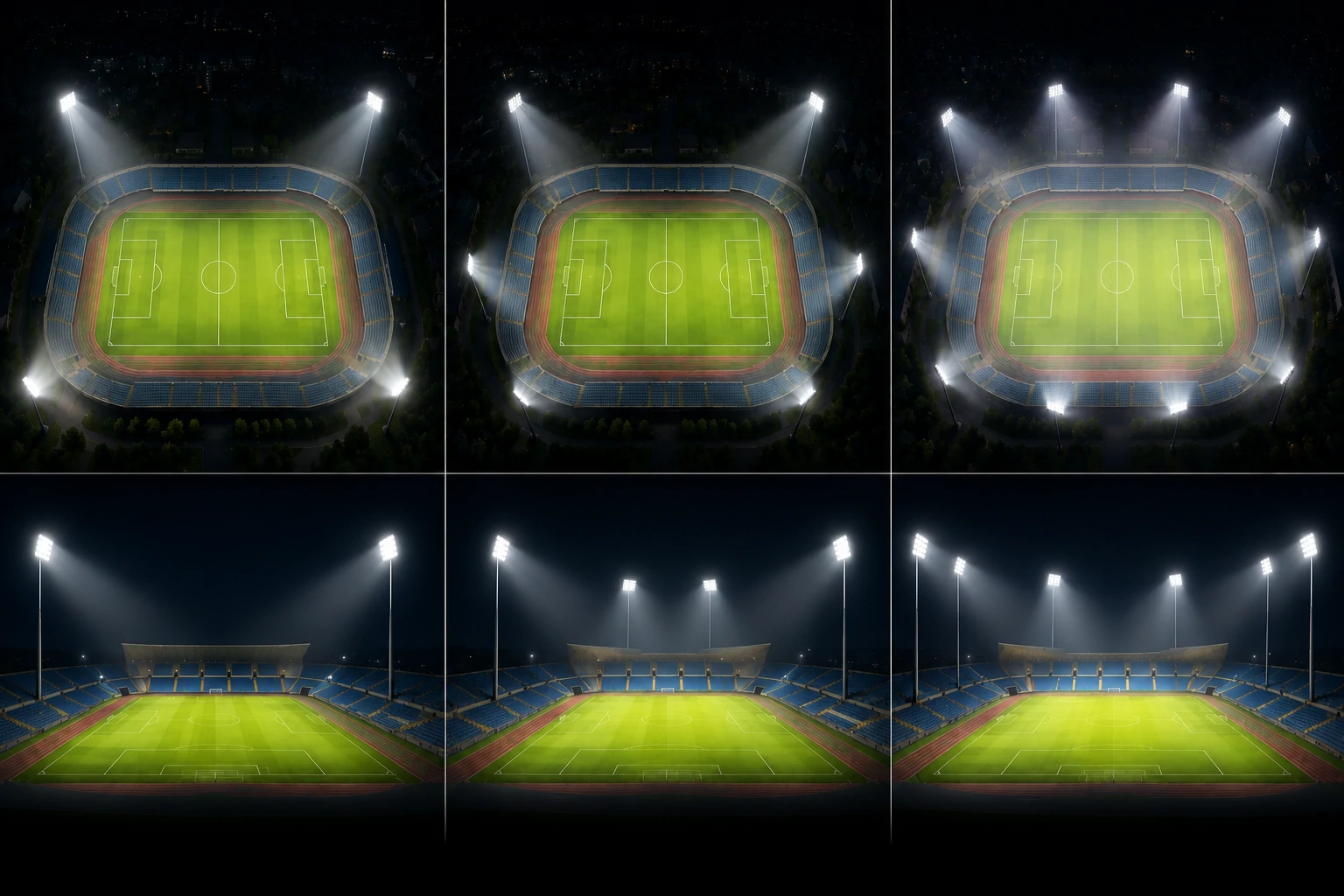
폴 레이아웃은 단순한 예산 항목이 아니라 성능을 고려한 결정 사항입니다. 이 가이드에서는 공연장 등급과 제약 조건에 따라 4/6/8-폴 레이아웃을 비교하고, 승인 여부를 예측할 수 있도록 확인해야 할 사항을 제시합니다.
적절한 수의 조명 기둥을 선정하는 것은 경기장 조명 설계에서 가장 중요한 결정 사항 중 하나입니다.
4극 시스템은 초기 비용을 절감할 수 있는 반면, 6극 또는 8극 배치는 더 뛰어난 균일성, 눈부심 감소, 향상된 광 분포 성능을 제공할 수 있습니다.
하지만 기둥이 많다고 해서 항상 결과가 더 좋아지는 것은 아닙니다.
이상적인 폴 구성은 종목 유형, 대회 수준, 조명 요구 사항, 관람 환경, 프로젝트 예산 등 여러 요인에 따라 달라집니다.
이 가이드에서는 엔지니어와 프로젝트 발주자가 가장 적합한 솔루션을 선택할 수 있도록 4극, 6극, 8극 경기장 조명 배치를 비교합니다.
답변: 경기장 등급 및 제약 조건에 따라 4극, 6극, 8극 중 하나를 선택하십시오. 4극은 훈련장에 적합한 경우가 많으며, 6극은 조명 균일성과 눈부심 제어 효과를 향상시키고, 8극은 더 높은 등급의 경기장과 더 엄격한 Ev/눈부심/빛 누출 요건을 충족합니다.
계산 보고서, 목표치, 그리고 인수 기준과 연계된 시운전 목표치 표를 활용하여 레이아웃 결정 사항을 검증 가능하게 만드십시오.
- 주요 요점 #1: 먼저 단계와 승인 방식을 정의하십시오. 레이아웃은 요구 사항에 따라 결정됩니다.
- 주요 요점 #2: 기둥을 더 많이 설치하면 주로 기울기 각도를 더 작게 설정할 수 있고, 조준 유연성이 향상되며, 눈부심과 빛의 확산을 더 효과적으로 제어할 수 있습니다.
- 주요 요점 #3: 개조 공사는 기존 전봇대 구조를 바탕으로 달성 가능한 목표를 검증해야 한다.
목차
1) 이 경우
2) 주요 요구 사항/지표 (표)
3) 단계별 작업 흐름
4) 흔히 저지르는 실수
5) 체크리스트 / 템플릿 다운로드
6) 자주 묻는 질문
관련 기사:
• 폴 높이에 대한 설명
• 훈련 경기장과 시합 경기장
• 에너지 절감 및 투자 수익률(ROI) 분석
이 경우
새로운 경기장이나 훈련장을 계획 중이거나, HID 조명에서 업그레이드하려는 경우, 또는 고정형 폴 위치가 있는 기존 시설을 개조할 때 이 가이드를 참고하십시오.
일반적인 시나리오
- 훈련 분야: 성과 목표는 낮고 비용 민감도가 높다.
- 경기 장소: 균일성과 눈부심 제어에 대한 요구가 더욱 높아지고 있다.
- 방송 장소: EV, 눈부심/빛 번짐, 조준 한계 등은 종종 레이아웃 선택을 좌우합니다.
- 개조: 기존 전봇대들로 인해 조준과 유출물 통제에 제약이 있습니다.
주요 요구 사항 / 지표
이러한 의사결정 지표를 활용하여 브로셔 방식이 아닌 공학적 관점에서 레이아웃을 비교하십시오.
| 결정 요인 | 어떤 부분에 영향을 미치는가 | 그것이 중요한 이유 | 확인해야 할 사항 |
|---|---|---|---|
| 장소 등급 | 목표 및 수용 방법. | 레이아웃은 계층 구조에 따라 구성되어야 합니다. | 필요한 경우 Eh/균일도 및 Ev를 정의하십시오. |
| 기울기/조준 한계 | 눈부심/광산란 위험. | 기울기가 크면 상향광과 눈부심이 증가합니다. | 최대 기울기 정책 + 조준 테이블. |
| 균일성 | 플레이 가능성과 방송 품질. | 균일성이 떨어지면 불만이 제기됩니다. | 계산 및 측정 격자 도면. |
| 유출 경계 | 이웃 및 도로 관련 규정 준수. | 현장 외 영향이 승인 여부를 좌우한다. | 경계 검사 및 차폐 전략. |
| 개조 시 제약 사항 | 달성 가능한 성능. | 고정된 기둥은 선택의 폭을 제한합니다. | 기존 형상을 바탕으로 달성 가능한 목표를 검증하십시오. |
정의
에~폴 레이아웃이란 조명 영역 주변의 설치 지점 배치를 의미합니다. 레이아웃 선택에 따라 조준의 자유도, 최대 기울기 각도, 그리고 조도 및 균일도 목표를 충족하면서 눈부심과 빛 번짐을 얼마나 효과적으로 제어할 수 있는지가 달라집니다.
일반적인 표적 사거리
일반적인 지침 (항상 입찰 공고문을 따르십시오):
- 훈련 단계: 유출이나 눈부심에 대한 제약이 크지 않다면 4극으로 충분할 때가 많습니다.
- 경기 등급: 6극을 사용하면 균일성이 향상되고 틸트 각도가 줄어드는 경우가 많습니다.
- 방송/고사양: 8개의 기둥을 사용하면 눈부심을 줄일 수 있으며, Ev 요건을 더 잘 충족할 수 있습니다.
입찰서에 EV 대상물이 명시되어 있지 않은 경우, 분쟁을 줄이기 위해 조기에 EV 인수 기준(높이 + 방향)을 정해 두어야 합니다.
단계별 작업 흐름
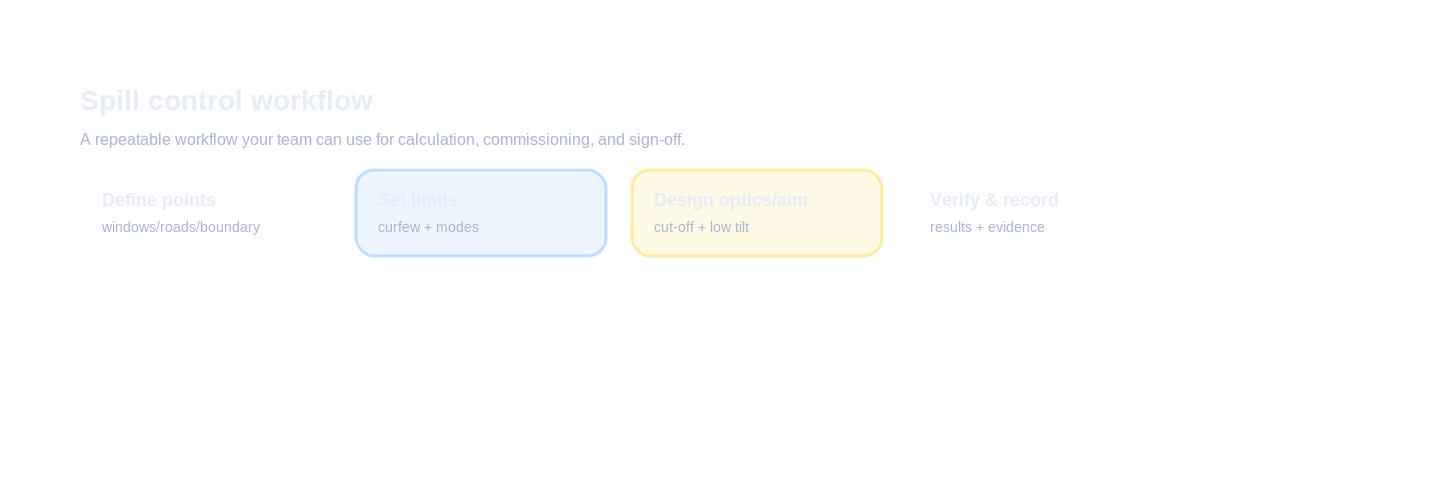
작업 흐름: 티어 정의 → 제약 조건 매핑 → 계산 시 4/6/8극 옵션 테스트 → 최적의 위험 프로필을 가진 옵션 선택 → 목표 한도 확정 및 결과물 승인.
수집할 입력 정보
- 경기장 규격 및 스포츠별 활용 사례.
- 전주 높이 옵션(또는 개조 공사를 위한 기존 전주 데이터).
- 인접 부지/도로 경계 및 유출 제한 사항.
- 방송용 카메라 촬영 방향(EV 설정이 필요한 경우).
설계 결정
- 계층 및 제약 조건에 따라 레이아웃을 선택하십시오.
- 민감한 방향에 대한 기울기 제한 및 차폐 정책을 정의하십시오.
- 승인 방법과 증빙 자료 패키지를 정의하십시오.
검증 및 승인
- 승인 방법과 증빙 자료 패키지를 정의하십시오.
- 조준대 시운전 및 실측도 확인.
흔히 저지르는 실수
- Ev/눈부심 제약 조건을 검증하지 않은 채, 고사양 방송 요구 사항에 맞춰 4개의 폴을 선택함.
- 시운전 시까지 최대 기울기 각도는 고려하지 않습니다.
- 유출 방지 경계 계획 없음.
체크리스트 / 템플릿 다운로드
이 다운로드 파일들은 브라우저 내에서 생성되며(TXT/CSV), 추후 접근 권한이 설정된 자료로 대체될 수 있습니다.
레이아웃 결정 매트릭스 (CSV)
4/6/8극을 성능 및 제약 조건에 따라 비교하십시오.
다운로드
전체 패키지 요청
폴 포지션 설문지 (CSV)
실측된 전주 위치와 높이를 측량하십시오.
다운로드
전체 패키지 요청
제약 조건 맵 체크리스트 (CSV)
인접 지역/도로 및 유출/눈부심 관련 제약 사항을 기록하십시오.
다운로드
전체 패키지 요청
입찰 조건 (TXT)
입찰 준비가 완료된 레이아웃 및 검증 언어.
다운로드
전체 패키지 요청
전체 패키지 요청하기
조명 솔루션을 시작해 보세요
개인정보 보호: 당사는 귀하의 정보를 본 요청과 관련된 서류 전달 및 기술적 후속 조치 목적으로만 사용합니다.
자주 묻는 질문
미식축구 경기장에는 4극 방식이 항상 최선의 선택일까요?
항상 그런 것은 아닙니다. 4극 조명은 훈련장에서는 잘 작동할 수 있지만, 전문 경기장이나 방송용 경기장의 경우 균일도, 눈부심, Ev 요건을 충족하기 위해 6극 또는 8극 조명이 필요할 수 있습니다.
어떤 경우에 6극을 사용하는 것이 타당할까요?
8극 방식의 완전한 설계로 전환하지 않고도 더 나은 균일도나 눈부심/빛 번짐 제어 성능을 확보해야 할 때.
일반적으로 8극 레이아웃은 어떤 요인에 의해 결정되나요?
더 높은 성능 등급, 방송용 수직 조도 요구 사항, 엄격한 눈부심/빛 번짐 제한, 또는 복잡한 다종목 경기장 요구 사항.
개조 공사 시 기존 폴 위치를 그대로 유지할 수 있나요?
좋은 카메라 영상은 적절한 방향에서 들어오는 빛에 달려 있기 때문입니다. Eh 값이 높고 Ev 값이 낮으면 입체감이 떨어지고, 얼굴 인식이 잘 되지 않으며, 노출이 일관되지 않을 수 있습니다.
과도한 설계를 피하려면 어떻게 해야 할까요?
먼저 장소 등급과 승인 방식을 정의하고, 지표와 제약 조건상 필요한 경우에만 폴을 추가하십시오.
이제 “요구사항” 단계에서 벗어나 제대로 된 설계로 넘어갈 준비가 되셨나요?
계산 보고서 + IES/LDT + 입찰용 사양 조항(및 조광 표)을 받아보세요.
계산 자료 / IES / 사양 팩 다운로드
ZCLED.com으로 돌아가기