Why this application needs its own lighting approach
Residential lighting must provide orientation and personal security while minimizing source brightness, bedroom-window spill and unnecessary nighttime light.

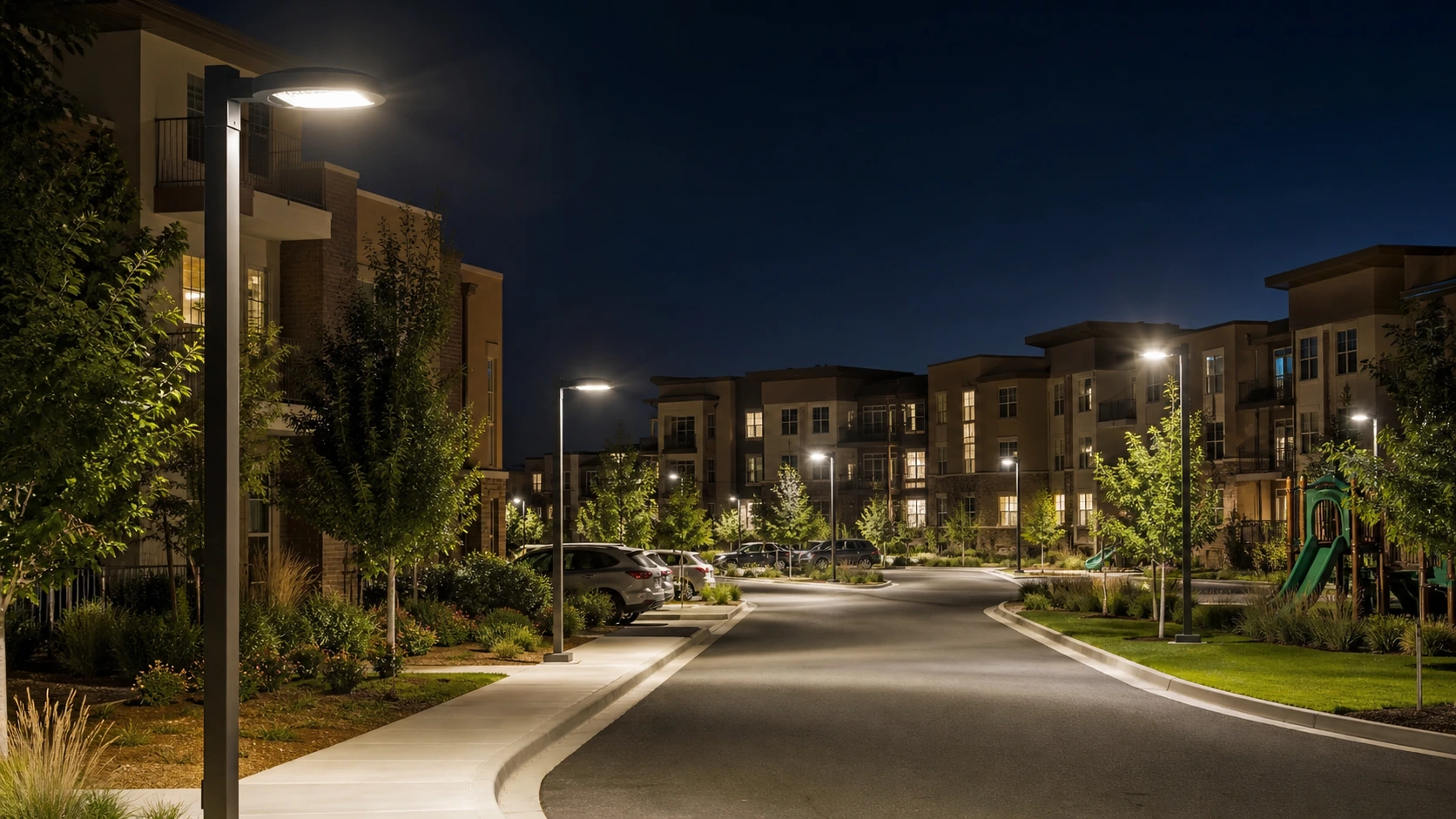
Residential lighting must provide orientation and personal security while minimizing source brightness, bedroom-window spill and unnecessary nighttime light.
Include roads, sidewalks, homes, windows, property lines, landscaping and pedestrian gathering areas. Mounting height and pole spacing should fit the neighborhood scale.
Residential lighting must provide orientation and personal security while minimizing source brightness, bedroom-window spill and unnecessary nighttime light.
Send road / path layout, pole heights, nearest homes or windows, operating hours and any community lighting limits.
Use controlled roadway or area optics with limited tilt. Place poles to serve both carriageway and pedestrian edges without directing the source toward nearby windows.
Include roads, sidewalks, homes, windows, property lines, landscaping and pedestrian gathering areas. Mounting height and pole spacing should fit the neighborhood scale.
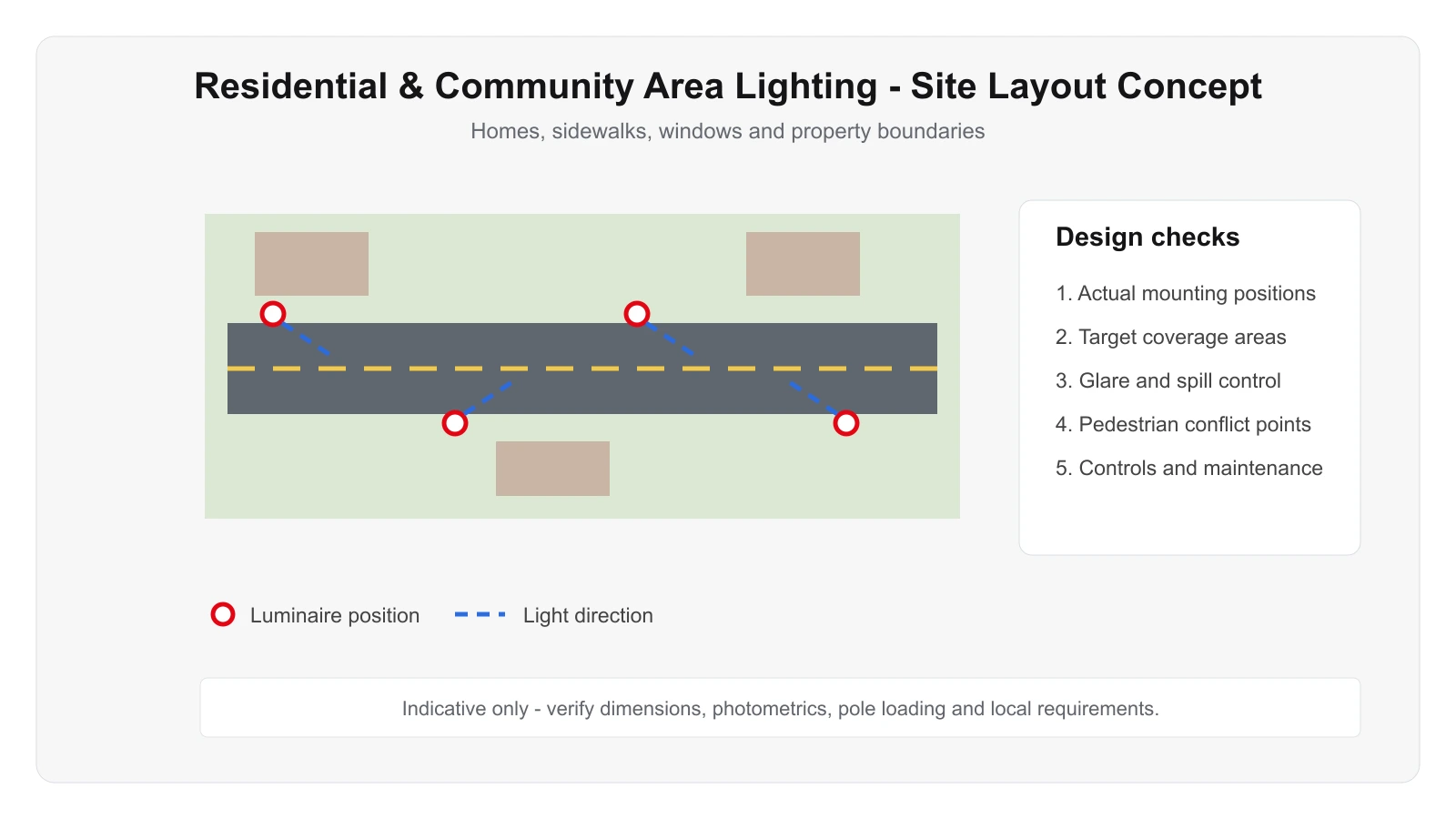
Use this only as a visual reference for mounting and coverage logic. The final design must follow the real project.
Prioritize low glare, uniform guidance, facial / pedestrian visibility, restrained spill and comfortable adaptation between lit and dark areas.
Dimming profiles and curfew schedules can reduce output late at night while maintaining safety. Smart control should complement, not replace, good optics.
Review bedroom windows, parks, ecological zones, trees and resident sightlines to the luminaire.
Review bedroom windows, parks, ecological zones, trees and resident sightlines to the luminaire.
When replacing older decorative or HID fixtures, preserve neighborhood character while correcting over-lighting and excessive upward emission.
These are project starting points, not universal specifications. Final wattage, optics, accessories and controls should follow the project calculation and installation conditions.
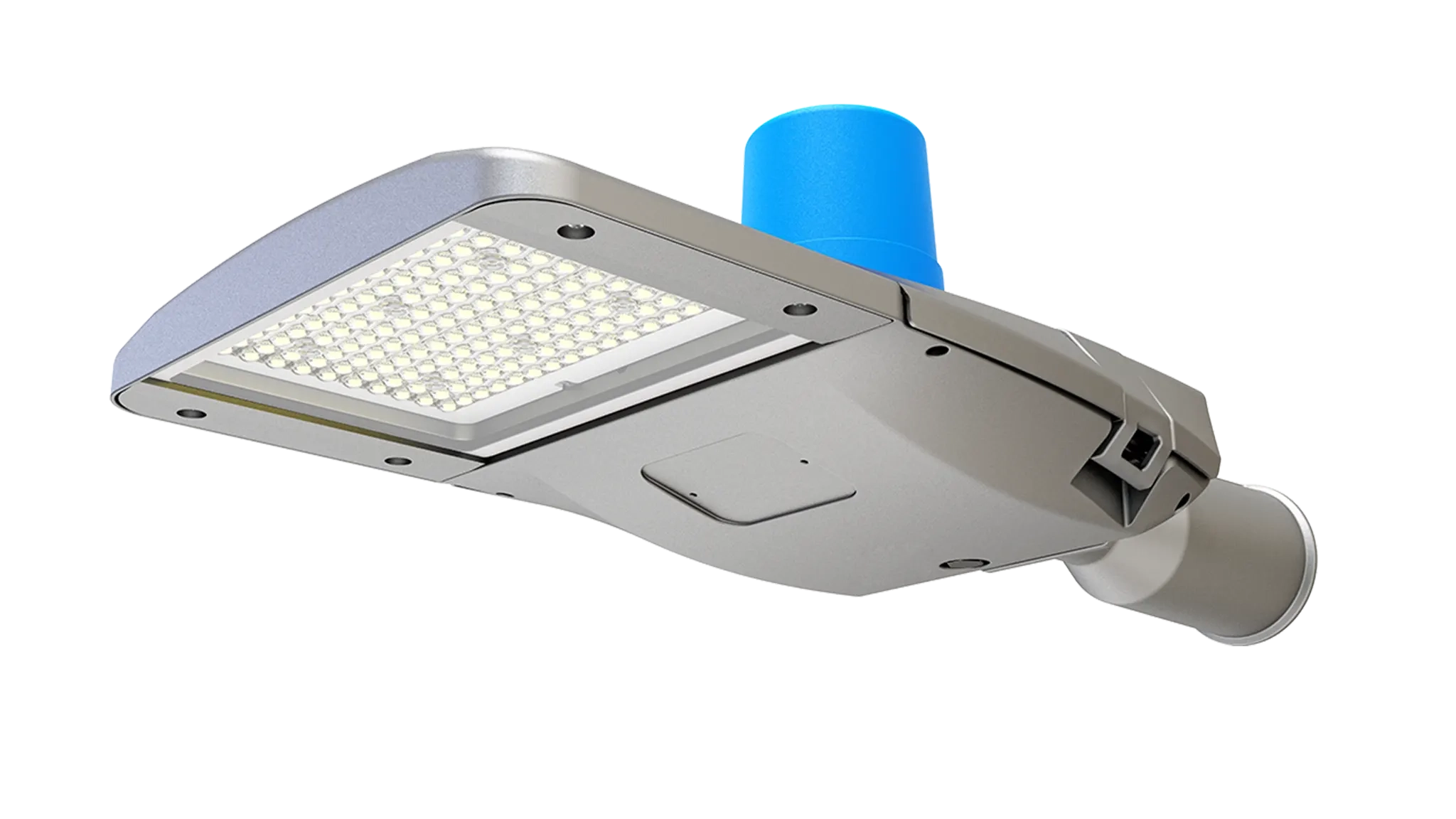
Evaluate this product against the actual mounting height, optics, environment, controls and maintenance requirements for this application.
View product →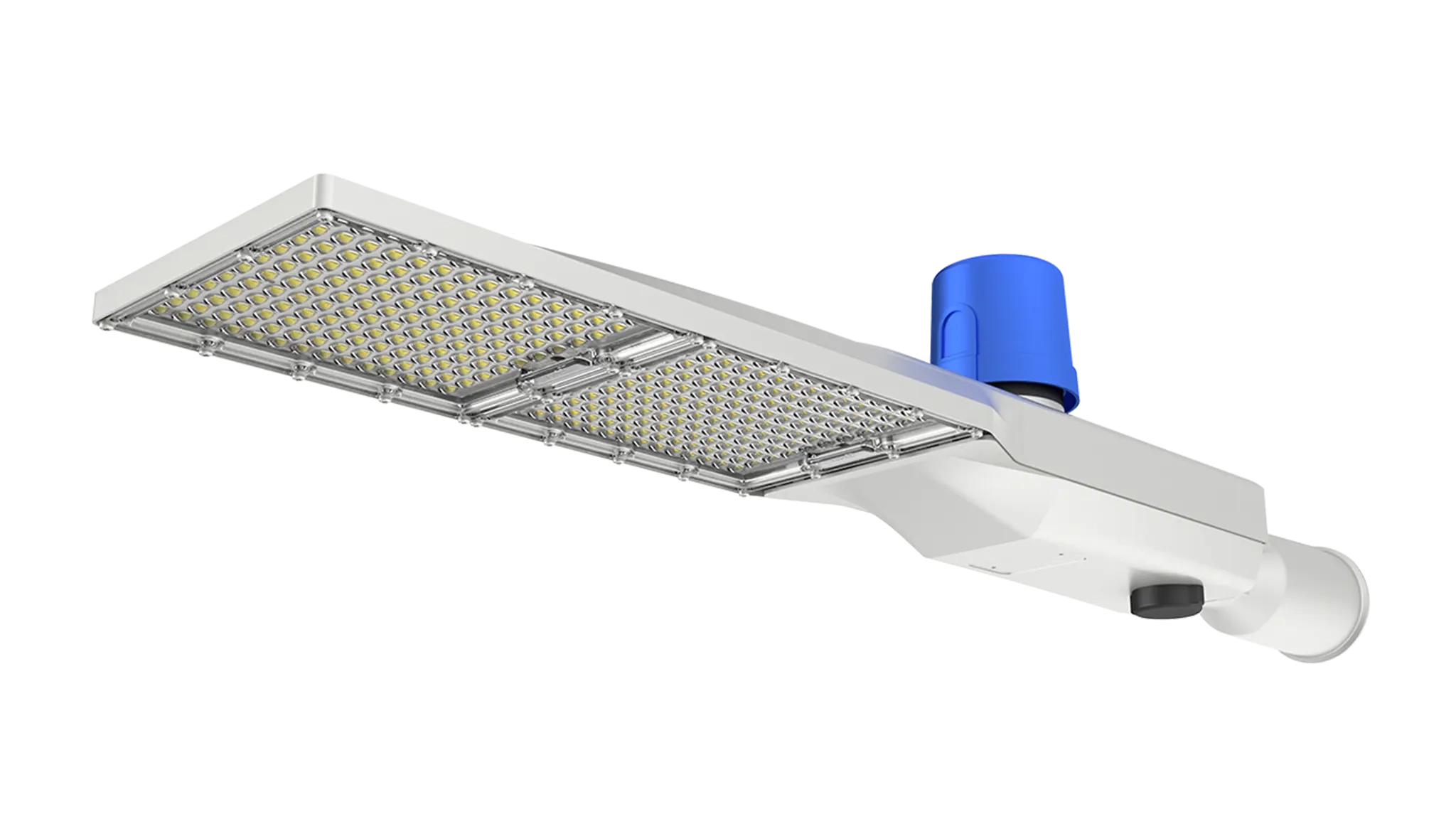
Evaluate this product against the actual mounting height, optics, environment, controls and maintenance requirements for this application.
View product →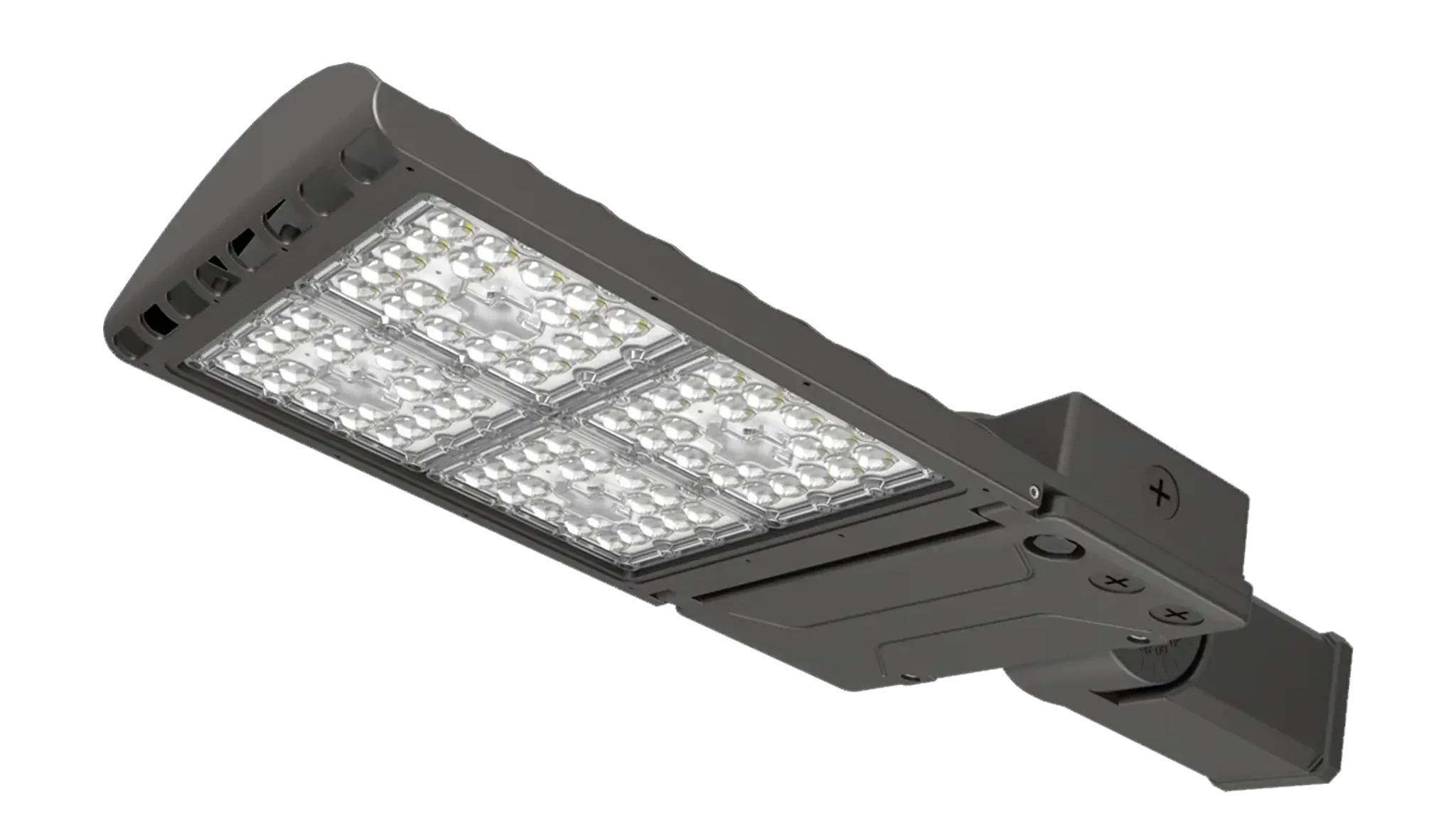
Evaluate this product against the actual mounting height, optics, environment, controls and maintenance requirements for this application.
View product →Send road / path layout, pole heights, nearest homes or windows, operating hours and any community lighting limits.
Send the project drawing and mounting information so the optical and product selection can be reviewed against the real site.
These answers are general engineering guidance. Project-specific requirements should always take priority.
Start from the real geometry, mounting positions, operating zones and target visual tasks. Pole or fixture quantity should then be confirmed by photometric calculation rather than copied from a generic example.
Often yes, but structural condition, wind / vibration loading, spacing, electrical condition and compatibility with the new optical strategy should be checked first.
Yes. Zoning, dimming, sensors and schedules affect driver selection, wiring and commissioning. Controls should fit the site operating policy and maintenance capability.
A site or floor plan, mounting height, existing fixture information, target performance, operating hours, environmental conditions and clear photos of the installation area.
No. They are engineering references only. Final mounting positions, fixture quantities, beam distributions and aiming angles should be verified for the actual project.