Why this application needs its own lighting approach
Large logistics and storage yards require broad horizontal coverage plus enough vertical visibility for trailers, containers, forklifts and CCTV from high mounting positions.

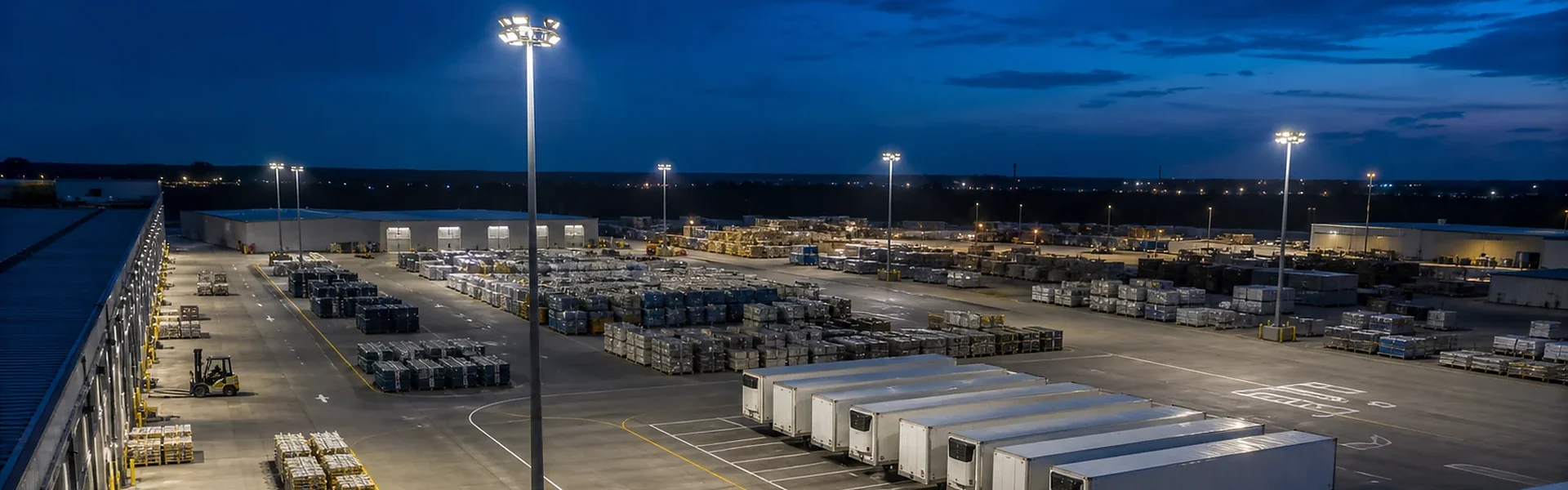
Large logistics and storage yards require broad horizontal coverage plus enough vertical visibility for trailers, containers, forklifts and CCTV from high mounting positions.
Map yard boundaries, stacking blocks, traffic lanes, loading faces, buildings, crane zones and mast locations. Stacking height changes can create moving shadow patterns.
Large logistics and storage yards require broad horizontal coverage plus enough vertical visibility for trailers, containers, forklifts and CCTV from high mounting positions.
Provide yard plan, mast positions / heights, stacking heights, vehicle routes and existing headframe details.
High masts are typically positioned at perimeter or internal islands where they can cover several operating zones without obstructing vehicle movement. Mixed optics are often needed on a single mast.
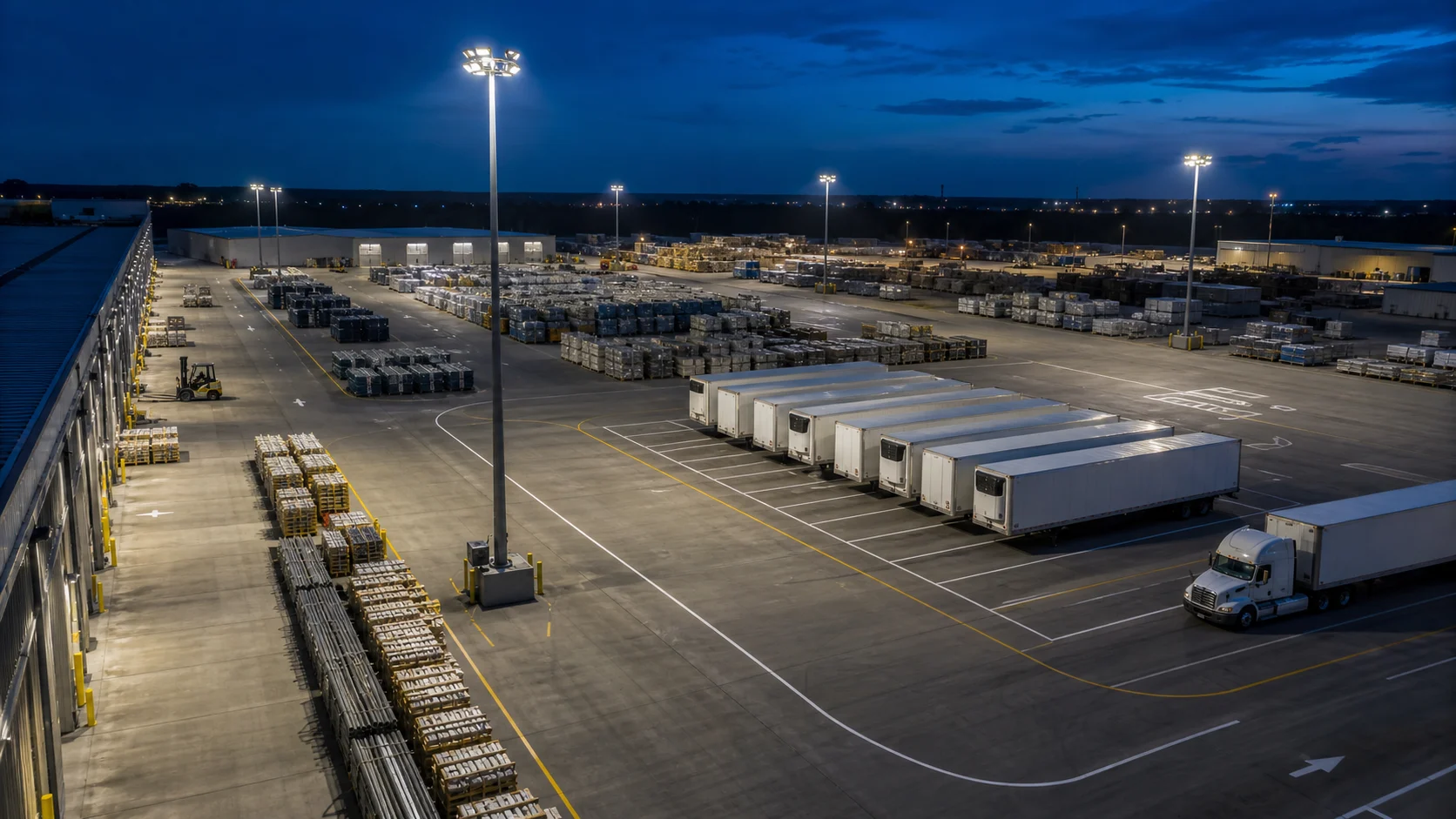
Map yard boundaries, stacking blocks, traffic lanes, loading faces, buildings, crane zones and mast locations. Stacking height changes can create moving shadow patterns.
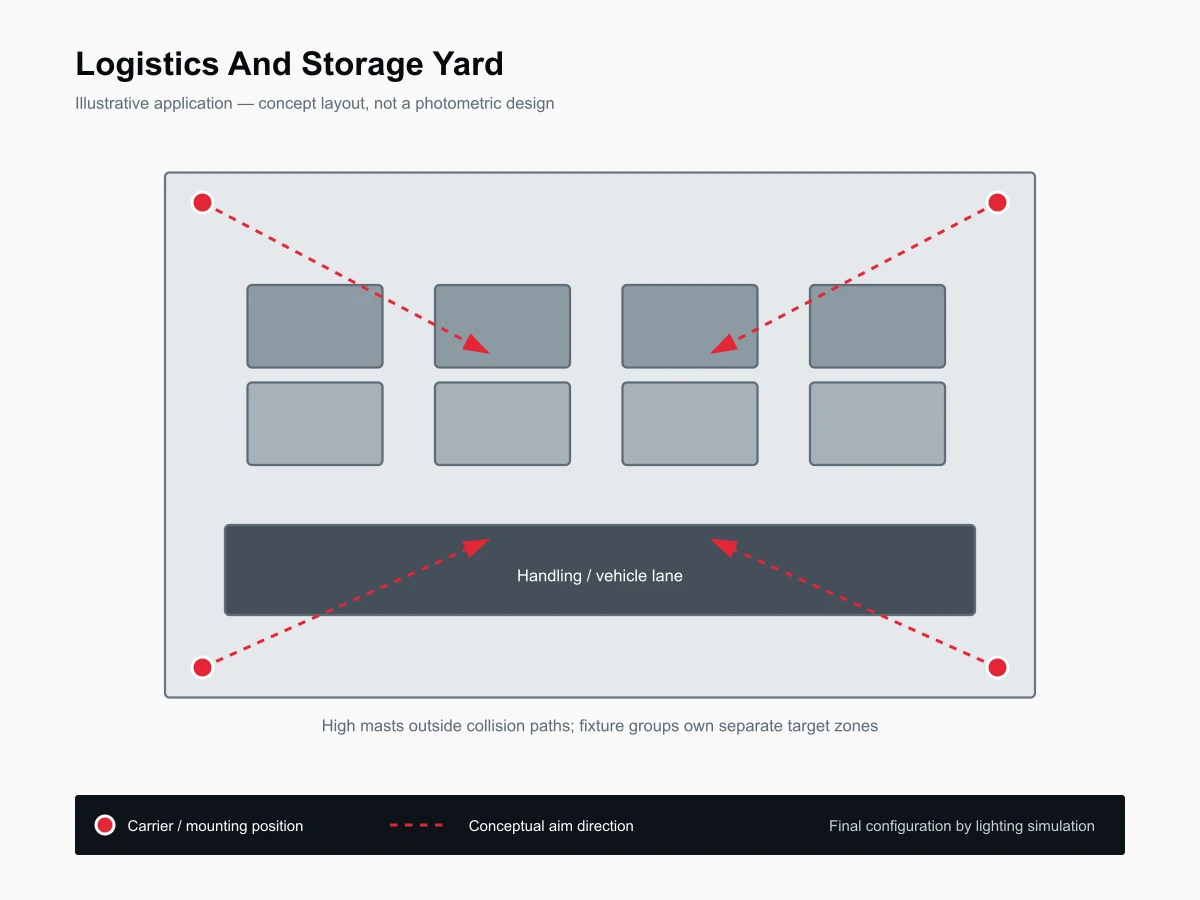
Use this only as a visual reference for mounting and coverage logic. The final design must follow the real project.
Review near-to-far uniformity, vertical visibility, glare toward drivers and neighboring properties, shadowing behind stacked goods and CCTV recognition.
Zone by yard block, gate, loading area and standby section. Scheduled or occupancy-based setback can reduce energy in inactive blocks.
Check mast lowering systems, headframe loading, wind / EPA, driver location, surge protection and maintenance access.
Check mast lowering systems, headframe loading, wind / EPA, driver location, surge protection and maintenance access.
For HID high-mast retrofit, verify the existing headframe, wiring, mast lowering gear, fixture weight and wind area before selecting a 1:1 replacement.
These are project starting points, not universal specifications. Final wattage, optics, accessories and controls should follow the project calculation and installation conditions.
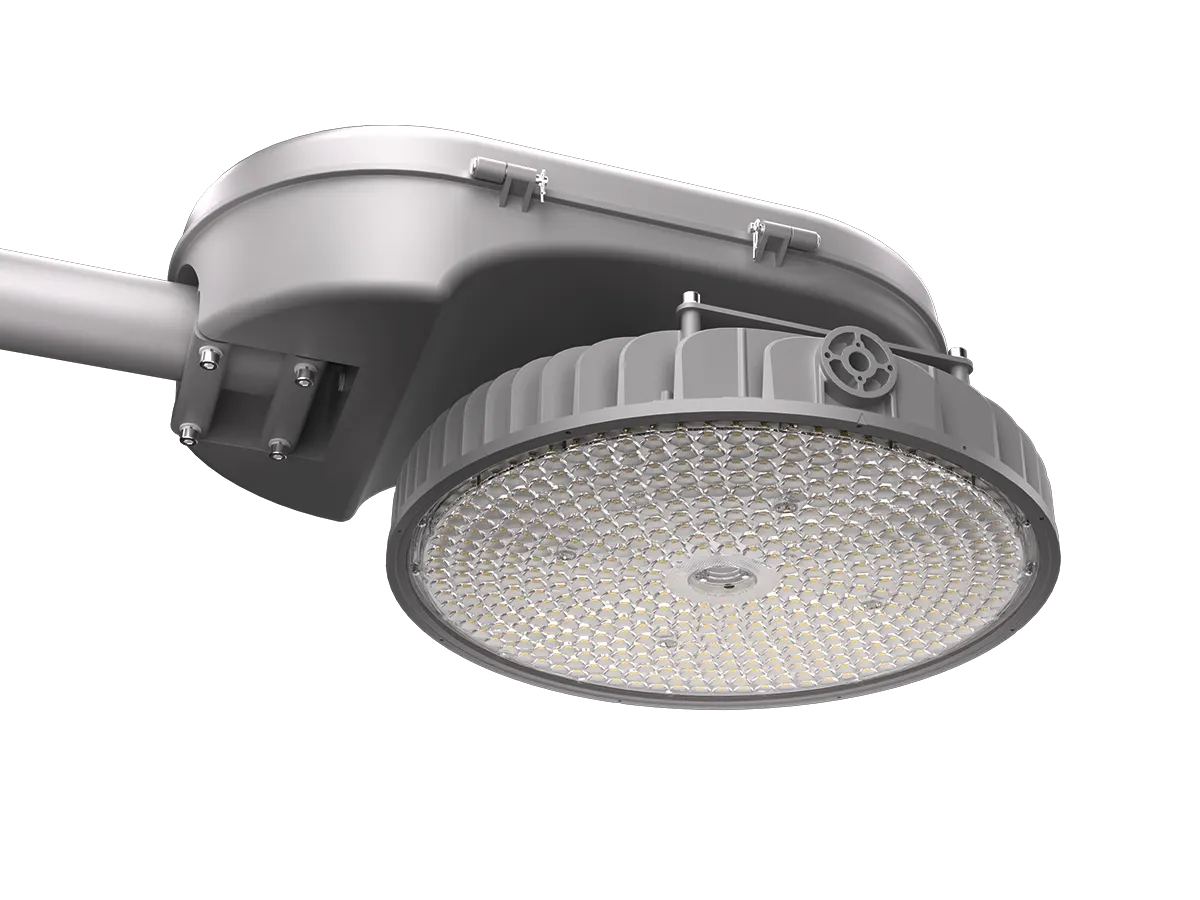
Evaluate this product against the actual mounting height, optics, environment, controls and maintenance requirements for this application.
View product →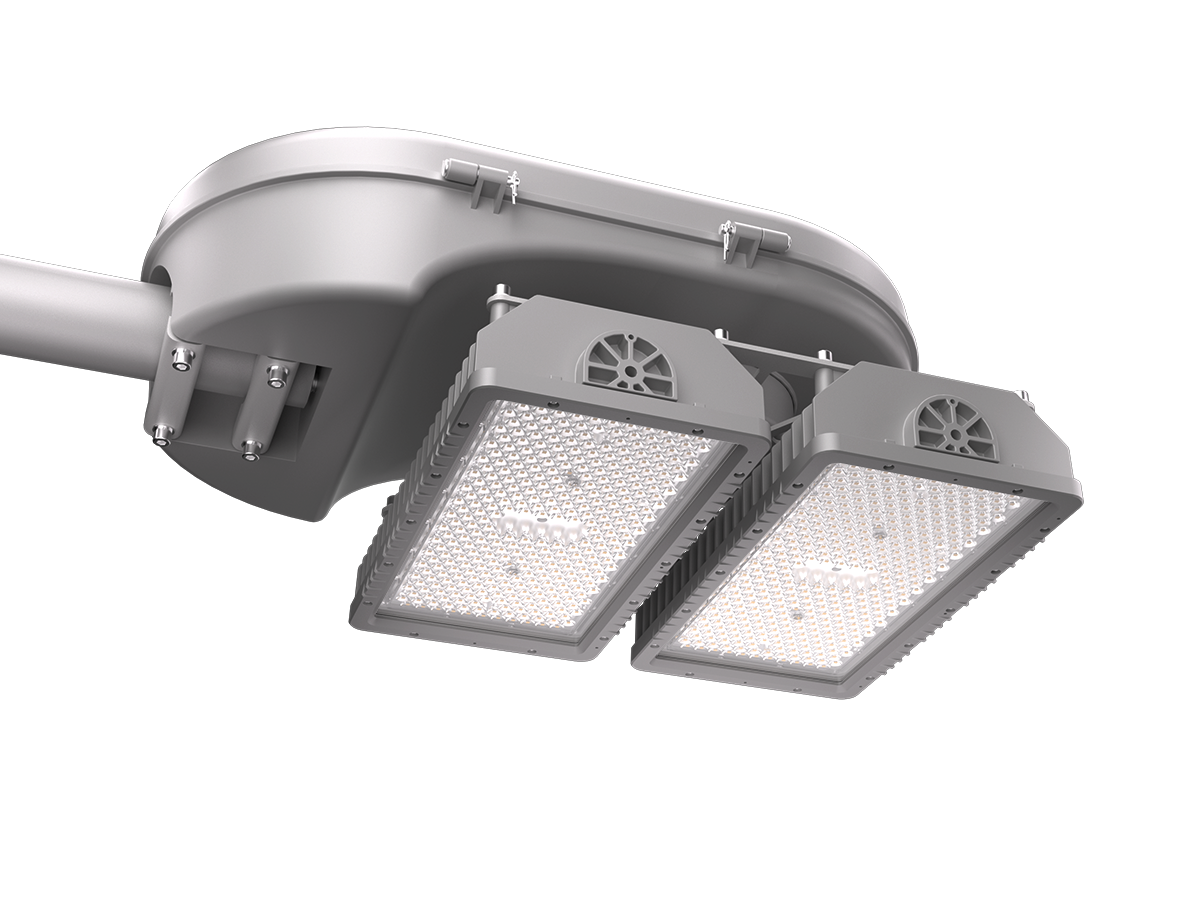
Evaluate this product against the actual mounting height, optics, environment, controls and maintenance requirements for this application.
View product →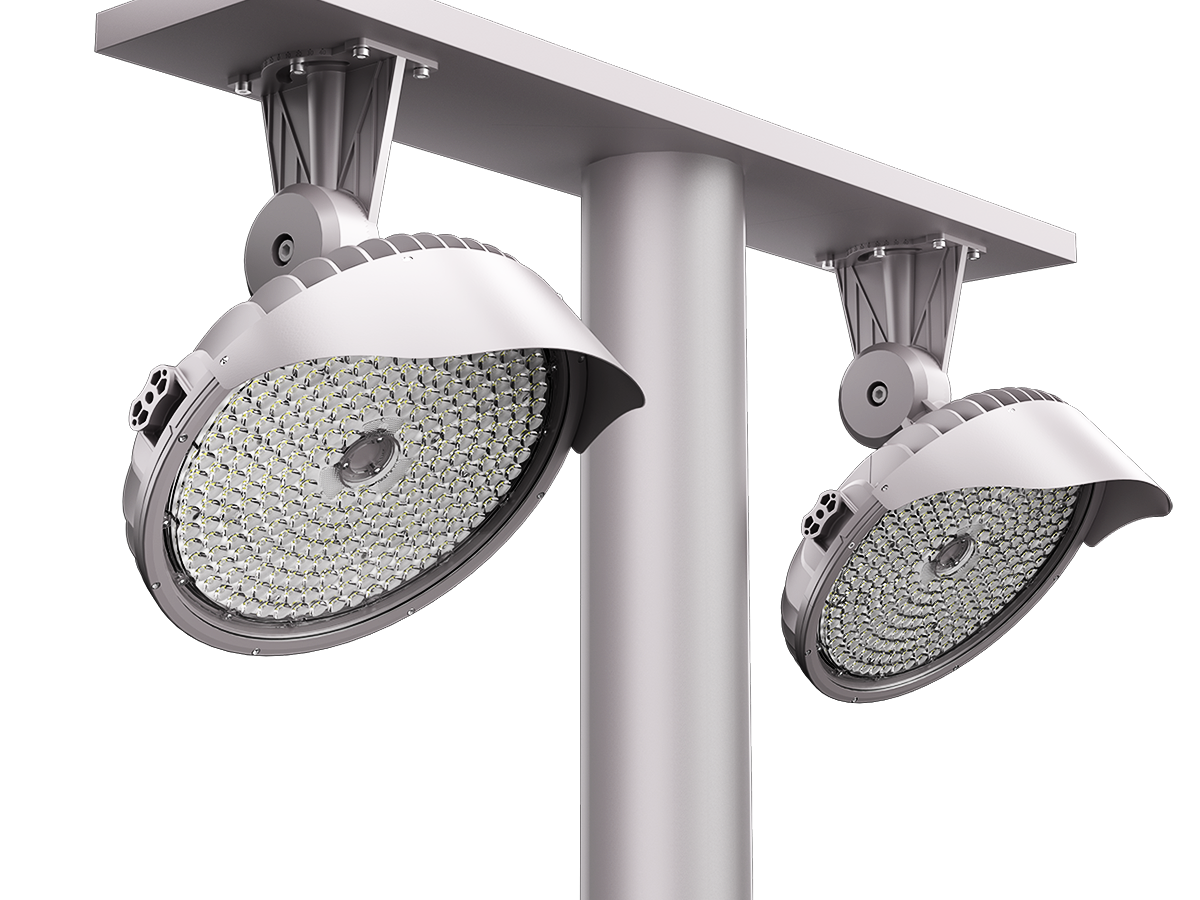
Evaluate this product against the actual mounting height, optics, environment, controls and maintenance requirements for this application.
View product →Provide yard plan, mast positions / heights, stacking heights, vehicle routes and existing headframe details.
Send the project drawing and mounting information so the optical and product selection can be reviewed against the real site.
These answers are general engineering guidance. Project-specific requirements should always take priority.
Start from the real geometry, mounting positions, operating zones and target visual tasks. Pole or fixture quantity should then be confirmed by photometric calculation rather than copied from a generic example.
Often yes, but structural condition, wind / vibration loading, spacing, electrical condition and compatibility with the new optical strategy should be checked first.
Yes. Zoning, dimming, sensors and schedules affect driver selection, wiring and commissioning. Controls should fit the site operating policy and maintenance capability.
A site or floor plan, mounting height, existing fixture information, target performance, operating hours, environmental conditions and clear photos of the installation area.
No. They are engineering references only. Final mounting positions, fixture quantities, beam distributions and aiming angles should be verified for the actual project.