Why this application needs its own lighting approach
Container terminals operate through the night with cranes, reach stackers, trucks and pedestrians in marine environments. Lighting must cover large zones without interfering with operator vision.


Container terminals operate through the night with cranes, reach stackers, trucks and pedestrians in marine environments. Lighting must cover large zones without interfering with operator vision.
Map container blocks, quay cranes, RTG / RMG routes, truck lanes, gates, workshops, quay edges and mast locations.
Container terminals operate through the night with cranes, reach stackers, trucks and pedestrians in marine environments. Lighting must cover large zones without interfering with operator vision.
Provide terminal plan, mast data, stack heights, crane / truck routes, marine exposure and control requirements.
High masts are common because they reduce obstruction in container yards. Use beam mixes to provide near-to-far coverage while keeping fixtures accessible through mast-lowering systems where available.
Map container blocks, quay cranes, RTG / RMG routes, truck lanes, gates, workshops, quay edges and mast locations.
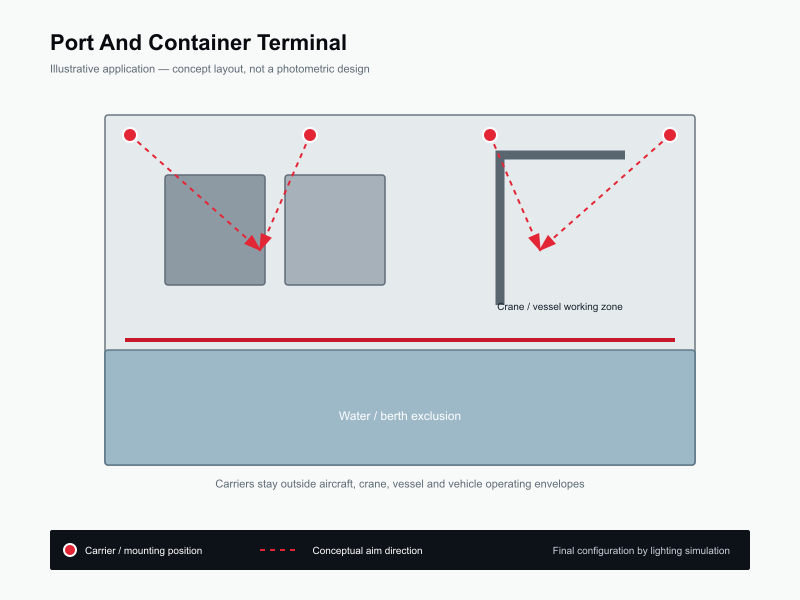
Use this only as a visual reference for mounting and coverage logic. The final design must follow the real project.
Prioritize vertical container / vehicle recognition, lane visibility, crane working zones, glare control and uniform transitions between yard blocks.
Block-based zoning and scheduling can reduce output in inactive stacks while keeping gates, quay and active routes fully operational.
Salt spray, corrosion, wind, humidity, surge, vibration and 24/7 duty cycles must be considered together.
Salt spray, corrosion, wind, humidity, surge, vibration and 24/7 duty cycles must be considered together.
Inspect mast corrosion, headframe condition, lowering gear, cables and wind loading before reusing existing infrastructure.
These are project starting points, not universal specifications. Final wattage, optics, accessories and controls should follow the project calculation and installation conditions.
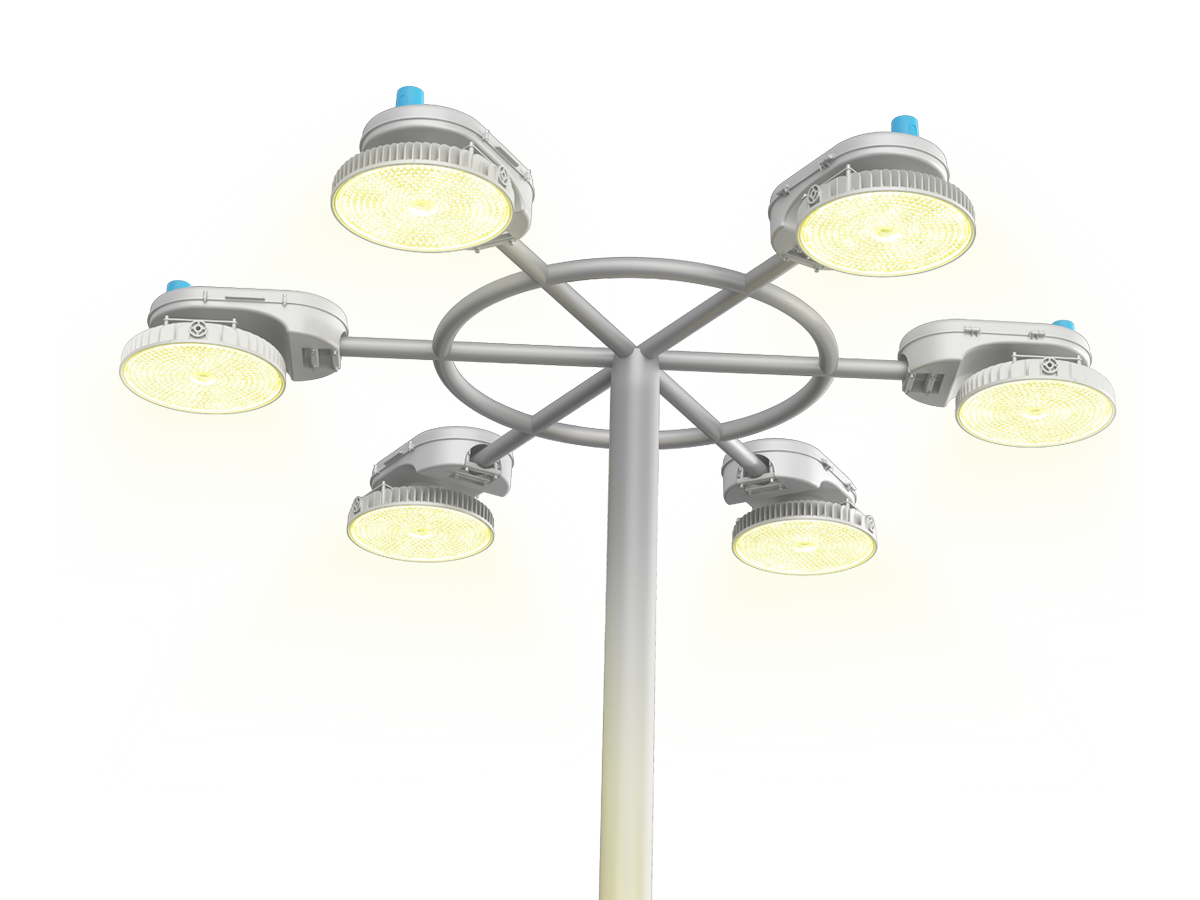
Evaluate this product against the actual mounting height, optics, environment, controls and maintenance requirements for this application.
View product →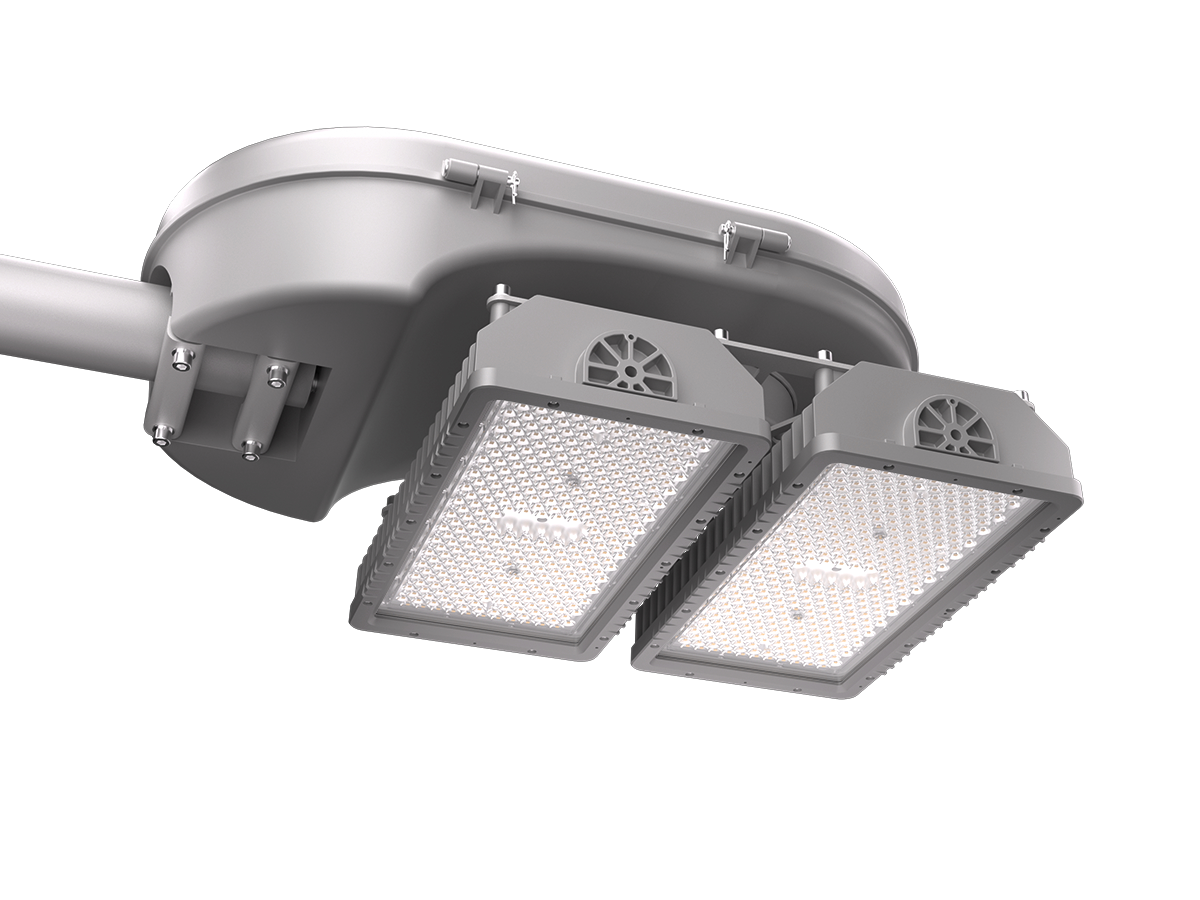
Evaluate this product against the actual mounting height, optics, environment, controls and maintenance requirements for this application.
View product →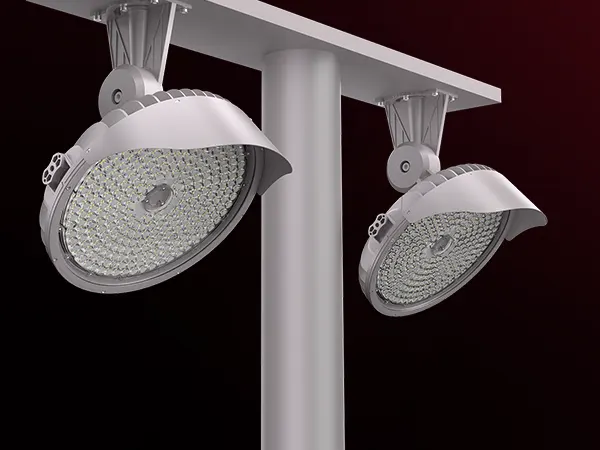
Evaluate this product against the actual mounting height, optics, environment, controls and maintenance requirements for this application.
View product →Provide terminal plan, mast data, stack heights, crane / truck routes, marine exposure and control requirements.
Send the project drawing and mounting information so the optical and product selection can be reviewed against the real site.
These answers are general engineering guidance. Project-specific requirements should always take priority.
Start from the real geometry, mounting positions, operating zones and target visual tasks. Pole or fixture quantity should then be confirmed by photometric calculation rather than copied from a generic example.
Often yes, but structural condition, wind / vibration loading, spacing, electrical condition and compatibility with the new optical strategy should be checked first.
Yes. Zoning, dimming, sensors and schedules affect driver selection, wiring and commissioning. Controls should fit the site operating policy and maintenance capability.
A site or floor plan, mounting height, existing fixture information, target performance, operating hours, environmental conditions and clear photos of the installation area.
No. They are engineering references only. Final mounting positions, fixture quantities, beam distributions and aiming angles should be verified for the actual project.