Why this application needs its own lighting approach
Cargo lanes connect warehouses, aprons, terminals and yards. Lighting must give truck and equipment operators continuous visual guidance without creating high-glare transitions.

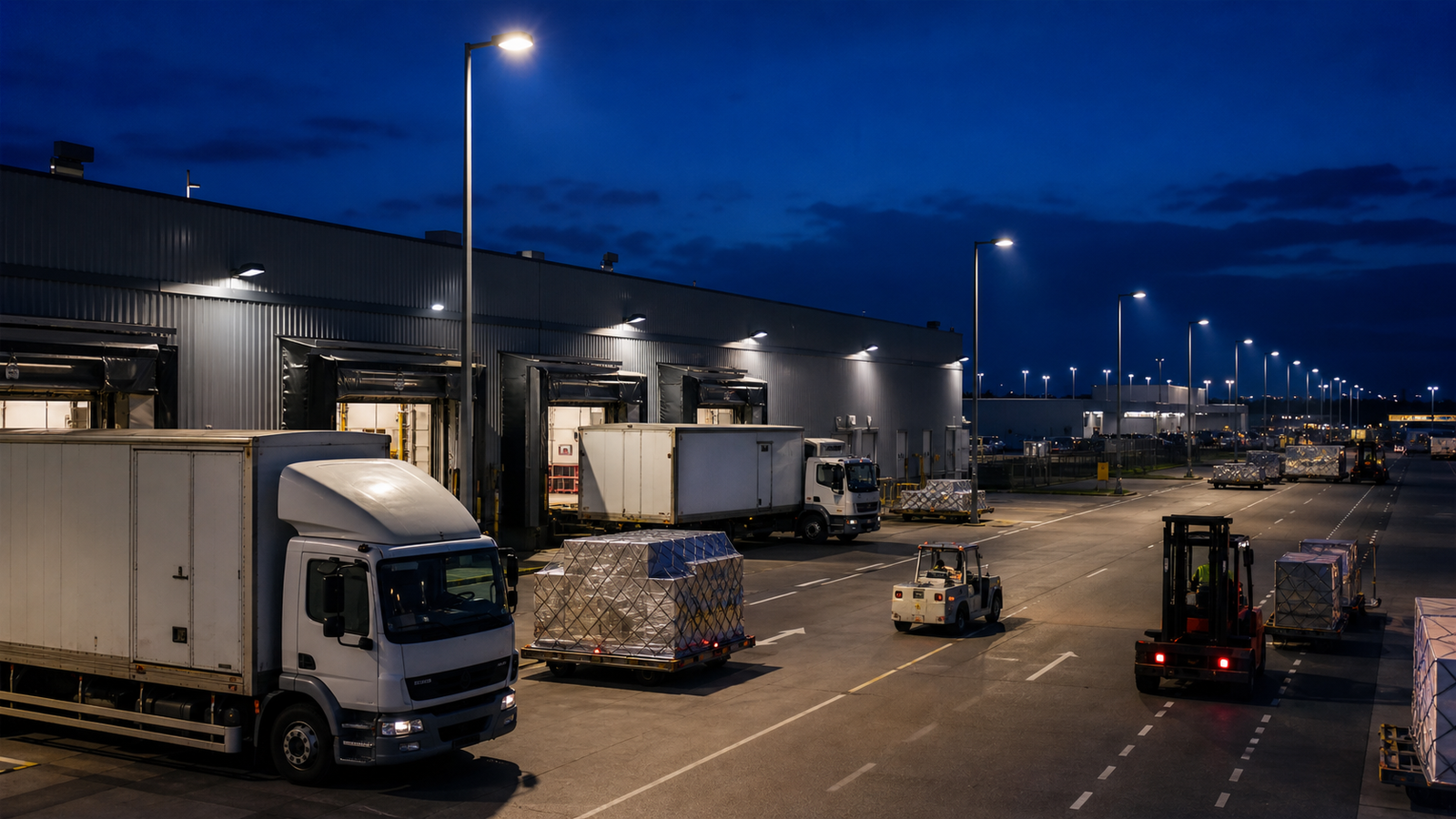
Cargo lanes connect warehouses, aprons, terminals and yards. Lighting must give truck and equipment operators continuous visual guidance without creating high-glare transitions.
Map lane width, intersections, loading faces, fences, crossings and adjacent high-mast zones.
Cargo lanes connect warehouses, aprons, terminals and yards. Lighting must give truck and equipment operators continuous visual guidance without creating high-glare transitions.
Provide lane geometry, intersections, adjacent lighting zones, mounting options and operating hours.
Use roadway / area optics or lower floodlight positions coordinated with nearby high-mast lighting. Avoid overlapping beams that create hotspots.
Map lane width, intersections, loading faces, fences, crossings and adjacent high-mast zones.
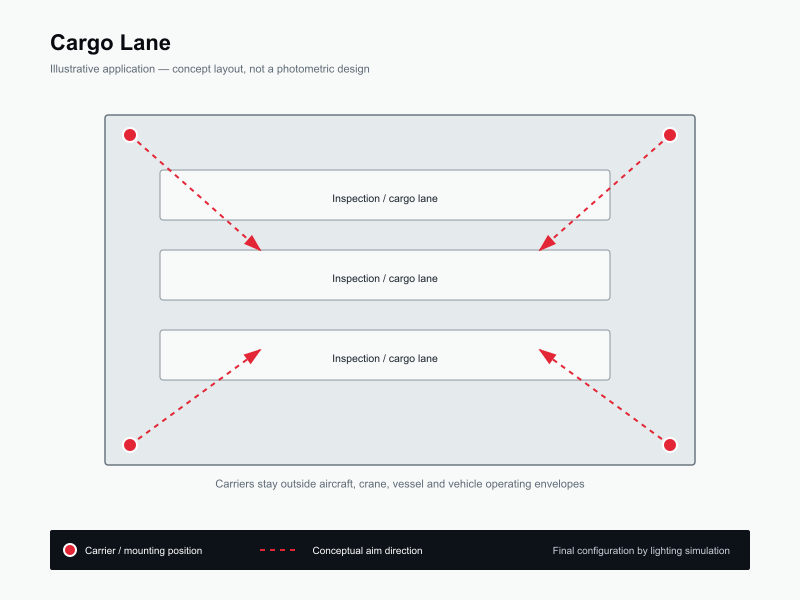
Use this only as a visual reference for mounting and coverage logic. The final design must follow the real project.
Focus on lane continuity, obstacle visibility, pedestrian crossings and smooth adaptation between brighter cargo zones.
Schedule or dim lanes with operational shifts while preserving safe movement routes.
Review truck-clearance zones, cameras, dust, weather and interaction with apron / yard lighting.
Review truck-clearance zones, cameras, dust, weather and interaction with apron / yard lighting.
A lane may appear dark because adjacent areas are over-lit; balance the entire visual environment before increasing output.
These are project starting points, not universal specifications. Final wattage, optics, accessories and controls should follow the project calculation and installation conditions.
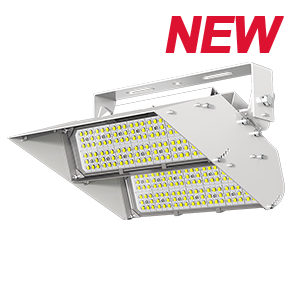
Evaluate this product against the actual mounting height, optics, environment, controls and maintenance requirements for this application.
View product →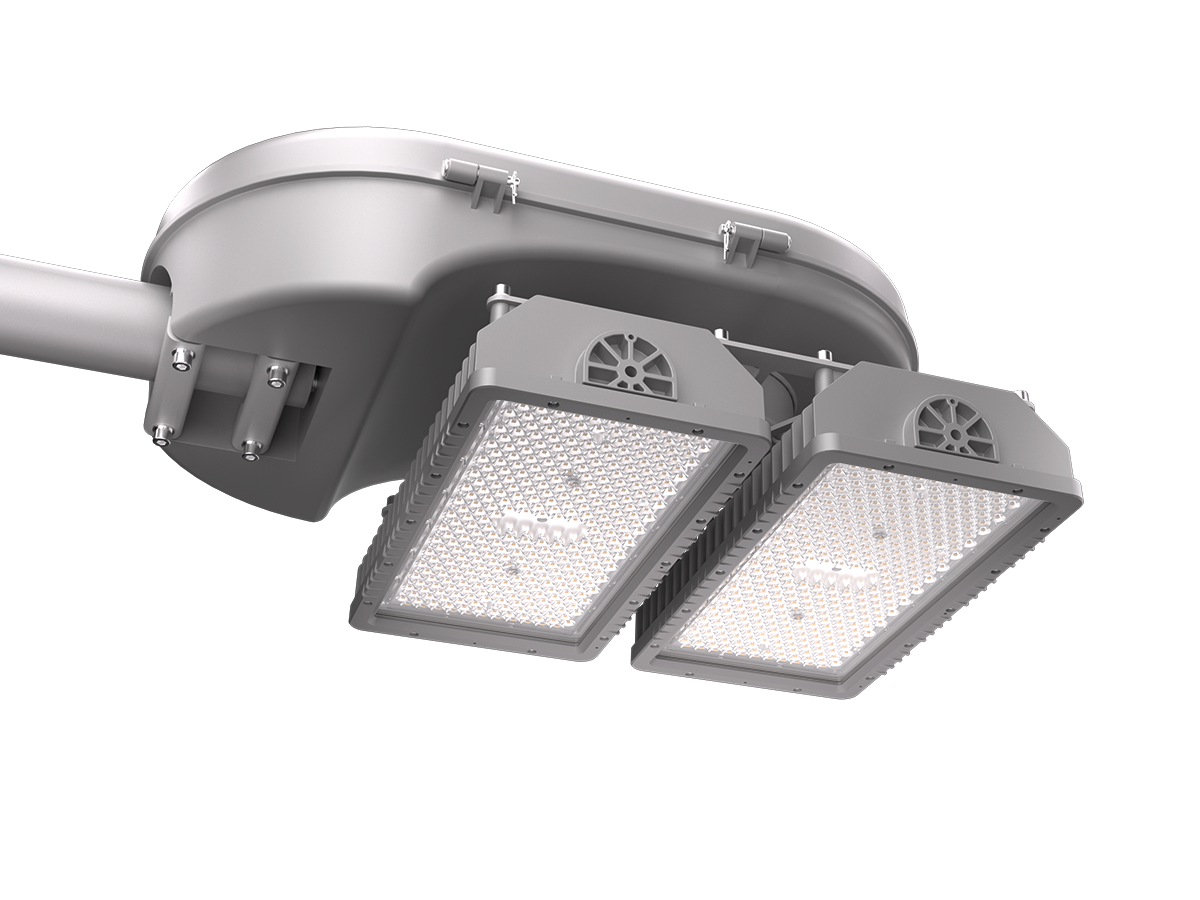
Evaluate this product against the actual mounting height, optics, environment, controls and maintenance requirements for this application.
View product →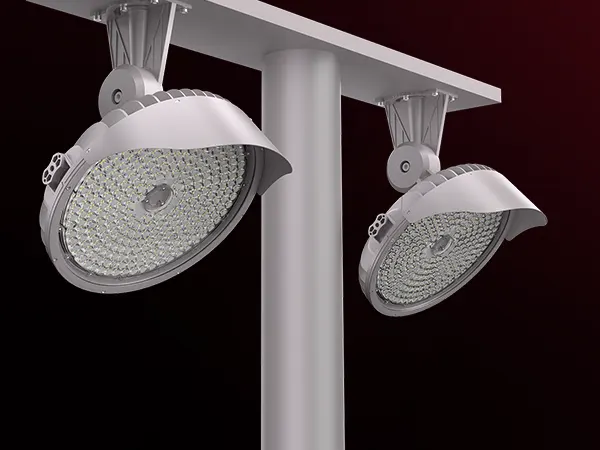
Evaluate this product against the actual mounting height, optics, environment, controls and maintenance requirements for this application.
View product →Provide lane geometry, intersections, adjacent lighting zones, mounting options and operating hours.
Send the project drawing and mounting information so the optical and product selection can be reviewed against the real site.
These answers are general engineering guidance. Project-specific requirements should always take priority.
Start from the real geometry, mounting positions, operating zones and target visual tasks. Pole or fixture quantity should then be confirmed by photometric calculation rather than copied from a generic example.
Often yes, but structural condition, wind / vibration loading, spacing, electrical condition and compatibility with the new optical strategy should be checked first.
Yes. Zoning, dimming, sensors and schedules affect driver selection, wiring and commissioning. Controls should fit the site operating policy and maintenance capability.
A site or floor plan, mounting height, existing fixture information, target performance, operating hours, environmental conditions and clear photos of the installation area.
No. They are engineering references only. Final mounting positions, fixture quantities, beam distributions and aiming angles should be verified for the actual project.