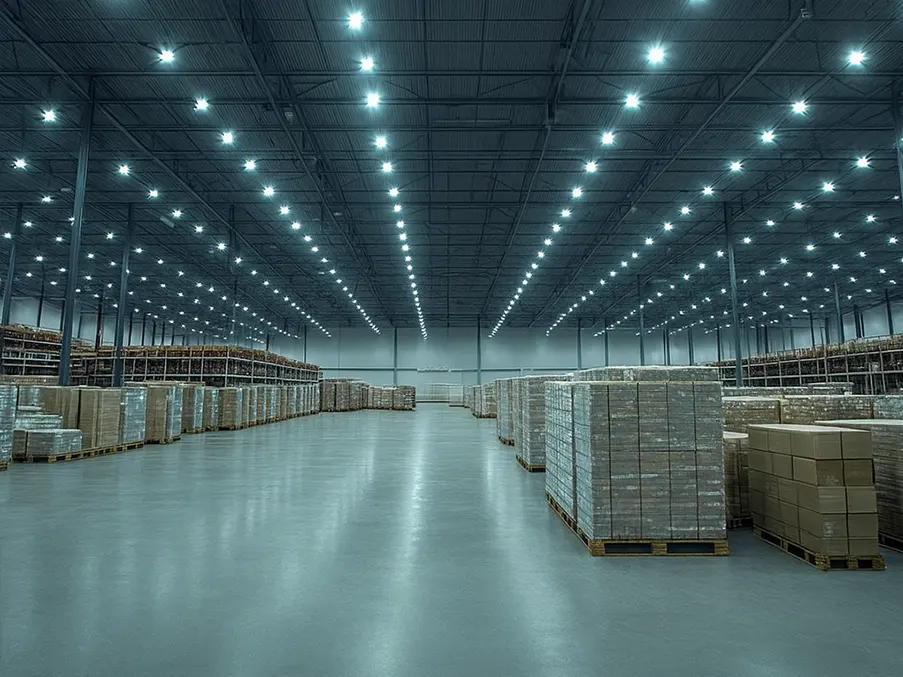
창고, 공장, 체육관, 대형 소매점 등 산업용, 상업용 및 대규모 실내 공간에서 하이베이 조명은 안전, 생산성 및 이용자의 쾌적함을 보장하는 데 중요한 역할을 합니다. 수십 년 동안 이러한 공간에서는 전통적인 조명 솔루션이 주류를 이루었으나, LED(발광 다이오드) 기술의 부상으로 시장이 재편되었습니다. 다음은 이에 대한 상세한 비교입니다. LED 하이베이 조명 그리고 전통 조명 (주로 고압 나트륨(HPS), 메탈 할라이드(MH), 형광 고천장등 등을 포함) 주요 성능, 비용 및 지속가능성 지표에 걸쳐.
1. 에너지 효율: LED의 타의 추종을 불허하는 장점
에너지 효율성은 두 기술 간의 가장 큰 차이점 중 하나로, 장기적인 운영 비용에 직접적인 영향을 미칩니다.
- 전통 조명:
- HPS 및 MH 조명은 에너지 효율이 매우 낮은 것으로 잘 알려져 있습니다. HPS 조명 기구는 일반적으로 에너지의 20~30%만 가시광선으로 변환하고 나머지는 열로 낭비됩니다. MH 조명은 이보다 약간 더 나은 성능(30~40%)을 보이지만, 여전히 에너지 효율 면에서 크게 뒤처집니다.
- 형광 고천장 조명은 HPS/MH보다 효율적이긴 하지만, 여전히 LED에는 미치지 못합니다. 4피트 형광등(T5/T8)은 4,000~6,000루멘을 발생시키기 위해 약 50~80와트를 소비하므로, “와트당 루멘”(lm/W) 비율이 더 낮습니다.
- LED 하이베이 조명:
- LED는 에너지 변환 효율이 뛰어나며, 에너지의 80~90%가 빛으로 변환되고 열 손실은 최소화됩니다. 최신 LED 하이베이 조명은 130~180 lm/W—HPS/MH에 비해 2~4배 향상되었으며, 형광등에 비해 1.5~2배 더 우수합니다.
- 예를 들어, 100W LED 하이베이 조명은 약 15,000루멘을 발산할 수 있으며, 이는 400W 메탈할라이드(MH) 조명이나 350W 고압나트륨(HPS) 조명과 동등한 수준입니다. 이는 즉, 60-75% 에너지 절감 설비당, 수십 개의 하이베이 조명이 설치된 공간에 획기적인 변화를 가져다줍니다.
2. 수명: LED는 유지보수 부담을 줄여줍니다
조명의 수명은 유지보수 비용, 인건비 및 가동 중단 시간에 직접적인 영향을 미치며, 이는 산업 현장에서 매우 중요한 요소들입니다.
- 전통 조명:
- HPS 전구의 수명은 10,000~24,000시간(하루 12시간 사용 시 1~2.5년)이며, MH 전구는 수명이 더 짧습니다(6,000~15,000시간, 약 0.5~1.5년).
- 형광등은 20,000~30,000시간(약 2~3년) 동안 사용할 수 있지만, 추운 곳이나 먼지가 많은 환경(창고에서 흔히 볼 수 있는)에서는 성능이 더 빨리 저하되어 조기 고장을 일으킬 수 있습니다.
- 모든 기존 방식은 전구를 자주 교체해야 하는데, 이로 인해 (설치 높이가 높아) 기술자를 불러야 하는 경우가 많고 업무에 차질이 생기기도 합니다.
- LED 하이베이 조명:
- LED의 평균 수명은 50,000~100,000시간 (하루 12시간 사용 시 5~10년) — HPS보다 5배, MH보다 8배 더 오래 지속됩니다.
- 또한 많은 LED 모델에는 “수명 보증”(5~7년)이 적용되어 신뢰성을 보장합니다. 교체 횟수가 줄어들면 인건비가 절감되고 가동 중단 시간도 최소화되므로, 연중무휴 24시간 운영되는 시설(예: 물류 센터)에 큰 이점이 됩니다.
3. 조명 품질: LED는 시야 확보와 안전성을 높여줍니다
연색성 지수(CRI), 색온도(CCT), 균일도로 측정되는 조명의 품질은 안전, 생산성은 물론 직원의 웰빙에도 영향을 미칩니다.
- 전통 조명:
- HPS 조명은 따뜻하고 노란빛이 도는 빛(CCT: 2,000~2,700K)을 내지만 CRI(색재현지수)는 매우 낮습니다(20~30). 이로 인해 색상을 구별하기 어렵고(예: 제품 라벨 확인이나 장비 결함 파악), 눈의 피로를 유발할 수 있습니다.
- MH 조명은 CRI(60~80)가 더 우수하지만, 눈부심이나 불균일한 조명(밝은 부분과 어두운 부분)을 유발하기 쉬운 거칠고 차가운 백색광(CCT: 4,000~6,000K)을 방출합니다.
- 형광등 방식의 하이베이 조명은 CRI(색재현지수)가 중간 수준(70~80)이지만, (눈에 보이거나 보이지 않는) “깜빡임” 현상과 시간이 지남에 따른 색상 변화가 발생하여 두통이나 피로를 유발할 수 있습니다.
- LED 하이베이 조명:
- LED는 공간의 용도에 맞춰 CCT(3,000K의 따뜻한 백색부터 6,000K의 차가운 백색까지)를 자유롭게 조절할 수 있습니다. 예를 들어, 체육관에는 3,000K(따뜻하고 아늑한 분위기), 창고에는 5,000K(밝고 선명한 분위기)를 사용할 수 있습니다.
- 대부분의 LED 하이베이 조명은 CRI가 80+ (일부 프리미엄 모델은 90 이상에 달하며), 이를 통해 정확한 색상 인식이 가능해지는데, 이는 공장이나 소매점 창고에서의 품질 관리에 매우 중요합니다.
- 또한 LED는 (첨단 렌즈 설계 덕분에) 균일한 배광을 제공하고, (고품질 드라이버와 함께 사용할 경우) 깜빡임이 전혀 없어 눈의 피로를 줄여주고 안전성을 높여줍니다(예: 조명이 어두운 구석에서 넘어지는 사고를 예방).
4. 환경적 영향: LED는 더 친환경적이다
지속 가능성은 기업들에게 점점 더 중요한 과제로 대두되고 있으며, 조명 선택은 탄소 발자국을 줄이는 데 중요한 역할을 합니다.
- 전통 조명:
- HPS 및 MH 전구에는 유해 물질(예: MH 전구의 수은)이 포함되어 있어 특별한 방법으로 폐기해야 합니다(일반 매립지에는 버릴 수 없음). 형광등에도 수은이 포함되어 있어(1개당 약 3~5mg), 파손되거나 부적절하게 폐기될 경우 환경에 위험을 초래할 수 있습니다.
- 에너지 소비량이 많다는 것은 기존 조명이 간접적으로 탄소 배출량을 증가시킨다는 것을 의미합니다. 400W 메탈할라이드(MH) 조명기구(100W LED 대비)는 연간 약 360kg의 CO₂를 추가로 배출합니다(미국 평균 전력 탄소 집약도 기준).
- LED 하이베이 조명:
- LED에는 수은이나 유해 물질이 포함되어 있지 않아 재활용이 쉽고 친환경적입니다.
- 에너지 사용량을 줄이면 탄소 발자국을 직접적으로 감소시킬 수 있습니다. LED 하이베이 조명 50개 (각 100W)를 설치한 창고와 50개의 MH 조명기구(각 400W)를 설치한 창고를 비교했을 때, 전자는 연간 약 18,000kWh를 절약하며, 이는 CO₂ 배출량을 약 12,600kg 줄이는 효과와 같습니다(또는 1년 동안 도로에서 자동차 2.7대를 줄이는 것과 같습니다).
5. 비용: 초기 비용은 높지만 총 소유 비용은 낮음
LED 하이베이 조명은 초기 비용은 더 들지만, 장기적으로 비용을 절감할 수 있어 기존 조명보다 비용 효율성이 더 높습니다.
- 전통 조명:
- 초기 비용: 저렴함 — HPS/MH 조명 기구는 개당 50~150, 형광등 하이베이 조명은 80~200입니다.
- 총 소유 비용(TCO): 높음 — 전구 교체 빈도가 잦고(전구당 10~30회) 전기 요금이 많이 들기 때문이다. 예를 들어, 50개의 400W 메탈할라이드(MH) 조명기구의 경우, 전기 요금이 연간 약 1,800(0.15/kWh 기준)이며, 여기에 유지보수 비용이 연간 500이 추가된다.
- LED 하이베이 조명:
- 초기 비용: 고가—LED 하이베이 조명의 가격은 개당 $150~400 사이입니다(와트 수 및 조광 기능이나 동작 감지 센서와 같은 사양에 따라 다름).
- TCO: 훨씬 저렴합니다. 50x100W LED 조명기구의 연간 전기 요금은 약 450, 유지보수 비용은 약 50입니다. 초기 비용은 대개 1~2년, 그 후 10년 동안 절약 효과가 지속됩니다.
6. 추가 기능: LED는 더 큰 유연성을 제공합니다
최신 LED 하이베이 조명에는 기존 조명에서는 찾아볼 수 없는 스마트 기능이 탑재되어 있습니다:
- 조명 조절: 많은 LED 조명은 0-10V 또는 DALI 조광 기능을 지원하므로, 사용자는 재실 여부에 따라 밝기를 조절(예: 사람이 없는 창고 구역의 조명을 어둡게 하는 등)하여 에너지 절약 효과를 더욱 높일 수 있습니다.
- 모션 센서/제어 장치: 동작 센서나 IoT 제어 장치(예: Philips Hue, Lutron)를 통합하면 조명을 자동으로 켜고 끌 수 있어, 사람이 드문 구역에서 발생하는 에너지 낭비를 줄일 수 있습니다.
- 추운 날씨에서의 성능: LED는 (예열 시간이 걸리는) MH/HPS나 (추운 환경에서 밝기가 약해지는) 형광등과 달리 저온(-40°C~40°C)에서도 우수한 성능을 발휘하므로, 냉장 창고나 지붕이 있는 야외 공간에 이상적입니다.
결론: LED 하이베이 조명이 바로 미래입니다
대부분의 산업용, 상업용 또는 대규모 실내 공간의 경우, LED 하이베이 조명 LED 조명은 에너지 효율, 수명, 광질, 지속 가능성, 장기적 비용 등 모든 핵심 부문에서 기존 조명보다 뛰어난 성능을 발휘합니다. 초기 투자 비용은 더 높지만, 1~2년의 투자 회수 기간과 10년에 걸친 안정적이고 저렴한 운영 비용 덕분에 LED 조명은 비용 절감, 안전성 향상, 환경 영향 감소를 추구하는 기업에게 현명한 선택입니다.
기존 조명(HPS/MH/형광등)은 여전히 특정 용도(예: 예산이 극히 제한적인 상황에서 매우 오래된 시스템을 개조하는 경우 등)에 사용될 수는 있겠지만, LED 기술이 점점 더 저렴해지고 발전함에 따라 그 시장 점유율은 계속해서 감소할 것입니다.