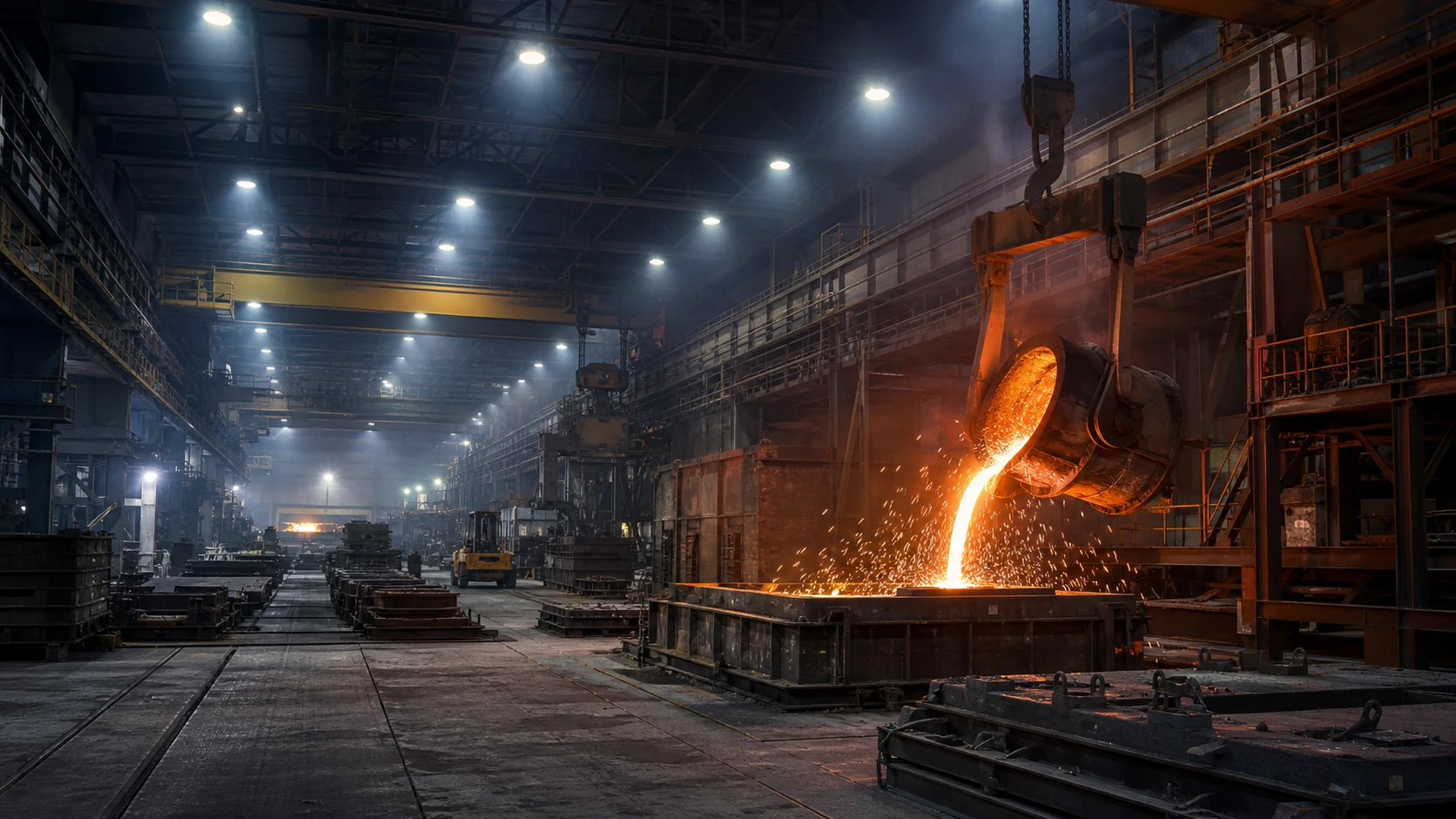
Steel Mill & Foundry Lighting real-site reference
Industrial & High-Bay Lighting

Steel Mill & Foundry Lighting

Steel mills and foundries combine heat, airborne dust, smoke, vibration, heavy vehicles and moving cranes. Lighting must remain serviceable while preserving visibility through visually complex industrial backgrounds.
ApplicationProject-specific engineering
MountingVerify actual geometry
ControlsZone / dim / schedule as needed
SelectionPhotometric calculation required
Understand the site

Start with the actual geometry and operating task.

Identify casting lines, furnaces, crane aisles, ladle routes, walkways, inspection areas and roof structures. The useful mounting grid is often irregular because cranes and process equipment occupy the most obvious ceiling positions.

Why this application needs its own lighting approach

Steel mills and foundries combine heat, airborne dust, smoke, vibration, heavy vehicles and moving cranes. Lighting must remain serviceable while preserving visibility through visually complex industrial backgrounds.
Key project inputs

Provide crane paths, furnace / hot-process locations, ambient temperature, mounting points and existing HID fixture information.

Layout & mounting

Use the real site first, then validate the layout.

Position luminaires outside crane envelopes and away from direct radiant heat. Use robust brackets or suspension points and maintain mechanical clearance from moving equipment.

Steel Mill & Foundry Lighting site reference
site referenceApplication context

Identify casting lines, furnaces, crane aisles, ladle routes, walkways, inspection areas and roof structures. The useful mounting grid is often irregular because cranes and process equipment occupy the most obvious ceiling positions.

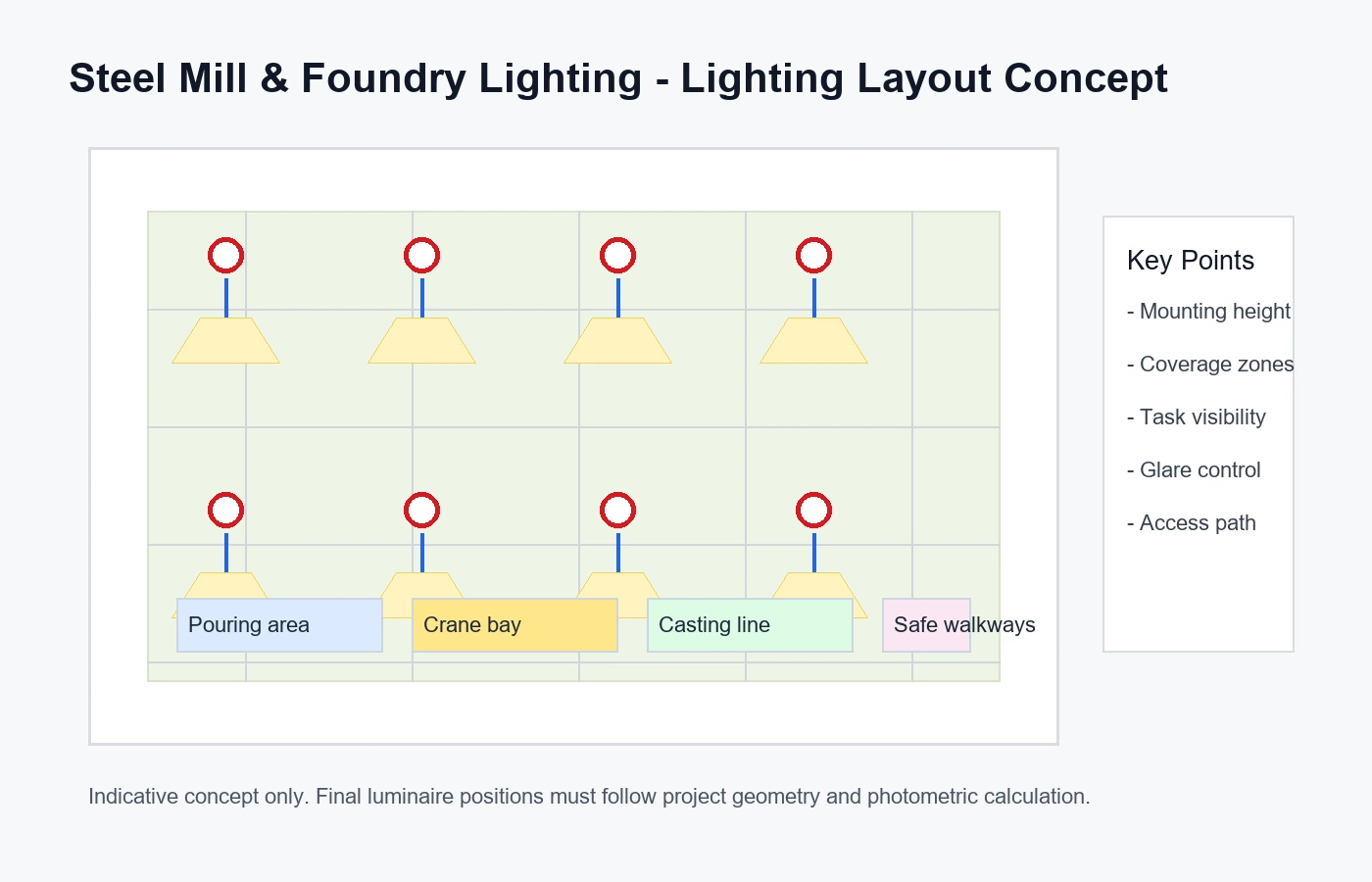
Typical layout for Steel Mill & Foundry Lighting
Engineering diagramTypical / indicative layout

Use this only as a visual reference for mounting and coverage logic. The final design must follow the real project.

Typical reference only. Final mounting positions, pole or fixture quantity, beam distribution, aiming, controls and structural loading should be confirmed by photometric calculation and the applicable project requirements.
Lighting performance

What the completed installation must achieve.

Emphasize vertical equipment recognition, floor visibility, operator contrast and reduced glare against bright furnaces or reflective metal surfaces.

Primary visual taskEmphasize vertical equipment recognition, floor visibility, operator contrast and reduced glare against bright furnaces or reflective metal surfaces.
Glare / off-site impactReview visible source brightness, observer positions and light outside the intended work or traffic area.
Uniformity / transitionsAvoid isolated hotspots and abrupt changes between adjacent operating zones.
Vertical visibilityCheck people, equipment, vehicles, racks, façades or structures where recognition is part of the task.
Environmental reliabilityHigh ambient temperature, dust ingress, vibration, impact risk and corrosive contaminants should be reviewed together rather than as isolated product ratings.
CommissioningVerify installed aiming, controls, operating scenes and critical measurement points after installation.
Controls & operation

Design the operating scenes before wiring is finalized.

Separate process, maintenance and standby areas. Controls should never compromise safety-critical routes or emergency visibility.

ZoningGroup luminaires by real operating areas rather than arbitrary circuit boundaries.
DimmingUse reduced-output scenes where the task and local requirements allow.
SchedulingMatch lighting operation to shifts, traffic, occupancy or curfew periods.
InterfacesSelect 0-10V, DALI, DMX, photocell, sensor or network interfaces only where compatible with the project architecture.
Accessories, environment & maintenance

Reliability depends on more than the LED package.

High ambient temperature, dust ingress, vibration, impact risk and corrosive contaminants should be reviewed together rather than as isolated product ratings.

Special project checks

High ambient temperature, dust ingress, vibration, impact risk and corrosive contaminants should be reviewed together rather than as isolated product ratings.

New build vs retrofit

A 1:1 HID replacement may reduce installation work, but the new optical distribution should still be recalculated because LED intensity and beam shape differ from legacy sources.

Recommended Products

Products commonly evaluated for this application.

These are project starting points, not universal specifications. Final wattage, optics, accessories and controls should follow the project calculation and installation conditions.

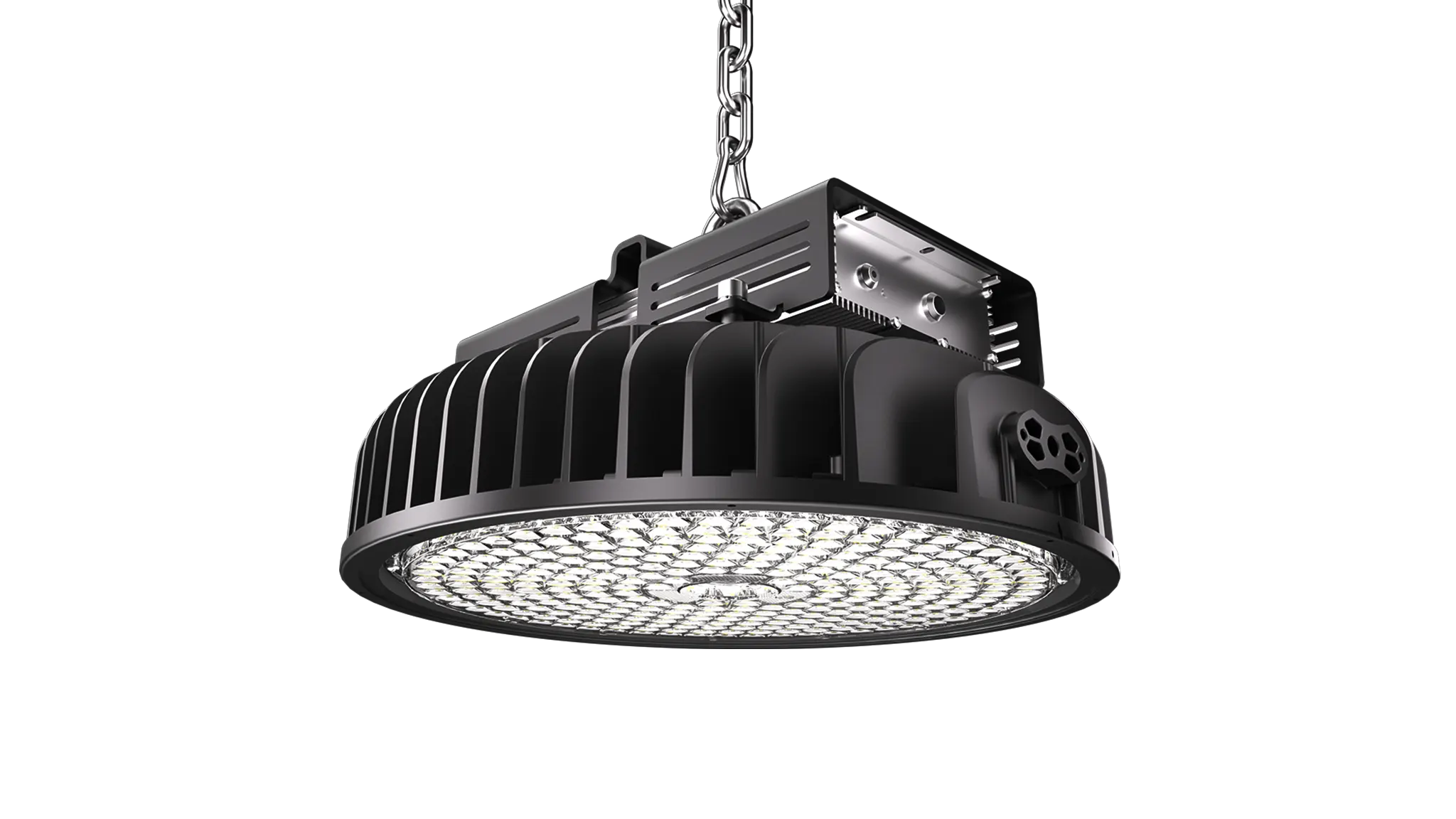
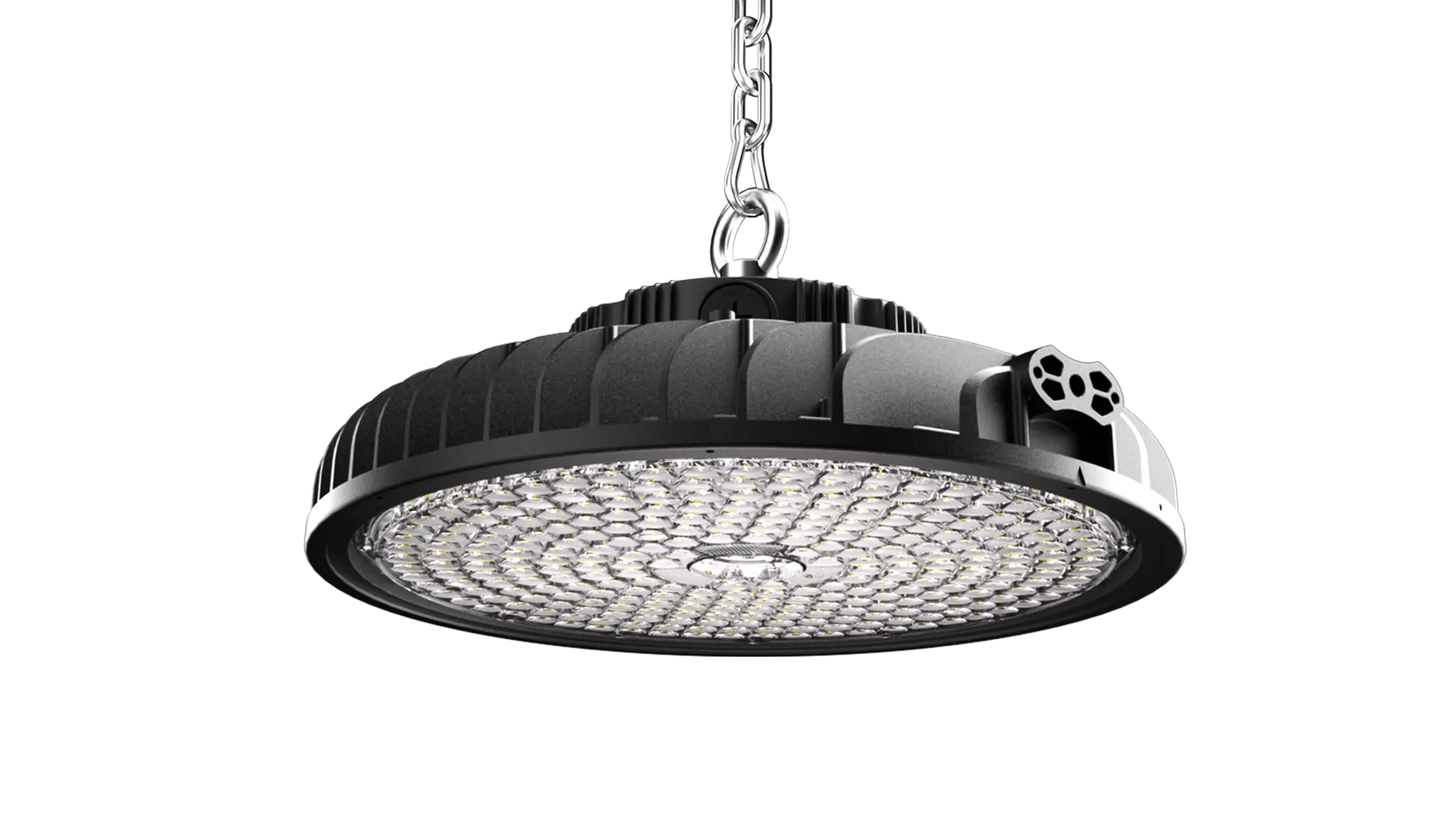
HB20 LED high bay light product photo
HB20

High-temperature industrial high-bay

Evaluate this product against the actual mounting height, optics, environment, controls and maintenance requirements for this application.

View product
HB19 LED high bay light product photo
HB19

High-output high-bay for tall spaces

Evaluate this product against the actual mounting height, optics, environment, controls and maintenance requirements for this application.

View product
Project information

What to send for a faster engineering review.

Provide crane paths, furnace / hot-process locations, ambient temperature, mounting points and existing HID fixture information.

01Site / floor plan with dimensions and operating zones.
02Mounting positions, heights, pole / bracket / roof structure information.
03Target task, performance requirement and operating schedule.
04Existing fixture data, photos and environmental conditions for retrofit projects.

Need a project-specific lighting proposal?

Send the project drawing and mounting information so the optical and product selection can be reviewed against the real site.

Request project support
Common questions

Before finalizing the application design.

These answers are general engineering guidance. Project-specific requirements should always take priority.

How should the lighting layout for steel mill & foundry lighting be determined?

Start from the real geometry, mounting positions, operating zones and target visual tasks. Pole or fixture quantity should then be confirmed by photometric calculation rather than copied from a generic example.

Can existing poles, brackets or mounting points be reused?

Often yes, but structural condition, wind / vibration loading, spacing, electrical condition and compatibility with the new optical strategy should be checked first.

Should controls be specified at the same time as the luminaires?

Yes. Zoning, dimming, sensors and schedules affect driver selection, wiring and commissioning. Controls should fit the site operating policy and maintenance capability.

What information is most useful for an initial proposal?

A site or floor plan, mounting height, existing fixture information, target performance, operating hours, environmental conditions and clear photos of the installation area.

Are the typical layouts shown on this page fixed designs?

No. They are engineering references only. Final mounting positions, fixture quantities, beam distributions and aiming angles should be verified for the actual project.

Request a lighting proposal

Tell us about your steel mill & foundry lighting project.

Share the site dimensions, mounting height, target lighting level and available drawings. Our team will review the project and recommend a suitable product and optical approach.

Email: info@zcled.com

Your information will be used only to respond to this project inquiry.

Get a Quote

Tell us about your project

For the fastest pricing, include model, quantity, application, and installation height.

Trust & Privacy

We respect your privacy. Your information will only be used to respond to your inquiry.

Upload project spec, layout, or drawing.

Thank you!

Your inquiry has been submitted successfully.
We'll reply within 24 hours.