High-Temperature Plant Lighting real-site reference
Industrial & High-Bay Lighting

High-Temperature Plant Lighting

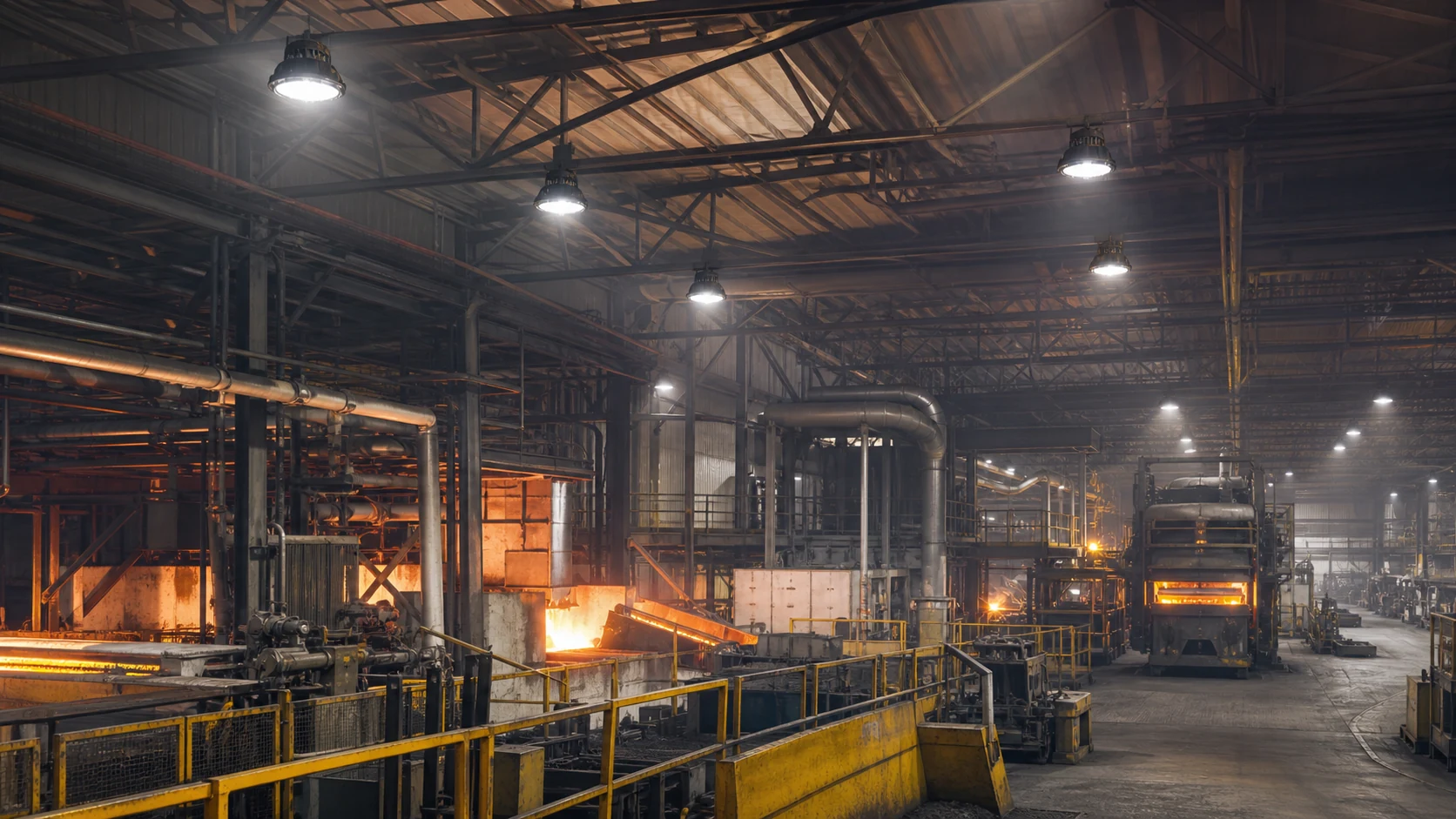
High-temperature plants such as steel, glass, ceramics, hot-process paper or furnace areas place thermal stress on LEDs, drivers, seals and wiring. Reliability is determined by the real ambient temperature around the luminaire, not the building-wide average.
ApplicationProject-specific engineering
MountingVerify actual geometry
ControlsZone / dim / schedule as needed
SelectionPhotometric calculation required
Understand the site

Start with the actual geometry and operating task.

Map hot zones, radiant-heat sources, roof heat pockets, ventilation paths and maintenance products. Mounting height alone is not enough; the temperature at the actual fixture position is the critical input.

Why this application needs its own lighting approach

High-temperature plants such as steel, glass, ceramics, hot-process paper or furnace areas place thermal stress on LEDs, drivers, seals and wiring. Reliability is determined by the real ambient temperature around the luminaire, not the building-wide average.
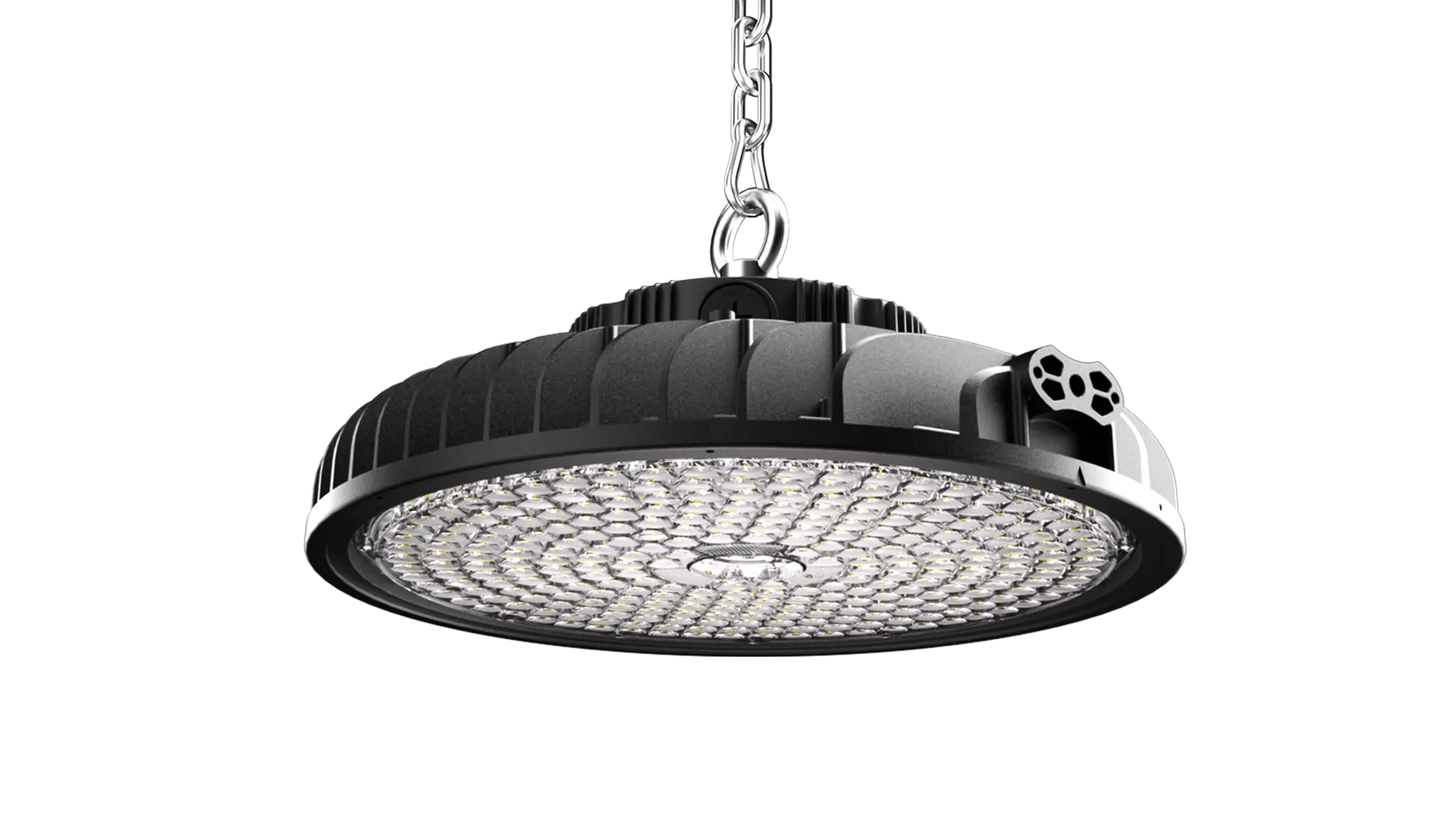
Key project inputs

Send measured or estimated temperature at luminaire height, process type, mounting height, operating hours and photos of the hot zone.

Layout & mounting

Use the real site first, then validate the layout.

Keep drivers and sensitive components away from direct radiant heat where the product architecture allows. Mount luminaires where convection can work, avoid trapping heat against structural surfaces and preserve access for inspection.

High-Temperature Plant Lighting site reference
site referenceApplication context

Map hot zones, radiant-heat sources, roof heat pockets, ventilation paths and maintenance products. Mounting height alone is not enough; the temperature at the actual fixture position is the critical input.

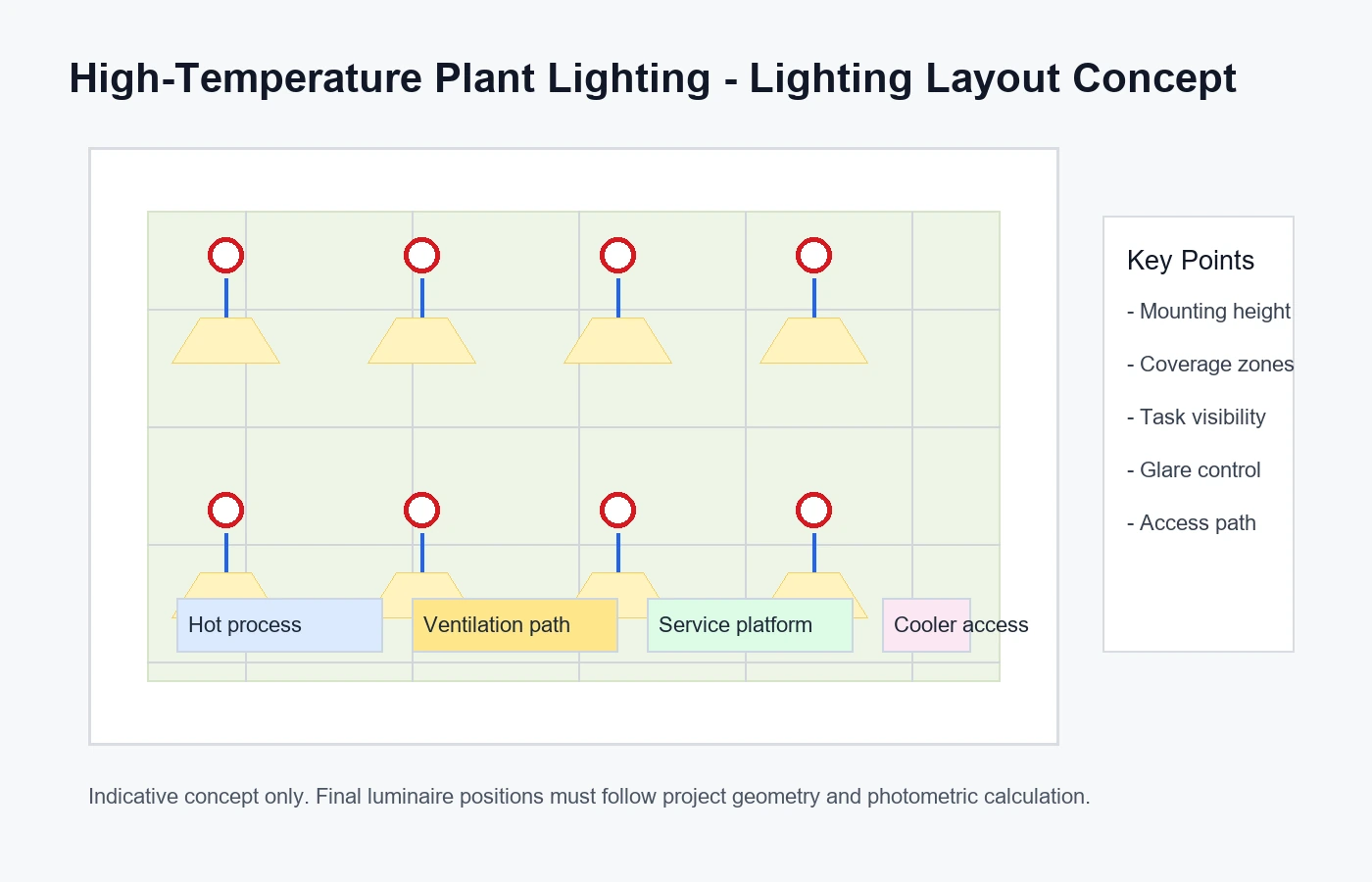
Typical layout for High-Temperature Plant Lighting
Engineering diagramTypical / indicative layout

Use this only as a visual reference for mounting and coverage logic. The final design must follow the real project.

Typical reference only. Final mounting positions, pole or fixture quantity, beam distribution, aiming, controls and structural loading should be confirmed by photometric calculation and the applicable project requirements.
Lighting performance

What the completed installation must achieve.

Maintain safe working visibility, equipment recognition and floor uniformity while avoiding excessive source brightness in already visually demanding environments.

Primary visual taskMaintain safe working visibility, equipment recognition and floor uniformity while avoiding excessive source brightness in already visually demanding environments.
Glare / off-site impactReview visible source brightness, observer positions and light outside the intended work or traffic area.
Uniformity / transitionsAvoid isolated hotspots and abrupt changes between adjacent operating zones.
Vertical visibilityCheck people, equipment, vehicles, racks, façades or structures where recognition is part of the task.
Environmental reliabilityReview maximum ambient temperature, thermal cycling, hot dust, corrosive gases, vibration, power quality and cable / connector temperature ratings.
CommissioningVerify installed aiming, controls, operating scenes and critical measurement points after installation.
Controls & operation

Design the operating scenes before wiring is finalized.

Simple zoning and schedule control are usually more relevant than aggressive occupancy sensing. Interfaces such as 0-10V, DALI or DMX should be selected only where they fit the plant control architecture and operating policy.

ZoningGroup luminaires by real operating areas rather than arbitrary circuit boundaries.
DimmingUse reduced-output scenes where the task and local requirements allow.
SchedulingMatch lighting operation to shifts, traffic, occupancy or curfew periods.
InterfacesSelect 0-10V, DALI, DMX, photocell, sensor or network interfaces only where compatible with the project architecture.
Accessories, environment & maintenance

Reliability depends on more than the LED package.

Review maximum ambient temperature, thermal cycling, hot dust, corrosive gases, vibration, power quality and cable / connector temperature ratings.

Special project checks

Review maximum ambient temperature, thermal cycling, hot dust, corrosive gases, vibration, power quality and cable / connector temperature ratings.

New build vs retrofit

Do not size a retrofit only from old HID wattage. Confirm the thermal environment, required light levels, mounting height and whether remote-driver or high-temperature components are needed.

Recommended Products

Products commonly evaluated for this application.

These are project starting points, not universal specifications. Final wattage, optics, accessories and controls should follow the project calculation and installation conditions.

HB20 LED high bay light product photo
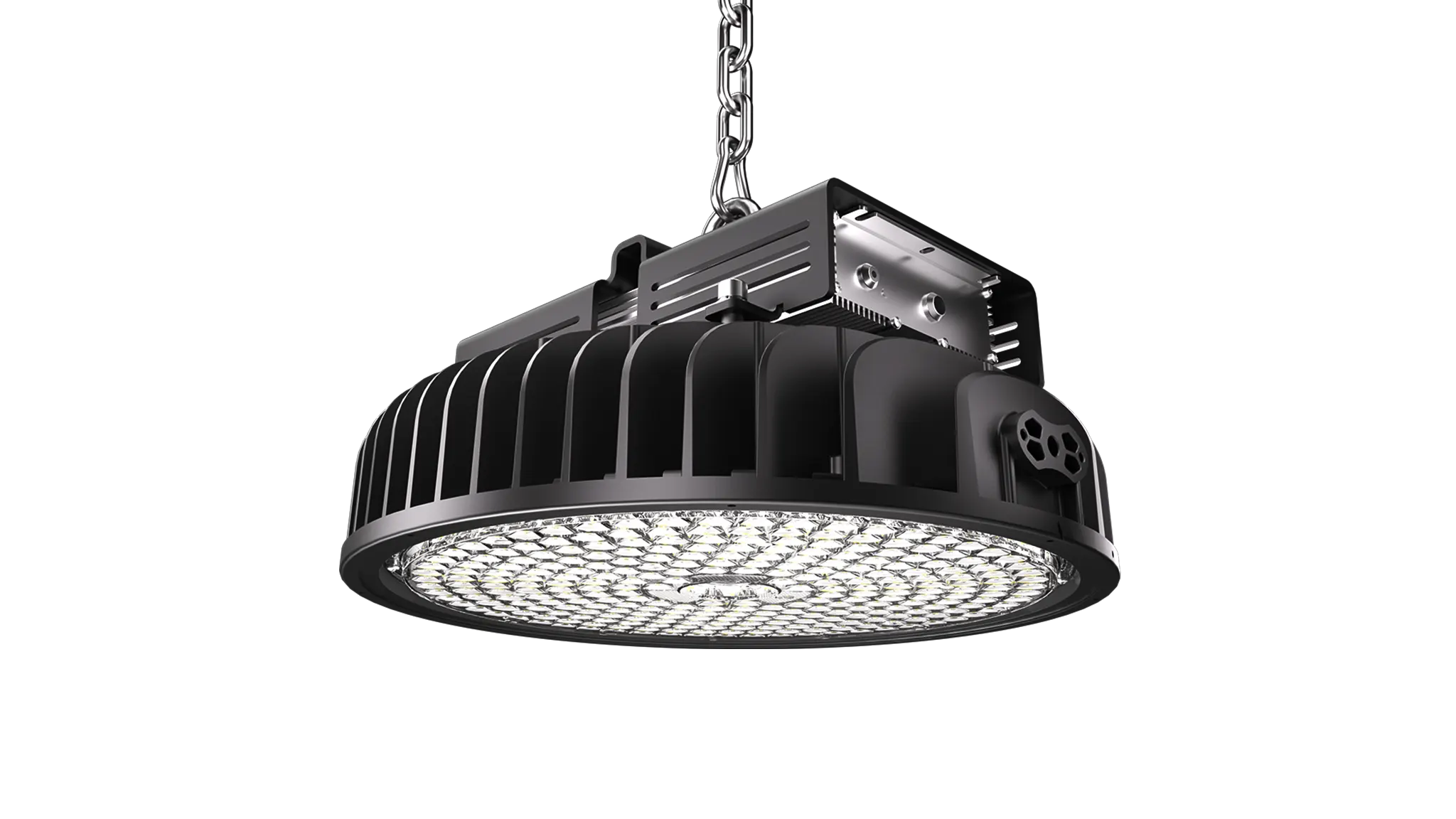
HB20

High-temperature industrial high-bay

Evaluate this product against the actual mounting height, optics, environment, controls and maintenance requirements for this application.

View product
HB19 LED high bay light product photo
HB19

High-output high-bay for tall spaces

Evaluate this product against the actual mounting height, optics, environment, controls and maintenance requirements for this application.

View product
Project information

What to send for a faster engineering review.

Send measured or estimated temperature at luminaire height, process type, mounting height, operating hours and photos of the hot zone.

01Site / floor plan with dimensions and operating zones.
02Mounting positions, heights, pole / bracket / roof structure information.
03Target task, performance requirement and operating schedule.
04Existing fixture data, photos and environmental conditions for retrofit projects.

Need a project-specific lighting proposal?

Send the project drawing and mounting information so the optical and product selection can be reviewed against the real site.

Request project support
Common questions

Before finalizing the application design.

These answers are general engineering guidance. Project-specific requirements should always take priority.

How should the lighting layout for high-temperature plant lighting be determined?

Start from the real geometry, mounting positions, operating zones and target visual tasks. Pole or fixture quantity should then be confirmed by photometric calculation rather than copied from a generic example.

Can existing poles, brackets or mounting points be reused?

Often yes, but structural condition, wind / vibration loading, spacing, electrical condition and compatibility with the new optical strategy should be checked first.

Should controls be specified at the same time as the luminaires?

Yes. Zoning, dimming, sensors and schedules affect driver selection, wiring and commissioning. Controls should fit the site operating policy and maintenance capability.

What information is most useful for an initial proposal?

A site or floor plan, mounting height, existing fixture information, target performance, operating hours, environmental conditions and clear photos of the installation area.

Are the typical layouts shown on this page fixed designs?

No. They are engineering references only. Final mounting positions, fixture quantities, beam distributions and aiming angles should be verified for the actual project.

Request a lighting proposal

Tell us about your high-temperature plant lighting project.

Share the site dimensions, mounting height, target lighting level and available drawings. Our team will review the project and recommend a suitable product and optical approach.

Email: info@zcled.com

Your information will be used only to respond to this project inquiry.

Get a Quote

Tell us about your project

For the fastest pricing, include model, quantity, application, and installation height.

Trust & Privacy

We respect your privacy. Your information will only be used to respond to your inquiry.

Upload project spec, layout, or drawing.

Thank you!

Your inquiry has been submitted successfully.
We'll reply within 24 hours.