Why this application needs its own lighting approach
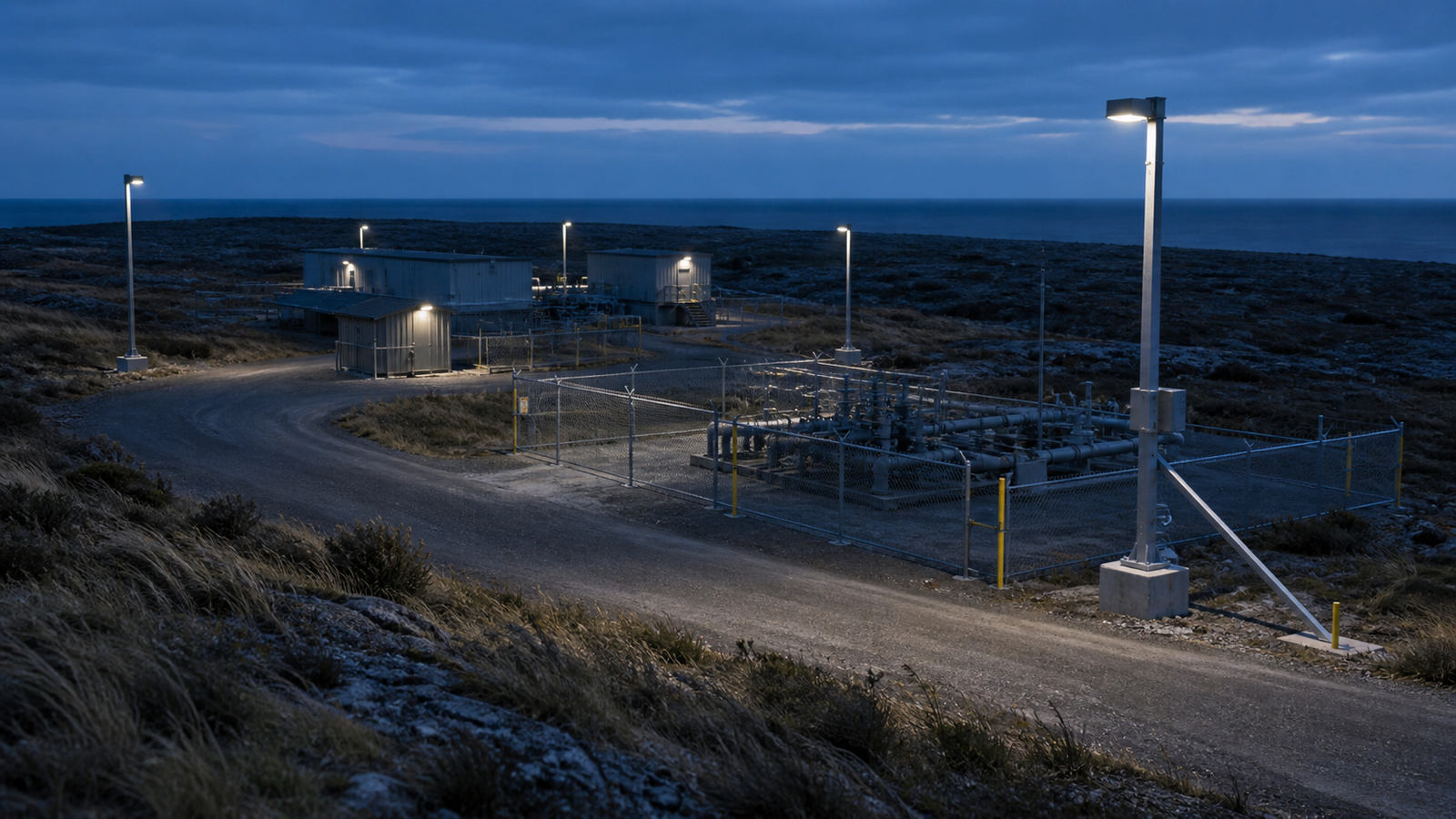
High-wind sites place structural demands on poles, brackets and luminaires. Fixture weight and projected area can influence mast loading as much as wattage or light output.
High-wind sites place structural demands on poles, brackets and luminaires. Fixture weight and projected area can influence mast loading as much as wattage or light output.
Identify mast height, exposure category, terrain, coastal / elevated location, headframe geometry and prevailing wind directions.
High-wind sites place structural demands on poles, brackets and luminaires. Fixture weight and projected area can influence mast loading as much as wattage or light output.
Send mast height, headframe drawing, design wind conditions, existing fixture weight / EPA and mounting orientation.
Use compact, low-EPA luminaires where structural constraints are critical. Confirm bracket orientation and fastening details with the mast / structural engineer.
Identify mast height, exposure category, terrain, coastal / elevated location, headframe geometry and prevailing wind directions.
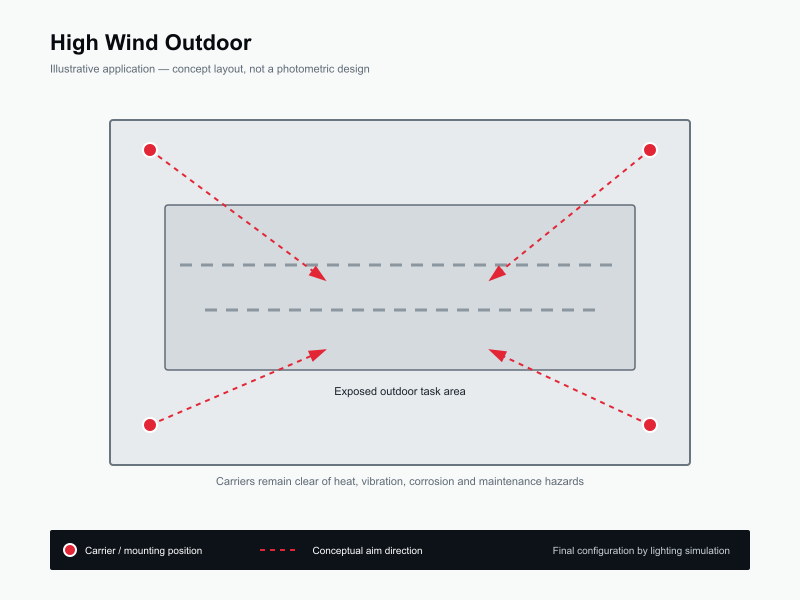
Use this only as a visual reference for mounting and coverage logic. The final design must follow the real project.
Optical performance should be achieved without unnecessary fixture quantity or oversized housings that increase wind load.
Control architecture is secondary to structural reliability; keep wiring and control enclosures protected from vibration and weather.
Review EPA / wind area, fixture weight, mast condition, bracket capacity, corrosion, surge and cable movement.
Review EPA / wind area, fixture weight, mast condition, bracket capacity, corrosion, surge and cable movement.
Do not assume an LED fixture is structurally equivalent to the HID fixture it replaces. Compare weight, projected area and center of gravity.
These are project starting points, not universal specifications. Final wattage, optics, accessories and controls should follow the project calculation and installation conditions.
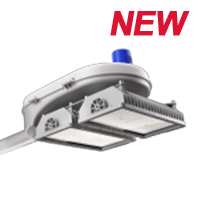
Evaluate this product against the actual mounting height, optics, environment, controls and maintenance requirements for this application.
View product →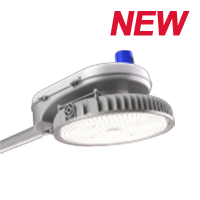
Evaluate this product against the actual mounting height, optics, environment, controls and maintenance requirements for this application.
View product →Send mast height, headframe drawing, design wind conditions, existing fixture weight / EPA and mounting orientation.
Send the project drawing and mounting information so the optical and product selection can be reviewed against the real site.
These answers are general engineering guidance. Project-specific requirements should always take priority.
Start from the real geometry, mounting positions, operating zones and target visual tasks. Pole or fixture quantity should then be confirmed by photometric calculation rather than copied from a generic example.
Often yes, but structural condition, wind / vibration loading, spacing, electrical condition and compatibility with the new optical strategy should be checked first.
Yes. Zoning, dimming, sensors and schedules affect driver selection, wiring and commissioning. Controls should fit the site operating policy and maintenance capability.
A site or floor plan, mounting height, existing fixture information, target performance, operating hours, environmental conditions and clear photos of the installation area.
No. They are engineering references only. Final mounting positions, fixture quantities, beam distributions and aiming angles should be verified for the actual project.