
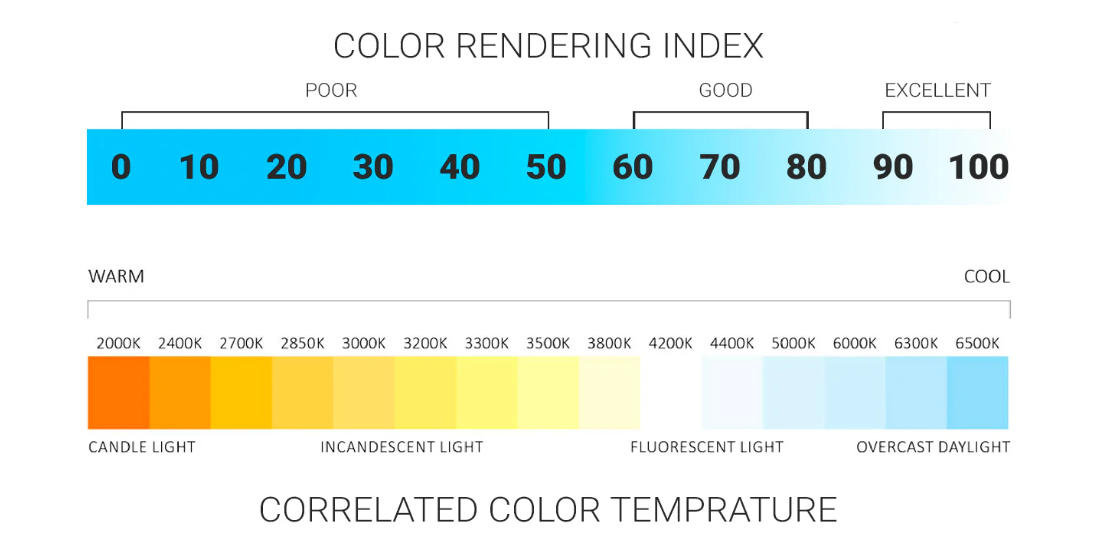
Color specs can waste budget or create patchiness when written badly. Use a practical method: define the use case, select one baseline CCT, set a sensible CRI target, and enforce consistency with batch control.
Avoid disputes by adding a commissioning acceptance note and mismatch log procedure—so ‘color’ is verifiable, not subjective.
- Point clé #1 : Consistency is usually more important than chasing extreme CRI numbers.
- Point clé #2 : Mixed CCT across poles/batches creates patchiness and complaints.
- Point clé #3 : Decision packs (rationale + batch control + acceptance note) prevent rework.
Table des matières
• RGBW: who needs it
• Broadcast-level standards guide
• Why LED stadium lights are a long-term investment
Dans les cas suivants
Use this guide when writing tender specs for stadium or training-field lighting and you want a professional, defensible CCT/CRI requirement without over-engineering.
- Training fields: comfort and long hours.
- Broadcast venues: camera expectations.
- Multi-field complexes: consistency reduces patchiness.
- Retrofits: mismatch with existing lighting creates complaints.
Exigences clés / indicateurs clés
Use this decision table to keep color specs defendable and cost-effective.
| Decision item | Quelles sont les conséquences ? | Pourquoi est-ce important ? | How to decide / verify |
|---|---|---|---|
| Use case | What “good” looks like. | Training vs broadcast differs. | Document venue use case and stakeholders. |
| Baseline CCT | Overall appearance. | Mixed CCT looks patchy. | Choose one baseline and enforce across procurement. |
| CRI target | Color discrimination. | Over-spec increases cost. | Set a sensible CRI aligned to use case. |
| Consistency control | Uniform look. | Batch mixing creates variation. | Lot/batch control and documentation. |
| Acceptance note | Reduces disputes. | “Color” becomes subjective. | Commissioning visual check + mismatch log. |
Definitions
CCT describes “white tone”, CRI describes color rendering. Practical risk is inconsistent appearance caused by mixing CCT/batches without control.
Typical target ranges
Use-case driven targets:
- Training-first: comfort + consistency.
- Broadcast-first: align with consultant/broadcaster expectations.
- Multi-field: enforce one baseline CCT per site or defined zone.
Target is consistent look with defendable cost-performance choices.
Déroulement étape par étape
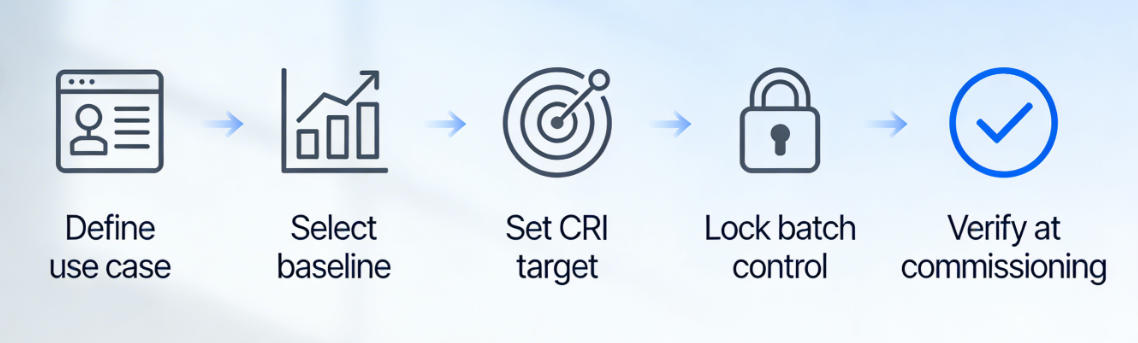
Define use case → select baseline → set CRI target → lock batch control → verify at commissioning.
Inputs to collect
- Venue use: training/match/broadcast/events.
- Stakeholders: owner/consultant/broadcaster.
- Existing lighting: retrofit mismatch risk.
- Procurement plan: lots/batches and substitutions.
Design decisions
- Pick one baseline CCT.
- Set sensible CRI target.
- Require batch/lot documentation.
- Define acceptance note and mismatch log.
Verification & sign-off
- Decision pack delivered.
- As-built batch record.
- Commissioning mismatch note (if any).
Erreurs courantes
- Over-spec CRI without use case.
- Mixing CCT on same field.
- No batch control.
- Ignoring retrofit mismatch.
- No acceptance method.

 English
  한국어
한국어  Español
  简体中文
简体中文  Français
  Deutsch
  العربية
  日本語
日本語